
数据安全

Search documents
控股股东认定结果不一致!石头科技赴港上市收反馈意见
Shen Zhen Shang Bao· 2025-09-16 03:38
Core Insights - Beijing Stone Technology Co., Ltd. (Stone Technology) is preparing for a Hong Kong IPO and has received feedback from the China Securities Regulatory Commission (CSRC) regarding the need for additional documentation related to overseas issuance and data security concerns [1] Group 1: Regulatory Feedback - The CSRC has requested Stone Technology to clarify its business scope, particularly regarding its value-added telecommunications services and whether it complies with the 2024 Negative List for foreign investment [1] - The company must provide details on its websites, apps, and mini-programs, including the scale of user data collection and storage, and measures for data protection before and after the IPO [1] - There is a need to explain inconsistencies in the identification of the controlling shareholder and provide a conclusive legal opinion on this matter [1] Group 2: Financial Performance - Stone Technology has experienced continuous revenue growth since its 2020 listing, with annual revenue increasing from 4.53 billion to 11.94 billion from 2020 to 2024, achieving a doubling of scale [2] - Despite revenue growth, the company reported a decline in net profit for 2024, with a net profit of 1.977 billion, down 3.64% year-on-year, and a non-recurring net profit of 1.620 billion, down 11.26% [2] - In the first half of 2025, revenue reached 7.903 billion, a year-on-year increase of 78.96%, but net profit fell by 39.55% to 678 million, with a significant drop in cash flow from operating activities to -823 million [2] Group 3: Customer Complaints - There has been a continuous stream of complaints on the Black Cat Complaint platform regarding Stone Technology, primarily related to product quality issues such as cleaning efficiency and path navigation, as well as after-sales service challenges like repair difficulties and refusal to replace products [3]

联合实验室专家陈雷:希望大湾区成为数据安全使用典范
Nan Fang Du Shi Bao· 2025-09-16 02:49
Core Insights - Generative artificial intelligence is a core driving force behind the new technological and industrial revolution, serving as an important engine for cultivating new productive forces and injecting new momentum into high-quality economic development [1] - The establishment of the Guangdong-Hong Kong-Macao Greater Bay Area Generative Artificial Intelligence Safety Development Joint Laboratory aims to create an innovative ecosystem that integrates government, industry, academia, research, and application, focusing on enterprise development, industry implementation, and safety regulation [1][2] Group 1: Data Quality and Integration - Data quality is crucial in the training of large models, and the Joint Laboratory is expected to integrate research capabilities from various universities to guide the correct use of data from policy and institutional levels [2][3] - The laboratory aims to create a big data platform by consolidating data from various universities in the Greater Bay Area, facilitating model testing and performance evaluation [3][9] Group 2: Data Security and Governance - Data security poses significant challenges, requiring a balance between data integration and safety, with suggestions for using techniques like homomorphic encryption and privacy computing for AI training [5][8] - The laboratory is expected to establish a collaborative governance system for data security and AI safety, promoting data sharing while ensuring privacy protection [5][7] Group 3: AI Talent Development - The Joint Laboratory is seen as a platform for AI talent cultivation, advocating for a "1+1" model where students spend one year in academic learning and another year in industry practice to bridge the gap between education and real-world application [6][7] Group 4: Future Expectations - There is an expectation for the Joint Laboratory to form more alliances and agreements to promote data security usage, creating a virtuous cycle of data sharing and safety in the Greater Bay Area [7] - The laboratory is also anticipated to focus on the safety of large models, ensuring their outputs are reliable and controllable while addressing new risks such as data poisoning [8][9]
让大湾区成为数据安全使用典范
Nan Fang Du Shi Bao· 2025-09-15 23:10
Core Insights - The most critical aspect of artificial intelligence development is data quality, as emphasized by the Director of the Information Hub at Hong Kong University of Science and Technology (Guangzhou) [2][10] - The establishment of a collaborative laboratory in the Guangdong-Hong Kong-Macao Greater Bay Area aims to integrate research capabilities from various universities to enhance the safe development of generative AI [2][4][10] Data Quality - Data quality is essential for effective AI applications, and the laboratory aims to create a big data platform for testing large models and improving their performance [4][10] - The laboratory will explore new methods to ensure data quality, including collaboration with industry to accumulate high-quality data for practical applications [4][9] Data Security - Data security poses significant challenges, requiring a balance between data integration and safety, with suggestions for using techniques like homomorphic encryption and privacy computing [5][9] - The laboratory is expected to establish a data security governance framework that includes both technical solutions and policy guidance to ensure proper data usage [5][8] AI Model Development - The successful application of large models in industries depends on their practical use, with examples provided from the insurance sector where large models can streamline claims processing [6][10] - The laboratory is tasked with addressing the security of AI models, particularly concerning the protection of sensitive information and the prevention of data poisoning attacks [9][10] Collaborative Efforts - The laboratory aims to form alliances through agreements that promote data security and encourage participants to prioritize data safety and privacy [8] - By fostering collaboration among universities and industries, the laboratory seeks to create a virtuous cycle of data sharing and usage, positioning the Greater Bay Area as a model for data security practices [8][9]


纯私有化部署+AI加持 政企专属的360智语视频会议智能体来了!
Sou Hu Cai Jing· 2025-09-15 11:56
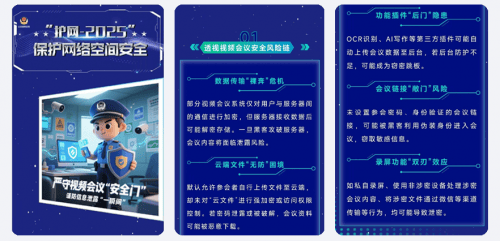
开会总是漏掉重点?整理会议纪要耗费太多精力?……面对传统会议存在"信息遗漏、效率低下、安全 隐患"三大痛点,360智语视频会议智能体应运而生。 这款智能体应用紧扣党政军、央国企的会议需求,不仅从实时转录到智能纪要一气呵成,更专为内网环 境设计、支持全私有化部署,满足重要内部会议智能化和安全性的双重需求。 私有化部署 严格守好视频会议"安全门" 在AI的狂飙突进中,确保信息和数据安全、可控,对于大型政企来说,是道不可逾越的"生命线"。特别 是打破时空限制的视频会议,随着AI元素的加入,潜在的安全风险也愈发凸显。 360智语智能会议纪要功能 "和线下会议相比,视频会议可谓危机重重。"近期,公安部网安局在"护网2025"行动中特别提醒,需严 守视频会议"安全门"。若防范不力,轻则导致会议内容被恶意下载,重则可能成为窃密跳板,给组织带 来难以估量的严重后果。 公安部网安局发布视频会议安全提醒 作为专注服务党政军、央国企的智能协作平台,360智语的视频会议智能体支持本地化部署,充分满足 数据安全、隐私保护和合规性需求,彻底规避公有云数据泄露风险;采用端到端加密传输,从网络传 输、数据加密到存储管理实现全链路防护,严防窃 ...

郭润清:加速建设国家级汽车行业数据跨境创新中心
Yang Shi Wang· 2025-09-15 10:53
Core Viewpoint - The automotive industry is increasingly reliant on global data for vehicle development and competitiveness, necessitating the establishment of a national-level cross-border data innovation center to support the globalization of the industry [1][3]. Group 1: Globalization and Data Utilization - The scale of China's automotive exports is rising, with a shift from simple product exports to localized ecosystems and R&D, making cross-border data a critical factor for sustained competitive advantage [3]. - Data has transitioned from a backend cost to a front-end competitive asset, serving as a prerequisite for global competition and a core accelerator for automotive enterprises [3]. Group 2: Regulatory Framework and Compliance - A comprehensive regulatory framework for cross-border data, including laws, regulations, and standards, has been established in China, particularly concerning personal information and critical data in the automotive sector [4]. - The upcoming "Automotive Data Export Safety Guidelines (2025 Edition)" aims to clarify cross-border data requirements, with a focus on scenarios like software upgrades and automated driving [4]. Group 3: Impact of Data on Business Operations - The ability to comply with cross-border data regulations determines the extent of a company's global market access, directly impacting its growth potential [5]. - The efficiency of cross-border data flow influences the speed of innovation, making data a key element in R&D and global competitiveness [5]. - High-value data applications are reshaping operational models and becoming crucial for brand pricing strategies [5]. - Data security is essential for building brand trust and constitutes a core component of intangible assets [5].

中美首轮会谈结束,美国要的,中国给不了;中国要的,美国不想给
Sou Hu Cai Jing· 2025-09-15 04:51
Group 1 - The recent US-China talks in Madrid focused on unilateral tariffs, export controls, and issues surrounding TikTok, indicating a high level of engagement and numerous unresolved issues [1][3] - The discussions included three main topics: TikTok, tariffs, and economic issues, all of which are complex and contentious [3][5] - The meeting is seen as a preparatory step for a potential meeting between the US and Chinese leaders at the upcoming APEC summit in late October [3][5] Group 2 - The US aims for China to fully open rare earth exports, stop purchasing Russian oil, and assist in addressing the fentanyl crisis, while China demands an end to unilateral trade sanctions and a clearer path for TikTok [8][20] - The ongoing tensions reflect a pattern of reciprocal actions, with the US imposing export controls and China responding with anti-dumping investigations [5][8] - The agricultural sector is significantly impacted, as China has ceased importing US soybeans, affecting American farmers and political dynamics in agricultural states [17][21] Group 3 - The discussions around TikTok are not solely about national security but also involve political maneuvering and the future of Chinese companies in the US market [20][21] - The contrast between the US's weakening position and China's strengthening stance is becoming increasingly evident, as the US struggles to find alternatives to Chinese supply chains [21][23] - China's development strategy focuses on learning, innovation, and leveraging its industrial capabilities, positioning it as a formidable competitor in high-tech sectors [15][21]

2025年国家网络安全宣传周丨网络安全知识科普,建议学习+收藏!
Sou Hu Cai Jing· 2025-09-13 11:28
Core Points - The 2025 National Cybersecurity Awareness Week will take place from September 15 to 21, with the theme "Cybersecurity for the People, Cybersecurity Relies on the People" [1] - The event aims to promote cybersecurity knowledge and skills while highlighting the achievements in the cybersecurity field since the 18th National Congress of the Communist Party of China [5] Legal Framework - The "Cybersecurity Law of the People's Republic of China" was enacted on June 1, 2017, as the first comprehensive law regulating cybersecurity management in China [8] - The "Data Security Law" was passed on September 1, 2021, serving as a fundamental law in the data sector and an important law in national security [11][12] - The "Personal Information Protection Law" came into effect on November 1, 2021, aimed at protecting personal information rights and regulating personal information processing activities [16] - The "Critical Information Infrastructure Security Protection Regulations" were implemented on September 1, 2021, focusing on the security of critical information infrastructure [9][10] Cybersecurity Awareness - The event will emphasize the importance of cybersecurity knowledge in the face of threats such as telecom fraud, information leakage, and malicious software [5] - The public is encouraged to learn about cybersecurity to mitigate risks associated with the internet [5] Critical Information Infrastructure - Critical information infrastructure includes essential sectors like energy, transportation, and finance, where damage or data leakage could severely harm national security and public interest [22] - The government has established a framework for the protection of critical information infrastructure, including responsibilities for various departments and operators [25] Cybersecurity Threats - Cyber threats include phishing emails, which are designed to deceive users into revealing sensitive information [27][32] - New types of scams, such as AI-based fraud, are emerging, utilizing advanced technology to manipulate victims [46] Data Security - Data security involves measures to protect data from damage, theft, or unauthorized use, with a focus on ensuring the legal and effective use of data [36] - The classification of data is based on the potential harm caused by unauthorized access or use, categorized into general, important, and core data [40]

新修订的仲裁法明年3月1日起施行,更好服务高水平对外开放
Xin Jing Bao· 2025-09-13 10:39
Core Points - The newly revised Arbitration Law was passed by the Standing Committee of the 14th National People's Congress on September 12, 2023, and will take effect on March 1, 2026, emphasizing the alignment with the policies of the Communist Party of China and the country's high-quality development and high-level opening-up [1][2] Group 1: Legal Framework and International Cooperation - The revised Arbitration Law consists of 8 chapters and 96 articles, aiming to establish a legal system for arbitration that is compatible with international norms while reflecting Chinese characteristics, thereby enhancing the credibility and international competitiveness of China's arbitration [2] - The law supports arbitration institutions in establishing business entities abroad and encourages collaboration with international arbitration organizations, which is crucial for improving the legal environment for foreign-related arbitration [2][3] Group 2: Online Arbitration and Data Security - The revised law allows arbitration activities to be conducted online through information networks, provided that all parties agree, ensuring that online arbitration holds the same legal validity as traditional in-person arbitration [2][3] - Suggestions were made to enhance the connection between online arbitration and data security, including mandatory regulations for data protection and clear standards for the security of electronic evidence during arbitration processes [4]
国家数据局李建国:加快建立汽车行业数据全生命周期安全管理机制
Zhong Zheng Wang· 2025-09-13 08:27
Core Viewpoint - Data security is essential for the intelligent and digital development of the automotive industry, as it encompasses sensitive information that, if leaked or misused, can harm user privacy, corporate interests, and national security [1] Group 1: Data Security and Management - The automotive industry must balance data utilization and security protection, establishing a comprehensive security management mechanism covering the entire data lifecycle, including collection, transmission, storage, processing, and destruction [1] - The industry is encouraged to adopt privacy protection computing and blockchain technologies for trustworthy data circulation, as well as to develop data security certification and compliance systems [1] Group 2: Data Value and Applications - The automotive sector generates vast amounts of high-quality data daily, which can be utilized in various applications such as intelligent driving model training, high-precision mapping, real-time traffic perception, and traffic scheduling optimization [1] - The automotive industry is not only a user of data but also a key contributor and strategic support for realizing the value of data elements, playing a crucial role in the development of smart cities, smart transportation, and interconnected energy systems [1]