
新发展理念

Search documents
牢牢把握推动高质量发展这个主题
Xin Hua She· 2025-10-28 12:28
Core Viewpoint - High-quality development is the primary task for building a modern socialist country, emphasizing the need to adhere to this theme during the "14th Five-Year Plan" period [1][2]. Group 1: Economic Growth and Innovation - During the "14th Five-Year Plan" period, under the strong leadership of the central government, the country has implemented new development concepts, achieving significant quality and efficiency transformations in the economy [2]. - The country's economic growth rate ranks among the top in major economies, with China being a key driver of global economic growth [2]. - The national comprehensive innovation capability ranking improved from 14th in 2020 to 10th in 2024, indicating enhanced innovation momentum [2]. - The added value of high-tech manufacturing industries increased by 42% compared to the end of the "13th Five-Year Plan" period [2]. Group 2: Modernization and Industrial Structure - High-quality development is essential for advancing Chinese-style modernization, with significant achievements in this area being a primary goal for the "14th Five-Year Plan" period [3]. - The focus is on transforming development methods, optimizing economic structures, and converting growth drivers, which are urgent requirements for overcoming challenges [3]. - A modern industrial system is crucial for a modernized nation, emphasizing the need to strengthen the foundation of the real economy [3]. - The strategy includes promoting intelligent, green, and integrated development, enhancing traditional industries, and fostering emerging and future industries [3]. Group 3: Technological Independence and Innovation - High-level technological self-reliance is a strategic support for high-quality development, with a focus on achieving this goal to lead new productive forces [4]. - The strategy involves seizing opportunities from the new round of technological revolutions and industrial transformations, enhancing the national innovation system, and boosting independent innovation capabilities [4]. - Emphasis is placed on strengthening basic research and tackling key core technologies to continuously generate new productive forces [4]. Group 4: Long-term Commitment to High-Quality Development - High-quality development is a comprehensive requirement for all aspects of economic and social development, necessitating long-term adherence across all regions [5]. - The focus during the "14th Five-Year Plan" period is on accelerating the construction of a new development pattern and promoting sustained economic health and social progress [5].
奋战四季度坚决实现全年目标任务动员部署会召开 刘宁出席并讲话 王凯主持
He Nan Ri Bao· 2025-10-28 10:48
Core Points - The meeting held in Zhengzhou emphasized the importance of achieving annual goals and ensuring a good start for the "15th Five-Year Plan" [1] - The provincial leadership highlighted the need for effective economic development, focusing on quality and reasonable growth [1][2] - There is a strong commitment to stabilize the economy, enhance policy implementation, and support enterprises and agriculture [2] Group 1 - The provincial government aims to maintain economic stability by enhancing monitoring, enterprise support, and agricultural production [2] - Efforts will be made to boost consumer confidence, increase investment, and expand foreign trade [2] - The government plans to integrate technological and industrial innovation to build a modern industrial system [2] Group 2 - The meeting underscored the importance of addressing major issues through research and preparing for the "15th Five-Year Plan" [3] - There is a focus on early planning for next year's economic work, including policy measures and major projects [3] - The meeting was conducted via video conference, allowing participation from various provincial cities and regions [3]

人民领袖|总书记为何说“不谈新发展理念不行”
Yang Shi Wang· 2025-10-28 00:42
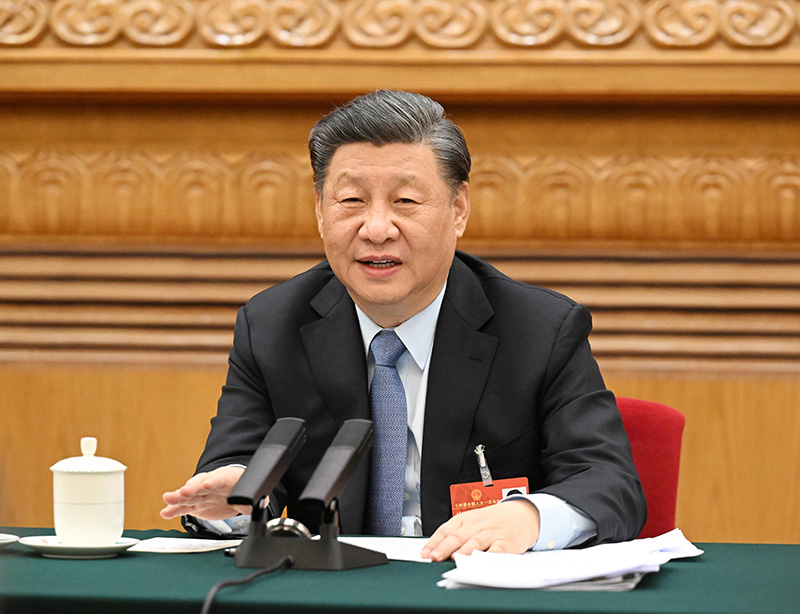
"江苏的发展,有一段时间,苏南、苏北不对称。" 2023年一次两会"下团组",习近平总书记讲起江苏发展曾经走过的一段弯路:苏北在发展冲动下,一度引进一些 低端产业。响水,一声暴雷,就是当时埋下的恶果。当时GDP上去了,但为若干年以后的灾害性事件埋下了根。 总书记的叮嘱鞭辟入里:"任何时候我们都不能走那种急就章、竭泽而渔、唯GDP的道路。这就是为什么要树牢新 发展理念。" 2023年3月5日,习近平总书记参加他所在的十四届全国人大一次会议江苏代表团审议。 发展理念是发展行动的先导,从根本上决定着发展成效乃至成败。总书记深刻指出:"我们谈高质量发展,不谈新 发展理念不行。" 十年前,总书记在党的十八届五中全会上创造性提出创新、协调、绿色、开放、共享的新发展理念,深刻总结国 内外发展经验教训和发展大势,为新时代中国经济提供了根本指引,"不再简单以国内生产总值增长率论英雄"。 十年来,他一次次作出决策部署,以理念之变引领发展之变。 2016年1月5日,重庆。推动长江经济带发展座谈会上,总书记开门见山:"今天可能要让你们失望了,这次讨论的 不是发展问题,而是保护的问题。" 他把科技自立自强摆在强国建设、民族复兴中考量。 ...
牢牢把握推动高质量发展这个主题——四论学习贯彻党的二十届四中全会精神
Xin Hua Wang· 2025-10-28 00:26
Core Viewpoint - High-quality development is the primary task for building a modern socialist country, emphasizing the need for a strategic focus on this theme during the "14th Five-Year Plan" period [1][2][3]. Group 1: Economic Growth and Innovation - During the "14th Five-Year Plan" period, under the strong leadership of the central government, China has implemented new development concepts, achieving significant quality and efficiency transformations in its economy [2]. - China's economic growth rate ranks among the top in major economies, with the country being a key driver of global economic growth [2]. - The national comprehensive innovation capability ranking improved from 14th in 2020 to 10th in 2024, indicating a strengthening of innovation momentum [2]. - The added value of high-tech manufacturing industries increased by 42% compared to the end of the "13th Five-Year Plan" period [2]. Group 2: Modernization and Industrial Structure - High-quality development is essential for advancing Chinese-style modernization, with a focus on transforming development methods, optimizing economic structures, and changing growth drivers [3]. - A modern industrial system is crucial for a modern nation, emphasizing the need to strengthen the real economy and maintain a reasonable proportion of manufacturing [3]. - The strategy includes optimizing traditional industries, nurturing emerging industries, and promoting high-quality development in the service sector [3]. Group 3: Technological Independence and Innovation - High-level technological self-reliance is a strategic support for high-quality development, with a focus on enhancing the national innovation system and boosting independent innovation capabilities [4]. - The strategy involves seizing opportunities from the new technological revolution and industrial transformation, emphasizing the importance of basic research and breakthroughs in key technologies [4]. - There is a call for deep integration of technological and industrial innovation, alongside the development of digital infrastructure to support new productive forces [4]. Group 4: Long-term Commitment to High-Quality Development - High-quality development is a comprehensive requirement for all aspects of economic and social development, necessitating long-term commitment across all regions [5]. - The focus is on practical actions and sustained efforts to achieve continuous and healthy economic growth and comprehensive social progress [5].
新华社评论员:牢牢把握推动高质量发展这个主题——四论学习贯彻党的二十届四中全会精神
Xin Hua She· 2025-10-27 16:55
Core Viewpoint - High-quality development is the primary task for building a modern socialist country, emphasizing the need to adhere to new development concepts and strategic deployments to achieve significant economic and social advancements [1][3]. Group 1: Economic Growth and Quality - During the "14th Five-Year Plan" period, under the leadership of the central government, China has implemented new development concepts, achieving quality and efficiency transformations, with the economy maintaining a leading growth rate among major economies [2][3]. - China's comprehensive innovation capability ranking improved from 14th in 2020 to 10th in 2024, indicating a significant enhancement in innovation momentum [2]. - The added value of high-tech manufacturing industries increased by 42% compared to the end of the "13th Five-Year Plan" period, showcasing substantial progress in industrial innovation [2]. Group 2: Modernization and Industrial Structure - High-quality development is essential for advancing Chinese-style modernization, with a focus on transforming development methods, optimizing economic structures, and changing growth drivers [3]. - A modern industrial system is crucial for a modern nation, emphasizing the need to strengthen the real economy and maintain a reasonable proportion of manufacturing [3]. - The strategy includes optimizing traditional industries, nurturing emerging industries, and promoting high-quality service sector development to lay a solid foundation for modernization [3]. Group 3: Technological Independence and Innovation - High-level technological self-reliance is a strategic support for high-quality development, with a focus on enhancing the national innovation system and boosting independent innovation capabilities [4]. - The emphasis is on seizing opportunities from the new round of technological revolutions and industrial transformations, integrating education, technology, and talent development [4]. - Continuous efforts are required in basic research and breakthroughs in key technologies to foster new productive forces and drive high-quality development [4]. Group 4: Long-term Commitment to High-Quality Development - High-quality development is a comprehensive requirement for all aspects of economic and social development, necessitating long-term commitment across all regions [5]. - The "15th Five-Year Plan" period aims to anchor high-quality development as a central theme, promoting sustainable economic growth and social progress through practical efforts [5].
宏观周报:国内前三季度GDP超目标增长,四中全会公布十五五规划-20251027
Zhe Shang Qi Huo· 2025-10-27 06:47
Report Industry Investment Rating No relevant content provided. Core Viewpoints - China's economy showed resilience in the first three quarters of 2025, with GDP exceeding the annual target. However, domestic economic indicators have been slowing since June, indicating weak domestic demand. The government needs to further strengthen policies to support economic growth. Additionally, international trade frictions, such as China's export controls on rare earths and the US's proposed additional tariffs on Chinese goods, may also pose challenges to the economy [3][16][17]. Summary by Directory I. Economic Situation - **GDP**: In the first three quarters of 2025, China's GDP reached 1,015,036 billion yuan, a year-on-year increase of 6.2%, exceeding the annual growth target of about 5%. In the third quarter, the actual GDP growth rate was 4.8% year-on-year, and the nominal GDP growth rate was 3.7% year-on-year [3]. - **Industrial Added Value**: In September, the industrial added value of large-scale industries increased by 6.5% year-on-year and 0.64% month-on-month. From January to September, the added value of high-tech manufacturing increased by 9.6% year-on-year, 0.1 percentage points higher than the previous month [17]. - **Fixed Asset Investment**: From January to September, fixed asset investment (excluding rural households) was 371,535 billion yuan, a year-on-year decrease of 0.5%. Real estate development investment was 67,706 billion yuan, a year-on-year decrease of 13.9% [3]. - **Social Retail Consumption**: In September, the total retail sales of consumer goods were 419.71 billion yuan, a year-on-year increase of 3.0%. From January to September, the growth rate was 4.5%. The growth rate of service retail sales from January to September was 5.2%, 0.1 percentage points higher than the previous value [3][17]. - **Import and Export Data**: In the first three quarters, China's total goods trade imports and exports were 33.61 trillion yuan, a year-on-year increase of 4%. In September, exports denominated in US dollars increased by 3.3% year-on-year, and imports increased by 7.4% year-on-year, both exceeding expectations. The trade surplus reached 90.5 billion US dollars [5]. - **Unemployment Rate**: In September, the national urban survey unemployment rate was 5.2%, 0.1 percentage points lower than the previous month [3]. - **PMI**: In September, the manufacturing PMI was 49.8%, up 0.4 percentage points from the previous month. The non-manufacturing PMI was 50%, down 0.3 percentage points from the previous month [6]. II. Financial Situation - **Social Financing Scale**: In September, the new social financing scale was 3.53 trillion yuan, a year-on-year decrease of 238.8 billion yuan. The stock of social financing scale at the end of September was 437.08 trillion yuan, a year-on-year increase of 8.7% [34]. - **Credit Data**: In September, credit increased by 129 billion yuan, a year-on-year decrease of 30 billion yuan. The demand recovery rhythm was uneven, and the structure continued to improve [35]. - **Money Supply**: As of the end of September, M2 increased by 8.4% year-on-year, M1 increased by 7.2% year-on-year, and M0 increased by 11.5% year-on-year [9]. III. Price Related - **CPI**: In September, the national consumer price index (CPI) decreased by 1.3% year-on-year and increased by 0.1% month-on-month. The core CPI excluding food and energy prices increased by 1.0% year-on-year, with the increase expanding for the fifth consecutive month [40]. - **PPI**: In September, the industrial producer price index (PPI) decreased by 2.3% year-on-year, with the decline narrowing by 0.6 percentage points compared to the previous month [40]. IV. Overseas Macro - **US Government Shutdown**: Since October 1, the US federal government has been shut down again. The shutdown has led to the suspension of economic data release and the stagnation of multiple public services, and its negative impact on the US economy is gradually emerging [45]. - **US Inflation**: In August, the US consumer price index (CPI) increased by 0.4% month-on-month and 2.9% year-on-year. The core CPI excluding food and energy increased by 0.3% month-on-month and 3.1% year-on-year [46]. - **US Economic Indicators**: In September, the US ISM manufacturing PMI was 49.1, and the non-manufacturing PMI was 50.0 [13]. V. Interest Rates and Exchange Rates - **Exchange Rates**: In October, the RMB exchange rate against the US dollar fluctuated within a narrow range. In the short term, the RMB exchange rate may continue to fluctuate widely, with the range expected to be between 7.0 and 7.2. In the long term, the trend will depend on the synergy between the strength of China's economic recovery and the Fed's monetary policy path [54]. - **Interest Rates**: The report provides data on various interest rates such as DR007, SHIBOR, LPR, and government bond yields, but no in-depth analysis is provided [55][56].
传达学习党的二十届四中全会精神
Xi An Ri Bao· 2025-10-27 06:28
Core Points - The meeting emphasized the importance of the 20th Central Committee's Fourth Plenary Session as a significant event in the journey towards the second centenary goal [2] - The session's approval of the proposal for the 15th Five-Year Plan is highlighted as a crucial programmatic document in the party's history [2] - The meeting called for a comprehensive understanding of the achievements during the "14th Five-Year" period and the development environment for the upcoming "15th Five-Year" period [2][3] Summary by Sections - **Strategic Goals**: The meeting focused on achieving the goal of basic socialist modernization, emphasizing the need to understand the developmental characteristics of Xi'an during the "15th Five-Year" period [3] - **Implementation of Policies**: It was stressed to fully implement the new development concept and align with the Central Committee's recommendations, addressing national missions and enhancing urban competitiveness [3] - **Promotion of Learning and Action**: The meeting called for a surge in learning and promoting the spirit of the plenary session, ensuring that the session's principles are deeply integrated into local governance and actions [3]
以推动高质量发展为主题,因地制宜发展新质生产力——论学习贯彻党的二十届四中全会精神
Ren Min Ri Bao· 2025-10-27 06:21
看发展动能,更加强劲。累计建成230多家卓越级智能工厂和1260家5G工厂,培育形成60多个新兴产业 领域国家先进制造业集群,国家级人工智能专精特新"小巨人"企业超400家……科技创新不断催生、引 领和壮大新质生产力,点燃高质量发展新引擎。 高质量发展是新时代的硬道理。党的二十届四中全会把推动高质量发展确定为"十五五"时期经济社会发 展的主题,既与"十四五"规划一脉相承,又在准确把握未来5年发展大势的基础上部署了战略任务,对 于我们继续紧紧抓住高质量发展这个首要任务、全面推进中国式现代化具有重大指导作用。 "十四五"时期,在以习近平同志为核心的党中央坚强领导下,我们紧紧围绕推动高质量发展这一主题, 深入践行创新、协调、绿色、开放、共享的新发展理念,持续推动质量变革、效率变革、动力变革,推 动中国经济在"量"上接连跨越新关口,在"质"上持续实现新突破。 发展新质生产力是推动高质量发展的内在要求和重要着力点。从"十四五"时期积极培育壮大新质生产力 的实践中,我们更能深刻理解为什么"十五五"时期要继续以推动高质量发展为主题,把因地制宜发展新 质生产力摆在更加突出的战略位置。 看发展结构,更加优化。传统产业转型升级, ...
以推动高质量发展为主题,因地制宜发展新质生产力
Xin Hua She· 2025-10-27 00:41
看发展底色,更加鲜明。"十四五"时期前4年单位国内生产总值能耗累计降低11.6%,建成全球最 大清洁发电体系,全社会用电量中每3千瓦时电就有1千瓦时绿电……降碳、减污、扩绿、增长协同推 进,绿色低碳转型步履坚实。 谋划部署"十五五"时期经济社会发展,全会把坚持高质量发展明确为必须遵循的一条重要原则,把 高质量发展取得显著成效放在主要目标的首位。当前,无论是破解仍然突出的发展不平衡不充分问题, 还是为基本实现社会主义现代化奠定更加坚实的基础,抑或是有效应对外部环境变化带来的各种不确定 性,都要求我们必须继续牢牢扭住高质量发展这个主题,坚持以经济建设为中心,完整准确全面贯彻新 发展理念,实现质的有效提升和量的合理增长,推动经济持续健康发展和社会全面进步。 如何推动高质量发展?最重要的是加快高水平科技自立自强,积极发展新质生产力,在推动科技创 新、加快培育新动能、促进经济结构优化升级上取得实质性、突破性进展。全会提出,抓住新一轮科技 革命和产业变革历史机遇,统筹教育强国、科技强国、人才强国建设,提升国家创新体系整体效能,全 面增强自主创新能力,抢占科技发展制高点,不断催生新质生产力。这一重要部署,必将科学指引培育 ...
“十五五将是怎样的五年”系列评论之一:续写“两大奇迹”新篇章,中国制度优势更加彰显
Huan Qiu Wang· 2025-10-26 23:31
Core Points - The 20th Central Committee of the Communist Party of China has approved the "Suggestions on Formulating the 15th Five-Year Plan for National Economic and Social Development," outlining a blueprint for China's development over the next five years [1] - The new development concept emphasizes high-quality development, innovation, coordination, green development, openness, and sharing, which are essential for China's economic and social progress during the 15th Five-Year Plan period [2][3] Group 1: New Development Concept - The new development concept is centered on innovation, coordination, green development, openness, and sharing, which are crucial for addressing various development challenges [2][3] - Innovation is highlighted as a key driver for creating higher quality living standards for the people, especially in the context of the ongoing new industrial revolution [2] - Coordination aims to address regional and social imbalances, ensuring that all demographics benefit from national development [3] Group 2: People-Centric Development - The development approach is firmly rooted in a people-centered philosophy, ensuring that all citizens can participate in and benefit from economic growth [2][4] - The concept of "soft needs" has emerged, encompassing not only material demands but also psychological and social expectations, emphasizing the importance of quality of life [4][5] Group 3: Institutional Advantages - China's socialist system allows for the concentration of resources to tackle significant challenges, which is a key factor in its rapid development and stability [6][8] - The successful implementation of the Five-Year Plans is attributed to the unique institutional advantages that provide strategic stability and efficient resource mobilization [8][11] Group 4: International Cooperation - China's development model, characterized by long-term strategic planning and coordination, offers a compelling framework for other nations facing complex challenges [12][13] - The Belt and Road Initiative exemplifies how China's approach can create development opportunities for partner countries, enhancing infrastructure and economic connectivity [10][12]