
经济全球化

Search documents
被蚊子叮咬后离死亡有多近?
Hu Xiu· 2025-07-10 09:04
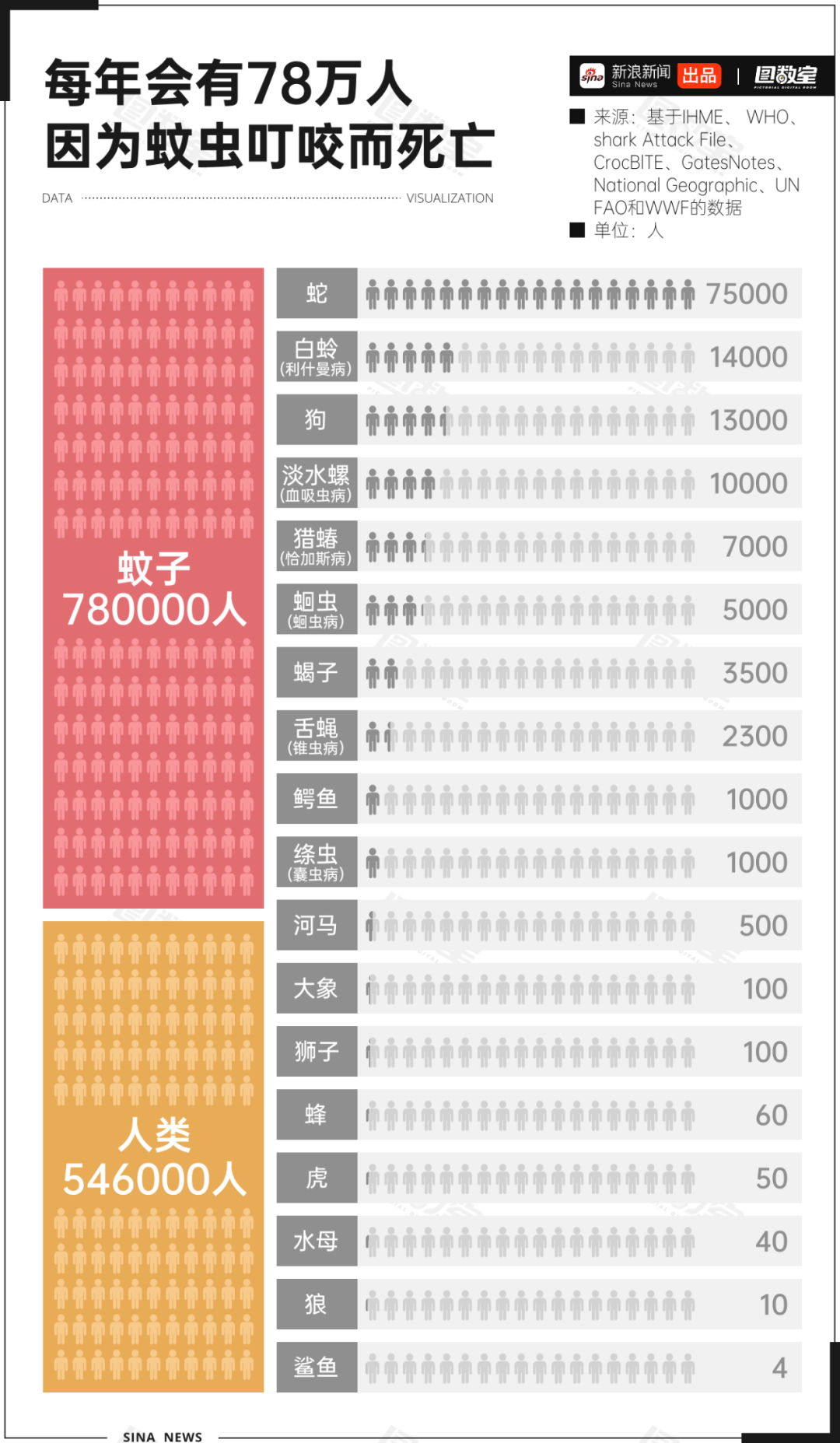
Group 1 - The article highlights that mosquitoes are responsible for approximately 780,000 deaths annually, making them the deadliest animals globally [1][6][5] - In China, mosquito-borne diseases such as dengue fever and malaria are on the rise, with dengue cases experiencing a significant increase in recent years [2][9][11] - The distribution of mosquitoes in China is not limited to southern provinces; several northern provinces also have high mosquito populations [15][17] Group 2 - The main mosquito-borne diseases in China include dengue fever, malaria, and Japanese encephalitis, all of which can have severe health impacts [9][11] - Dengue fever is currently the most concerning mosquito-borne disease in China, with a rapid increase in cases reported in 2023 [9][11] - The spread of mosquito-borne diseases is closely linked to economic development, population mobility, and climate change, with global dengue cases increasing approximately 30 times over the past 50 years [11] Group 3 - The most common mosquito species in China include Aedes albopictus, Culex pipiens, and Anopheles sinensis, with a total of 418 known species [19] - Mosquito activity peaks at specific times, with different species exhibiting varying feeding patterns, which can influence their impact on human populations [20][21] - Mosquito saliva contains allergens that can cause significant immune responses in humans, leading to more severe reactions to bites from certain species [25]

淬炼金砖成色 展现金砖力量(和音)
Ren Min Ri Bao· 2025-07-09 22:32
Group 1 - The BRICS cooperation mechanism advocates for openness, inclusiveness, and win-win cooperation, avoiding camp confrontation and not targeting any country [1][3] - The 17th BRICS Summit took place in Rio de Janeiro, Brazil, from July 6 to 7, 2023, marking the first summit after the inclusion of new members Indonesia and ten partner countries [1][2] - The expansion of BRICS is seen as enhancing its influence and ability to uphold multilateralism and improve global governance [1][2] Group 2 - The BRICS countries are experiencing a collective GDP growth rate of 4% in 2024, significantly surpassing the global average, highlighting their role as a driving force for global development [2] - China is actively implementing the "high-quality development" concept proposed by President Xi Jinping, focusing on cooperation and innovation among BRICS nations [2][3] - The BRICS mechanism is positioned as a key player in promoting fair and just global governance, countering hegemony, and advocating for the rights of developing countries [3]
李强会见世贸组织总干事伊维拉
证监会发布· 2025-07-08 01:26
Core Viewpoint - The article emphasizes the significant changes in the global trade landscape, highlighting the rise of unilateralism and protectionism, which pose challenges to international economic order and development [1][2]. Group 1: China's Position and Actions - China is committed to upholding multilateralism and free trade, aiming to work with the international community to restore the global economy [1]. - The Chinese government plans to implement more proactive macroeconomic policies and expand domestic demand strategies, leveraging its large market of over 1.4 billion people to stimulate demand [1]. - China will introduce more measures for autonomous and unilateral opening, adhering strictly to WTO principles and market rules, while sharing development opportunities with other countries [1]. Group 2: WTO's Role and Challenges - The WTO faces significant challenges due to the impact on the multilateral trade system, with a call for member countries to enhance dialogue and cooperation to promote sustainable development [2]. - The WTO appreciates China's long-term support for the least developed countries and recognizes its important role in the multilateral trade system, looking forward to collaborating on WTO reforms [2].
李强会见埃塞俄比亚总理阿比
证监会发布· 2025-07-06 23:17
Core Viewpoint - The meeting between Chinese Premier Li Qiang and Ethiopian Prime Minister Abiy highlights the strong bilateral relationship and cooperation between China and Ethiopia, emphasizing the commitment to deepen collaboration across various sectors and enhance multilateral communication [1][2]. Group 1: Bilateral Cooperation - China and Ethiopia have maintained a sincere and supportive relationship for 55 years, positioning their cooperation at the forefront of China-Africa collaboration [1]. - China announced significant new measures, including 100% tariff exemptions on products for 53 African countries, aiming to further enhance cooperation with Ethiopia [1]. - The two countries plan to promote the sustainable development of flagship projects like the Addis Ababa-Djibouti Railway and expand trade and investment in sectors such as infrastructure, new energy vehicles, green industries, e-commerce, and artificial intelligence [1]. Group 2: Multilateral Engagement - Both countries, as important global South nations, aim to strengthen communication and coordination within multilateral mechanisms like the United Nations and BRICS, advocating for true multilateralism and the maintenance of economic globalization and free trade [1]. - Ethiopia appreciates China's role in international affairs, particularly in global development, and expresses a desire to deepen political trust and cooperation in various fields, including trade, industry, and tourism [2].
【李强会见埃塞俄比亚总理阿比】7月6日讯,李强指出,中国将一如既往支持埃塞自主探索符合本国国情的发展道路,愿同埃塞方在高质量共建“一带一路”框架下,推动亚吉铁路这一旗舰工程可持续发展,扩大双边贸易投资规模,拓展基础设施、新能源汽车、绿色产业、电子商务、人工智能等领域合作,加强旅游、青年、教育等方面合作。中国和埃塞同为全球南方重要国家,中方愿同埃塞方加强在联合国、金砖国家等多边机制的沟通协调,推动各方一道践行真正的多边主义,坚定维护经济全球化和自由贸易,为世界注入更多稳定性和正能量。
news flash· 2025-07-06 14:08
Core Viewpoint - China expresses unwavering support for Ethiopia's independent development path and aims to enhance cooperation in various sectors under the Belt and Road Initiative framework [1] Group 1: Bilateral Cooperation - China is committed to promoting the sustainable development of the flagship project, the Addis Ababa-Djibouti Railway [1] - There is an intention to expand bilateral trade and investment scale [1] - Cooperation will be extended to infrastructure, new energy vehicles, green industries, e-commerce, and artificial intelligence [1] Group 2: Multilateral Engagement - Both countries, as significant representatives of the Global South, will strengthen communication and coordination in multilateral mechanisms such as the United Nations and BRICS [1] - The goal is to promote genuine multilateralism and uphold economic globalization and free trade [1] - This collaboration aims to inject more stability and positive energy into the world [1]
法国总统马克龙会见王毅:期待再次访华
中国基金报· 2025-07-05 04:27
Group 1 - The core viewpoint emphasizes the importance of strengthening Sino-French relations and cooperation in international economic and financial governance to address global challenges and promote multilateralism [1][2] - France expresses a desire for a more balanced economic relationship with China and welcomes increased Chinese investment in France [1] - Both parties recognize the strategic value of their relationship amidst global instability and advocate for a multipolar world and inclusive economic globalization [2] Group 2 - China is committed to high-quality development and aims to create a first-class business environment that is market-oriented, law-based, and internationalized [2] - The discussion included various global issues such as the Ukraine crisis, the situation in Gaza, and the Iran nuclear issue, indicating a shared interest in international stability [3]
法国总统马克龙会见王毅
news flash· 2025-07-05 00:01
马克龙请王毅转达对习近平主席的良好祝愿和友好情谊,表示法中在倡导多边主义、遵守国际法等诸多 重要问题上有着广泛共识。当今世界不确定、不可预测因素增多,法中作为联合国安理会常任理事国承 担着更为重要的责任。法方期待同中方加强国际经济、金融、全球治理等方面政策协调,共同应对全球 挑战,为多边主义注入更多活力,防止世界陷入霸权冲突和阵营对立。在建交50周年之际,欧中应作出 战略选择,做彼此可预测、可信赖的朋友和伙伴。法方高度重视发展法中关系,欢迎中国加大对法投 资,发展更为平衡的经贸关系。我期待适时再次访华。 王毅转达了习近平主席对马克龙总统的亲切问候,表示中方愿同法方共同落实好两国元首重要共识,筹 备好下阶段高层交往,深化各领域合作。中法是全面战略伙伴,也是世界两大稳定性力量。国际形势越 是动荡,中法关系的战略价值就愈加凸显。中方认为,多极化潮流不可阻挡,全球化趋势不可逆转,应 以联合国成立80周年为契机,进一步强化联合国核心地位,切实发挥其应有作用。我们愿同法方加强战 略沟通和团结协作,共同践行多边主义,反对单边霸凌,抵制阵营对立,为变乱交织的世界注入更多确 定性和可预测性,推动平等有序的世界多极化和普惠包容的 ...
以实实在在改革举措兑现开放承诺
Zheng Quan Shi Bao· 2025-07-04 17:20
Group 1 - The Shanghai Free Trade Zone's pilot measures will be replicated and promoted nationwide, covering areas such as intellectual property protection, government procurement reform, labor rights protection, state-owned enterprise reform, and environmental protection [1] - The initiative reflects China's commitment to promoting an open world economy amidst rising unilateralism and protectionism, with significant policy documents released this year to enhance foreign investment and financial services [1] - The measures aim to address urgent needs of enterprises and the public, particularly in areas like intellectual property protection and cross-border data flow, responding to strong calls for reform from foreign investors [2] Group 2 - The ultimate goal of the reforms is to create a fairer market competition environment and a more transparent and stable institutional framework, requiring collaboration among various departments and localities [2] - Future reforms will focus on increasing transparency in competitive projects, optimizing procurement processes through electronic means, and encouraging bilingual procurement announcements to enhance the effectiveness of government procurement reforms [2]
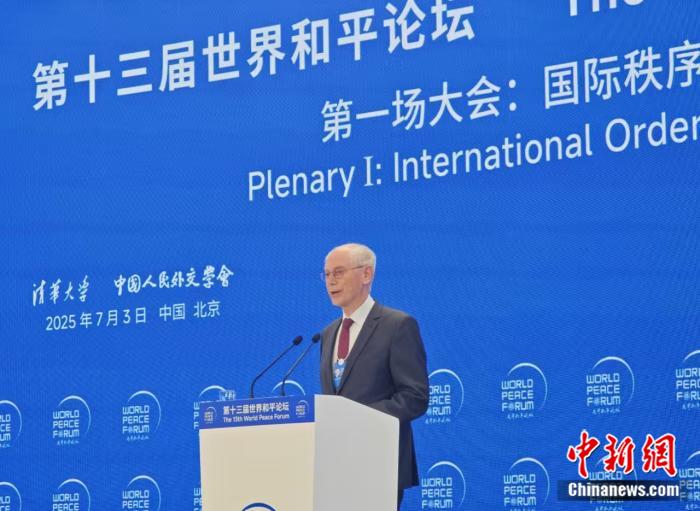
欧洲理事会前主席范龙佩呼吁各方对话:关税战没有赢家 | 世界观
Zhong Guo Xin Wen Wang· 2025-07-04 01:55
中新网北京7月4日电(张东方薛凌桥林勐男)7月2日至4日,第十三届世界和平论坛在北京举行。3日,欧 洲理事会前主席、比利时前首相赫尔曼·范龙佩(Herman Van Rompuy)在出席该论坛时表示,关税战会打 击国与国之间的信任,其结果是人人皆输。他呼吁各方对话,回归现实主义。 本届论坛以"共促世界和平与繁荣:共担、共享、共赢"为主题,探讨如何通过加强国际合作、共同承担 维护和平、促进发展的责任,共享全球化带来的机遇,最终实现世界各国的共同繁荣和持久和平。 范龙佩说,关税战会打击国与国之间的互相信任。"尤其是,关税战并非基于理性的经济考量。因为, 这既不符合本国利益,也无益于全球经济。" 在他看来,关税战注定以失败告终,但在此过程中将造成极大破坏,各国不应给已经动荡不安的局势再 添不稳定因素,民众理应免受不公平贸易行为的伤害。 范龙佩认为,维护或重建信任离不开双边和多边对话。即使存在深刻分歧,对话仍至关重要。"在政治 条件允许的情况下,只要对话从未中断,重建紧密联系就会更加容易。" 他还提及中欧贸易关系,并对即将举行的新一次欧中领导人会晤表达了期待。 7月3日,欧洲理事会前主席、比利时前首相赫尔曼·范龙佩( ...
为世界经济注入中国动能
Jing Ji Ri Bao· 2025-07-02 22:07
Group 1 - The 16th Summer Davos Forum held in Tianjin signals China's commitment to contributing to global economic growth amid increasing uncertainties in the global trade environment [1] - China has maintained a stable contribution rate of around 30% to global economic growth, with a GDP growth of 5.4% year-on-year in the first quarter [1] - China is set to implement its 15th Five-Year Plan, demonstrating a long-term vision for economic stability and growth [1] Group 2 - China's market expansion and upgrade create significant opportunities for international trade, as it remains the world's second-largest consumer market for over a decade [2] - The demand for consumption in China is shifting towards high-income levels, with notable growth in emerging markets such as smart devices and cultural tourism [2] - China's technological innovation in fields like AI, 5G, and renewable energy is fostering a competitive and vibrant innovation ecosystem, promoting international collaboration [2] Group 3 - There is a strong call for more countries and enterprises to invest in China, emphasizing the potential for mutual growth and shared opportunities [3]