
合成生物学

Search documents
写在天津大学建校130周年之际:百卅学府 向新而行
Zhong Guo Qing Nian Bao· 2025-09-27 22:33
Core Insights - Liu Xiuyun, a rising academic star, returned to Tianjin University to teach after studying at prestigious institutions, embodying the university's spirit of "self-improvement" and national service [1][2] - Tianjin University, celebrating its 130th anniversary, showcases significant breakthroughs in various fields, including brain-computer interface technology and new energy chemical catalysis [1][3] - The university emphasizes the importance of aligning research with national needs, fostering a culture of practical and impactful scientific inquiry [3][5] Group 1: Academic Contributions - Liu Xiuyun completed her studies and postdoctoral research at top universities in a short time, demonstrating exceptional learning ability [2] - Tianjin University's chemical engineering discipline ranks among the top 0.1% globally, reflecting its historical connection to national development [3] - The university's faculty and students are actively engaged in research that addresses real-world industrial challenges, such as the development of new technologies in chemical engineering [3][5] Group 2: Educational Philosophy - The university's motto "seeking truth from facts" has been a guiding principle for over a century, emphasizing practical application in education and research [6][7] - Recent initiatives include the establishment of new academic programs and a focus on interdisciplinary studies to meet the evolving demands of the industry [10][12] - Tianjin University aims to cultivate a new generation of leaders equipped to tackle future challenges, aligning educational outcomes with national strategic needs [10][12] Group 3: Innovation and Industry Collaboration - Faculty members are encouraged to engage in research that directly benefits industry, reflecting a shift in academic evaluation criteria towards practical contributions [4][5] - The university has launched programs targeting emerging fields such as synthetic biology and brain-computer interfaces, aiming to produce competitive talent in these areas [11][12] - Tianjin University is committed to fostering innovation through collaboration with industries, ensuring that research translates into real-world applications [12][13]
从技术突破到产值跃迁 常德“生物制造谷”加速崛起
Xin Hua Cai Jing· 2025-09-26 14:12
Core Viewpoint - The biomanufacturing sector is recognized as a key engine for the new technological revolution and industrial transformation, with Changde aiming to establish itself as a national-level industrial cluster by 2025 [1][4]. Group 1: Industry Development - Changde has nurtured several biopharmaceutical companies, including YunGang Bio and LiEr Bio, with 35 core enterprises in synthetic biomanufacturing expected to achieve a production value exceeding 7.5 billion yuan by mid-2025 [1][4]. - YunGang Bio has developed a GMP-standard automated production line for extracting and synthesizing ursodeoxycholic acid from animal bile, achieving a conversion rate of over 99% and capturing more than one-third of the domestic market for its core product [2][3]. - Changde's synthetic biomanufacturing industry has shown significant growth, with a production value of 7.689 billion yuan as of July 2025, reflecting a year-on-year increase of 23.52% [3]. Group 2: Technological Innovation - The foundation of synthetic biology and biomanufacturing is held by companies like MuEn Bio, which has identified over 320,000 proprietary microbial strains, enabling high-throughput screening for bioactive microorganisms and their metabolites [2][3]. - MuEn Bio has established a comprehensive DREAM technology platform that covers the entire process from resource discovery to product development, enhancing its competitive edge in biomanufacturing [3]. Group 3: Ecosystem and Support - Changde is building a comprehensive industrial ecosystem with support from policies, talent acquisition, and financial backing, aiming to accelerate the transition from technological breakthroughs to large-scale implementation [4][5]. - The establishment of a 5 billion yuan biomanufacturing mother fund and a 1 billion yuan innovation guidance fund is part of Changde's strategy to inject "patient capital" into the biomanufacturing sector [4]. Group 4: Future Prospects - By 2028, Changde aims to achieve a production value of over 30 billion yuan in synthetic biomanufacturing and to cultivate more than 100 enterprises in the sector, including over 50 high-tech companies [6]. - The biomanufacturing industry in China has reached a total scale of nearly 1 trillion yuan, with fermentation capacity accounting for over 70% of the global market, indicating significant growth potential [5][6].
常青科技分析师会议-20250926
Dong Jian Yan Bao· 2025-09-26 13:03
Report Summary 1. Report Industry Investment Rating No information provided in the document. 2. Core Viewpoints - The company is the first in China to successfully put into production a TBS production device. TBS has excellent performance and a wide range of downstream applications, with good market prospects under the trend of industrial upgrading and import substitution [24][37]. - The company attaches great importance to the strategic value and development potential of cutting - edge technology fields such as synthetic biology. The Taizhou project (Phase I) is an extension of the company's product matrix and technology accumulation, aiming to enrich product categories [25][30][32]. - The company's R & D adopts a model of internal R & D combined with university cooperation. The existing R & D team is mainly composed of senior technical backbones with over 10 years of industry experience, which is in line with the current R & D needs of the company [27][28]. - The company's products are mainly high - molecular new material special monomers and special additives, which have the characteristics of small dosage, great effect, and high added value in the downstream high - molecular new material industry system [38]. 3. Summary According to the Directory 3.1 Research Basic Situation - The research object is Changqing Technology. The reception time was on September 26, 2025. The listed company's reception personnel included the chairman and general manager, the director and board secretary, the financial controller, and the independent director [17]. 3.2 Detailed Research Institutions - The research institutions mainly include investors and others [20]. 3.3 Research Institution Proportion No information provided in the document. 3.4 Main Content Information - **Product Application and Market**: TBS has been sent for sampling and sales in multiple industries and is expected to be applied in more industries. The company's products can be used in multiple fields of the big - health industry, such as high - end medical consumables, biomedicine, and food packaging [24][26]. - **Project Planning**: The Taizhou project (Phase I) is an extension of the company's product matrix and technology accumulation. The second - and third - phase plans will be scientifically demonstrated and decided based on the operation results of the first - phase project, market trends, and R & D progress [25][30][35]. - **New Product Promotion and Production Capacity**: Some new products of the company's fund - raising projects have been sent to customers for sampling or obtained orders, and the production capacity and benefits are gradually being released. The seventh - phase project is in the trial - production stage [27][31][41]. - **R & D and Technology**: The company's R & D adopts a combination of internal R & D and university cooperation. The company's unique technology path is difficult to be imitated by competitors, and the company attaches great importance to technology confidentiality [27][28][34]. - **Market and Sales**: The company's products are sold overseas, with an export proportion of about 35% during the reporting period, mainly to Europe, Japan, South Korea, Southeast Asia and other countries or regions [24][33][37]. - **Production Capacity and Performance**: The company's production capacity is in a stable and rising trend. The production capacity of the fund - raising project is gradually climbing. Regarding the third - quarter performance, please refer to the company's subsequent regular reports [41].

双模CRISPR系统能同时开关不同基因
Ke Ji Ri Bao· 2025-09-24 23:47
Core Insights - A new dual-mode CRISPRa/i gene editing system has been developed by South Korean scientists, allowing simultaneous "activation" and "suppression" of different genes, overcoming the limitations of existing CRISPR technology which primarily focuses on gene suppression [1][2]. Group 1: Technology Development - The new system was developed through collaboration between the Korea Advanced Institute of Science and Technology and the Korea Institute of Chemical Technology [1]. - The dual-mode gene scissors enable precise control of gene expression, akin to an electrical switch, which is crucial for optimizing metabolic pathways in synthetic biology [1][2]. Group 2: Performance Metrics - In experiments, the new system demonstrated significant performance improvements: protein expression levels increased by 4.9 times during activation experiments, while protein production decreased by 83% during suppression experiments [2]. - The system successfully achieved simultaneous regulation of two genes, with one gene's activity increased by 8.6 times and the other gene suppressed by 90% [2]. Group 3: Industry Implications - This dual-mode CRISPR system is expected to provide powerful tools for metabolic pathway optimization, gene network research, and bacterial functional genomics, potentially enhancing the efficient production of high-value compounds, biofuels, and pharmaceuticals [2].
先进制造:产业图谱、成长底层逻辑与主要赛道(附163页PPT)
材料汇· 2025-09-23 14:18
Core Viewpoint - The article emphasizes the acceleration of a new technological revolution and industrial transformation in advanced manufacturing, highlighting China's leading position in manufacturing output, growth rate, and GDP contribution globally [6][12]. Group 1: Industry Landscape and Growth Logic - China's manufacturing sector has shown a compound annual growth rate of approximately 5.4% from 2020 to 2023, while the U.S. manufacturing sector had a compound annual growth rate of about 5.0% from 2020 to 2022 [6]. - The article identifies five key challenges faced by Chinese manufacturing enterprises, including supply chain management, user demand for online services, IT/OT integration, economic downturns, and marketing channel transformations [7]. Group 2: Development Directions of Advanced Manufacturing - The future paradigm of manufacturing is characterized by high quality and efficiency, resilient intelligence, and ecological innovation [9]. - The traditional economic growth model is deemed unsustainable, necessitating the construction of new growth drivers [10][14]. Group 3: Growth Logic of Advanced Manufacturing - Advanced manufacturing is essential for China's transition from high-speed growth to high-quality development, serving as a foundation for overcoming the "middle-income trap" [16]. - Historical data shows that only 13 out of 101 middle-income economies successfully transitioned to high-income status, emphasizing the importance of technological innovation and industrial upgrading [16]. Group 4: Industry Map of Advanced Manufacturing - The article outlines six forward-looking tracks for future industry development, including future manufacturing, future information, future materials, future energy, future space, and future health [22][24]. - Future manufacturing focuses on intelligent manufacturing, bio-manufacturing, and advanced materials, aiming to break through key technologies and promote industrial internet development [21]. Group 5: Bio-Manufacturing - Bio-manufacturing is defined as the production of goods and services using biological systems at a commercial scale, with significant potential for economic and environmental benefits [28][30]. - The article discusses the transition from traditional production methods to advanced bio-manufacturing, highlighting its advantages in cost reduction, efficiency, and environmental sustainability [35][36]. Group 6: Synthetic Biology - Synthetic biology is presented as a transformative approach that allows for the design and reconstruction of biological systems, enabling the production of desired substances through engineered microorganisms [41][42]. - The article outlines the core technologies of synthetic biology, including gene editing, chassis cell selection, and product purification, emphasizing its potential to enhance production efficiency and expand product types [57][58]. Group 7: Carbon Emission Reduction through Bio-Manufacturing - Bio-manufacturing can achieve significant carbon emission reductions, with potential reductions exceeding 60% for various bio-based chemical products [79]. - The article highlights the cost advantages of bio-based products in the context of carbon tax policies, indicating that bio-based chemical products can significantly lower carbon tax costs compared to fossil-based products [87].


江南大学邓禹教授团队:基于人工智能的大肠杆菌核心启动子设计与强度调控方面的研究成果
合成生物学与绿色生物制造· 2025-09-23 03:52
Core Insights - The article discusses significant advancements made by Professor Deng Yu's research team at Jiangnan University in the design and strength regulation of Escherichia coli core promoters, published in Nucleic Acids Research [1][5] - The research addresses the challenges in accurately predicting and rationally designing bacterial core promoters, which are crucial for transcription initiation [1][2] Research Progress - The team developed a comprehensive platform that integrates rational library construction, predictive modeling, and generative design to achieve programmable regulation of E. coli core promoters [2][3] - They introduced the Mutation-Barcoding-Reverse Sequencing (MBRS) strategy, creating a high-quality dataset of 112,955 promoters, covering a 16,226-fold expression range [2][3] Model Performance - A Transformer model trained on this dataset achieved high prediction accuracy with a correlation coefficient of R = 0.87, revealing attention patterns consistent with classical motifs and contextual dependencies [3] - The platform can generate novel promoters with precise target strengths, achieving a correlation coefficient of R = 0.95, and demonstrated good generalization across different genetic backgrounds (R = 0.93) [3] Application and Impact - The designed promoters exhibited stable modular "plug-and-play" regulatory effects in both constitutive and inducible systems, contributing to the optimization of microbial cell factories [3][6] - The research has been supported by various funding sources, including the National Key Research and Development Program and the National Natural Science Foundation [5]

川宁生物:公司目前的维生素类产品有肌醇,后续还会有一些维生素类、氨基酸类等合成生物学产品推出
Mei Ri Jing Ji Xin Wen· 2025-09-22 08:13
Group 1 - The company currently offers inositol as its vitamin product and plans to launch additional vitamin and amino acid products in the future [1]
北交所化工新材专题报告:开源证券氨基酸多领域需求扩张与技术升级,无锡晶海引领高附加值赛道
KAIYUAN SECURITIES· 2025-09-21 08:14
Group 1 - The amino acid industry is experiencing a multi-field demand resonance, driven by technological upgrades and high-end transformation, with domestic companies like Wuxi Jinghai accelerating breakthroughs in high-end pharmaceutical raw materials [3][11][23] - The global amino acid production scale surpassed 10 million tons in 2021 and is expected to reach 13.8 million tons by 2027, while the global market size was $26.19 billion in 2021 and is projected to grow to $49.42 billion by 2030 [17][19][22] - Amino acids are widely used in pharmaceuticals, agriculture, health care, food feed, and cosmetics, with applications expanding due to increasing public awareness of health and nutrition [3][20][21] Group 2 - The North Exchange chemical new materials industry experienced a decline of 1.62% in the week from September 15 to September 19, 2025, with various sub-industries showing different levels of decrease [4][25][26] - Key stocks in the North Exchange chemical new materials sector that performed well during the week included Sanwei Equipment (+22.53%), Hanwei Technology (+15.26%), and Huitong New Materials (+5.68%) [33][35] - The overall performance of the North Exchange chemical new materials industry was weak, with all sub-industries experiencing declines, including battery materials (-3.93%) and non-metal materials (-4.36%) [26][30][32]
专家:未来淀粉生产可脱离农业种植,让人类有太空生存能力
Guan Cha Zhe Wang· 2025-09-21 07:50
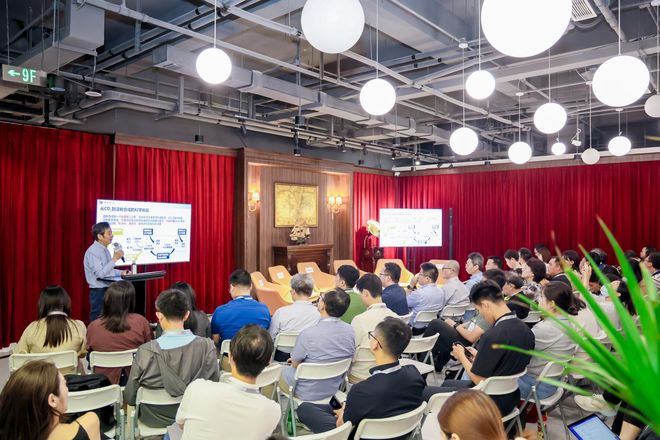
Core Insights - The breakthrough in artificial starch synthesis through synthetic biology allows for starch production without reliance on agricultural resources such as land and freshwater, potentially reshaping the landscape of biological manufacturing and agricultural production [1][3]. Group 1: Synthetic Biology Overview - Synthetic biology, originating from the term coined by French chemist Stéphane Leduc in 1911, is an interdisciplinary field that combines biology, genomics, engineering, and informatics to design biological systems and even create new life [3]. - The artificial synthesis of starch represents a milestone in synthetic biology, moving from natural photosynthesis processes to engineered methods that utilize carbon dioxide, water, and hydrogen as raw materials [3][4]. Group 2: Technological Advancements - The research team led by Ma Yanhe successfully identified the optimal pathway from 6,568 biochemical reactions, addressing challenges in thermodynamic matching and metabolic flow balance to synthesize starch [4]. - The latest version of the artificial starch synthesis pathway has improved energy conversion efficiency by 3.5 times and reduced synthesis time from 2-3 months to just a few days, indicating a significant advancement in industrial starch production capabilities [6]. Group 3: Market Potential - The global synthetic biology market has grown from $5.3 billion in 2018 to over $17 billion in 2023, with an average annual growth rate of 27%, and is projected to reach nearly $50 billion by 2028 [8]. - The integration of artificial intelligence in synthetic biology is enhancing the rational design process, expanding applications to complex molecules such as sucrose, hexose, and biodegradable materials, providing new solutions for the food, energy, and pharmaceutical industries [6]. Group 4: Event and Collaboration - The "Good Hope Science Salon" event, co-hosted by various organizations, aims to create a platform for impactful interdisciplinary collaboration and exchange in the field of synthetic biology [10]. - Over 100 experts, scholars, and industry leaders participated in discussions about technological advancements and commercialization prospects in synthetic biology [6].
康弘药业:推动国际化管线上市 竞逐前沿技术赛道
Zhong Guo Zheng Quan Bao· 2025-09-19 20:43
Core Viewpoint - 康弘药业 has made significant progress during the "14th Five-Year Plan" period, focusing on core technologies and expanding its product matrix in ophthalmology, psychiatry/neuroscience, and oncology, leading to a steady increase in performance and high-quality development [1] Financial Performance - The company's operating revenue increased from 3.605 billion yuan in 2021 to 4.453 billion yuan in 2024, while the non-net profit rose from 301 million yuan to 1.184 billion yuan during the same period [1] - In the first half of 2025, the operating revenue was 2.453 billion yuan, a year-on-year increase of 6.95%, and the non-net profit was 723 million yuan, up 6.51% [1] Development Philosophy - The company adheres to a development philosophy centered on market orientation, innovation, quality, and talent, aiming to create innovative products and services that benefit the public [2] Risk Management and Innovation - 康弘药业 balances innovation and risk management by conducting thorough research and making accurate judgments, focusing on policy risk assessment, market demand validation, and a well-structured R&D pipeline [3] Product Strategy - 康弘药业 aims to develop long-lifecycle blockbuster products, with 康柏西普 being a prime example, generating 1.345 billion yuan in revenue in the first half of 2025, accounting for 54.83% of total revenue [3] - The company has launched 利非司特滴眼液, the first of its kind in China, targeting the large dry eye patient population [4] Market Potential - The dry eye medication market in China is projected to reach 4.79 billion yuan in 2024, with a compound annual growth rate of 16% from 2020 to 2024, providing 康弘药业 with significant growth opportunities [5] Technological Advancements - 康弘药业 is investing in cutting-edge technologies such as gene therapy, antibody-drug conjugates, and synthetic biology, with ongoing clinical trials for various innovative products [6][7]
