
低碳化

Search documents
费尼亚发布新型燃油系统创新技术产品矩阵
Zhong Guo Qi Che Bao Wang· 2025-11-14 05:45
• PHINIA将在2025年国际内燃机与动力装备博览会上展示其新型柴油甲醇双燃料喷射新技术创新成果,以支持满足国六B及未来排放法规。 在全球内燃机技术迈向低碳化、高效化的浪潮中,费尼亚(PHINIA)作为领先的燃料喷射系统供应商,在11月12日至14日举办的2025 年国际内燃机与 动力装备博览会(2025 ICE&PE)上展示了多项燃油系统创新技术,这些产品覆盖了从柴油到氢能、甲醇等替代燃料的全方位解决方案,体现出费尼亚在重 型商用车、船电发动机、轻型车辆及非道路应用领域的深厚技术积累。 超高压喷射系统在中国市场受青睐 费尼亚是全球汽车市场首家推出500bar超高压汽油直喷系统的供应商。目前,该系统已配装长安新蓝鲸动力平台,用于xEV车型,现以在长安汽车的十 余款车型上应用。通过精细雾化、新型喷油器和锻造油轨等先进技术,可实现更充分燃烧,降低后处理成本。此外,费尼亚的智能控制软件支持多种喷油模 式,优化全时域、全速域、全温域、全场域等全场景性能,并兼容各类燃油与汽油发动机平台。 双燃料喷射系统兼顾高效与低碳 费尼亚展示了多款应用于柴油及双燃料喷射系统的新产品。在双燃料喷射器方面,费尼亚推出柴油甲醇双喷油器 ...

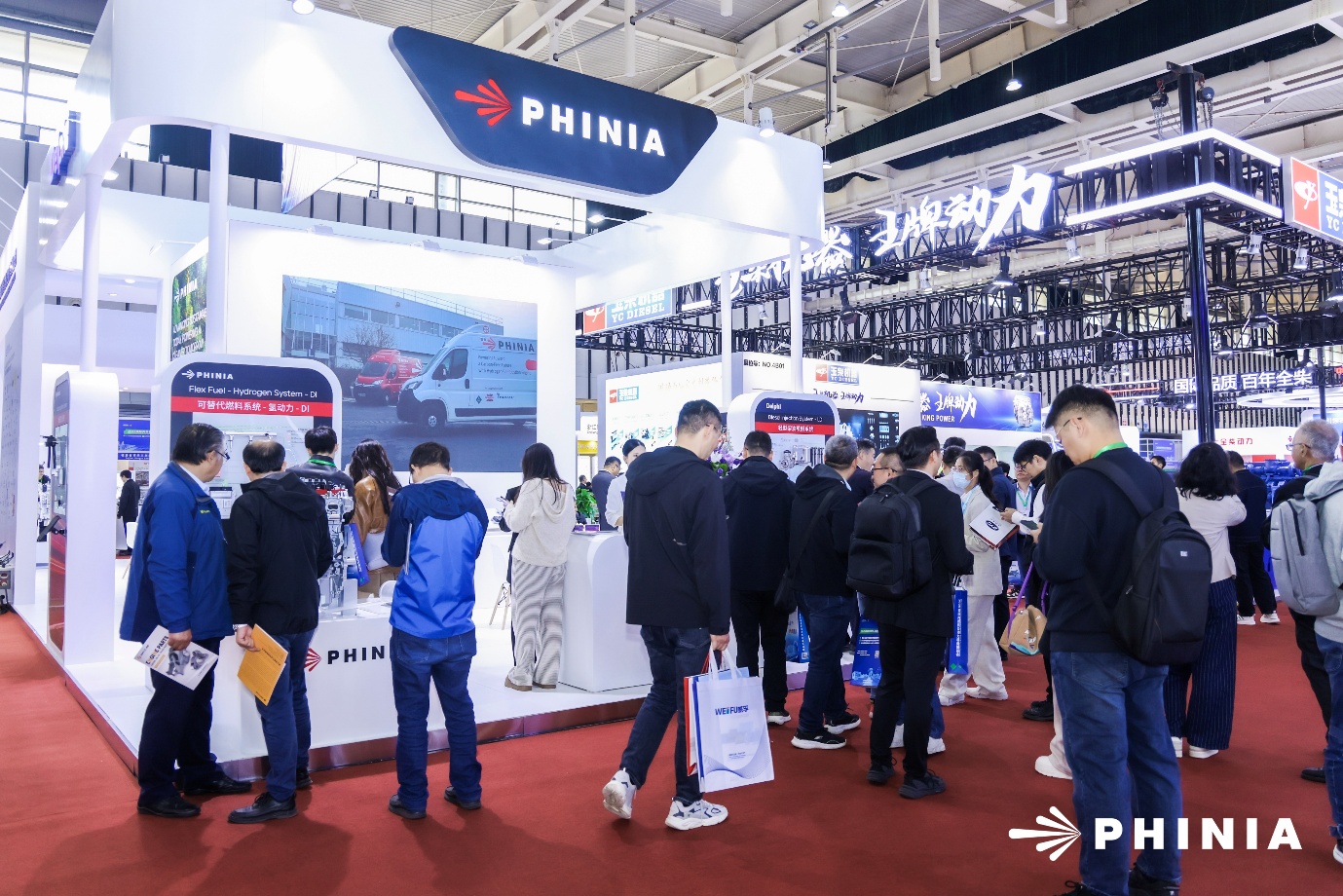
潍柴/玉柴/解放/云内/全柴等阵容强大 2025内燃机展有啥看点?|头条
第一商用车网· 2025-11-12 09:45
Core Viewpoint - The 2025 International Internal Combustion Engine and Power Equipment Expo showcased innovations in the internal combustion engine and power systems, focusing on low-carbon, electrification, and intelligent directions, highlighting the diverse and integrated innovation landscape of the power industry [1]. Group 1: Weichai Power - Weichai exhibited 9 engine models, including the WP16NG-4.0 gas engine, which boasts a displacement of 15.7 liters, rated power of 750 horsepower, and peak torque of 3400 Nm [3][5]. - The WP16NG-4.0 gas engine features a 6% reduction in fuel consumption compared to diesel vehicles, potentially saving customers 150,000 yuan annually [5]. - The WP2H lightweight diesel engine, designed for light commercial vehicles, has a displacement of 1.994 liters, maximum power of 190 horsepower, and maximum torque of 420 Nm, offering excellent fuel efficiency [7]. Group 2: Jiefang Power - Jiefang Power showcased 7 products, including the CA4DT2-E68 series diesel engine and CA6SM6-E6N series natural gas engine, emphasizing a strong lineup in both diesel and natural gas categories [9][11]. - The CA6SM6 natural gas engine delivers a maximum power of 506 horsepower and a maximum torque of 2400 Nm, featuring a B10 lifespan of 1.5 million kilometers [11]. - The CA4DT2 diesel engine, with a displacement of 2.44 liters, offers high power and reliability, meeting blue card light truck specifications with a maximum power of 180 horsepower and torque of 500 Nm [13]. Group 3: Yuchai Machinery - Yuchai presented 8 key products, including the YCK05H hydrogen fuel engine and YCK16 diesel engine, showcasing a diverse technological approach [14][15]. - The YCK05H hydrogen fuel engine addresses industry challenges such as backfire and knocking, achieving zero carbon emissions while reducing manufacturing costs by 70% and operating costs by 50% [17]. - The YCK16 diesel engine, designed for mining applications, outputs a maximum of 775 horsepower and 3200 Nm of torque, suitable for heavy-duty machinery [19]. Group 4: QuanChai Power - QuanChai Power exhibited the most products at the expo, showcasing 11 complete machines and several components, including the Q25A engine with a power range of 110-116 kW and a maximum torque of 450 Nm [21][23]. - The F28T gas engine, primarily used in 4.5-ton light trucks, features a torque range of 230-450 Nm, highlighting its versatility in the market [25]. Group 5: Yunnei Power - Yunnei Power displayed 5 products, including the D25-180 diesel engine, which has a rated power of 132 kW and a maximum torque of 500 Nm, outperforming competitors in fuel efficiency [27][29]. - The G20TNFR gas range extender offers a maximum output of 140 horsepower and a torque of 350 Nm, integrating innovative technologies to enhance performance [31]. Group 6: Other Companies - Other participating internal combustion engine manufacturers showcased their recent developments in engines and components, indicating a comprehensive enhancement in product offerings for the commercial vehicle market [40].



金杯汽车探索拓展优质客户资源 挖掘细分领域增长潜力
Zheng Quan Shi Bao Wang· 2025-11-12 09:44
Core Viewpoint - Jinbei Automotive is focusing on enhancing its operational performance and financial stability while actively participating in the evolving automotive industry, particularly in electric, intelligent, and low-carbon technologies [1][3]. Financial Performance - For the first three quarters of 2025, Jinbei Automotive achieved a revenue of 3.319 billion yuan, with a total profit of 335 million yuan; the third quarter alone saw a revenue of 1.187 billion yuan, representing a year-on-year growth of 0.92% and a quarter-on-quarter increase of 16.37% [1]. - The net profit attributable to shareholders in the third quarter was 77 million yuan, showing a significant quarter-on-quarter growth of 195% [1]. - As of the end of the third quarter, the company's equity attributable to shareholders reached 1.575 billion yuan, a 12.93% increase from the end of the previous year, and cash funds increased to 1.951 billion yuan, up 31.6% from the beginning of the year [1]. Business Operations - Jinbei Automotive's main business includes the design, production, and sale of automotive parts, with key products such as interior components, seats, and rubber parts, primarily serving clients like Brilliance BMW [1]. - The company is actively participating in the establishment of an investment fund, contributing 240 million yuan, which accounts for 30% of the total fund size of 800 million yuan, aimed at seizing opportunities in the automotive industry [2][3]. Strategic Initiatives - The company aims to leverage its participation in the investment fund to enhance its core competitiveness and strengthen relationships with strategic partners like BMW [3]. - Jinbei Automotive has successfully entered the core supply chain for autonomous logistics vehicles through its subsidiary, Shenyang Baoju Automotive Transmission Systems Co., Ltd., which has established itself as a key supplier for leading companies in the sector [3][4]. - The sales revenue from the vehicle bridge products for autonomous logistics vehicles is projected to be approximately 17 million yuan in 2025, indicating progress in market expansion within this niche [4].

共享汽车业开放繁荣的无限可能 ——直击第八届进博会
Zhong Guo Qi Che Bao Wang· 2025-11-11 09:13
Group 1: Event Overview - The 8th China International Import Expo (CIIE) took place from November 5 to 10, showcasing a record number of exhibitors and highlighting the vitality of China's large-scale market [2][4] - Premier Li Qiang emphasized that the CIIE serves as a bridge connecting the global economy with China's economy, reflecting China's commitment to openness [2][3] Group 2: Participation and Scale - This year's expo featured participation from 155 countries and regions, with 4,108 overseas companies, including 290 Fortune 500 companies and enterprises from 123 Belt and Road Initiative countries [4] - The automotive and smart mobility exhibition area was a focal point, showcasing cutting-edge technologies in electrification, intelligence, and low-carbon solutions [2][4] Group 3: Industry Insights - Major automotive companies like General Motors and Volkswagen expressed confidence in the Chinese market, highlighting the evolving consumer trends and technological advancements [4][5] - The automotive exhibition demonstrated a shift from traditional vehicle displays to local R&D achievements, indicating a deeper integration of foreign companies into the Chinese market [6][9] Group 4: Technological Innovations - The expo featured significant advancements in electric vehicles, with Volkswagen presenting five electric models tailored for the Chinese market [6] - Tesla showcased a comprehensive energy ecosystem, including solar power and home storage solutions, emphasizing the complete cycle of green mobility [7] Group 5: Localization and Collaboration - The trend of localization was evident, with multinational automotive groups integrating R&D, production, and innovation into the Chinese market [9][10] - Qualcomm highlighted its expanding partnerships in China, showcasing innovations across various sectors, including automotive and AI [9][10]


惠生清能董事长刘洪钧:融合破局 驶向海洋高端装备深蓝区
Zhong Guo Zheng Quan Bao· 2025-11-10 01:53
Group 1 - The core viewpoint emphasizes that the ocean economy is becoming a new engine for economic growth and a new domain for technological competition, with a focus on the integration of high-end equipment manufacturing [1] - The ocean economy is projected to reach a production value of 10 trillion yuan in 2024, with a year-on-year growth of 5.9%, and the marine manufacturing industry contributing 3 trillion yuan, indicating significant market potential [2] - The current ocean economy is transitioning from quantitative accumulation to qualitative leaps, characterized by a shift towards deep-sea development compared to traditional near-sea exploration [2] Group 2 - The industry faces challenges such as core technology monopolies, a fragmented industrial structure, and pressures from extreme environments and ecological protection in deep-sea development [2] - The company advocates for a shift from traditional "single-point technology breakthroughs" to a focus on "integration, intelligence, modularization, and low-carbon" as core principles for reshaping industrial development [2][3] - The company has achieved significant results with the "four modernizations" in its core products, including a major breakthrough in the FLNG sector, capturing approximately 30% of the global new FLNG platform market [3] Group 3 - The company has established long-term stable partnerships with international energy firms, evolving from a project participant to a co-builder of the international energy ecosystem, enhancing its market, brand, and technological capabilities [3] - The future outlook suggests that Chinese companies should not be satisfied with mere manufacturing but should extend towards the two ends of the "smile curve" by enhancing front-end design and basic research, as well as improving back-end brand value and service levels [3]
惠生清能董事长刘洪钧: 融合破局 驶向海洋高端装备深蓝区
Zhong Guo Zheng Quan Bao· 2025-11-09 22:51
Core Insights - The ocean economy is emerging as a new engine for economic growth and a competitive frontier for technology, with a focus on the integration of high-end equipment manufacturing [1][2] - The ocean economy's production value in China is projected to reach 10 trillion yuan in 2024, with a year-on-year growth of 5.9%, and the marine manufacturing sector contributing 3 trillion yuan [2] - The industry is transitioning from quantity accumulation to quality leap, characterized by a shift towards deep-sea development [2] Industry Development - Continuous policy support is driving the industry's growth, with the 20th National Congress of the Communist Party of China emphasizing the construction of a strong marine nation [2] - During the 14th Five-Year Plan period, China's marine engineering equipment sector leads the world in manufacturing value added, export volume, and new orders [2] Challenges and Strategies - The industry faces challenges such as core technology monopolies, a fragmented industrial structure, and pressures from extreme environments and ecological protection [2] - To overcome these challenges, the industry must adopt an integrated approach focusing on "integration, intelligence, modularization, and low carbon" [2][3] Company Achievements - The company has made significant progress in its core products, particularly in the FLNG sector, where it has delivered China's first fully autonomous FLNG, capturing approximately 30% of the global new FLNG platform market [3] - In the FPSO sector, while the company has addressed basic operational issues, it still needs to enhance brand recognition and competitiveness in the supply chain [3] Future Outlook - The company aims to extend its capabilities along the "smile curve" by enhancing front-end design and basic research, as well as improving back-end brand value and service levels [3] - Emphasizing innovation-driven growth is essential for elevating the overall value chain of the marine high-end equipment manufacturing sector, positioning it as a national asset for building a strong marine nation [3]
融合破局 驶向海洋高端装备深蓝区
Zhong Guo Zheng Quan Bao· 2025-11-09 20:14
Core Insights - The ocean economy is emerging as a new engine for economic growth and a competitive frontier for technology, with a focus on the integration of high-end equipment manufacturing [1] - The ocean economy is projected to reach a production value of 10 trillion yuan in 2024, with a year-on-year growth of 5.9%, indicating significant market potential for high-end equipment manufacturing [1] - The industry is experiencing a transition from quantitative accumulation to qualitative leaps, characterized by a shift towards deep-sea development [1] Industry Development - Continuous policy support is driving the industry's growth, with the Chinese government emphasizing the construction of a strong marine nation and the importance of marine engineering equipment [1] - The marine engineering equipment sector leads the world in manufacturing value added, export volume, and new orders during the 14th Five-Year Plan period [1] Challenges and Solutions - The industry faces challenges such as core technology monopolies, a fragmented industrial structure, and pressures from extreme environments and ecological protection in deep-sea development [2] - The company advocates for a shift from traditional "single-point technology breakthroughs" to a focus on integration, intelligence, modularity, and low carbonization, termed the "four integrations" [2] Product Achievements - The company has made significant progress in the FLNG (Floating Liquefied Natural Gas) sector, delivering China's first fully autonomous FLNG, capturing approximately 30% of the global new FLNG platform market [2] - In the FPSO (Floating Production Storage and Offloading) sector, the company acknowledges the need to enhance brand recognition and competitiveness in the supply chain, particularly in overseas markets [2] Strategic Partnerships - The company has established long-term partnerships with international energy firms such as ENI, Petronas, and Turkish Petroleum, evolving from a project participant to a co-builder of the international energy ecosystem [2] Future Outlook - The company emphasizes the need for Chinese enterprises to extend their capabilities towards the ends of the "smile curve," enhancing design and basic research at the front end while improving brand value and service levels at the back end [3] - Innovation-driven strategies are essential for elevating the overall value chain of the marine high-end equipment manufacturing sector, positioning it as a vital tool for building a strong marine nation [3]
前美中贸易委员会会长:进博会汇聚全球创新力量 众多跨国巨头纷纷首秀首发|一览·进博会
Di Yi Cai Jing· 2025-11-07 14:58
Core Insights - The eighth China International Import Expo (CIIE) has seen a record number of participating companies, with a significant increase in new exhibitors [1] - The expo serves as a "super connector" between global quality resources and the Chinese market, continuously attracting multinational giants to debut their products [1] - Notable first-time exhibitors include Sherwin-Williams, showcasing a global core paint product lineup, and Mettler-Toledo, known for its precision instruments, which also launched three global first products [1] - The products presented align with China's demand for smart and low-carbon solutions, reflecting the expo's effect of transforming exhibits into commodities and exhibitors into investors [1] - As more companies relocate their headquarters and R&D centers to China, the CIIE is becoming a central hub for multinational companies to deepen their local market engagement and global strategies [1] - Craig Allen, former president of the US-China Business Council, emphasized that China's innovative vitality relies on diversity, and the CIIE is an excellent platform for leveraging global strengths for China [1]


今日开幕!多图直击进博会汽车馆
Zhong Guo Qi Che Bao Wang· 2025-11-06 02:26
Core Insights - The 8th China International Import Expo (CIIE) took place from November 5 to 10, showcasing a record scale with participation from 155 countries and regions, featuring 4,108 overseas enterprises and an exhibition area exceeding 430,000 square meters [2] Group 1: Automotive and Smart Mobility - The "Automotive and Smart Mobility Exhibition Area" focused on the theme "Mobility, Infinite Possibilities," highlighting advancements in electrification, intelligence, and low-carbon technologies across the global automotive industry [2] - Major automakers like Volkswagen showcased five electric models tailored for the Chinese market, indicating a strategic shift from planning to full delivery in the electrification sector [3] - Hyundai presented the world's first mass-produced hydrogen-powered heavy-duty truck, equipped with an L4 autonomous driving system, emphasizing zero-emission operations and innovative long-haul freight solutions [5] - Toyota highlighted its multi-pathway new energy technology solutions, including hydrogen fuel cell heavy trucks developed in collaboration with Chinese partners, showcasing a commitment to localized R&D [7] - Tesla created a "Future Neighborhood" exhibit, demonstrating a complete energy ecosystem from solar power generation to home energy storage and charging stations [9] Group 2: Intelligent Connectivity and AI - The trend of intelligent and connected vehicles was evident, with Tesla's Cybercab making its Asia-Pacific debut, featuring a fully digital control system and no traditional driving controls [10] - Tesla also showcased its humanoid robot, Optimus, which is expected to start mass production by the end of 2026, aiming for an annual production target of 1 million units by 2030 [12] - Various companies presented low-altitude flying vehicles, with Tianling Technology's eVTOL aircraft attracting attention for its vertical takeoff and landing capabilities and a maximum range of 600 kilometers [14] - BMW introduced its new generation technology, collaborating with Chinese tech firms to enhance AI capabilities and create a seamless digital experience for users [16] Group 3: Localization and Global Cooperation - The participation of 12 multinational automotive groups, with 9 being long-term exhibitors, reflects a trend of deepening localization strategies and integrating R&D, production, and innovation into the Chinese market [17] - Volkswagen's local R&D achievements were highlighted, showcasing innovations in intelligent connectivity and electrification, marking a shift from product introduction to deep local innovation [19] - Qualcomm's presence at the expo demonstrated its expanding partnerships in China, showcasing advancements in connectivity, computing, and AI across multiple sectors [21] - The expo also featured a unique international automotive culture experience area, illustrating the evolution of the automotive industry from traditional fuel vehicles to new energy solutions and technological collaboration [23]

新版路线图来了!15年后的汽车将会是啥样?
Zhong Guo Jing Ji Wang· 2025-11-04 07:15
Core Viewpoint - The new "Energy-saving and New Energy Vehicle Technology Roadmap 3.0" outlines the development blueprint for China's automotive industry towards 2040, emphasizing low-carbon, electrification, and intelligence as key directions for growth [1][2]. Group 1: Future Development Directions - The automotive industry in China is set to focus on "low-carbon, electrification, and intelligence," with a significant enhancement in global competitiveness by 2040, positioning itself among the world's leading automotive powers [2]. Group 2: Expected Technological Breakthroughs - Intelligent connected vehicles are expected to enter a rapid market development phase within the next 5 to 15 years, with high-level autonomous driving vehicles achieving large-scale application. Solid-state batteries are anticipated to see small-scale application by 2030 and large-scale global promotion by 2035 [3]. Group 3: Environmental Key Indicators - A new key indicator for carbon emission intensity has been introduced, aiming for a 60% reduction in average carbon emission intensity of passenger vehicles by 2040 compared to 2024. This shift indicates a broader evaluation of environmental impact, focusing on carbon metrics rather than just energy consumption [4]. Group 4: Future Vehicle Composition - The future automotive landscape will not see a complete replacement of fuel vehicles by new energy vehicles; instead, a "coexistence" of oil and electricity is expected. By 2040, the penetration rate of new energy passenger vehicles is projected to exceed 85%, with pure electric vehicles (BEV) accounting for 80%. Internal combustion engines will still play a significant role, with their sales proportion in new passenger vehicle sales remaining around one-third [5][6].