
创新联合体

Search documents
解码河南科技“新名词”
He Nan Ri Bao· 2025-06-29 23:11
Group 1 - The article highlights the emergence of new technological terms in Henan, reflecting the province's transition towards an innovation-driven economy [1] - Key initiatives such as "揭榜挂帅" (ranking system for technology challenges) are being implemented to address critical industrial technology issues [2][3] - The "PI system" and "racehorse system" are introduced to enhance project management and resource allocation in scientific research [4] Group 2 - The "科技服务综合体" (technology service complex) is established to improve the efficiency of project applications and provide targeted support to innovation entities [6][8] - "赋权改革" (empowerment reform) aims to facilitate the transfer and commercialization of scientific achievements by addressing ownership issues [7] - The introduction of "科技副总" (technology vice president) positions aims to bridge the gap between academia and industry, enhancing collaborative innovation [9][10] Group 3 - The concept of "创新联合体" (innovation consortium) is being promoted to foster collaboration among leading industries, research institutions, and enterprises to tackle key technological challenges [11] - The article emphasizes the importance of these new initiatives in driving Henan's high-quality development and transforming its industrial landscape [11]

广东省国资委:目前省属国企共组建45个创新联合体
news flash· 2025-06-17 06:49
Group 1 - The core viewpoint is that Guangdong's state-owned enterprises (SOEs) are actively engaging in innovation by forming collaborative innovation bodies and platforms [1] - Currently, there are 45 innovation joint bodies established by provincial SOEs in Guangdong [1] - Guangdong has built 15 national-level innovation platforms and 73 provincial-level innovation platforms [1] Group 2 - The provincial SOEs are involved in 131 major national and provincial scientific research tasks [1] - These efforts have led to the production of a number of original technological achievements [1]
扬州市生态科技新城:科技镇长团跑出产学研融合“加速度”
Xin Hua Ri Bao· 2025-06-09 21:35
Group 1 - The core idea of the news is the successful collaboration between the Yangzhou Ecological Technology New City and a team of experts from top universities, which has led to significant advancements in local industry through technology transfer and talent cultivation [1][2] - The "talent + project + industry" three-dimensional linkage mechanism has facilitated over 10 university-enterprise cooperation projects and attracted more than 30 high-level talents, accelerating high-quality regional industrial development [1] - The collaboration has resulted in the establishment of a smart design system that enhances design efficiency by 30%, showcasing the effective application of academic research in practical industry settings [1] Group 2 - The team has engaged in the construction of five major specialized classes, creating a full-chain service mechanism from technology tackling to industrial landing, emphasizing the importance of transforming technological innovations into practical applications [2] - The establishment of a low-altitude economy joint laboratory and the intention to build a testing platform for integrated circuits highlight the focus on strategic emerging industries and the potential for incubating high-tech enterprises [1][2] - The introduction of a "scene-based talent recruitment" model and the establishment of a talent training base in collaboration with East China Aviation Valley demonstrate a commitment to aligning educational outcomes with industry needs, ensuring a seamless transition from education to employment [1][2]
第二批长三角创新联合体名单发布,三家安徽企业牵头!
Xin Lang Cai Jing· 2025-06-09 04:37
Core Viewpoint - The second batch of Yangtze River Delta Innovation Alliances has been officially announced, with three enterprises from Anhui leading the initiatives [1][4]. Group 1: Innovation Alliances - A total of 12 innovation alliances have been established, each led by a different company, focusing on various technological advancements [3]. - The leading companies and their respective innovation alliance names include: - Jiangsu Hengtong Optic-Electric Co., Ltd. leading the "Yangtze River Delta Marine Information Transmission Technology Innovation Alliance" - Jiangsu Aosaikang Pharmaceutical Co., Ltd. leading the "Yangtze River Delta Antimicrobial Infection Drug Research Innovation Alliance" - Nanjing Meichen Microelectronics Co., Ltd. leading the "Yangtze River Delta Low Earth Orbit Satellite Communication Integration Technology Innovation Alliance" - China Electronics Jinxin Digital Technology Group Co., Ltd. leading the "Yangtze River Delta Artificial Intelligence Source Network Collaborative Energy Management Innovation Alliance" - Shanghai Chemical Industry Research Institute Co., Ltd. leading the "Yangtze River Delta Isotope Technology Innovation Alliance" - Shanghai Yudu Semiconductor Technology Co., Ltd. leading the "Yangtze River Delta Electrical Measurement Equipment Innovation Alliance" - Zhejiang Jingsheng Mechanical and Electrical Co., Ltd. leading the "Yangtze River Delta Integrated Circuit Large Silicon Wafer Polishing Technology Innovation Alliance" - Hangzhou Shenhao Technology Co., Ltd. leading the "Yangtze River Delta Intelligent Robot Innovation Alliance" - Ningbo Geely Luoyou Engine Parts Co., Ltd. leading the "Yangtze River Delta Green Intelligent Powertrain Innovation Alliance" - Efort Intelligent Robot Co., Ltd. leading the "Yangtze River Delta Robot High-Speed High-Precision Technology Innovation Alliance" - Anhui Wanyi Technology Co., Ltd. leading the "Yangtze River Delta Wireless Minimally Invasive Surgery System Innovation Alliance" - Anhui Jianghuai Automobile Group Co., Ltd. leading the "Yangtze River Delta Automotive Low Carbon and Intelligent Technology Innovation Alliance" [3]. Group 2: Strategic Focus - The 12 innovation alliances are designed to address national strategic needs and align with local dominant industry directions, aiming to build an industrial chain around innovation [4]. - The goal is to promote the aggregation of various innovative elements towards the innovation alliances [4].






第二批12家长三角创新联合体名单发布!涉及生物医药、智能机器人等领域
第一财经网· 2025-06-07 03:01
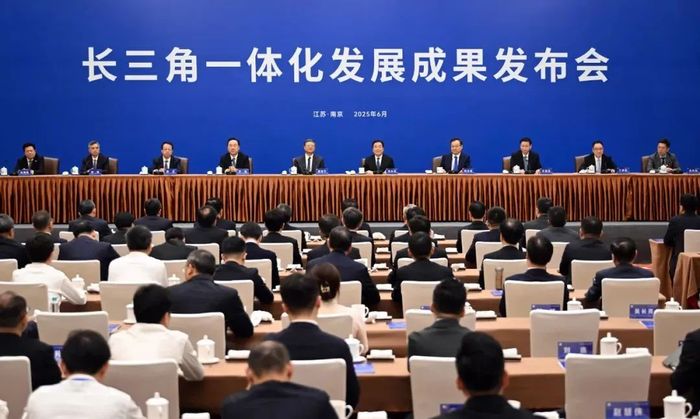
Group 1 - The establishment of 12 Yangtze River Delta Innovation Alliances is aimed at addressing national strategic needs and enhancing collaborative construction based on local leading industries [1][2] - The second batch of Yangtze River Delta Innovation Alliances was officially announced at the seventh Yangtze River Delta Integration Development Forum [1] - The leading units and names of the 12 innovation alliances include Jiangsu Hengtong Optic-Electric Co., Ltd. leading the "Yangtze River Delta Marine Information Transmission Technology Innovation Alliance" and others focusing on various technological innovations [1][2] Group 2 - The construction goal of these alliances is to layout the industrial chain around the innovation chain, promoting the aggregation of various innovative elements towards the innovation alliances [2] - Future steps involve improving organizational structures and operational mechanisms, leveraging the industry influence of leading units, and fostering collaborative research and technology breakthroughs [2] - The focus is on enhancing the independent innovation capabilities and core competitiveness of key industries in the Yangtze River Delta region [2]


江苏将建设新一批省创新联合体鼓励概念验证、科技金融等机构参与
Xin Hua Ri Bao· 2025-06-01 23:28
Group 1 - The core idea of the news is the launch of the Jiangsu Province Innovation Consortium construction work, aiming to enhance technological innovation and industrialization through collaboration among enterprises, universities, and research institutions [1][2] - Jiangsu Province has established 25 provincial innovation consortia since 2022, focusing on emerging industries and future technologies, including integrated circuits, new materials, and artificial intelligence [2] - The provincial government encourages the establishment of a council led by the head of the leading unit to coordinate innovation resource allocation and share the benefits of technology transfer [2] Group 2 - The innovation consortia will focus on addressing critical technological bottlenecks and iterating industry technologies, promoting a collaborative innovation mechanism with clear positioning and complementary advantages [2] - Jiangsu Province aims to leverage the advantages of the Yangtze River Delta region in science, education, and industry resources to create a collaborative technological innovation community [2] - The provincial government will prioritize support for leading enterprises, industry leaders, and unicorn companies to propose technology development directions based on innovation and industrial chain needs [1][2]
科技成果如何协同转化?政企学共议创新联合体
Zhong Guo Xin Wen Wang· 2025-06-01 08:24
Group 1 - The event focused on building an innovative ecosystem in Zhejiang, emphasizing the integration of industry, academia, and research for effective technology transfer [1] - The discussion highlighted the need for a collaborative approach in addressing challenges related to technology commercialization, including technical breakthroughs, institutional mechanisms, and capital support [1] - The low commercialization rate of scientific research is a common issue globally, with successful technology ventures in Silicon Valley having a success rate of only 2%-3% [1] Group 2 - Westlake University's Vice President emphasized the importance of focusing on the quality of research outcomes rather than just the quantity of technology transfers [2] - The concept of positioning professors as "chief scientists" rather than CEOs was proposed to allow them to concentrate on academic innovation while industry professionals manage daily operations [2] - The role of capital in supporting innovative teams was discussed, with an emphasis on the importance of patience in the long-term process of industrialization and market integration [2] Group 3 - The CEO of Rokid Technology revealed that the order volume for Rokid Glasses has exceeded production capacity, with expectations to scale annual production from hundreds of thousands to millions within three years [3] - The need for simultaneous efforts to address both technological challenges and production bottlenecks was highlighted to ensure successful market integration of technological innovations [3] - The collaboration among scientists, entrepreneurs, and investors is essential for creating a unique innovative ecosystem in Zhejiang, with each group playing a distinct role in the innovation and commercialization process [3]
协同联动构建创新联合体
Jing Ji Ri Bao· 2025-05-15 22:09
Core Viewpoint - The establishment of innovation consortia is crucial for enhancing the role of enterprises in innovation, promoting collaboration across the supply chain, and accelerating the transformation of scientific achievements into productive forces [1][2]. Group 1: Innovation Consortium Development - The innovation consortium serves as a key vehicle for integrating innovation chains, industrial chains, financial chains, and talent chains, which is essential for achieving technological self-reliance [1]. - Various regions, such as Zhejiang and Shanghai, have initiated innovation consortia involving leading enterprises and numerous universities and research institutions to focus on strategic emerging industries and future industries [1][2]. Group 2: Systematic and Task-oriented Approach - The third batch of central enterprise innovation consortia emphasizes a "systematic and task-oriented" approach, enhancing the functionality of the consortia and improving market mechanisms for shared benefits and risk-sharing [2]. - There is a need for better coordination among large enterprises and active participation from small and medium-sized enterprises to create a new collaborative framework [2]. Group 3: Strategic Planning and Key Areas - Strengthening overall planning and collaboration among provinces is essential, with a focus on creating integrated policies for technology innovation, including financial support and project demonstrations [3]. - Identifying key areas for joint efforts based on regional advantages and industrial foundations is necessary to develop a clear list of collaborative innovation needs [3]. Group 4: Organized Research Activities - Encouraging innovation consortia to explore integrated research organization models can enhance cross-disciplinary collaboration and improve overall innovation capabilities [3]. - The goal is to achieve significant breakthroughs in critical technology, equipment, and products across supply chains [3]. Group 5: Accelerating Element Circulation - Establishing a mechanism for shared investment in project funding, technology transfer, and benefit sharing is vital for effective technology commercialization [4]. - Developing a knowledge-sharing mechanism within innovation consortia and promoting high-value patent strategies can enhance competitive advantages [4]. Group 6: Financial Policy Improvement - Utilizing various innovation funds to attract financial capital for supporting innovation projects within consortia is crucial [4]. - Exploring new financing models for small and medium-sized enterprises within innovation consortia can facilitate project development and innovation growth [4].