
官僚主义

Search documents
摘牌减负里的作风建设新成效
Ren Min Ri Bao· 2025-11-15 07:06
Core Viewpoint - The article emphasizes the importance of reducing burdens on grassroots officials to enhance their ability to serve the public, reflecting a shift from demanding tasks from the community to providing services to them [1][4]. Group 1: Background and Context - In 2019, the Chinese government declared it a "year of reducing burdens at the grassroots level," with President Xi Jinping stressing the need to combat formalism and bureaucratism [5][6]. - By 2024, significant progress was reported, with a reduction in the number of signs and responsibilities for grassroots officials, allowing them to focus more on community service [7][8]. Group 2: Specific Measures and Outcomes - In Inner Mongolia, a targeted plan was implemented, resulting in an average reduction of over 60 work items for village officials and the clearance of 53,000 signs [7]. - Nationwide, various regions have adopted measures to simplify processes, such as Shanghai's "four reductions" initiative and Chongqing's streamlined reporting system, leading to a reduction of over 60% in report-related tasks [8]. - In the specific case of the village of Buzanwa, the number of signs was reduced from over 10 to 4, fostering a more proactive approach among local officials [8].
只有两栋厂房的产业园,怎就吹成了“百亿童车小镇”
Xin Jing Bao· 2025-10-31 10:44
Core Insights - The central government has addressed issues of formalism and burdens on grassroots levels, highlighting a case in Leiyang City, Hunan Province, where a children's car industrial park was planned without proper feasibility studies, leading to exaggerated claims about its scale and output [1][2] Group 1: Project Overview - Leiyang City proposed a "100 billion-level children's car industrial park" despite lacking the necessary conditions for such an industry cluster [1][2] - The city claimed over 60 enterprises had settled in the so-called "children's car town," but in reality, only 2 factory buildings were completed, with just 1 assembly enterprise and 4 small supporting businesses operational [1][2] Group 2: Economic Impact - The reported output for 2024 is only 21.65 million yuan, with tax revenue of 257,000 yuan and fewer than 100 employees, indicating a significant gap between projected and actual performance [1][2] - The disparity between promotional materials and the actual state of the industrial park reflects a troubling trend of data fabrication and a focus on superficial achievements rather than genuine economic development [1][2][3] Group 3: Broader Implications - The situation raises questions about the initial approval of the project and highlights a pattern of local governments prioritizing short-term metrics over sustainable growth [2][3] - The failure to develop a viable industrial chain and the reliance on unrealistic projections demonstrate a need for local governments to align their initiatives with actual resource capabilities and market conditions [2][3]
明纪释法丨不折不扣把党中央决策部署贯彻落实到位
Zhong Yang Ji Wei Guo Jia Jian Wei Wang Zhan· 2025-10-15 00:34
Core Points - The article emphasizes the importance of adhering to the decisions and policies set by the Central Committee of the Communist Party of China, highlighting the need for party members to internalize and act upon these directives [1][4] - It outlines the disciplinary measures for party members who fail to implement these decisions, particularly focusing on the behaviors of party leaders [2][6] Summary by Sections Disciplinary Regulations - Article 56 of the Disciplinary Regulations specifies that party leaders who act independently and refuse to implement central policies may face severe penalties, including removal from party positions or expulsion from the party [2][3] - The article also notes that failure to implement decisions or doing so half-heartedly can lead to warnings or more severe disciplinary actions depending on the consequences of such actions [2][4] Historical Context - The evolution of Article 56 reflects a growing emphasis on political discipline, with recent amendments highlighting the political dangers of failing to implement central directives [4][12] - The 2023 revision introduced new provisions to address local protectionism and its negative political impacts, reinforcing the need for strict adherence to central policies [4][12] Scope of Application - The article clarifies that the disciplinary measures primarily target party leaders, while ordinary members may face different consequences for similar failures [6][7] - It emphasizes that all party members have a responsibility to implement central decisions, regardless of their rank [7][8] Behavioral Expectations - Specific behaviors that constitute violations include merely stating intentions without follow-through, lack of decisiveness in implementation, and engaging in local or departmental protectionism [8][10] - The article stresses that these behaviors must have a direct negative impact on the authority of the Central Committee and the unity of the party to warrant disciplinary action [10][11] Distinctions in Violations - The article distinguishes between outright refusal to implement central policies and less severe forms of non-compliance, with different disciplinary consequences for each [12][13] - It also differentiates between violations of political discipline and general work discipline, noting that the former involves intentional disregard for central directives [13]
投资大家谈 | 好的管理——投资框架体系
点拾投资· 2025-08-30 11:00
Core Viewpoint - The article emphasizes the evolution of management thought from a bureaucratic system focused on organization and control to a human-centered approach that values people, relationships, and innovation [14]. Group 1: Management Evolution - The transition in management thought represents a significant cognitive revolution, shifting from rigid mechanical control to flexible humanistic care [14]. - The core change is from an organization-centric paradigm to a people-centric one, fundamentally altering the logic of organizational operations and the understanding of the core element of "people" [14]. Group 2: Bureaucratic System Characteristics - Bureaucratic systems are characterized by formal hierarchical structures where authority is determined by job rank, with top-down decision-making and strict adherence to rules [17]. - The bureaucratic approach relies on supervision, regulations, and rewards/punishments to maintain control, leading to competition among individuals for promotions [17]. Group 3: Issues with Bureaucratic Systems - Bureaucratic systems often result in rigidity, short-sightedness, and a lack of responsiveness to change, which can stifle creativity and innovation [18]. - The reliance on outdated practices and excessive trust in traditional leadership can hinder the organization's ability to adapt and seize new opportunities [18]. Group 4: Organizational Innovation Environment - A conducive environment for innovation includes open communication, transparency, and a sense of safety that encourages individuals to express themselves freely [20]. - Leadership should focus on enhancing team cohesion and leveraging individual strengths to foster a collaborative atmosphere [20]. Group 5: Project-Based and Studio Structures - Implementing project-based structures can reduce the emphasis on performance metrics and align professional expertise with authority [21]. - Establishing dynamic hierarchical structures and innovation teams can promote a more flexible and responsive organizational framework [21].


陈刚在桂林市调研,强调要牢固树立和践行正确政绩观,力戒形式主义官僚主义
Guang Xi Ri Bao· 2025-07-23 01:30
Core Viewpoint - The article emphasizes the need to establish and practice a correct view of performance, focusing on eliminating formalism and bureaucratism in project management and governance [1][2][3]. Group 1: Project Management Issues - The Hengcheng Yaohan Yangshou City Cultural Tourism Project, covering approximately 140 acres, has a planned total investment of 1.65 billion yuan, with an actual investment of 540 million yuan. Due to a broken funding chain, some projects have stalled, leading to significant waste and low efficiency [2]. - The project has been identified as a typical case of formalism and deviation in performance views, highlighting issues of corruption among officials [2]. Group 2: Recommendations for Improvement - The article calls for the local government to take responsibility for rectifying the issues, addressing public concerns, and re-evaluating the construction plans for the project area. It stresses the importance of enhancing public infrastructure and legally revitalizing existing assets [2]. - There is a strong emphasis on learning from the mistakes of the Hengcheng project to prevent similar issues in the future, advocating for a focus on practical, market-oriented solutions rather than blindly initiating new projects [3]. Group 3: Event and Economic Development - The article discusses the need for optimizing the function and layout of the Guilin International Convention Center, accelerating project construction, and enhancing market operations to improve venue utilization and operational efficiency [3]. - It highlights the importance of diversifying the business model to include "exhibition + diversification" to better meet market demands and improve overall economic performance [3].
新闻1+1丨盲目建设致140亩“瑶汉养寿城”烂尾 如何整改?
Yang Shi Wang· 2025-07-22 16:58
Core Viewpoint - The article discusses the issues surrounding the "Yao Han Yang Shou Cheng" cultural tourism project in Guangxi, highlighting the waste of resources due to blind decision-making and the need for thorough investigation and rectification to revitalize the assets and generate benefits [1] Group 1: Rectification Measures - The primary rectification task is to resolve housing issues for 104 households, ensuring they can receive their homes, certificates, and access to education [3] - Measures include improving residential facilities for 88 households that have received their homes, expediting project completion, and facilitating property registration [3] - A nearby school enrollment plan has been established to ensure children of these households can enroll before the new school year [3] - For 16 households unable to receive their homes on time, alternative housing or refunds are being arranged to protect their legal rights [3] Group 2: Asset Revitalization - The focus is on attracting investment to revitalize the assets, addressing the lack of diverse business activities and insufficient industrial pathways in the surrounding area [5] - Policies and measures are being implemented to attract quality enterprises to ensure the effective utilization of idle properties [5] Group 3: Addressing Bureaucratic Issues - The situation reflects issues of formalism and bureaucratism, characterized by decisions made without objective reality or scientific validation, leading to a loss of local government credibility and economic health [7] - To combat these issues, it is essential to address the root causes of formalism and bureaucratism, enhancing grassroots governance [7] Group 4: Institutional Improvements - Institutional reforms are necessary to prevent formalism and bureaucratism, ensuring that all decisions undergo scientific validation from the outset [11] - A public consultation mechanism should be established for significant decisions, allowing for community input to ensure that projects align with public interests [11]
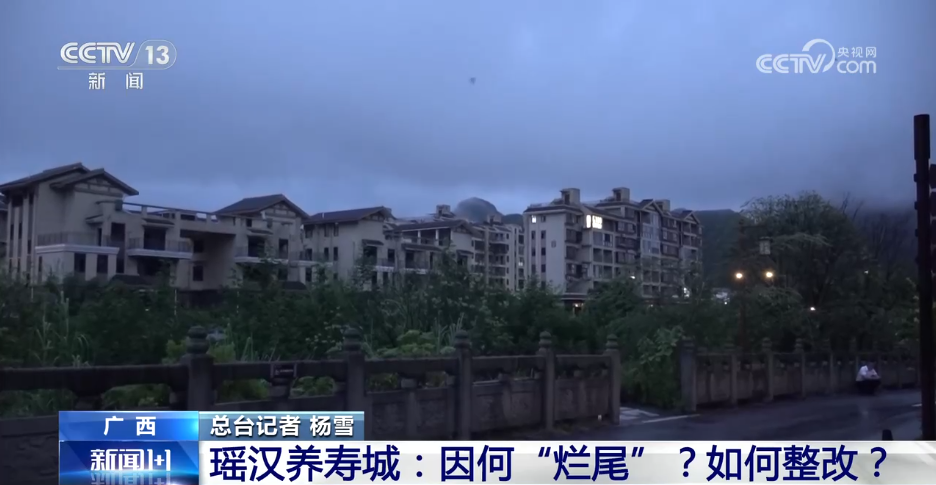
落马书记盲目上马文旅项目造成闲置浪费,遭中央通报
Di Yi Cai Jing· 2025-07-14 10:53
Core Insights - The "Yao-Han Health City" project in Guangxi's Gongcheng Yao Autonomous County has been halted due to mismanagement and misuse of funds, with 65 million yuan misappropriated from public finances [1][2] - The project was initiated without proper consideration of local conditions, leading to significant waste and public dissatisfaction [1][2] Group 1: Project Overview - The "Yao-Han Health City" project covers an area of approximately 140 acres, with a planned total investment of 1.65 billion yuan, but only 540 million yuan has been invested so far [1] - Currently, 6 out of 11 constructed buildings are idle, indicating low utilization and poor economic returns [1] Group 2: Financial Implications - The actual investment of 540 million yuan exceeds the county's annual general public budget revenue, which was approximately 400 million yuan in 2018 and has been declining since then [3] - As of the end of 2024, the total government debt in Gongcheng Yao Autonomous County is 2.68 billion yuan, but it remains within the debt limit without any defaults [3] Group 3: Governance Issues - The former county party secretary, Deng Xiaoqiang, was found to have made decisions without adequate local resources and was involved in corrupt practices, leading to his expulsion from the party and public office [2] - The county's financial management faces challenges, including a single-source revenue structure and insufficient fiscal capacity to meet growing expenditure demands [3]
深度关注·持续擦亮新时代管党治党“金色名片”减出新气象 干出精气神
Zhong Yang Ji Wei Guo Jia Jian Wei Wang Zhan· 2025-07-08 00:53
Group 1 - The core viewpoint emphasizes the importance of reducing formalism and bureaucratic burdens on grassroots levels to enhance efficiency and service delivery [2][5][13] - The implementation of measures to streamline meetings and reduce unnecessary documentation has shown significant results, with a reported 63.6% reduction in issued documents and a 43.9% decrease in meetings in Changde City [6][9] - The introduction of digital platforms like "Meeting Intelligence Management" has facilitated better management of meetings, leading to a 25% reduction in meeting frequency and a 60% decrease in printed materials in Beibei District [8][9] Group 2 - The "Four Down to the Grassroots" initiative aims to encourage officials to engage directly with the public, thereby improving the effectiveness of governance [10][12] - The focus on practical outcomes over formal reporting has led to more effective problem identification and resolution, as seen in the proactive measures taken during flood risk assessments [12][13] - The establishment of regulations to combat formalism and bureaucratic inefficiencies is seen as a critical step in enhancing the operational effectiveness of local governments [13][14] Group 3 - The integration of technology in administrative processes, such as the "Bright Code into Enterprises" mechanism, has reduced the burden of repeated inspections on businesses, promoting a more efficient regulatory environment [15][16] - The emphasis on reducing redundant checks and improving the transparency of administrative actions has garnered positive feedback from local businesses, indicating a shift towards a more supportive governance model [15][16] - The overall strategy aims to balance regulatory oversight with the need to minimize unnecessary burdens on both grassroots officials and the public [15][16]
中央纪委国家监委通报!
券商中国· 2025-06-27 09:28
Group 1 - The central government has reported a total of 21,843 cases of violations of the Eight-point Regulation in May, with 28,189 individuals receiving criticism or punishment, including 2 provincial-level and 98 departmental-level officials [1] - Among the violations, 11,730 cases were related to formalism and bureaucratism, with the highest number of issues (9,868 cases) concerning lack of responsibility and action that severely impacts high-quality development [1] - Additionally, 10,113 cases of hedonism and extravagance were reported, including 5,285 cases of illegal acceptance of valuable gifts and 2,229 cases of improper dining [1]
明规立矩加强新时代党的作风建设
Zhong Guo Qing Nian Bao· 2025-06-15 03:35
Group 1 - The core viewpoint emphasizes the importance of a stable and effective institutional system for the construction of the Party's good conduct, which has been continuously improved since the 18th National Congress of the Communist Party of China [1] - The implementation of the Central Eight Regulations and the focus on combating the "Four Winds" (formalism, bureaucratism, hedonism, and extravagance) are key components of the Party's internal regulations [1][2] - The Party has established a series of regulations and documents to address the new manifestations of formalism and bureaucratism, which are characterized by concealment and technicality [2][3] Group 2 - The evaluation of leadership effectiveness includes loyalty to responsibilities, courage to take action, and the ability to maintain the interests of the masses [3][4] - The Party emphasizes the need to reduce burdens on grassroots levels, which is crucial for enhancing governance efficiency [4][5] - The Party's commitment to frugality and opposition to extravagance is reinforced through strict adherence to regulations regarding gifts and hospitality [5][6] Group 3 - The Party has implemented strict regulations to combat corruption related to improper dining and entertainment practices, which are seen as breeding grounds for corruption [6][7] - The focus on controlling the construction of government buildings reflects a commitment to using limited resources effectively for public welfare rather than ostentation [7][8] - The Party aims to transform institutional constraints into internal recognition and behavioral consciousness among all members [7]