市净率

Search documents
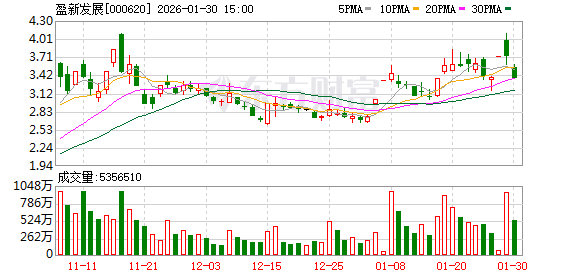
盈新发展:预计2025年亏损9.5亿元-12亿元
Zhong Guo Zheng Quan Bao· 2026-01-30 12:10
-○- 公司 -○- 行业均值 中证智能财讯盈新发展(000620)1月30日晚间披露2025年度业绩预告,预计2025年归母净利润亏损9.5亿元至12亿元,上年同期亏损5.33亿元;扣非净利润 亏损9.93亿元至12.54亿元,上年同期亏损7.06亿元;基本每股收益-0.16元/股至-0.2元/股。以最新收盘价计算,市净率(LF)约4.41倍,市销率(TTM)约 10.13倍。 以本次披露业绩预告均值计算,公司近年市盈率(TTM)图如下所示: 近年来市盈率变化情况(倍) 100 @ 20 7.53 0 142 4 8 දි 0:77 -50 -100 -138.23 -150 2022-06-30 2027-12-37 2020-12-37 ! 2021-06-30 2022-12-37 : 2023-12-37 J24-06-30 23-06-30 ; 2n- 资料显示,公司为一家集文旅景区开发运营、酒店管理、旅行社、房地产开发、建筑施工、物业服务、规划设计等多产业布局、具备多业态综合开发能力的 上市公司。 100 ହ 90 80 70 60 50 40 30 20 10 9:2 0 - 2020-12- ...


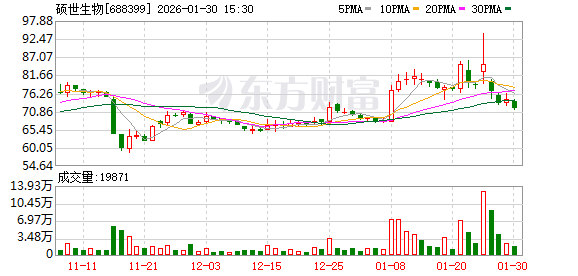
硕世生物:预计2025年亏损2940万元-4400万元
Zhong Guo Zheng Quan Bao· 2026-01-30 12:10
中证智能财讯硕世生物(688399)1月30日晚间披露2025年度业绩预告,预计2025年归母净利润亏损2940万元至4400万元,上年同期亏损200.17万元;扣非 净利润亏损8190万元至1.23亿元,上年同期亏损7183.71万元。以最新收盘价计算,市净率(LF)约2.03倍,市销率(TTM)约17.79倍。 以本次披露业绩预告均值计算,公司近年市盈率(TTM)图如下所示: 近年来市盈率变化情况(倍) 150 116.17 50 1883 0 2 82 - 50 - 100 -15 -200 -250 2022-06-30 ' 2021-12-37 2021-06-30 ' 2022-12-37 0-12-37 3-06-30 13-12-3- 2n- -○- 公司 -○- 行业均值 100 94,52 ହ 90 80 70 67o87 60 57:88 50 4476 40 30 26:05 20 10 d to #37 0 2027-12-37 | 2020-12-37 1 2022-12-37 3-06-30 ' 3-12-37 . 7-06-30 , 2022-06-30 ' 2n- ) 制图数 ...

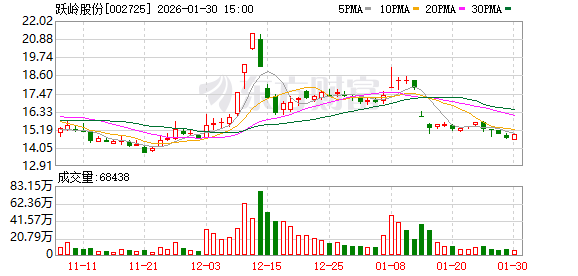
跃岭股份:2025年净利同比预降61.86%-74.57%
Zhong Guo Zheng Quan Bao· 2026-01-30 12:03
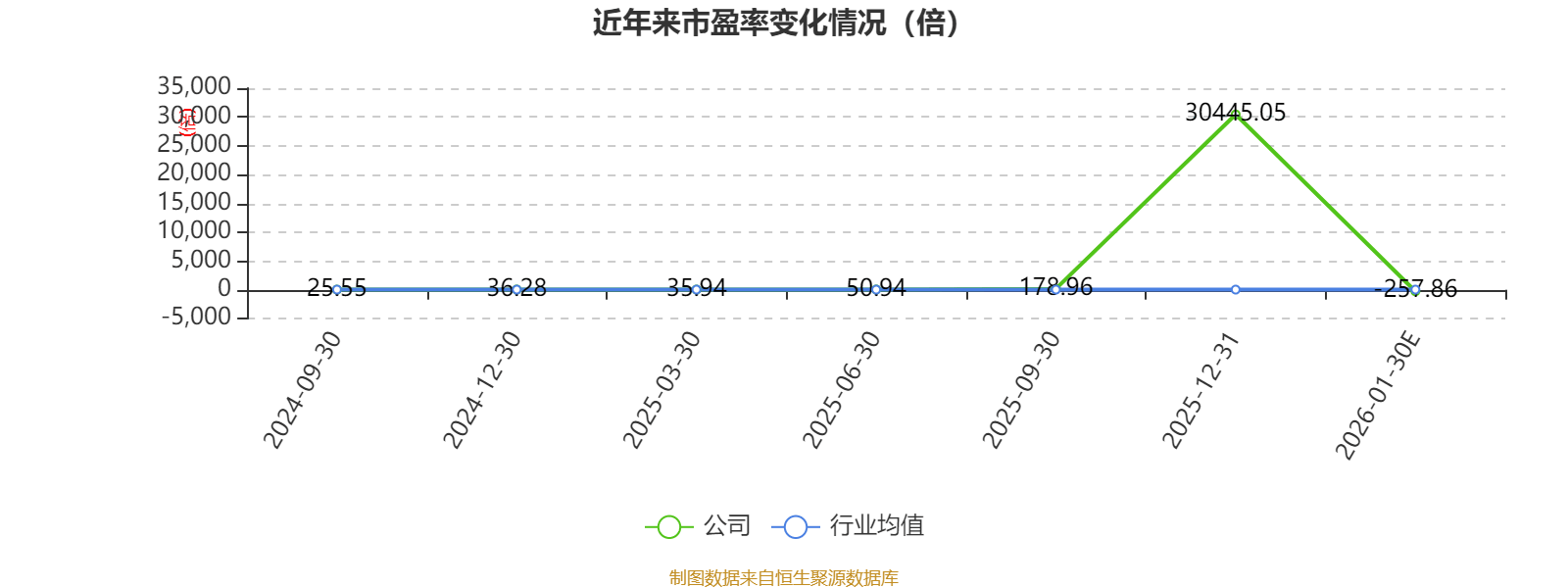
以本次披露业绩预告均值计算,公司近年市盈率(TTM)图如下所示: 近年来市盈率变化情况 (倍) 中证智能财讯跃岭股份(002725)1月30日晚间披露2025年度业绩预告,预计2025年归母净利润1200万元至1800万元,同比下降61.86%-74.57%;扣非净利润 预计270万元-405万元,同比下降16.03%-44.02%;基本每股收益0.0469元/股-0.0703元/股。以1月30日收盘价计算,跃岭股份目前市盈率(TTM)约为211.63 倍-317.44倍,市净率(LF)约3.7倍,市销率(TTM)约5.57倍。 600 @00 436.1 200 180.28 94~11 0 -60.62 58.4 -144-39 -177.65 -200 -319.94 -400 2021-06-30 2021-12-37 202-06-30 2020-12-37 2022-12-37 3-06-30 3-12-37 2n- -○- 公司 -○- 行业均值 100 97658 ହ 90 81~43 80 70 6843 60 50 40 30 20 10 0 2020-12-37 1 2027-12-37 ...

朗科智能:2025年净利同比预降68.09%-78.73%
Zhong Guo Zheng Quan Bao· 2026-01-30 11:53
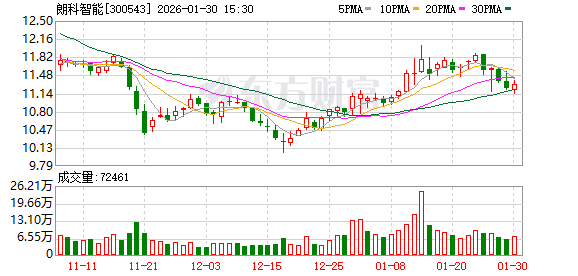
中证智能财讯朗科智能(300543)1月30日晚间披露2025年度业绩预告,预计2025年归母净利润1100万元至1650万元,同比下降68.09%-78.73%;扣非净利润 预计700万元-1050万元,同比下降77.05%-84.7%。以1月30日收盘价计算,朗科智能目前市盈率(TTM)约为210倍-315.01倍,市净率(LF)约2.36倍,市销 率(TTM)约2.11倍。 以本次披露业绩预告均值计算,公司近年市盈率(TTM)图如下所示: 近年来市盈率变化情况 (倍) 300 @50 200 150 100 50 47 64 45 02 24x72 23:02 21o77 0 2020-12-37 1 2027-12-37 1 ·7-06-30 ' 2022-12-37 5-30 2n- -○- 公司 -○- 行业均值 100 ହ 90 80 70 65x35 63a 60 58.16 50 46.97 40 38.41 30 20 -11-58 10 8.64 6.97 0 2027-12-37 1 2020-12-37 2-12-37 · 5-12-37 . 2-06-30 -06-30 2n- ← ...

益诺思:预计2025年亏损2678.89万元-3984.86万元
Sou Hu Cai Jing· 2026-01-30 11:25
Core Viewpoint - The company is experiencing a decline in net profit and gross margin due to macroeconomic changes and intensified industry competition, but it is focusing on expanding its domestic and international business to drive high-quality growth in core operations. Company Performance - The company's main business includes early-stage drug evaluation, non-clinical research, and clinical testing and translational research [9] - The net profit attributable to shareholders and the net profit after deducting non-recurring gains and losses decreased compared to the same period last year [9] - In 2025, the company signed new orders worth RMB 1.135 billion, a year-on-year increase of 38.62%, with overseas orders amounting to RMB 74.772 million [9] - By the end of 2025, the company's backlog of orders reached RMB 1.248 billion, an increase of 28.23% from the end of 2024 [9] Industry Context - The CRO industry is facing downward pressure on sales order prices due to changes in the macro environment and increased competition [9] - The overall sales performance in the industry is being impacted, leading to a decline in gross margins for companies within the sector [9]
普邦股份:预计2025年亏损2.5亿元-5亿元
Zhong Guo Zheng Quan Bao· 2026-01-30 10:23
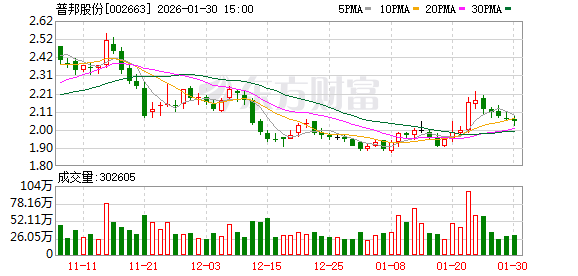
Group 1 - The company expects a net loss attributable to shareholders of 250 million to 500 million yuan for the year 2025, compared to a loss of 470 million yuan in the same period last year [2] - The company's non-recurring net profit is projected to be a loss of 280 million to 560 million yuan, with the previous year's loss being 462 million yuan [2] - The basic earnings per share are estimated to be between -0.1451 yuan and -0.2901 yuan [2] Group 2 - The company's main business includes landscape engineering construction, landscape design, architectural design, seedling planting production, and landscape maintenance services, providing integrated services to clients [11] - The company's revenue and gross profit have declined due to intensified market competition and extended project settlement cycles [11] - The company plans to recognize impairment losses on accounts receivable, contract assets, and long-term receivables based on cautious principles, with specific amounts to be determined after audit [11]

腾龙股份:2025年净利同比预降72.38%-81.59%
Zhong Guo Zheng Quan Bao· 2026-01-30 10:17
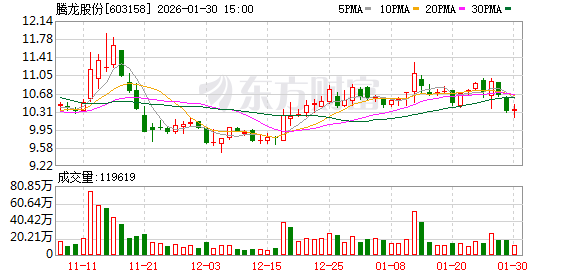
Company Performance - The company, Tenglong Co., Ltd. (603158), expects to achieve operating revenue of 3.965 billion to 4.382 billion yuan in 2025, representing a year-on-year growth of 3.97% to 14.92% [4] - The net profit attributable to shareholders is projected to be between 46 million and 69 million yuan, indicating a significant decline of 72.38% to 81.59% year-on-year [4] - The expected net profit after deducting non-recurring gains and losses is estimated to be between 28.8 million and 51.8 million yuan, reflecting a decrease of 72.21% to 84.55% year-on-year [4] Valuation Metrics - As of January 30, the company's price-to-earnings (P/E) ratio (TTM) is approximately between 73.69 and 110.53 times, while the price-to-book (P/B) ratio (LF) is about 2.19 times, and the price-to-sales (P/S) ratio (TTM) is around 1.22 times [4] Business Overview - The company specializes in the research, development, production, and sales of automotive thermal management components and is recognized as a leading domestic automotive parts manufacturer [13] - The performance fluctuation is attributed to steady growth in the main business, increased industry competition, and the ramp-up period of new projects in Poland and Anhui, leading to higher fixed asset depreciation and a slight decline in gross margin [13] - The company has implemented various measures to improve profitability, including cost reduction in the supply chain and enhancing operational efficiency, which are gradually showing results [13]

安旭生物:2025年净利同比预降55.8%-63.08%
Zhong Guo Zheng Quan Bao· 2026-01-30 10:10
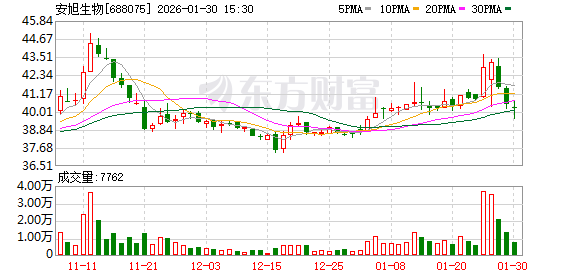
以本次披露业绩预告均值计算,公司近年市盈率(TTM)图如下所示: 资料显示,公司主营POCT试剂及仪器。 中证智能财讯安旭生物(688075)1月30日晚间披露2025年度业绩预告,预计2025年归母净利润7100万元至8500万元,同比下降55.8%-63.08%;扣非净利润 预计1300万元-1560万元,同比下降58.84%-65.7%。以1月30日收盘价计算,安旭生物目前市盈率(TTM)约为60.16倍-72.03倍,市净率(LF)约0.99倍,市 销率(TTM)约11.05倍。 此外,美国政府加征关税使得部分区域市场订单减少,公司承担部分关税导致营业成本上升,加上汇率波动引起汇兑损失、利息收入降低及资产折旧摊销等 多方面原因导致利润同比下滑。 指标注解: 据公告,公司业绩变动原因为, 报告期内,公司主营业务保持稳健发展,为巩固在产业领域内的长期竞争优势,公司保持原有几大技术平台的先进性之 外,持续加大对新技术平台的战略性投入,同时国内外市场及注册证书等拓展,海外分子公司的布局致使费用增加。 市盈率=总市值/净利润。当公司亏损时市盈率为负,此时用市盈率估值没有实际意义,往往用市净率或市销率做参考。 市 ...

锐奇股份:预计2025年亏损4654.04万元-6237.37万元
Zhong Guo Zheng Quan Bao· 2026-01-30 10:07
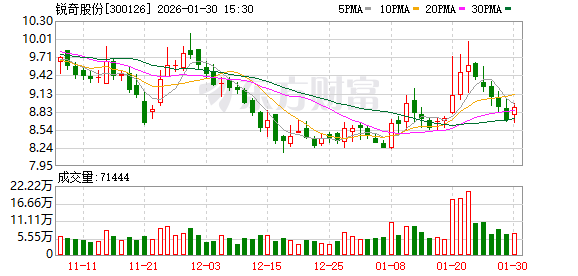
Core Viewpoint - The company, Ruiqi Co., Ltd. (300126), has announced a significant expected loss for the year 2025, projecting a net loss attributable to shareholders between 46.54 million and 62.37 million yuan, compared to a loss of 19.26 million yuan in the same period last year [4]. Financial Performance - The expected net profit loss for 2025 is between 46.54 million yuan and 62.37 million yuan, with a previous year's loss of 19.26 million yuan [4]. - The expected non-recurring net profit loss ranges from 65.74 million yuan to 81.57 million yuan, compared to a loss of 40.88 million yuan in the previous year [4]. - The company's price-to-book ratio (LF) is approximately 2.59 times, and the price-to-sales ratio (TTM) is about 5.76 times based on the latest closing price [4]. Reasons for Performance Change - The significant changes in operating performance are primarily attributed to rising raw material prices, increased operating costs, and higher expenses, leading to a decline in overall gross profit margin [12]. - The impact of non-recurring gains and losses on net profit is approximately 19.19 million yuan, compared to 21.62 million yuan in the previous year [12]. Historical Financial Trends - Historical data indicates a trend of increasing losses over the years, with the projected net profit and non-recurring net profit for 2025 showing a continued decline [14]. - The year-on-year growth rates for net profit and non-recurring net profit have shown significant negative changes, indicating a challenging financial environment for the company [14].

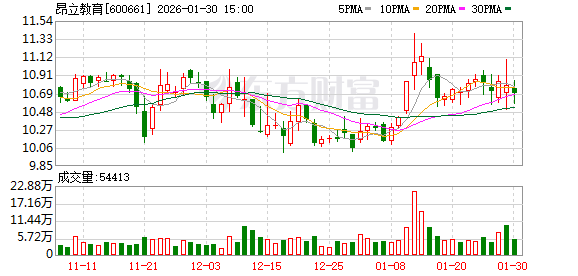
昂立教育:预计2025年盈利8000万元 同比扭亏
Zhong Guo Zheng Quan Bao· 2026-01-30 09:58
Group 1 - The company Anli Education (600661) expects to achieve an operating revenue of 1.38 billion yuan in 2025, representing a year-on-year growth of 12.23% [4] - The company forecasts a net profit attributable to shareholders of 80 million yuan, a significant recovery from a loss of 48.58 million yuan in the same period last year [4] - The expected net profit after deducting non-recurring gains and losses is approximately 4 million yuan, compared to a loss of 67.94 million yuan in the previous year [4] Group 2 - As of January 30, the company's price-to-earnings (P/E) ratio (TTM) is approximately 38.29 times, the price-to-book (P/B) ratio (LF) is about 22.77 times, and the price-to-sales (P/S) ratio (TTM) is around 2.22 times [4] - The company has formed four major business segments: quality education, vocational and basic education, international education, and adult education [13] - In 2025, the company plans to deepen strategic adjustments, expand business scale, enhance product quality, and improve operational efficiency through various initiatives [13] Group 3 - The company completed the sale of real estate assets and shares of Kensington Park School Limited, generating approximately 64 million yuan in revenue [13] - The company received government subsidies totaling about 14 million yuan in 2025 [13]