
开源鸿蒙

Search documents
我国首个电力物联操作系统,电力版“纯血鸿蒙”已落地应用
Nan Fang Du Shi Bao· 2025-11-21 13:32
Core Insights - The article discusses the implementation of the "Dianhong" IoT operating system in the power industry, which simplifies the process of connecting various devices, allowing operations with just a smartphone and basic tools [1] Group 1: Overview of Dianhong - Dianhong is China's first IoT operating system for the power industry, developed based on open-source Harmony and Euler projects, led by China Southern Power Grid in collaboration with various partners [2] - The first version of Dianhong was released in 2023, with subsequent updates leading to the establishment of a unified digital foundation for power IoT, with significant advancements expected by August 2025 [2] - The system has achieved EAL5+ security certification, making it the first domestically developed IoT operating system kernel to receive the highest security level certification [2] Group 2: Ecosystem and Partnerships - Dianhong promotes an open ecosystem that breaks the traditional model dominated by single vendors, lowering R&D barriers and encouraging innovation among various ecosystem participants [3] - The ecosystem has connected over 500 industry partners and thousands of power terminals, adapting to over 100 mainstream chips and 40 mainstream modules, with more than 3,000 terminals undergoing adaptation [3] Group 3: Application and Efficiency - In the Guangzhou Nansha Comprehensive Demonstration Zone, Dianhong has been applied across nine business scenarios and 82 types of equipment, achieving unified management from transmission to consumption [4] - The system's capabilities, such as plug-and-play and remote OTA upgrades, have significantly improved system deployment speed and overall operational efficiency [4] - For example, the upgrade of 560 smart meters and 155 Dianhong smart gateways in a residential project reduced the time for debugging and acceptance testing from over 10 hours to less than 1 hour [4] Group 4: Future Prospects - Dianhong represents a deep practice of open-source Harmony in the energy sector and serves as a model for exploring self-developed, self-controlled, and sustainably evolving industry operating systems [5] - The open-source Harmony project is extending into various professional fields, integrating into enterprise systems, industry platforms, and terminal devices, becoming a digital foundation across multiple sectors [5]
深圳首个面向开源鸿蒙的开发者培训基地启用
Zheng Quan Shi Bao Wang· 2025-11-21 10:43
人民财讯11月21日电,据深圳发布,近日,全市首个专注于开源鸿蒙的开发者培训基地在深圳龙华区数 字创新中心正式启用,"人才生态联盟"同步成立,标志着深圳在开源鸿蒙人才培育、生态共建、创新培 育与产业协同领域迈入全新阶段。活动现场先后举行两项重磅签约,深天使、深开鸿、人才数科三方签 署战略合作协议,共同设立专项基金,为生态内创新项目与人才孵化提供"资金+技术+场景"支持。多 家开源鸿蒙生态企业与龙华区政府签署落地协议,覆盖芯片适配、行业解决方案、教育赋能等关键环 节,进一步夯实本地鸿蒙产业链与创新链的集聚效应。 ...
“首发首套首台”层出不穷,武汉首位度持续攀升
Chang Jiang Ri Bao· 2025-11-18 11:30
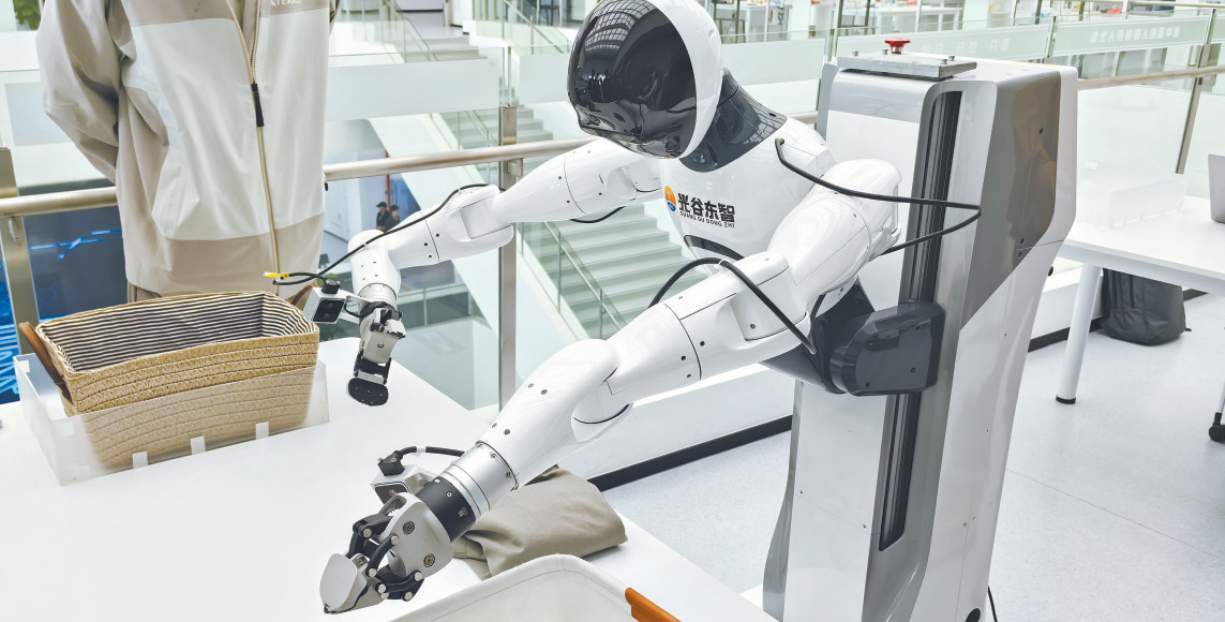
Core Viewpoint - Wuhan is emerging as a significant hub for technological innovation and industrial advancement, showcasing numerous firsts in various sectors, which enhances its national and global standing in innovation [1][2]. Technological Innovations - The first domestic humanoid robot powered by the HarmonyOS, named "Kua Fu," was unveiled in Wuhan, marking a breakthrough in domestic technology and addressing industry safety concerns [3]. - The world's first "world model-driven virtual-physical integrated intelligent data factory" was established in Wuhan, providing a robust learning environment for robots and positioning Wuhan as a key player in the humanoid robot industry [3]. - Wuhan has produced several groundbreaking technologies, including the world's first 128-layer 3D flash memory chip and the first professional night-sensing satellite, "Luojia No. 1" [3]. Future Industry Development - Wuhan has identified 13 sub-sectors for future industry development, including humanoid robots and advanced semiconductors, aiming for a revenue scale exceeding 100 billion yuan by 2027 [4]. - The city ranks eighth globally in the "2024 Nature Index - Research Cities," reflecting its strong scientific research capabilities and innovation potential [5]. Research and Development Support - The innovation ecosystem in Wuhan is supported by 41 national key laboratories and over 16,000 high-tech enterprises, ensuring a comprehensive innovation chain [6]. - The city has seen a significant increase in high-tech manufacturing, with a 16.3% growth in value added in the first three quarters of the year, contributing over 60% to industrial growth [9]. Smart Manufacturing - Wuhan's smart manufacturing sector is leading nationally, with the first autonomous learning intelligent CNC system, "Huazhong No. 10," enabling rapid code generation for machine tools [7][9]. - The city has also developed the world's first intelligent heavy-duty machine tool, showcasing a shift from reliance on imports to domestic innovation in high-end manufacturing [9]. Biopharmaceutical Innovations - Wuhan is making strides in the biopharmaceutical sector, with the "rice blood production" project expected to produce 12 million injections annually, significantly reducing reliance on imports [11]. - The city is home to over 4,500 health enterprises, with the life and health industry reaching a scale of over 550 billion yuan, positioning Wuhan as a key player in the global health sector [11][12]. Overall Innovation Landscape - Wuhan's continuous innovation efforts have led to its recognition as a competitive player in the global innovation landscape, with a focus on high standards and advanced technologies [12][13].

中软国际尾盘涨超4% 公司携手深开鸿与龙芯中科 联合打造“龙鸿体系”
Zhi Tong Cai Jing· 2025-11-17 08:01
Core Viewpoint - China Software International (中软国际) has signed a strategic cooperation agreement with Deepin Technology (深开鸿) and Loongson Technology (龙芯中科) to develop a comprehensive autonomous "Longhong System" based on "Open Source Harmony + LoongArch" [1] Group 1: Company Developments - China Software International's stock rose by over 4%, reaching HKD 5.69 with a trading volume of HKD 216 million [1] - The collaboration aims to leverage complementary resources among the three companies, focusing on software applications, system integration, and international market expansion [1] Group 2: Technological Collaboration - The partnership will utilize Deepin Technology's Open Source Harmony operating system, which features full-scene coverage, distributed characteristics, and low-latency technology [1] - Loongson Technology will provide support through its LoongArch instruction set chips and underlying solutions, enhancing the technological foundation of the "Longhong System" [1] Group 3: Market Strategy - The three companies will work together across four dimensions: technology, products, market, and ecosystem to accelerate the industrialization of the "Longhong System" [1]

中国软件国际(00354)携手深开鸿与龙芯中科签署战略合作 共推“龙鸿体系”构建自主可控信息技术新生态
智通财经网· 2025-11-10 14:29
Core Viewpoint - China Software International has signed a strategic cooperation agreement with Shenzhen Kaihong Digital Industry Development Co., Ltd. and Loongson Technology Co., Ltd. to jointly develop the "Longhong System" based on "Open Source Harmony + LoongArch" [1][2] Technical Aspects - The collaboration will focus on deep adaptation of "LoongArch chips + KaihongOS" to optimize the performance of the Loongson platform, ensuring stable software and hardware integration [1] - A joint technical team will be established to work on kernel adaptation, driver development, performance optimization, security enhancement, and AI empowerment [1] Product Development - The three parties will leverage their strengths to create edge computing gateways, AI terminals, and customized industry solutions targeting core scenarios such as industrial control, government affairs, and smart living [1][2] Market Strategy - The collaboration aims to tackle government and industry localization projects, prioritizing implementation in key cities like Shenzhen, Beijing, and Jiangsu, while also expanding into overseas markets [2] Ecological Development - The partners will participate in open-source community building and industry standard formulation, promoting standardization of technical interfaces and resource sharing [2] - The "Longhong System" is designed to provide a complete closed-loop technology system for national critical information infrastructure and core industries, ensuring system-level security and control [2] Long-term Vision - The collaboration is seen as an opportunity to deepen technological integration and industrial cooperation, aiming to accelerate the large-scale implementation of an independent information technology system and create long-term value for shareholders [2]

中国软件国际携手深开鸿及龙芯中科 共推“龙鸿体系”
Ge Long Hui· 2025-11-10 14:22
Core Viewpoint - China Software International (00354.HK) has signed a strategic cooperation agreement with Shenzhen Kaihong Digital Industry Development Co., Ltd. and Loongson Technology Co., Ltd. to jointly develop the "Longhong System" based on "Open Source Harmony + LoongArch" [1] Group 1: Strategic Cooperation - The three parties will leverage their complementary resources: China Software International will utilize its software application, system integration, and international market expansion capabilities [1] - Shenzhen Kaihong will contribute its Open Source Harmony operating system, which features full-scenario coverage, distributed characteristics, and low-latency technology [1] - Loongson Technology will support the initiative with its LoongArch instruction set chips and underlying solutions [1] Group 2: Collaborative Dimensions - The collaboration will focus on four key dimensions: technology, products, market, and ecosystem [1] - The aim is to accelerate the industrialization of the "Longhong System" [1]
调研速递|润和软件接待华创证券等7家机构 鸿蒙原生应用落地多家银行 AI算力一体机商业化加速
Xin Lang Zheng Quan· 2025-11-07 09:54
Core Insights - The company, Runhe Software, held a targeted investor meeting on November 4, 2025, to discuss its business layout, innovation progress, and future plans with various institutional investors [1][2]. Business Layout - Runhe Software operates in two main segments: 1. Technical services, primarily project-based and time-based, covering financial technology, smart IoT, and smart energy information systems, with financial technology accounting for over 50% of total revenue. The company has established a strong presence with six major state-owned banks, twelve joint-stock banks, and over 280 small and medium-sized financial institutions [3]. 2. Innovative business focusing on open-source HarmonyOS, open-source Euler, and AI, which are seen as new growth engines. The company reported a stable revenue growth of 12.86% year-on-year for the first three quarters of 2025 [3]. Innovation Focus - The company has developed a one-stop solution for HarmonyOS applications, successfully implementing projects in the banking sector and other verticals such as cultural tourism and government services [4]. - In the AI sector, Runhe Software has established a "hardware + software" product matrix, including the IntelliCore AI computing unit and the AIRUNS intelligent hub, which manages the entire lifecycle of AI models [5]. Industry Leadership - Runhe Software's "Runzhi," "Runshi," and "Runxing" large model matrix has been recognized, with "Runzhi" being listed among the "Top 30 Chinese Large Models of 2025." The company has also launched the "Runwu AI Financial Testing Agent" to facilitate digital transformation in the financial sector [6]. Commercialization Efforts - The company has achieved significant commercial applications in open-source Euler, obtaining over 160 compatibility certificates and successfully deploying solutions in finance, energy, and safety sectors. Additionally, its AI robots have been introduced in Japan for customer service in 4S stores [7]. Personnel Strategy - Runhe Software is implementing a personnel strategy focused on "controlling scale and optimizing structure," limiting growth in traditional technical services while directing resources towards innovative business areas to enhance industry capabilities [8]. Future Plans - The company aims to continue focusing on innovative directions such as trusted computing and AI, leveraging its industry experience and advantages in domestic operating systems and AI technologies. It plans to increase R&D investment and pursue productization and platformization for high-quality development [9].

润和软件(300339) - 润和软件投资者关系活动记录表
2025-11-07 09:32
Company Overview - The company operates in two main business segments: technology services (project-based and man-month based) and innovative product-based services, focusing on financial technology, smart IoT, and smart energy information services [1][2]. - The innovative business segment aims to drive the next phase of growth, leveraging experience in domestic operating systems and AI technologies [2]. Financial Performance - In the first three quarters of 2025, the company's revenue grew by 12.86% year-on-year, with financial technology accounting for over 50% of total revenue [3]. Business Development - The company has established a comprehensive solution for HarmonyOS application development, signing contracts with multiple banks for projects including mobile banking apps [4]. - In the open-source HarmonyOS sector, the company has launched 13 proprietary commercial versions across various industries, including finance, energy, and healthcare [4][5]. AI Product Offerings - The company has developed an "AI Central" product matrix, including hardware and three core software platforms: AIRUNS, AgentRUNS, and AutoRUNS, aimed at providing enterprise-level AI solutions [7]. - The "润知" knowledge processing model has been recognized in the "2025 China Large Model TOP30" list, showcasing the company's advancements in AI [10]. Open Source Initiatives - As a leading vendor in the open-source Euler community, the company has obtained over 160 compatibility certificates and is actively promoting commercial applications in various sectors [11]. Robotics and Automation - The company has introduced service robots for 4S stores and AI tongue diagnosis robots, integrating multiple AI technologies to enhance customer service and healthcare diagnostics [12][13]. Future Workforce Strategy - The company plans to maintain a stable workforce while focusing on attracting key talent for innovative business areas, ensuring high-quality development without excessive personnel expansion [13].
圣阳股份、山东路桥等成立开源鸿蒙数字科技公司
Zheng Quan Shi Bao Wang· 2025-11-03 05:16
Core Viewpoint - A new company, Kaiyuan Hongmeng (Shandong) Digital Technology Co., Ltd., has been established with a registered capital of 50 million yuan, focusing on various advanced technology sectors including intelligent unmanned aerial vehicle manufacturing and artificial intelligence applications [1] Company Summary - The registered capital of the newly established company is 50 million yuan [1] - The business scope includes manufacturing of intelligent unmanned aerial vehicles, integration services for artificial intelligence industry applications, sales of artificial intelligence hardware, sales of intelligent robots, and research and development of intelligent robots [1] - The company is jointly held by Shandong Road and Bridge (000498) wholly-owned subsidiary Shandong High-speed Road and Bridge Investment Management Co., Ltd. and Shengyang Co., Ltd. (002580) among others [1]


润和软件:暂不涉及量子计算相关业务
Mei Ri Jing Ji Xin Wen· 2025-11-03 01:20
Core Viewpoint - The company, Runhe Software, currently does not engage in quantum computing or quantum technology but plans to expand in these areas based on development strategies and market demand [1]. Group 1: Business Operations - Runhe Software has launched 13 commercial versions of the open-source HarmonyOS, which possess independent intellectual property rights [1]. - The company has empowered various industries including finance, electricity, oil and gas, healthcare, education, smart cities, and smart mining with its HarmonyOS solutions [1].