数字化监管

Search documents
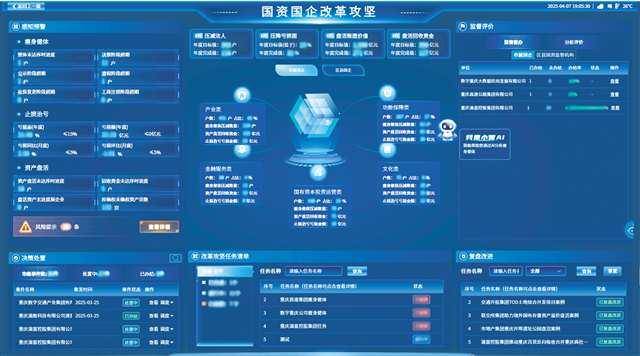
重庆为国资企业接上“监管大脑”
Sou Hu Cai Jing· 2025-07-11 00:43
Core Insights - The "State-owned Assets Intelligent Management" system in Chongqing serves as a regulatory brain for state-owned enterprises (SOEs), utilizing real-time data monitoring to enhance asset management and operational efficiency [2][3][4] Group 1: System Functionality - The system automates the collection of over 20 million monitoring data points, eliminating the need for manual reporting and creating a comprehensive set of 171 regulatory indicators and 4 warning models [2][3] - It connects directly to the business management systems of 33 key municipal SOEs, increasing the digitalization rate of core business operations from 65% to 98% [3][4] Group 2: Risk Management and Monitoring - The system provides real-time monitoring of financial data, allowing for immediate identification and resolution of anomalies, significantly reducing the time from detection to resolution [4][7] - It has established 66 core regulatory indicators for monitoring SOE funds, debts, and decision-making processes, enhancing risk management capabilities [7] Group 3: Asset Activation and Efficiency - The system has facilitated the successful leasing of 41,600 square meters of space, generating a rental contract value of 285 million yuan, achieving a 100% activation rate [6][7] - The integration of an intelligent search engine within the system has improved asset management and operational efficiency, enabling quick responses to market conditions [5][6] Group 4: Future Prospects - The application has been recognized by the State-owned Assets Supervision and Administration Commission (SASAC) and included in a national pilot program for comprehensive monitoring systems [7]

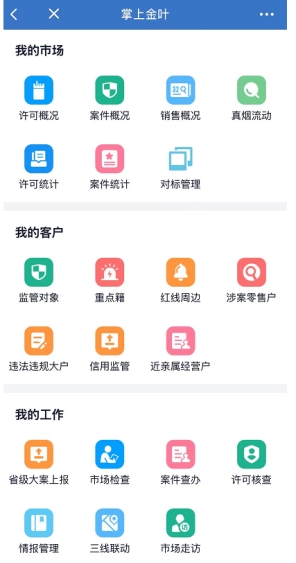
湖北黄州:依托“金叶五智”提升市场数字化监管效能
Zhong Guo Chan Ye Jing Ji Xin Xi Wang· 2025-06-23 14:45
Group 1 - The core viewpoint of the article emphasizes the digital transformation of the Huangzhou District Tobacco Monopoly Bureau, utilizing the "Golden Leaf Five Intelligence" digital application to enhance market regulation from traditional methods to intelligent and precise approaches [1] Group 2 - The Huangzhou District Tobacco Monopoly Bureau has expanded its analysis dimensions from 3 to 8, allowing for a more precise identification of key regulatory targets and areas, thus improving market oversight efficiency [3] - The "Golden Leaf" platform provides timely alerts for market anomalies, enabling the regulatory team to address issues promptly and effectively, with over 200 market risk alerts successfully issued this year [4] Group 3 - The platform's rapid response mechanism allows for a full-cycle management of risk clues, significantly enhancing law enforcement efficiency, as demonstrated by the interception of a suspicious vehicle carrying illegal cigarettes valued at nearly 300,000 yuan [5] - The Huangzhou District Tobacco Monopoly Bureau plans to continue expanding the digital application boundaries of the "Golden Leaf Five Intelligence" initiative to create a higher-level intelligent tobacco market regulation system [5]
药监局公布5起典型案例:“清源”行动纵深推进
2 1 Shi Ji Jing Ji Bao Dao· 2025-06-20 10:25
Core Viewpoint - The National Medical Products Administration (NMPA) has launched a "Clean Source" action to combat illegal activities in the pharmaceutical distribution sector, ensuring public health and safety amid rising issues like counterfeit drugs and illegal online sales [1][2][3]. Group 1: Regulatory Actions - The "Clean Source" action was initiated in April 2023, focusing on eliminating risks and illegal practices in drug distribution, with a commitment to continue until November 2025 [2][5]. - The NMPA has emphasized the importance of cross-departmental collaboration and the use of digital monitoring tools, such as drug traceability codes, to enhance regulatory effectiveness [6][7]. Group 2: Case Examples - Five typical cases of violations were reported, including illegal procurement and sales of drugs, with penalties ranging from fines to the revocation of operating licenses [3][4]. - Specific cases include a pharmacy in Guangdong fined 1.3 million yuan for illegal drug procurement and a pharmacy in Jiangxi penalized for selling drugs without proper qualifications [3][4]. Group 3: Industry Impact - The initiative aims to establish a transparent and compliant pharmaceutical distribution system, promoting industry compliance and enhancing public trust in drug safety [3][6]. - The focus on digital upgrades in drug monitoring is expected to shift regulatory practices from reactive to proactive, improving overall drug safety [6][7].
强化数字赋能 提升监管效能 ——塔城地、市市监局举办扫码监管工作专项培训会
Zhong Guo Shi Pin Wang· 2025-06-13 03:51
Core Insights - The article discusses the implementation of the "Tatungban Enterprise Inspection Code" as a new smart regulatory model in Tashkent City, aimed at enhancing regulatory efficiency and reducing the burden on businesses [1][2] - The initiative is part of a broader effort to adapt to digital regulatory trends and improve the business environment by streamlining inspection processes and ensuring fair treatment of enterprises [1][2] Group 1: Implementation and Training - The Tashkent City Market Supervision Administration organized a specialized training session for over 30 frontline enforcement personnel to implement the new inspection code [1] - The training included practical exercises in scanning inspections and real-time problem-solving with guidance from professional trainers [1] Group 2: Benefits of the New Model - The "Tatungban Enterprise Inspection Code" reduces redundant inspections by consolidating inspection requirements from various departments, thus preventing frequent checks on the same enterprise [1] - It standardizes inspection practices, eliminating arbitrary checks and ensuring the protection of enterprises' legal rights [1] - The model also alleviates the burden on businesses by minimizing inspection time and costs, allowing them to focus on operations [1] Group 3: Future Plans and Goals - Currently, over 3,100 enterprises are registered in Tashkent City, with more than 1,000 inspection codes issued, indicating ongoing efforts to expand the program [2] - The Market Supervision Administration aims to further enhance the application of scanning inspection technology to improve regulatory effectiveness and service quality [2] - The initiative is seen as a crucial reform for optimizing the business environment, emphasizing the importance of data intelligence and institutional rigidity in regulatory processes [2]
药品“身份证”重塑医保基金监管生态系统
Sou Hu Cai Jing· 2025-05-15 23:19
Core Insights - The application of drug traceability codes is transforming the regulatory ecosystem of medical insurance funds, enhancing transparency and accountability in the pharmaceutical sector [1][3][5] Group 1: Regulatory Developments - As of March 31, 2025, the National Medical Insurance Information Platform has accumulated 27.309 billion traceability codes, covering 31 provinces and regions, with 88.9 thousand designated hospitals and pharmacies connected, representing 95.6% of total designated medical institutions [1] - The integration of over 95% of medical insurance drug transaction data into real-time supervision marks a significant shift from traditional regulatory models, addressing previous "information blind spots" [1][3] Group 2: Technological Advancements - The drug traceability code functions as a "digital ID" for pharmaceuticals, providing comprehensive tracking capabilities that include production details and expiration dates, thus curbing illegal practices [3][5] - The daily access to the traceability query function has surpassed 500,000 visits, indicating a growing public engagement in monitoring drug safety [3] Group 3: Impact on Stakeholders - The increasing connection rate of medical institutions and pharmaceutical companies is driving improvements in internal management systems and digital management capabilities [5] - The traceability feature not only ensures medication safety for insured individuals but also enhances their awareness as stakeholders in the medical insurance fund [5] Group 4: Future Prospects - The regulatory framework is evolving from reactive measures to proactive prevention, supported by real-time monitoring and intelligent risk alerts [5] - The potential expansion of digital regulation, including innovations like "electronic medical insurance IDs" and "AI assessments of medical behaviors," promises to cover all aspects of medical services [5]

“达标车辆秒过,高排放车辆自动拦截”
Zhong Guo Huan Jing Bao· 2025-05-08 02:08
Core Viewpoint - The implementation of an upgraded environmental access control system in key vehicle enterprises in Pucheng County, Shaanxi Province, enhances the efficiency and precision of pollution management, contributing to the broader goal of air quality improvement. Group 1: Environmental Access Control System - The new access control system automatically connects to vehicle emission databases and the municipal environmental supervision platform, allowing for real-time monitoring and management of high-emission vehicles, preventing non-compliant vehicles from entering the facility [1][2] - The system captures vehicle data, including license plate numbers and emission status, and automatically uploads this information to the municipal regulatory platform, significantly reducing manual verification errors and improving operational efficiency [1][2] Group 2: Impact on Companies - Companies like Weinan Keshun New Materials Co., Ltd. have reported increased efficiency and reduced manual workload due to the new system, which allows for streamlined vehicle registration and monitoring [2] - The upgraded system enables better data analysis for vehicle dispatch, statistical analysis, and environmental self-inspection, thereby enhancing the company's environmental credit [2] Group 3: Broader Environmental Strategy - The initiative is part of a larger effort to combat mobile source pollution, with Pucheng County actively promoting the construction of environmental access control systems in key vehicle enterprises to achieve intelligent and traceable pollution management [2][3] - The local environmental authority plans to explore new models combining access control systems with environmental supervision to create a comprehensive regulatory framework that enhances pollution monitoring and response capabilities [3]
五一起,食品安全问题有解了?
Hu Xiu· 2025-03-24 07:45
Core Viewpoint - The introduction of the "National Food Safety Reporting System" on May 1, 2025, marks a significant milestone in addressing food safety issues in China, aiming to enhance consumer participation and improve regulatory efficiency [3][12][20] Group 1: Food Safety Issues - Recent food safety scandals have severely damaged consumer trust, with various incidents reported, including dyed beef and contaminated food products [2][5] - The frequency of food safety problems has prompted regulatory bodies to increase oversight, with significant actions taken in 2024, including inspections of 9.734 million food production and operation entities and handling over 53,600 food safety violation cases [7][19] Group 2: New Reporting System - The new reporting system allows consumers to report food safety issues more efficiently, moving from a reactive to a proactive approach in identifying and addressing problems [3][12] - Key features of the system include the ability for consumers to upload photographic evidence of violations, enhancing the reliability of reports and facilitating quicker responses from authorities [13][17] Group 3: Impact on Businesses - The reporting platform presents both challenges and opportunities for food businesses, requiring them to maintain higher standards of food safety to avoid scrutiny [18] - The system also provides a mechanism for businesses to defend against malicious complaints, fostering a more transparent environment [18] Group 4: Long-term Solutions - Sustainable food safety governance requires a cultural shift within the industry, moving from compliance to a genuine commitment to safety [20] - The integration of technology in regulatory practices is expected to improve efficiency and effectiveness in monitoring food safety, transitioning from reactive measures to preventive strategies [19][20]