数据标注

Search documents
估值2000亿元独角兽怒告前员工:窃取上百份文件,策反数百万美元客户!公司面临更大危机
Mei Ri Jing Ji Xin Wen· 2025-09-06 14:26
Core Viewpoint - Scale AI has filed a lawsuit against former employee Eugene Ling and his new company Mercor, alleging theft of confidential documents and attempts to poach key clients, amid a crisis of trust following a significant investment from Meta [1][12]. Group 1: Lawsuit Details - Scale AI accuses Ling of illegally downloading over 100 confidential documents, including sensitive client information and business strategies, to his personal cloud storage [4]. - The lawsuit claims that Ling began promoting Mercor to Scale AI's important clients while still employed, indicating premeditated actions to benefit his new employer [3][4]. - Ling's compensation at Mercor includes a 20% commission on gross profits from clients he brings in, creating a financial incentive for his actions [3] Group 2: Company Responses - Scale AI's VP Tom Channick stated that Mercor has been uncooperative and has denied any wrongdoing regarding the alleged theft [6]. - Ling publicly acknowledged the lawsuit and admitted to having old files in his personal cloud but claimed there was no malicious intent [6][9]. - Mercor's co-founder Surya Midha denied using any of Scale AI's trade secrets and stated that they are investigating the situation [9][10]. Group 3: Industry Context - Scale AI is facing a client retention crisis, with major clients like Google and OpenAI reportedly reducing or terminating contracts due to concerns over its ties with Meta [12]. - Following a $14.3 billion investment from Meta, Scale AI's valuation soared to $29 billion, but this has raised concerns among its clients about data security [12]. - In contrast, Mercor has rapidly gained traction in the market, leveraging a unique business model that employs experts in specialized fields for data annotation, attracting high-profile clients [15].

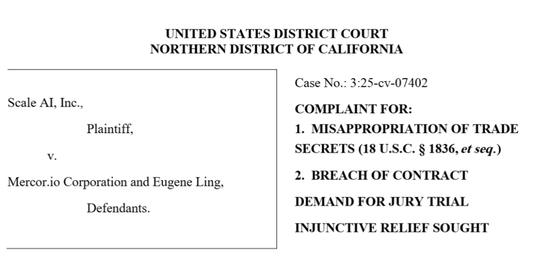
估值2000亿独角兽怒告前员工:窃取上百份文件,策反数百万美元客户
Mei Ri Jing Ji Xin Wen· 2025-09-06 14:09
Core Viewpoint - Scale AI has filed a lawsuit against former employee Eugene Ling and his new employer Mercor, alleging theft of confidential documents and attempts to poach key clients, amidst a backdrop of client trust issues following a significant investment from Meta [1][2][8] Group 1: Lawsuit Details - Scale AI accuses Ling of illegally downloading over 100 confidential files, including sensitive client information and business strategies, to his personal cloud storage [4] - The lawsuit claims that Ling began promoting Mercor to Scale AI's important clients while still employed, indicating a premeditated plan to transition to the competitor [3][4] - Ling's new employer, Mercor, is alleged to have offered him a commission of 20% on gross profits from clients he brings in, contingent on generating over $5 million in profits [3] Group 2: Industry Context - Following a $14.3 billion investment from Meta, Scale AI faces a crisis as major clients like Google and OpenAI are reportedly reducing or terminating their contracts due to concerns over data security [2][8] - Reports indicate that Google is planning to end a $200 million contract with Scale AI, while other tech giants are reassessing their partnerships [8][9] - In contrast, Mercor has rapidly gained traction in the market, achieving a valuation of $2 billion by employing a unique strategy that focuses on hiring experts from specialized fields for data training and annotation [10] Group 3: Company Responses - Scale AI's spokesperson has expressed frustration over Mercor's alleged delay in communication and denial of wrongdoing, emphasizing the importance of protecting their business [4][7] - Ling has publicly stated that while he has old files in his personal cloud, he did not act with malicious intent and has not used these documents in his new role [4][7] - Mercor's co-founder has denied any use of Scale AI's trade secrets and stated that they are conducting an internal investigation regarding the matter [7]
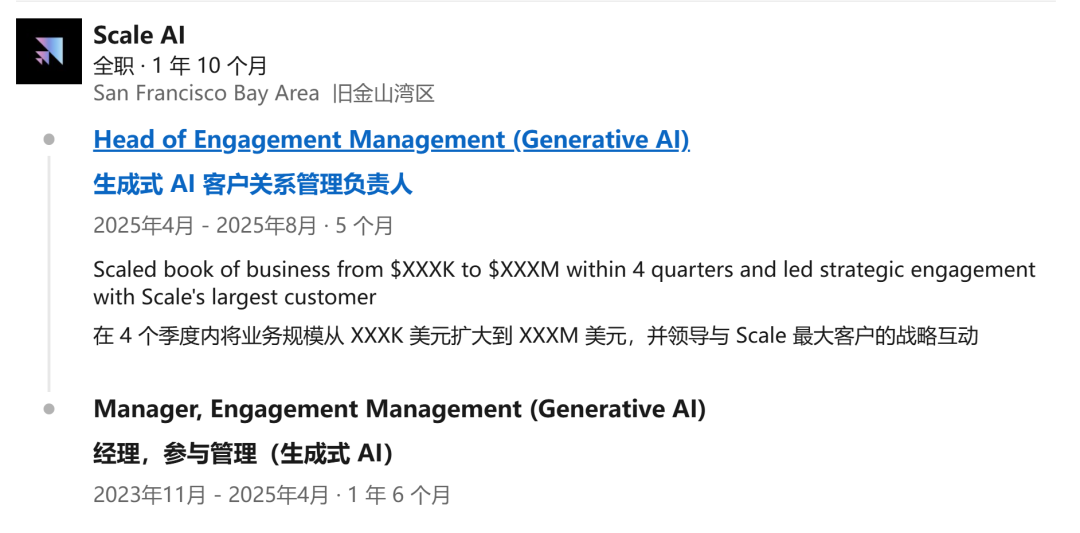
估值2000亿元独角兽怒告前员工:窃取上百份文件,策反数百万美元客户!公司面临更大危机:谷歌和OpenAI等“金主”流失
Mei Ri Jing Ji Xin Wen· 2025-09-06 13:59
Core Viewpoint - Scale AI has filed a lawsuit against former employee Eugene Ling and his new employer Mercor, alleging theft of confidential documents and attempts to poach key clients, amidst a backdrop of client trust issues following a significant investment from Meta [1][12]. Group 1: Lawsuit Details - Scale AI accuses Ling of illegally downloading over 100 confidential documents, including sensitive client information and business strategies, to his personal cloud storage [4]. - The lawsuit claims that Ling began promoting Mercor to Scale AI's important clients while still employed at Scale AI, indicating premeditated actions to benefit his new employer [3][4]. - Mercor is alleged to have offered Ling a commission of 20% on gross profits from client projects he brings in, contingent on generating over $5 million in gross profits [2][3]. Group 2: Client Trust Issues - Following Meta's $14.3 billion investment for a 49% stake in Scale AI, the company faces a trust crisis as major clients like Google and OpenAI reconsider their partnerships due to concerns about data security [12]. - Reports indicate that Google is planning to terminate a $200 million contract with Scale AI, while other clients are also reassessing their relationships [12]. - Internal feedback from Meta's own research teams suggests that Scale AI's data quality is perceived as inferior compared to competitors [13]. Group 3: Mercor's Rise - Mercor, valued at $2 billion, has gained traction by employing experts from specialized fields, contrasting with Scale AI's traditional data annotation model [14]. - The company's strategy focuses on high-quality data annotation by hiring PhD-level professionals, which enhances client retention and addresses specific industry challenges [14]. - Despite being a newer player, Mercor has successfully attracted top-tier clients, including OpenAI, by differentiating its service offerings [14].
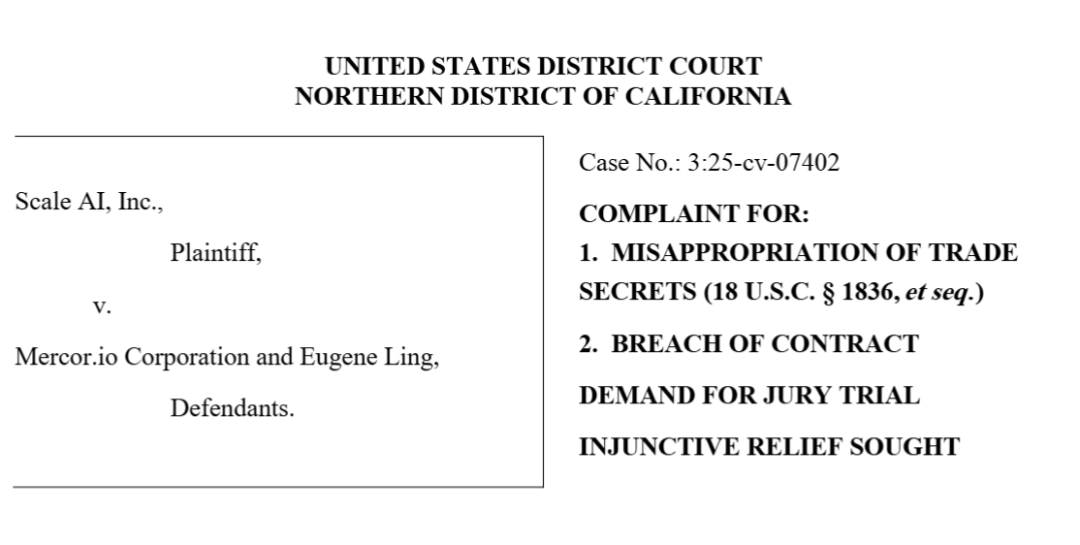
A股反复震荡,9月有哪些重要交易主线?高手这样看
Mei Ri Jing Ji Xin Wen· 2025-09-03 11:17
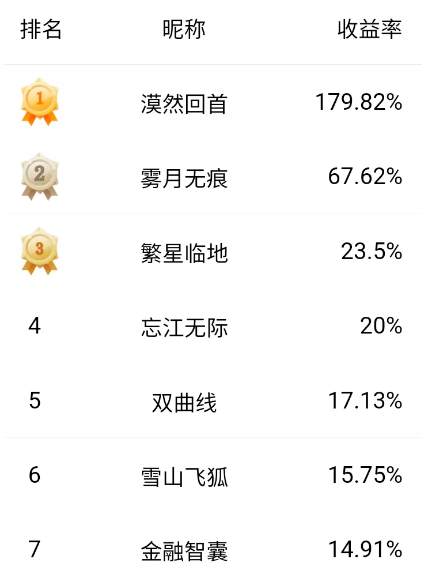
Market Performance - The A-share market continued its downward trend, with the Shanghai Composite Index falling 1.16% to close at 3813.56 points, breaking through the 5-day and 10-day moving averages [1] - The trading volume in the Shanghai and Shenzhen markets was 23.641 trillion yuan, a significant decrease of 510.9 billion yuan compared to the previous day [1] - A total of 823 stocks rose while 4560 stocks declined, indicating a broad market pullback [5] Futures Market - In the futures market, egg and gold prices saw significant increases, while lithium carbonate and stock index futures experienced declines [1] - Participants in the "Economic Grain Cup - National Futures Simulation Championship" capitalized on the rising trends of eggs and gold [1] Competitions and Events - The "Economic Grain Cup - National Futures Simulation Championship" aims to help investors understand and learn about futures trading, providing a "zero-cost trial and high-reward growth" opportunity [4] - The competition features weekly and monthly rewards, with cash prizes for the top performers [4][10] - The ongoing "Digging Gold Competition" allows participants to engage in simulated stock trading with a virtual fund of 500,000 yuan, with rewards for positive returns [4] Investment Insights - Some participants in the competitions are optimistic about sectors such as AI programming, data labeling, and optical switches [7] - A notable strategy discussed among participants is the "rate cut trade," with recent concerns about the independence of the Federal Reserve driving gold prices higher [7] - Participants emphasize the importance of continuous learning and understanding market dynamics to enhance trading skills [7]
大模型下半场:谁在掘金数据标注?
3 6 Ke· 2025-09-02 08:25
Core Insights - Meta's investment of approximately $15 billion in Scale AI for a 49% stake highlights the growing importance of data annotation in the AI industry, pushing Scale's valuation to $29 billion [1] - Scale AI has rapidly evolved from a data annotation service to a key player in the AI landscape, demonstrating the strategic significance of data in model training [1][2] - The acquisition reflects Meta's data anxiety, as it seeks to enhance its AI capabilities amid competition [1][2] Data Annotation Evolution - Data annotation involves labeling raw data to convert it into training samples that AI can understand, essential for applications like autonomous driving [2] - The industry consists of three main types of players: pure human labor companies, crowdsourcing platforms from major tech firms, and intelligent service providers with automation capabilities [3][4] Market Dynamics - The global data annotation market is projected to be around $2 billion, with the U.S. accounting for approximately 40% of this market, valued at $838 million [5][6] - U.S. companies leverage global outsourcing to reduce costs, while also maintaining a technological edge in automation compared to domestic firms [6][7] Industry Trends - The role of data annotators is becoming more complex, requiring specialized knowledge and skills as AI models shift towards vertical applications and reinforcement learning [9][10] - Companies like Surge AI are capitalizing on the demand for high-quality data, achieving significant revenue growth by focusing on specialized data generation [10][11] Future Outlook - Data annotation is expected to evolve towards higher quality and specialization, becoming increasingly central to competitive advantage in the AI industry [11]

清华大学张小劲谈数据标注:高质量数据集走到哪,AI就到哪
Nan Fang Du Shi Bao· 2025-08-29 06:50
Core Insights - The data annotation industry is at a new strategic stage, indicating a maturation process with evolving roles and responsibilities among companies [3] - The relationship between high-quality datasets and artificial intelligence is symbiotic, driving advancements in both fields [6][8] Industry Development - The demand for data annotation is shifting towards economically developed regions and AI frontier areas, reflecting a trend in labor distribution [4] - The industry is primarily concentrated in information technology and scientific research, with a notable demand for annotation in AI research sectors [4] - Traditional manual annotation is facing intense competition and transformation, with future prospects leaning towards automation and intelligent tools [4] Future Trends - The synthetic data field is gaining attention due to the limitations of real-world data and the high costs associated with annotation processes [5] - A 2x2 matrix categorization of data annotation companies reveals trends based on scene strength and foundational strength, indicating diverse development paths [5] - The development of AI-assisted annotation and fully automated technologies is essential for transitioning from labor-intensive to knowledge-intensive processes [8] Recommendations for Industry Growth - Establish multi-round quality inspection and feedback mechanisms to ensure high-quality data for AI models [8][9] - Develop targeted annotation systems to leverage China's rich application scenarios and data resources [9] - Enhance collaboration between academia and industry to accelerate technology transfer and standardization [9] - Focus on skill training and optimizing human resource allocation to support high-quality annotation work [9]

Alarum Technologies .(ALAR) - 2025 Q2 - Earnings Call Transcript
2025-08-28 13:30
Financial Data and Key Metrics Changes - The company reported second quarter revenue of $8.8 million, a slight decrease from $8.9 million in the same period last year, attributed to a shift in customer mix towards the AI segment [16][19] - Non-IFRS gross margin for 2025 was 63%, down from 78% in 2024, reflecting the impact of strategic investments and lower margins from new projects [17] - Non-IFRS net profit was $300,000 for 2025, compared to a net loss of $400,000 in 2024 [19] - Adjusted EBITDA for 2025 was $1 million, down from $3.4 million in 2024 [19] Business Line Data and Key Metrics Changes - The company is experiencing significant growth in the AI segment, which is replacing customers from other segments, leading to a net retention rate (NRR) of 0.98 [16] - The company has launched new projects with major AI and e-commerce platforms, indicating a shift towards larger deal sizes and more significant revenue potential [7][8] Market Data and Key Metrics Changes - The demand for data collection services is increasing, driven by the need for training data for AI models, positioning the company favorably within the evolving market landscape [6][9] - The company is focusing on expanding its customer base, which now includes major tech giants and emerging startups, indicating a broadening market reach [7] Company Strategy and Development Direction - The company is strategically reinvesting earnings into scaling operations, expanding infrastructure, and broadening its IP proxy network to capture long-term value from major AI-driven customers [16][13] - The focus is on building a robust talent pool and developing a cooperative field of data collection products designed for the AI era, aiming to cross-sell to existing customers [11][13] Management's Comments on Operating Environment and Future Outlook - Management highlighted the dynamic and unpredictable nature of the AI market, urging investors to evaluate the company's performance over multiple quarters rather than on a quarter-by-quarter basis [12] - The company anticipates revenue for 2025 to range from $12.8 million, representing a 78% year-over-year increase, with adjusted EBITDA expected to be around $1.1 million [22] Other Important Information - The company has a strong balance sheet with cash and liquid investments of approximately $25 million, allowing for strategic investments while maintaining a focus on sustainable value creation [14][21] - The company is currently experiencing a transition phase, with operating expenses increasing to $5.4 million due to higher employee-related costs, particularly in R&D [18] Q&A Session Summary Question: Clarification on the large customer ramp in Q3 - Management explained that lower margins are due to the new product's infrastructure costs, which are currently high due to the scale of the project [27][28] Question: Infrastructure costs and margin recovery - Management indicated that significant volume increases would be necessary to recover margins, and improvements in cost structure are expected as the project scales [31][32] Question: Broader customer base usage trends - Management noted a significant increase in demand from AI and data-driven customers, with a strong pipeline of new logos expected [36][38] Question: Customer lifetime value and stability - Management expressed optimism that the new AI-driven customer base could lead to higher customer lifetime value and stability over time [42][47] Question: Contribution of the large customer to Q2 results - Management confirmed that the large customer has been ramping up and is already contributing a respectable amount to revenues [51] Question: Visibility into projected revenues - Management stated that there is a level of confidence in the projected $3 million revenue for Q3, with ongoing demand expected [56][57]

当AI浪潮来到西部山乡小县
Xin Hua She· 2025-08-19 10:18
Core Viewpoint - The article highlights how artificial intelligence (AI) is transforming the lives of rural women in Yijun County, Shaanxi Province, by providing new employment opportunities as AI trainers, thereby attracting young talent back to the underdeveloped area [1][6]. Group 1: Employment Opportunities - AI has created new job channels for rural women, allowing them to transition from traditional roles in agriculture to becoming AI trainers [1][5]. - The local government has partnered with technology companies to improve employment quality and attract talent back to the county [4][5]. - Yijun County's AI data labeling company has successfully recruited over 20 employees, primarily rural women, by lowering job entry barriers [5][6]. Group 2: Training and Skill Development - Data labeling, a key role in AI training, requires minimal prior knowledge and can be learned through systematic training, making it accessible to rural women [5][6]. - Employees undergo regular training to meet the increasing accuracy demands of AI applications, with some women now handling complex tasks across various industries [6][7]. - The company has completed over 607,000 data labeling tasks, generating over 35 million yuan in revenue, with a workforce of over 240, predominantly rural women [6][7]. Group 3: Economic Impact - The average monthly income of 4,000 yuan has empowered these women, enhancing their independence and self-esteem [7]. - The growth of the AI sector in Yijun County has led to a revitalization of the local economy, with more young people returning home and new businesses emerging [8][9]. - The establishment of a digital economy innovation center has created over 1,000 jobs, breaking employment barriers in rural areas [9].

GPT-5不及预期,但给OpenAI喂数据的公司却身价暴涨
虎嗅APP· 2025-08-10 13:24
Core Viewpoint - The article discusses the transformative journey of Turing, a company that evolved from a recruitment firm to a key player in the AI data annotation industry, highlighting the increasing demand for high-quality data in AI model training and the challenges faced by the industry as it approaches a performance ceiling with traditional methods [4][6][10]. Group 1: Turing's Evolution - Turing initially focused on remote engineering recruitment but pivoted to providing high-quality data for AI model training after recognizing the demand from OpenAI [5][10]. - The company achieved a valuation of $2.2 billion in just seven years, becoming a leading data annotation firm in Silicon Valley [6][12]. - Turing's talent cloud platform has amassed a network of 4 million developers, enabling rapid assembly of specialized teams for AI projects [9][25]. Group 2: Business Model and Financial Performance - Turing's business model has diversified into two main segments: Turing AGI Advancement, which serves top AI labs, and Turing Intelligence, which focuses on enterprise applications [23][28]. - The company reported an annual recurring revenue (ARR) of approximately $300 million in 2024, a threefold increase from the previous year, and achieved profitability [12][13][28]. - Turing's funding history includes a Series E round in March 2025, raising $111 million and doubling its valuation from $1.1 billion to $2.2 billion [12][16]. Group 3: Market Trends and Challenges - The global AI data collection and annotation market is projected to grow from approximately $18 billion in 2024 to $22 billion in 2025, with a compound annual growth rate of 20-30% [30]. - The industry is shifting towards a "elite feeding" model, where high-quality human annotation and expert involvement are prioritized over traditional methods [32][33]. - Turing faces challenges in maintaining data quality and operational efficiency as competition in the data annotation space intensifies [7][34].

GPT-5不及预期,但给OpenAI喂数据的公司却身价暴涨
Hu Xiu· 2025-08-10 08:37
Core Insights - OpenAI's latest model GPT-5 was released on August 8, but its performance improvements did not meet expectations for a "next-generation model" [2] - The AI industry is at a critical turning point, as traditional methods of enhancing model performance through increased data and computational resources may be reaching their limits [3] - Turing, a company that provides data to OpenAI, has rapidly evolved from a recruitment firm to a data annotation company, achieving a valuation of $2.2 billion in just seven years [4][10] Company Overview - Turing was founded in 2018 by Jonathan Siddharth and Vijay Krishnan, both with backgrounds in computer science from Stanford University [13][15] - Initially focused on remote engineering recruitment, Turing has built a talent cloud platform with a network of 4 million developers, becoming one of the largest and most international talent platforms [7][23] - The company has transitioned to become an AGI infrastructure provider, offering high-quality data and services to top AI labs like OpenAI, Anthropic, Google, and Meta [8][20] Financial Performance - Turing's Series D funding round in December 2021 raised $87 million, leading to a post-money valuation of $1.1 billion, marking its entry into unicorn status [10][11] - The Series E round in March 2025 raised $111 million, doubling its valuation to $2.2 billion, with total funding reaching approximately $225 million [10][11] - Turing's annual recurring revenue (ARR) reached $300 million in 2024, a threefold increase from the previous year, achieving profitability [12][10] Market Dynamics - The global AI data collection and annotation market is projected to grow from approximately $18 billion in 2024 to $22 billion in 2025, with a compound annual growth rate of 20-30% [26] - The demand for high-quality data is increasing as AI labs face challenges in model performance improvements, leading to a shift towards "elite feeding" in data annotation [29][30] - Turing's ability to provide a vast pool of high-quality data and expert annotations positions it well in a competitive landscape where data quality is becoming the key differentiator [31][36] Business Model - Turing operates two main business lines: Turing AGI Advancement, which serves AI labs with data services, and Turing Intelligence, which develops AI applications for enterprises [20][24] - The company utilizes its talent cloud to quickly assemble specialized teams for AI projects, ensuring rapid response to client needs [23] - Turing's business model has evolved to include subscription-based services and project-based engagements, demonstrating its adaptability in a changing market [25][24]