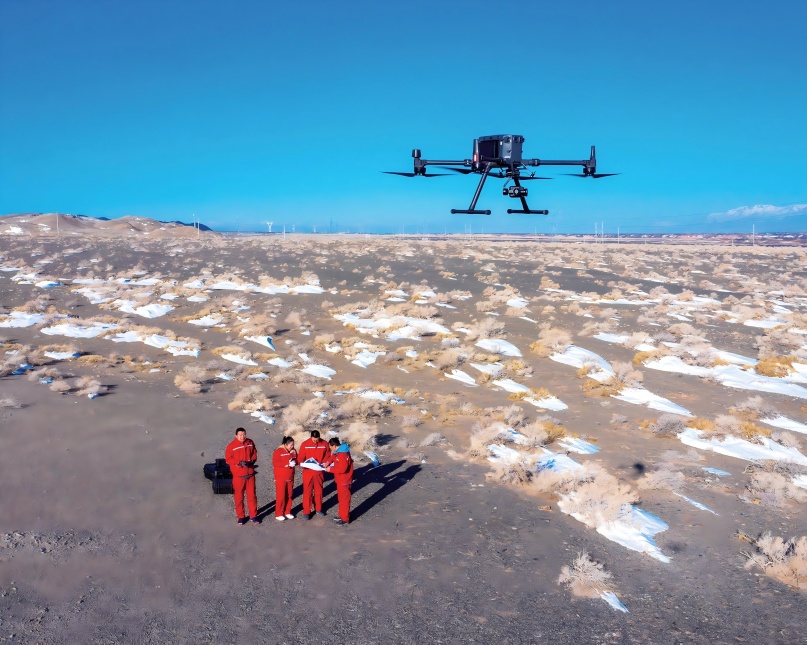
新一轮找矿突破战略行动

Search documents
山东提前超额完成“十四五”找矿任务
Da Zhong Ri Bao· 2025-07-17 00:55
Core Insights - Shandong Province has exceeded its mineral exploration targets for the "14th Five-Year Plan," adding 583 tons of gold resources and ranking first in the country for newly discovered iron ore and other strategic minerals [1][2] Group 1: Mineral Resource Development - The province has established 25 strategic mineral exploration projects focusing on key areas such as the Jiaodong gold mine and the Luxi iron mine, achieving breakthroughs in both new resource quantities and newly identified mineral reserves [1] - New mineral resources added since the beginning of the "14th Five-Year Plan" include 1.44 billion tons of iron ore, 212 million tons of crystalline graphite, and 37 million tons of titanium, with a total estimated value exceeding 500 billion yuan [2] - Shandong has confirmed reserves of 26 out of 36 strategic minerals identified by the national government, highlighting its comprehensive mineral resource base [2] Group 2: Green Mining Initiatives - Shandong has prioritized green mining practices, establishing 576 green mines, with 63 at the national level and 464 at the provincial level, leading the country in the number of provincial-level green mines [3] - The province has completed ecological restoration of 15.3 million acres of historically abandoned mines, emphasizing its commitment to sustainable mining practices [3] Group 3: Technological Innovation - Technological innovation is identified as a key driver for high-quality development in Shandong's mining sector, with significant advancements in geological exploration technologies and equipment [4] - The province has developed a comprehensive underground 3D geological model, enhancing the visualization of subsurface geological structures and mineral deposits [4] - Shandong aims to strengthen its geological survey capabilities and accelerate offshore and deep-earth exploration, while also focusing on the green transformation of the mining industry [4]
端牢能源“饭碗”!山东5种矿产保有资源量全国第一,将继续推动增储上产
Qi Lu Wan Bao· 2025-07-16 08:51
Core Viewpoint - The Shandong Provincial Government is implementing a new round of mineral exploration strategies to enhance the reserves and production of strategic minerals, emphasizing the importance of mineral resources for national security and economic stability [1]. Group 1: Strategic Actions for Mineral Resource Development - Strengthening basic geological surveys by accelerating the implementation of a new geological mapping plan to comprehensively understand the geological resources at a scale of 1:50000, focusing on key mineral areas [2]. - Accelerating offshore and deep geological exploration, particularly in the coastal areas where significant mineral resources are expected, and expanding exploration efforts to depths of 3000 meters [2]. - Enhancing technological support for mineral exploration by integrating advanced research and artificial intelligence to improve the efficiency and accuracy of mineral resource identification [2]. Group 2: Market Innovation and Environmental Sustainability - Innovating the mining market by encouraging geological survey units and mining companies to conduct strategic mineral investigations, providing financial incentives for successful exploration rights transfers [3]. - Promoting green transformation in the mining industry by ensuring high completion rates of green mining standards across various sizes of production mines and enhancing the utilization of by-products and low-grade ores [3]. - Strengthening regulatory enforcement to combat illegal mining activities and ensure sustainable development in the mining sector, aiming for high-quality growth in the industry [3].
山东扎实推进新一轮找矿突破战略行动,实现新增资源量和新探明储量矿种“双突破”
Qi Lu Wan Bao· 2025-07-16 08:43
Core Insights - Shandong Province is actively implementing a new round of mineral exploration strategy to enhance the reserves and production of strategic minerals, achieving significant results ahead of the national targets for the 14th Five-Year Plan [1][3] Group 1: Strategic Actions and Collaborations - The provincial government has integrated the mineral exploration strategy into the green, low-carbon, and high-quality development initiatives, with strong support from the Ministry of Natural Resources [3] - A strategic cooperation agreement was signed between the provincial government and the Ministry of Natural Resources to enhance collaboration in geological surveys and other areas [3] - A total of 44 billion yuan has been invested in exploration funding since the beginning of the 14th Five-Year Plan, with contributions from 14 departments [3] Group 2: Resource Development Achievements - Shandong has established 25 strategic mineral exploration projects, achieving breakthroughs in both new resource quantities and newly identified reserves [4] - Since the start of the 14th Five-Year Plan, Shandong has added 583 tons of gold resources, 14.4 million tons of iron ore, and 2.12 million tons of crystalline graphite, leading the nation in gold and iron ore resource additions [4] - The newly discovered resources are estimated to be worth over 500 billion yuan, significantly supporting the resilience of the industrial and supply chains [4] Group 3: International Cooperation and Expansion - Shandong is actively participating in the Belt and Road Initiative, enhancing international cooperation in energy and resource investments [6] - The province has engaged in geological surveys and mineral exploration projects in over 20 countries across Asia, Africa, and Australia [6] Group 4: Green Development Initiatives - Shandong has prioritized green mining practices, establishing local standards for green exploration and undertaking ecological restoration of abandoned mines [7] - The province has completed ecological restoration of 153,000 acres of abandoned mines and has built 576 green mines, leading the nation in the number of green mines at provincial and national levels [7] Group 5: Innovation and Technology Development - Shandong is participating in national technological initiatives to enhance geological exploration capabilities, focusing on innovation as a key driver for high-quality development in the mining sector [8] - The province has developed a comprehensive underground 3D geological model, providing detailed insights into geological structures and mineral deposits [8]

精细“CT”扫描矿产、“一趟钻”钻井技术……山东找矿装备“大升级”
Qi Lu Wan Bao· 2025-07-16 08:43
Group 1 - The core viewpoint of the news is that Shandong Province is actively implementing a new round of mineral exploration breakthrough strategy to enhance the reserves and production of strategic minerals, with significant achievements in equipment upgrades and technological innovations [1] Group 2 - The province has invested over 230 million yuan in key equipment for mineral exploration, acquiring more than 2,000 advanced pieces of equipment for drilling, geophysical exploration, surveying, and testing [2] - Shandong has developed a comprehensive geological experimental center and established 29 key technology innovation platforms, including an academician workstation and a national coal field geophysics laboratory [2] Group 3 - The province has pioneered large-diameter directional rapid drilling technology, improving drilling efficiency by over 50%, and has introduced innovative mineralization theories and models [3] - The coalbed methane exploration project has achieved a maximum daily drilling rate of 709 meters, setting multiple records in the region [3] - The Shandong Coalfield Geological Bureau aims to continuously innovate exploration theories and methods, enhance equipment configuration, and improve exploration processes to contribute to the province's high-quality economic development [3]
多地推动战略性矿产资源增储上产,矿业权市场热度持续攀升
Di Yi Cai Jing· 2025-07-14 06:59
Core Insights - The newly revised Mineral Resources Law emphasizes national mineral resource security and aims to establish a comprehensive system for mineral resource security [1] - The implementation of the new law is expected to create new development opportunities for high-quality growth in the mining industry, with multiple policy benefits being released [1] - There is a significant increase in investment in mineral exploration, with a 23.9% year-on-year growth in funding for non-oil and gas mineral exploration in the first half of the year [2] Group 1: Policy and Regulatory Changes - The new Mineral Resources Law, effective from July 1, introduces a mineral rights registration system and enhances the protection of mineral rights as a type of property right [1] - The law aims to improve the licensing system for mineral exploration and mining, as well as the management of transfer contracts [1] - The Ministry of Natural Resources has increased the supply of exploration rights, with a record 581 strategic mineral exploration rights to be issued in 2024 [5] Group 2: Investment Trends - In the first half of the year, total investment in mineral exploration reached 6.993 billion yuan, with social funding accounting for 3.359 billion yuan, indicating a growing enthusiasm among enterprises for mineral exploration [2] - Investment in various minerals such as tin, bauxite, tungsten, copper, and phosphate has seen over 50% year-on-year growth [2] - The mining rights market is becoming increasingly active, with significant transactions reported in regions like Gansu and Inner Mongolia, totaling hundreds of billions of yuan [5][6] Group 3: Market Environment - The external environment for mineral resources is currently unstable, while domestic demand for mineral resources is on the rise [4][6] - The mining industry is undergoing a transformation period, balancing development and ecological protection, necessitating a new round of strategic actions for mineral exploration [6][7] - The Ministry of Natural Resources is encouraging policy innovation and social capital involvement in mineral geological surveys to address various local issues [7]
重要矿种找矿取得重大突破,非油气矿产勘查投入继续增长
Di Yi Cai Jing· 2025-07-10 03:24
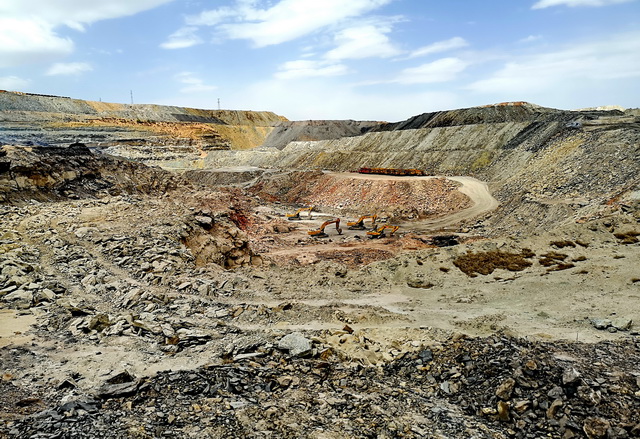
Core Insights - In the first half of 2025, national non-oil and gas mineral exploration investment reached 6.993 billion yuan, a year-on-year increase of 23.9%, indicating a sustained rapid growth trend [1] - Significant breakthroughs were achieved in the exploration of important mineral resources, with 38 new mineral sites discovered, a 31% increase year-on-year [1] - The majority of mineral types have already completed their exploration targets ahead of the "14th Five-Year Plan" [1] Investment Trends - Social funding for mineral exploration amounted to 3.359 billion yuan, a year-on-year increase of 28.2%, accounting for 48.0% of total mineral exploration investment, reflecting increased corporate engagement in mineral exploration [2] - Central and local government financial contributions reached 3.634 billion yuan, a year-on-year increase of 20.1% [2] Mineral Resource Development - Exploration investments for various minerals such as tin, bauxite, tungsten, copper, and phosphate have increased by over 50%, while investments in coal, lead-zinc, molybdenum, gold, and graphite also saw varying degrees of growth [4] - The Ministry of Natural Resources has increased the supply of exploration rights, with 581 strategic mineral exploration rights issued in 2024, the highest in a decade, and 318 issued in the first half of 2025 [5] Policy and Strategic Actions - The current external environment for mineral resources is unstable, while domestic demand is rising, necessitating a new round of strategic actions for mineral exploration [5] - The Ministry of Natural Resources has emphasized the need for policy innovation, encouraging social capital to conduct geological surveys in areas lacking mining rights, and improving the mining land system [5] - There is a focus on enhancing technological support capabilities and addressing practical issues raised by various regions [5]
自然资源部:上半年全国新发现矿产地38处
Ren Min Ri Bao· 2025-07-10 02:17
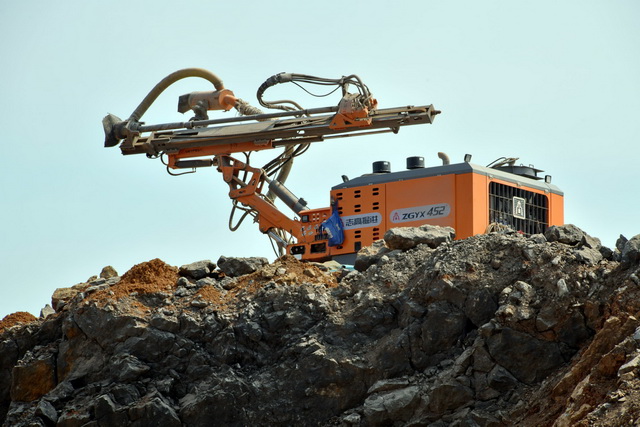
Group 1 - In the first half of 2023, 38 new mineral sites were discovered nationwide, representing a 31% year-on-year increase, with 25 of them being large and medium-sized [1] - Significant breakthroughs were made in important mineral types, including the discovery of China's first super-large uranium mine in Heilongjiang Province and a new rubidium resource of 3.37 million tons in Hebei Province [1] - Most mineral types have completed their exploration targets ahead of schedule for the 14th Five-Year Plan [1] Group 2 - In the first half of 2025, the total investment in non-oil and gas mineral exploration reached 6.993 billion yuan, a 23.9% year-on-year increase, indicating a sustained growth trend [2] - Social funding accounted for 3.359 billion yuan, a 28.2% increase, making up 48.0% of total exploration investment, reflecting increased corporate enthusiasm for mineral exploration [2] - The Ministry of Natural Resources has increased the supply of exploration rights, with 581 strategic mineral exploration rights issued in 2024, the highest in a decade, and 318 issued in the first half of 2025 [2]
国资委:大力实施新一轮找矿突破战略行动 推动以超导材料为代表的新材料产业高质量发展
news flash· 2025-07-04 09:56
Core Viewpoint - The State-owned Assets Supervision and Administration Commission (SASAC) emphasizes the need for a new round of mineral exploration strategies to enhance the development of the new materials industry, particularly superconducting materials, and to ensure high-quality growth in the sector [1] Group 1: Strategic Actions - SASAC aims to improve the security of important metal mineral resources and accelerate the exploration, investment, development, construction, smelting, and processing across the entire industry chain [1] - The implementation of a new round of breakthrough mineral exploration strategies is prioritized to increase the reserves and production of important metal minerals [1] - The "going out" strategy is to be promoted to establish a positive image of central enterprises [1] Group 2: Economic Growth and Industry Trends - The focus is on achieving high-quality stable growth while closely monitoring macroeconomic conditions and industry trends [1] - Companies are encouraged to adjust their operational strategies in a timely manner, emphasizing cost reduction and efficiency improvement [1] - There is a call to plan and layout major projects that effectively support the expansion of domestic demand [1] Group 3: Technological Innovation and Transformation - The development of new productive forces is to be accelerated with increased investment in technological innovation [1] - Traditional businesses such as resource development, smelting, processing, and engineering construction are encouraged to transition towards high-end, intelligent, and green practices [1] - The high-quality development of the new materials industry, particularly superconducting materials, is a key focus area [1]
2025中国探矿者年会在新疆举行
Zhong Guo Zi Ran Zi Yuan Bao· 2025-06-18 01:17
Group 1 - The 2025 China Explorer Conference was held in Urumqi, Xinjiang, focusing on the theme "Anchoring Strategic Resources to Achieve Increased Reserves and Production" [1] - Xinjiang's government emphasized the importance of geological exploration and the integration of national geological exploration forces to enhance resource development [1][2] - The conference highlighted the establishment of a "central-local-enterprise" coordination mechanism to promote a unified national exploration strategy [2] Group 2 - The conference recognized the need for geological survey units and mining enterprises to prioritize finding large and urgently needed mineral resources [2] - Reports were presented by Chinese Academy of Engineering academicians on new energy and innovative exploration technologies [2] - Various events were organized during the conference, including a project promotion meeting and an exhibition showcasing achievements in mineral exploration since the founding of New China [2]
地质援疆 共筑繁荣 共画“同心圆”、共下“一盘棋”,集结全国地质行业在疆力量,全面融入国家援疆工作总体布局——
Zhong Guo Zi Ran Zi Yuan Bao· 2025-06-13 01:30
Core Viewpoint - The news highlights the significant progress and strategic importance of mineral resource exploration and development in Xinjiang, emphasizing its role as a national energy resource security base [2][10]. Group 1: Government Initiatives and Support - The Ministry of Natural Resources has initiated geological assistance work in Xinjiang, aiming to accelerate the region's development as a national energy resource security base [2][10]. - A new round of mineral exploration strategies has been launched, with increased financial support for geological surveys, raising funding from 150 million yuan in 2023 to 500 million yuan in 2024 and 917 million yuan in 2025 [3][4]. - The government is focusing on enhancing geological work in Xinjiang, with a commitment to improve resource management and technological innovation in the mining sector [4][11]. Group 2: Mineral Resource Potential - Xinjiang is rich in mineral resources, having discovered 154 types of minerals, which is over 88% of the total in China, including strategic minerals like high-purity quartz, lithium, and zirconium [3][4]. - The region has seen a surge in mining rights transfers, with 171 projects attracting significant attention in 2023, and mining rights transfer revenue reaching 520 million yuan in the first quarter of this year [2][3]. - Major resource bases have been established, including large-scale lithium and iron mines, contributing to the region's mineral production capabilities [6][7]. Group 3: Collaborative Efforts and Achievements - Various provinces are collaborating with Xinjiang to enhance geological exploration, with over 90 million yuan invested in geological survey projects since 2024 [5][8]. - The establishment of strategic partnerships, such as the cooperation between Henan and Hami, aims to integrate advanced geological technologies and improve local resource management [8][12]. - Successful projects, like the Karcheer Fluorspar Mine, have significantly boosted local economies, increasing the region's fluorspar reserves ranking from 24th to 4th nationally [7][8]. Group 4: Future Directions and Goals - The focus is on enhancing the exploration and development of strategic minerals, with a goal to improve the discovery rate of key resources, which currently averages below 20% [6][12]. - The geological assistance work is seen as a long-term commitment to empower Xinjiang's resource exploration and development, aligning with national economic strategies [9][10]. - The aim is to create a comprehensive geological database and improve collaboration between military and civilian geological efforts to optimize resource management [11][12].