铜矿

Search documents
1-2月贸易数据点评:出口保持强韧性,进口同比增速上行
Tai Ping Yang Zheng Quan· 2026-03-13 14:40
Export Performance - In January-February 2026, China's export value reached $656.58 billion, a year-on-year increase of 21.8%[3] - In February 2026, exports amounted to $299.88 billion, showing a significant year-on-year growth of 39.6%[4] - The export growth was supported by a low base effect from the previous year and a recovery in global manufacturing PMI, which remained above the threshold at 50.9% and 51.9%[4] Regional Export Trends - Exports to the EU increased by 27.8%, up 19.4 percentage points from the previous month, driven by the recovery in EU manufacturing[4] - Exports to Africa saw a remarkable growth of 49.9%, while exports to ASEAN and Japan grew by 29.4% and 8.9%, respectively[4] - Exports to the US decreased by 11.0%, although the decline was less severe compared to a 20.0% drop in December 2025[4] Import Performance - In January-February 2026, China's import value totaled $442.96 billion, with a year-on-year growth of 19.8%[5] - February imports were $208.90 billion, reflecting a 13.8% increase compared to the same month last year[5] - The increase in imports was primarily due to recovering domestic demand and higher imports of intermediate goods related to rising exports[5] Regional Import Trends - Imports from the EU rose by 11.7%, while imports from South Korea surged by 35.8%[5] - Imports from Japan increased by 26.5%, whereas imports from the US fell by 26.7%, marking a significant widening of the decline compared to December 2025[5] Product-Specific Insights - Imports of electromechanical products and high-tech products grew by 24.0% and 27.7%, respectively, contributing significantly to overall import growth[5] - Agricultural products saw a year-on-year growth of 9.7%, with edible vegetable oil surging by 52.4%[5] - Integrated circuit imports increased by 39.8%, reflecting the impact of the AI technology wave on demand[5] Risk Factors - Potential risks include policy uncertainties, unexpected changes in macroeconomic fundamentals, and geopolitical risks overseas[6]
金诚信(603979):首次覆盖报告:矿服赋能资源开发,双轮驱动高成长
GUOTAI HAITONG SECURITIES· 2026-03-10 02:26
Investment Rating - The report initiates coverage with a rating of "Buy" and sets a target price of 81.30 CNY [5][12]. Core Views - The company is positioned for high growth driven by a dual engine model of "mining services + resources," particularly as its core copper projects ramp up production [2][12]. - The report forecasts significant revenue growth, with total revenue expected to reach 11,955 million CNY in 2025, representing a year-on-year increase of 20.2% [4][14]. - The net profit attributable to shareholders is projected to grow to 2,322 million CNY in 2025, reflecting a substantial increase of 46.6% year-on-year [4][14]. Financial Summary - Total revenue is forecasted to grow from 7,399 million CNY in 2023 to 15,407 million CNY by 2027, with a compound annual growth rate (CAGR) of approximately 18.3% [4][14]. - Net profit attributable to shareholders is expected to increase from 1,031 million CNY in 2023 to 3,918 million CNY in 2027, indicating a CAGR of around 16.0% [4][14]. - Earnings per share (EPS) are projected to rise from 1.65 CNY in 2023 to 6.28 CNY in 2027 [4][14]. Market Position and Growth Drivers - The company is recognized as a leading comprehensive mining service provider, successfully transitioning to a dual engine model that enhances its growth potential [12]. - The report highlights a clear production growth path, with significant contributions expected from various copper mining projects, including Dikulushi, Lonshi, and Lubambe [12][14]. - The company aims to leverage advanced technologies such as artificial intelligence and automation to improve operational efficiency and safety in complex geological environments [12]. Supply and Demand Dynamics - The global copper supply is constrained by insufficient capital expenditure and declining ore grades, while structural demand is expanding due to energy transitions and technological advancements [12]. - The report anticipates a long-term tight balance in the refined copper market, which is expected to support upward price trends and enhance profitability for copper producers [12].

“HALO”能火多久?
和讯· 2026-03-09 09:13
Group 1 - The article discusses the emergence of the "HALO" strategy, which stands for Heavy Assets, Low Obsolescence, as a response to geopolitical tensions and market shifts towards tangible assets that are less susceptible to AI disruption [3][4][5]. - The "HALO" strategy has gained traction due to a significant capital movement towards sectors like oil, gas, and utilities, with notable daily inflows exceeding 90 billion yuan into the electrical grid sector [2][8]. - The market is witnessing a re-evaluation of asset values, with investors shifting focus from light assets to hard assets that are difficult to replicate and have high construction costs, as highlighted by Goldman Sachs [4][5]. Group 2 - The recent geopolitical conflicts, particularly in the Strait of Hormuz, have intensified the demand for hard assets, leading to a surge in energy asset prices and a perceived "geopolitical premium" [12][13]. - The article notes that the fear of AI's disruptive potential has led to a significant sell-off in tech stocks, prompting investors to seek refuge in "HALO" assets, which are viewed as immune to technological obsolescence [11][10]. - The "HALO" strategy is characterized by its structural pillars, including materials, utilities, railroads, waste management, defense, and infrastructure, all of which share the trait of high replication costs and natural physical moats [4][5]. Group 3 - There is a debate on whether the current capital influx into "HALO" assets is overestimating AI's destructive capabilities while underestimating human innovation's ability to overcome physical constraints [18][19]. - Optimists argue that the integration of AI with traditional energy sources will enhance the strategic value of hard assets, positioning them as essential components of the digital economy [16][17]. - The article concludes that the relationship between "HALO" assets and AI is not adversarial; rather, they complement each other, with hard assets serving as critical infrastructure in the AI era [20][21].


重磅信号!全球锂矿暴涨,津巴布韦全面禁运,中国恐被冲击
Sou Hu Cai Jing· 2026-02-27 07:45
Group 1 - Zimbabwe, the world's fourth-largest lithium producer, has announced a sudden export ban on all lithium concentrates and ores, impacting global supply dynamics significantly [2][4] - The ban aims to reshape the distribution of industrial chain profits by forcing foreign companies to invest locally and only allowing the export of higher-value lithium sulfate [4] - Zimbabwe accounts for 15% of China's lithium concentrate imports, and the ban is expected to exacerbate existing supply-demand gaps in the lithium market [4][5] Group 2 - Current domestic lithium concentrate inventory in China is below 20,000 tons, with turnover days for material factories under 10 days, indicating a critical supply shortage [5] - The lithium price is projected to rise significantly, potentially exceeding 200,000 yuan per ton and possibly reaching 300,000 yuan per ton due to low inventory, supply disruptions, and recovering demand [5] - The global competition for mineral resources is intensifying, with countries increasing capital expenditures to secure self-sufficiency in industrial products, making basic resources a strategic commodity [7][12] Group 3 - The resource nationalism trend is evident as countries tighten export controls to enhance local processing and retain higher profit margins, as seen with recent actions from Congo and Indonesia [14][20] - The first tier of countries likely to follow Zimbabwe's lead includes those in the lithium triangle of South America, particularly Chile, which may restrict new mining permits [16][18] - The second tier includes Southeast Asian and African nations, with Indonesia likely to extend its export restrictions to copper and bauxite, while Congo may halt cobalt concentrate exports [18][20] Group 4 - The overarching strategy for resource-rich countries is to control resource sources, prohibit raw mineral exports, and leverage geopolitical tensions to enhance bargaining power [22][25] - Key areas to monitor for potential policy changes include cobalt resources in Congo, lithium resources in Chile, and copper and bauxite in Indonesia, as these are likely to be the next focal points for stringent controls [24]
西部矿业:公司拥有丰富的国内铜矿资源,具备显著的战略稀缺性
Zheng Quan Ri Bao Wang· 2026-02-26 10:10
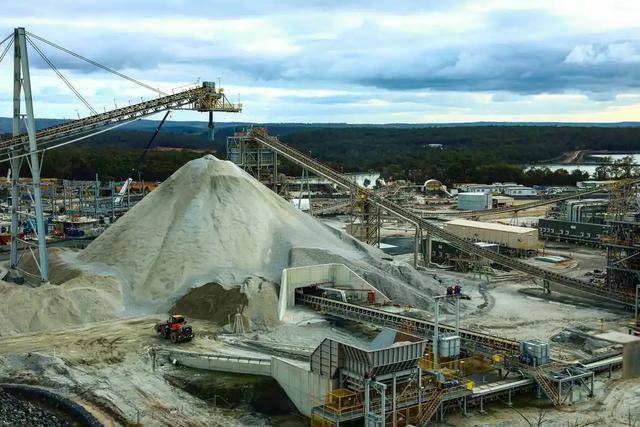
Group 1 - The company possesses abundant domestic copper resources, which are strategically scarce [1] - In response to the national emphasis on enhancing copper resource security, the company plans to accelerate existing mine resource expansion and external resource development [1] - The company will continue to increase exploration efforts to strengthen its resource moat and enhance resource security capabilities [1]

被多国竞逐,中亚关键矿产家底有多厚?
Huan Qiu Shi Bao· 2026-02-26 06:47
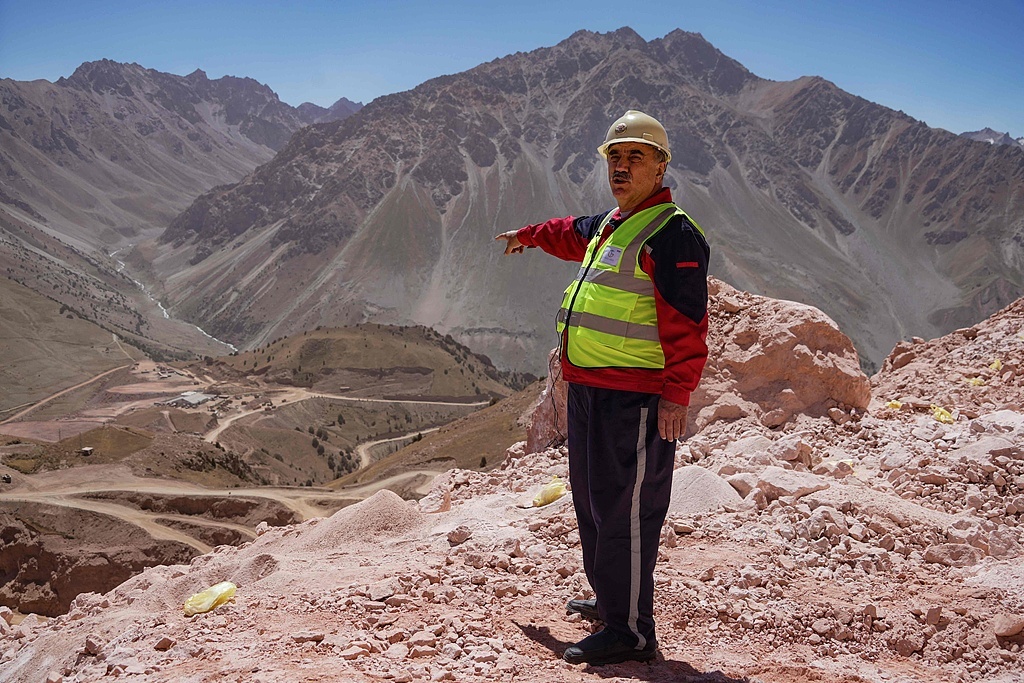
Core Insights - The United States has signed an agreement with Uzbekistan to secure a more stable supply of critical mineral resources, highlighting the strategic importance of these resources in the global energy transition and technological revolution [1] Group 1: Strategic Importance of Critical Minerals - Critical minerals have evolved from mere industrial raw materials to key elements reshaping global industrial and geopolitical landscapes [1] - Central Asia is rich in various critical mineral resources, attracting global attention, with the region being described as "extremely wealthy" by former U.S. President Trump [2][3] Group 2: Mineral Resources in Central Asia - Central Asia has become a significant player in the global strategic resource production, with countries like Kazakhstan, Kyrgyzstan, and Uzbekistan holding substantial reserves of critical minerals [3] - Uzbekistan has identified over 30 types of mineral resources, ranking as the fifth-largest uranium supplier globally and the 11th in copper reserves [4] - Tajikistan's antimony production accounts for 10% of global supply, with the country producing approximately 21,000 tons in 2023 [2] Group 3: Challenges in Mineral Development - The mining sector is a crucial economic pillar for Kazakhstan and Uzbekistan, contributing approximately 17% and 8% to their GDP, respectively [5] - Central Asia faces challenges in mineral development, including outdated geological survey data and limited investment, which hinder resource exploitation [5][7] - The region's reliance on outdated power infrastructure and seasonal electricity shortages poses significant barriers to expanding mining operations [7] Group 4: Future Development Plans - Kazakhstan aims to modernize its mining sector, viewing critical mineral development as a priority, with plans for extensive geological exploration and investment in processing technologies [8][9] - Kyrgyzstan has approved a development plan for critical minerals, targeting an annual export increase to $1 billion by 2030 [9] - Uzbekistan plans to implement a $2.6 billion project for rare metal extraction and processing over the next three years [9]
【环时深度】被多国竞逐,中亚关键矿产家底有多厚?
Huan Qiu Shi Bao· 2026-02-25 22:55
Core Insights - The article discusses the strategic importance of critical mineral resources in Central Asia, highlighting the region's rich deposits and the geopolitical implications of their extraction and trade [1][10]. Group 1: Mineral Resources Overview - Tajikistan's antimony production accounts for 10% of global supply, with an estimated output of 21,000 tons in 2023, representing a quarter of the world's total [4]. - Central Asia is home to significant mineral reserves, with manganese, chromium, lead, zinc, titanium, aluminum, copper, and cobalt having substantial global shares [4]. - Kazakhstan is noted for having the largest chromium reserves globally, estimated at 230 million tons, and is the second-largest producer of chromium [5]. Group 2: Regional Developments - Uzbekistan is rapidly establishing itself as a regional mineral hub, identifying over 30 types of mineral resources, including lithium and molybdenum, and is the fifth-largest uranium supplier globally [6]. - Kazakhstan's geological surveys have revealed a new rare earth metal deposit estimated to exceed 20 million tons, potentially making it the third-largest in the world [5]. - Kyrgyzstan is gaining recognition for its lithium and antimony reserves, which are crucial for battery and electronic device manufacturing [7]. Group 3: Economic Impact and Challenges - The mining sector significantly contributes to the GDP of Kazakhstan (17%) and Uzbekistan (8%), reflecting the region's mining tradition and existing extraction conditions [8]. - Challenges include outdated geological data, limited investment, and a lack of local processing capabilities, which hinder the development of critical mineral resources [9][8]. - The region requires an estimated $20 billion investment by 2030 to upgrade infrastructure and integrate renewable energy for mining operations [9]. Group 4: Future Plans and Concerns - Kazakhstan aims to modernize its mining sector, with plans for extensive geological exploration and the introduction of advanced processing technologies [10]. - Kyrgyzstan's government has set a goal to increase critical mineral exports to $1 billion by 2030 and attract $700 million in foreign direct investment [11]. - Concerns exist regarding the potential for increased dependency on commodity exports and the associated socio-economic inequalities if investments remain focused solely on resource extraction [11].
黄金大热,这家上市公司增资
Sou Hu Cai Jing· 2026-02-13 04:29
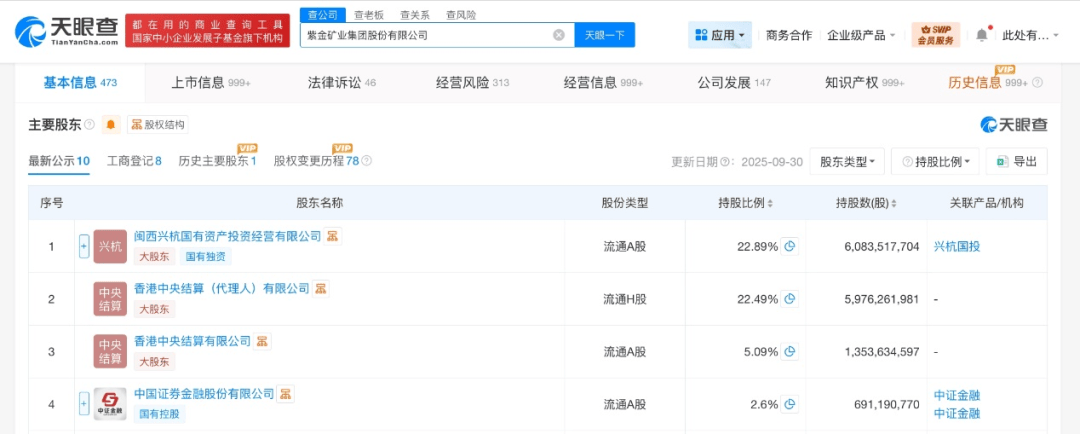
Core Viewpoint - Zijin Mining's registered capital has increased from approximately 2.63 billion RMB to about 2.66 billion RMB, reflecting a growth of approximately 0.947% [1]. Group 1: Company Overview - Zijin Mining Group Co., Ltd. was established in September 2000 and is engaged in mineral resource exploration, gold mining, gold smelting, copper mining, information system integration services, and IT consulting services [1]. - The company is jointly held by Minxi Xinghang State-owned Assets Investment Management Co., Ltd., Hong Kong Central Clearing Limited (as an agent), and Hong Kong Central Clearing Limited [1]. Group 2: Shareholder Information - The major shareholders include: - Minxi Xinghang State-owned Assets Investment Management Co., Ltd. with a holding of 22.89% [2]. - Hong Kong Central Clearing (Agent) Limited with a holding of 22.49% [2]. - Hong Kong Central Clearing Limited with a holding of 5.09% [2]. - China Securities Finance Corporation Limited with a holding of 2.6% [2]. Group 3: Capital Change Details - The registered capital change was officially recorded on February 11, 2026, with the previous registered capital being 2,632.82 million RMB and the new registered capital being 2,657.75 million RMB [2].

紫金矿业增资至26.6亿
Xin Lang Cai Jing· 2026-02-13 02:21
Group 1 - The core point of the article is that Zijin Mining (601899) has recently undergone a business change, increasing its registered capital from approximately 2.63 billion RMB to about 2.66 billion RMB [1] - Zijin Mining Group Co., Ltd. was established in September 2000 and is led by legal representative Zou Laichang, with a business scope that includes mineral resource exploration, gold mining and selection, gold smelting, copper mining and selection, information system integration services, and information technology consulting services [1] - Shareholder information indicates that the company is jointly held by Minxi Xinghang State-owned Assets Investment and Operation Co., Ltd., Hong Kong Central Clearing (Agent) Co., Ltd., and Hong Kong Central Clearing Co., Ltd. [1]
美日联手加码稀土争夺战,120亿美元布局全球矿产,挑战中国供应链格局
Sou Hu Cai Jing· 2026-02-11 21:02
Group 1 - The core focus of the article is the strategic competition between the US and Japan to secure critical mineral resources, driven by concerns over China's dominance in this sector [1][3][15] - The US has initiated a "Treasury Plan" with a budget of $12 billion to stockpile essential minerals, aiming to reduce reliance on foreign sources, particularly China [1][3] - Japan is actively exploring seabed resources, specifically rare earth elements, with the "Chikyū" deep-sea vessel successfully extracting mineral-rich sediment from the Minami-Tori-shima area [5][7] Group 2 - In 2025, the US Department of Defense and the Department of Energy plan to invest several billion dollars in domestic rare earth producers to enhance mineral security [3][5] - A cooperation agreement was signed between Japan and the US, with Japan committing to invest $550 billion in various sectors, including nuclear energy, AI, and critical minerals [5][11] - The competition for critical minerals is not limited to the US and Japan; African nations like the Democratic Republic of the Congo are implementing export quota policies, affecting global cobalt prices and supply chains [9][11] Group 3 - Despite the significant investments, experts warn that the high costs and technical challenges of deep-sea mining could delay commercial viability for at least a decade [9][15] - China currently controls approximately 70% of global rare earth production and 90% of processing, creating substantial barriers for other nations attempting to compete [13][15] - The article highlights the increasing assertiveness of resource-rich countries in Africa, which are becoming less willing to allow resources to flow to any single nation [15]