日本军国主义复活

Search documents
台湾属于中国的史实和法理不容置疑
Ren Min Ri Bao· 2025-12-09 22:32
Group 1 - The core viewpoint of the article emphasizes that Taiwan has historically and legally been part of China, and recent statements from Japanese leaders regarding the use of force in Taiwan are seen as a serious infringement on China's sovereignty and territorial integrity [1][2][3] - Wang Yi, the Chinese Foreign Minister, outlined historical documents such as the Cairo Declaration and the Potsdam Proclamation, which affirm that Taiwan must be returned to China after World War II, highlighting the legal basis for China's claim over Taiwan [2][3] - The article mentions that the 1971 UN General Assembly Resolution 2758 restored all rights of the People's Republic of China in the UN and expelled representatives of Taiwan, further solidifying Taiwan's status as a part of China [2][3] Group 2 - Wang Yi stated that the series of historical facts politically and legally confirm that Taiwan is Chinese territory, and any attempts at "Taiwan independence" are viewed as a violation of both Chinese and international law [3] - The article notes that this year marks the 80th anniversary of China's victory in the War of Resistance against Japan, and it calls for Japan, as a former colonial power, to reflect on its past actions and refrain from military threats regarding Taiwan [3] - The article concludes by asserting that all peace-loving people have a responsibility to uphold the principles of the UN Charter and to prevent Japan from militarizing or reviving militarism [3]
诸多动向标志着日本安保政策加速“向右转” 引发各方严重关切
Yang Shi Wang· 2025-12-07 05:56
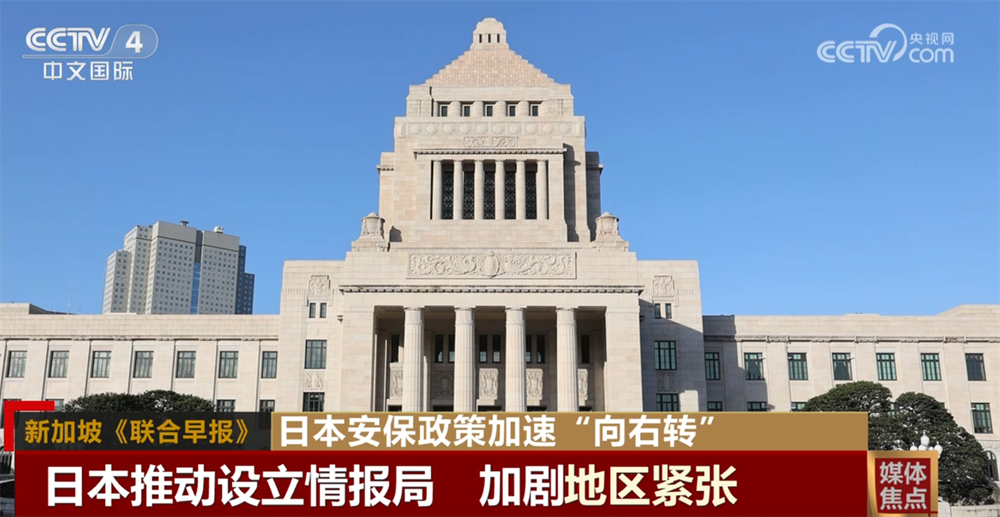
日本执政党计划于明年春季放宽防卫装备出口限制。现行规定仅允许出口救援、运输等五类非战斗装备,日本执政党计划删除品类限制, 意味着日本可对外出口驱逐舰、导弹等高致命性武器。此举引发对日本是否背离和平主义承诺的质疑。自民党此前联合执政的公明党在安全政 策上长期扮演"刹车"角色,如今自民党与支持解除武器出口限制的维新会组成执政联盟,后者可能成为政策转向的"涡轮增压引擎"。 央视网消息:由日本首相高市早苗推动设立的国家情报局,最早将于明年开始运作,日本执政党同样计划明年放宽防卫装备出口限制。诸 多动向标志着日本安保政策加速"向右转",引发严重关切。 新加坡《联合早报》:日本推动设立情报局 加剧地区紧张 日本自民党预计将于明年正式启动建立国家情报局的立法程序。该机构旨在整合外务省、防卫省、警察厅和公安调查厅等部门的情报资 源,建立统一分析与汇总机制。分析认为,此举意在为首相高市早苗塑造"安保强人"形象,符合推动日本突破和平宪法限制、强化防务能力的 倾向。这必然引起周边国家警惕,对地区安全互信与合作造成负面影响。 日本《日本时报》:松绑武器出口 日本迈出危险步伐 尼日利亚《每日时报》:警惕日本军国主义复活 日本首相高市早 ...

【环时深度】国际社会警惕日本军国主义“还魂”
Huan Qiu Shi Bao· 2025-11-25 22:44
Core Viewpoint - Japan is significantly shifting its security policies, moving away from its post-war pacifist stance towards a more militarized approach, raising concerns about a resurgence of militarism in the region [1][2][10]. Summary by Sections Security Policy Changes - Japan has lifted restrictions on collective self-defense and is expanding its military capabilities, including the establishment of missile bases in the Ryukyu Islands and the expansion of F-35 bases [2][3]. - The country is investing in "security resilience" initiatives, such as developing versatile blood plasma and modifying civilian ports for dual-use [2]. Public Sentiment and Opposition - There is growing public opposition to Japan's military expansion, as evidenced by large protests in cities like Kumamoto against government plans and statements from officials [4][5]. - The rightward shift in Japanese politics is seen as a long-term trend, with increasing military activities affecting the daily lives of citizens [4]. Constitutional Amendments - The core demands of the "constitutional revisionists" in Japan include redefining the emperor's role, lowering the threshold for constitutional amendments, and modifying Article 9 of the pacifist constitution [5][6]. - Despite existing obstacles, the risk of constitutional amendments is accumulating, with potential implications for Japan's military identity and actions [6]. Regional and Global Implications - Japan's military policy shift is perceived as a threat to regional stability, potentially leading to an arms race and increased military tensions in East Asia [7][8]. - The reinterpretation of history and military policies could redefine moral boundaries and impact collective security arrangements in Asia [8][9]. Historical Context - The rise of right-wing sentiments in Japan is linked to historical revisionism, which may obscure the lessons learned from past militarism and aggression [6][8]. - The international community emphasizes the importance of Japan adhering to its pacifist constitution to maintain trust and stability in the region [9][10].
绝不允许日本军国主义复活
Yang Shi Xin Wen· 2025-11-20 07:21
Group 1 - The core viewpoint of the articles revolves around China's strong diplomatic response to Japanese Prime Minister Kishi Nobuo's provocative remarks regarding Taiwan, emphasizing the importance of maintaining political foundations in Sino-Japanese relations [1][2][6] - China has taken multiple actions in response to Kishi's comments, including summoning the Japanese ambassador, issuing warnings from various ministries, and advising Chinese citizens to avoid traveling to Japan, indicating a serious diplomatic crisis [1][2] - The economic implications of reduced Chinese tourism to Japan are significant, with estimates suggesting a potential loss of 2.2 trillion yen (approximately 101.16 billion yuan) for the Japanese economy [1] Group 2 - The articles highlight the historical context of Japan's militaristic tendencies, particularly in light of the 80th anniversary of the victory in the Anti-Japanese War, and how Kishi's remarks challenge the post-war order and moral consciousness [2][4] - Japan's ruling Liberal Democratic Party, under Kishi's leadership, is pushing for constitutional amendments to remove the pacifist clause, which could lead to a normalization of Japan's military status [4][5] - Japan's defense budget is set to increase significantly, with plans to reach 8.85 trillion yen by 2026, indicating a shift towards a more aggressive military posture [5] Group 3 - The regional response to Kishi's actions has been overwhelmingly negative, with countries like Russia and South Korea expressing strong opposition, highlighting Japan's growing isolation in East Asia [6] - The articles suggest that Japan's current trajectory poses a significant risk to regional peace, with calls for Japan to adhere to its commitments to peaceful development [6]
国际锐评丨绝不允许日本军国主义复活
Yang Shi Xin Wen· 2025-11-20 07:17
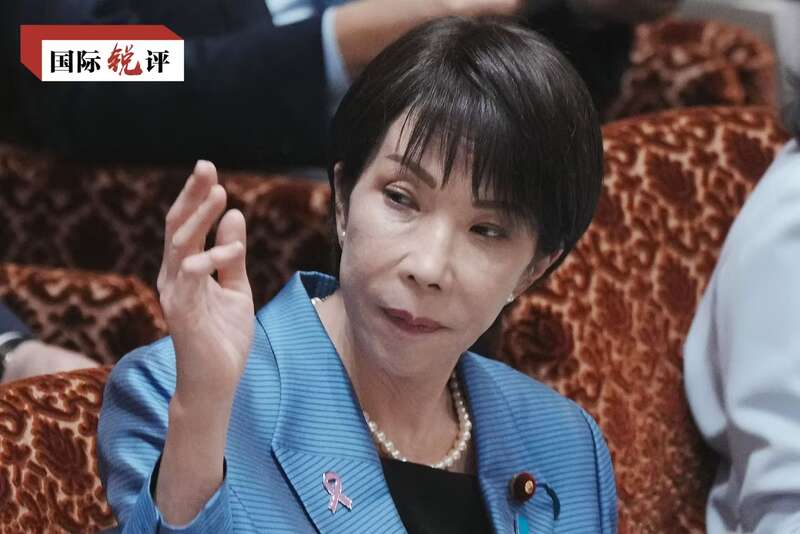
Core Viewpoint - The article discusses China's strong diplomatic response to Japanese Prime Minister Kishi Nobuo's provocative remarks regarding Taiwan, emphasizing the importance of maintaining the political foundation of Sino-Japanese relations [1][2]. Group 1: Diplomatic Tensions - China has formally protested against Kishi's comments, urging Japan to retract its statements and cease provocations related to China [1]. - The Chinese government has taken multiple actions, including summoning the Japanese ambassador and warning citizens against traveling to Japan [1][2]. - The economic implications for Japan are significant, with estimates suggesting a potential loss of 2.2 trillion yen (approximately 101.16 billion yuan) if Chinese tourist numbers decline sharply [1]. Group 2: Historical Context - The article highlights the historical responsibility of China in countering Japan's militaristic tendencies, especially in the context of the 80th anniversary of the victory in the Anti-Japanese War [2]. - Kishi's actions are seen as part of a broader trend of Japanese right-wing forces challenging the post-war order and seeking military normalization [2]. Group 3: Military Expansion - Japan plans to revise its security documents and accelerate defense spending, aiming for a defense budget of 8.85 trillion yen, which marks a continuous increase over 14 years [3]. - The article notes Japan's intention to develop nuclear capabilities, with reports indicating the possession of sufficient plutonium for hundreds of nuclear warheads [3]. Group 4: Regional Reactions - Neighboring countries, including Russia and South Korea, have criticized Kishi's remarks, indicating a growing concern over Japan's military ambitions and historical revisionism [4]. - The article suggests that Kishi's provocations have led to widespread condemnation from multiple nations, highlighting Japan's emerging role as a potential destabilizing force in East Asia [4]. Group 5: Call for Peace - The article concludes with a call for Japan to adhere to its commitments to peace and development, emphasizing the need for the international community to prevent the resurgence of militarism [5].
外交部:国际社会必须高度警惕、坚决阻击任何复活军国主义的图谋
Xin Hua She· 2025-11-19 13:30
Core Viewpoint - The spokesperson of the Ministry of Foreign Affairs, Mao Ning, emphasized that Japan's invocation of "survival crisis" and "self-defense" as justifications for foreign aggression is a tactic commonly used by Japanese militarism, urging the international community to remain vigilant against any attempts to revive militarism and to collectively maintain post-war international order and world peace [1][2]. Group 1 - Mao Ning highlighted that the concept of "collective self-defense" as defined by the UN Charter was created to maintain collective security and prevent the resurgence of fascist forces, and Japan has been restricted from exercising this right post-World War II [1]. - The Potsdam Declaration explicitly prohibits Japan from rearming, and Japan's constitution commits to "forever renouncing war" and the use of force to resolve international disputes, establishing a principle of "defensive defense" [1]. - Historical examples were cited, such as Japan's invasion of Northeast China in 1931 under the pretext of a "survival threat," and the declaration of the "Greater East Asia Co-Prosperity Sphere" as a battle for Japan's survival, which led to widespread aggression across Asia [2]. Group 2 - Mao Ning warned that the alarm has been sounded and that the tragedies of the past must not be repeated, calling for the international community to be highly alert and to decisively counter any attempts to revive militarism [2]. - The statement coincides with the 80th anniversary of the victory in the Chinese People's Anti-Japanese War and the global anti-fascist war, reinforcing the need for collective action to safeguard world peace [2].
忘战必危、好战必亡,绝不允许日本军国主义复活
Ren Min Ri Bao· 2025-11-18 23:11
Core Viewpoint - The Chinese government firmly opposes the revival of Japanese militarism and any challenges to the post-war international order, emphasizing the importance of remembering historical lessons to maintain global peace and stability [1][2]. Group 1: Japan's Military Developments - Recent statements from multiple Japanese officials indicate plans to restore military rank terminology such as "Colonel," which could break the long-standing practice of downplaying military aspects within Japan's Self-Defense Forces [1]. - The shift in military terminology is viewed as a potential aggravation for countries that suffered from Japanese colonial aggression, likened to "salting historical wounds" [1]. Group 2: Historical Context and Concerns - The Chinese spokesperson highlighted that Japan's militaristic past has caused significant suffering in Asia and worldwide, stressing that historical lessons must not be forgotten or distorted [2]. - The Potsdam Declaration explicitly prohibits Japan from rearming, and Japan's pacifist constitution establishes a principle of "defensive defense" [1]. - There is growing concern over Japan's recent security policy adjustments, including increased defense budgets, relaxed weapon export restrictions, and ambitions to develop offensive weaponry, which may lead to a departure from the "Three Non-Nuclear Principles" [1].
日本要复活“”,外交部:我们绝不允许日本军国主义复活,绝不允许任何人挑战战后国际秩序,绝不允许世界和平稳定再遭破坏
Zhong Guo Ji Jin Bao· 2025-11-18 09:49
Group 1 - Japan is planning to modify the Self-Defense Forces' rank names, potentially restoring terms from the old Japanese military, which raises concerns among neighboring countries affected by Japan's colonial history [1] - The Chinese Foreign Ministry emphasizes that Japan's military security movements are closely watched due to its history of colonialism and invasion, highlighting the shift in Japan's security policy and increased defense budget [1] - The spokesperson warns against the revival of Japanese militarism, stating that historical lessons must not be forgotten or distorted, and asserts that Japan's militaristic tendencies should not be allowed to resurface [1] Group 2 - The Chinese Foreign Ministry responds to comments made by the U.S. Ambassador to Japan, criticizing the remarks as politically motivated and contrary to diplomatic responsibilities [2] - The Ministry asserts that the U.S.-Japan alliance, a product of the Cold War, should not target third parties or interfere in the internal affairs of other nations [2]
外交部:绝不允许日本军国主义复活
证券时报· 2025-11-18 09:20
Core Viewpoint - Japan's recent plans to modify the Self-Defense Forces' rank names, including the restoration of terms like "Colonel," have raised concerns about a potential revival of militarism, which could be seen as a provocation to nations affected by Japan's colonial history [3]. Group 1: Japan's Military Policy Changes - Japan's military security movements are under scrutiny due to its colonial and invasion history, with significant adjustments to security policies and an increase in defense budgets noted in recent years [3]. - The country is seeking to develop offensive weapons and is moving away from its "no nuclear" principles, which raises alarms among neighboring countries and the international community [3]. - The resurgence of right-wing forces in Japan is pushing for a departure from the constraints of the "Peace Constitution," indicating a shift towards militarization [3]. Group 2: Territorial Disputes - The Diaoyu Islands, claimed by China, are highlighted as an area of contention, with Chinese Coast Guard vessels conducting lawful patrols in the region, which Japan has protested [3]. - China firmly rejects Japan's diplomatic protests regarding its patrols, asserting its territorial sovereignty and calling for Japan to respect the four-point consensus between China and Japan [3]. Group 3: U.S.-Japan Relations - Comments made by the U.S. Ambassador to Japan regarding China are characterized as politically motivated and contrary to the responsibilities of a diplomat, emphasizing that the U.S.-Japan alliance should not target third parties [4].
日本要复活“大佐”,外交部:我们绝不允许日本军国主义复活,绝不允许任何人挑战战后国际秩序,绝不允许世界和平稳定再遭破坏
中国基金报· 2025-11-18 09:02
Group 1 - Japan is planning to modify the Self-Defense Forces' rank names, potentially restoring terms like "Colonel," which may break the long-standing practice of downplaying military aspects [1] - The Chinese government expresses strong opposition to Japan's military security movements, citing historical colonial and invasion issues that concern neighboring countries and the international community [1] - Japan has been significantly adjusting its security policies, increasing defense budgets annually, relaxing weapon export restrictions, and seeking to develop offensive weapons, which raises alarms about abandoning its "no nuclear" principles [1] Group 2 - The Chinese government criticizes the U.S. Ambassador to Japan's comments as politically motivated and contrary to diplomatic responsibilities, emphasizing that the U.S.-Japan alliance should not target third parties or interfere in other nations' internal affairs [2]