
柔性执法

Search documents
柔性执法的温度
He Nan Ri Bao· 2025-06-13 00:07
Group 1 - The article discusses the concept of flexible law enforcement in Henan province, highlighting positive public reception towards warm and supportive actions taken by authorities towards small vendors and businesses [2] - It emphasizes the importance of balancing legal enforcement with a compassionate approach, showcasing how administrative law enforcement can enhance the business environment and public trust [2][5] - The article mentions the implementation of the "four lists" by the market regulation department, which outlines conditions under which first-time minor violations may not incur penalties, promoting a more lenient approach to enforcement [3][4] Group 2 - The article highlights the integration of educational measures in administrative penalties, as established by the revised Administrative Penalty Law, which aims to foster a law-abiding business environment [4][5] - It describes the proactive measures taken by market regulation authorities, such as technical assistance for food production companies, to address compliance issues before they escalate into violations [7][8] - The introduction of compliance handbooks and digital platforms for businesses is noted as a means to facilitate adherence to regulations and reduce the burden of compliance [10][12] Group 3 - The article outlines the classification of regulatory oversight based on credit and risk levels, allowing for differentiated treatment of businesses, particularly in the food sector [9] - It discusses the use of technology in regulatory practices, such as QR codes for enterprises and integrated market supervision platforms, to enhance compliance and reduce operational burdens [10][11] - The proactive service-oriented approach of local governments, such as the "License Reminder" system, is highlighted as a significant improvement in administrative services for businesses [12][13][14]


消防柔性执法展现为企业减负诚意
Nan Fang Du Shi Bao· 2025-06-04 04:17
Core Viewpoint - The newly announced "Twelve Measures for Convenience and Benefit to Enterprises by Guangdong Fire Rescue Institutions" aims to address the high frequency of fire safety inspections that have been burdensome for businesses, promoting a more balanced approach to fire safety regulation and enterprise development [2][3]. Group 1: Key Measures - Establishing a quantitative management mechanism to limit annual inspections of the same unit to a maximum of 2 times, with a minimum interval of 6 months, effectively reducing the phenomenon of repeated inspections [3][4]. - Implementing a "sunshine law enforcement notification" system, where inspections are announced one day in advance and conducted on working days, allowing businesses to prepare and minimizing disruption to their operations [3][4]. - Creating a provincial-level fire administrative law enforcement exemption list, which introduces a new mechanism for error correction and tolerance, reflecting a more flexible approach to enforcement [3][4]. Group 2: Impact on Enterprises - The new policies are a positive response to enterprise concerns, showcasing a flexible enforcement philosophy that does not compromise fire safety oversight but enhances regulatory efficiency through more scientific and humane methods [3][4]. - The balance between ensuring fire safety and reducing the burden on enterprises is a significant step forward, indicating a deeper transformation in governance logic [4]. - The introduction of a safety credit mechanism for enterprises, where those with three consecutive years of no violations may receive preferential treatment, demonstrates a focus on risk-based management and improved enforcement precision [4].

广东消防回应企业反映“检查频次高”:要求年度抽查不超两次
Nan Fang Du Shi Bao· 2025-06-03 05:57
Core Viewpoint - Guangdong Province has introduced the "Twelve Measures for Fire Rescue Institutions to Facilitate the Public and Enterprises" to protect the legal rights of enterprises and citizens while supporting high-quality economic and social development in Guangdong [1][2]. Group 1: Regulatory Changes - The new measures aim to reduce the frequency of inspections for the same unit to a maximum of two times per year, with a six-month interval, addressing concerns about excessive inspections [1]. - A "sunshine law enforcement notification" system has been implemented, where all inspections are announced one day in advance, allowing enterprises to prepare adequately [1]. - A provincial-level list of exemptions and light penalties has been established to create a new mechanism for error correction, thereby easing enforcement pressure on businesses [1]. Group 2: Administrative Efficiency - Guangdong Fire Department is exploring unified fire examination and safety inspection standards across the province, implementing parallel approvals to enhance the quality of fire administrative licensing services [2]. - The time for handling credit repair has been reduced to three working days, and the licensing time for registered fire engineers has been cut to ten working days, expediting processes by over 50% compared to conventional methods [2]. - The entire process for applying for a registered fire engineer certificate can now be completed via mobile, with certificates mailed directly to applicants, eliminating the need for cross-city travel [2]. Group 3: Service Innovations - The "Yue Shang Tong" platform allows units to book fire rescue services for "safety inspections + hazard rectification," effectively reducing the risk of fire accidents [2]. - Flexible enforcement policies have exempted over 4,900 enterprises from penalties, thereby reducing burdens and empowering business development [3]. - The fire safety services provided through the "Yue Shang Tong" platform have responded to enterprise needs over 6,600 times, achieving "zero-distance" technical services [3].
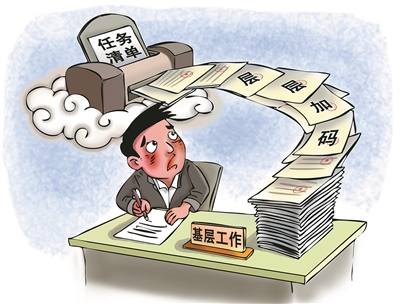
层层落实不是层层加码(干部状态新观察·为基层减负赋能)
Ren Min Ri Bao· 2025-05-26 22:20
Core Viewpoint - The article emphasizes the need to reduce the burden on grassroots officials by addressing issues of excessive task layering and misalignment of responsibilities, ultimately aiming to enhance their work efficiency and morale [2][3]. Group 1: Issues Faced by Grassroots Officials - Grassroots officials are experiencing increased workloads due to layered task requirements and imprecise assessment methods, which create confusion and hinder their ability to serve the public effectively [2][3]. - The phenomenon of "layered increases" is prevalent, where tasks are compounded at various administrative levels, leading to unnecessary burdens on local officials [3][4]. Group 2: Measures Taken to Alleviate Burdens - Qinghai Province's Xining City has implemented clear task lists to reduce the burden on grassroots officials, promoting flexible enforcement in urban management [2][4]. - The city has introduced specific management standards for different types of roads, aiming to minimize disruptions to local vendors while maintaining urban aesthetics [4][5]. Group 3: Communication and Feedback Mechanisms - Xining City has established internal communication channels to facilitate feedback from grassroots officials, allowing for timely corrections of misaligned enforcement practices [6]. - The city promotes a "721" work method, focusing on resolving 70% of issues through service, 20% through management, and only 10% through enforcement, to reduce unnecessary punitive measures [6][7]. Group 4: Educational Initiatives and Policy Framework - Continuous education on the central government's eight regulations has led to the development of a task list aimed at reducing formalism and ensuring compliance with administrative laws [7]. - The city is committed to transforming educational outcomes into tangible benefits for the public, ensuring that the results of these initiatives are felt by the community [7].
时隔13年山东实施道路交通安全法办法拟修正,增加首违不罚、自动驾驶等规定
Qi Lu Wan Bao Wang· 2025-05-23 06:35
Core Points - The Shandong Province is revising the implementation measures of the Road Traffic Safety Law of the People's Republic of China for the second time after 13 years, with public consultation open until June 23, 2025 [2][7] - The revision aims to align with national laws and address new challenges in traffic safety management due to rapid economic, social, and technological developments [3][4] Group 1: Legislative Background - The original Road Traffic Safety Law was implemented on May 1, 2004, marking the beginning of a legal framework for traffic safety in China [2] - The first revision of the Shandong implementation measures occurred in 2012, and the law has since played a crucial role in maintaining traffic order and reducing accidents [2] Group 2: Key Changes in the Draft - The draft includes the removal of outdated provisions that conflict with national laws, such as those related to school bus regulations and vehicle speed limits [4] - New provisions are introduced to enhance the regulation of non-motorized vehicles, particularly electric bicycles, by prohibiting the production and sale of non-compliant vehicles [5][8] - The draft emphasizes the responsibility of businesses in emerging sectors like delivery services to ensure compliance with traffic safety laws [6][8] Group 3: Technological Integration - The draft proposes the use of advanced technology for traffic law enforcement, including remote monitoring and handling of traffic violations [6][8] - It also includes provisions for the testing and operation of autonomous vehicles, reflecting the need to adapt to technological advancements in transportation [6][8] Group 4: Public Participation - The public is invited to submit feedback on the draft through various channels, indicating a commitment to community involvement in legislative processes [7]
规范涉企执法见成效!深圳做法被肯定
Shen Zhen Shang Bao· 2025-05-22 17:56
Core Points - The core viewpoint of the articles is the implementation and impact of the nationwide special action to standardize administrative law enforcement related to enterprises, which aims to improve the business environment and reduce unnecessary inspections [1][2]. Group 1: Administrative Law Enforcement Actions - The special action to standardize administrative law enforcement was fully launched nationwide in March this year, with a reported problematic case amounting to 335 million yuan, recovering losses of 98.81 million yuan for enterprises by May 21 [1]. - The implementation of the "Opinions on Strictly Standardizing Inspections Related to Enterprises" has led to the development of inspection standards and frequency limits by relevant departments, significantly reducing unnecessary inspections [1]. - In Shenzhen, the establishment of the administrative law enforcement supervision code system has shown effectiveness, with the number of enterprise inspections in Guangming District decreasing from 3,323 to 1,135 since 2025, a reduction of 65.84% [1]. Group 2: Regulatory Improvements and Innovations - The comprehensive cleanup of existing enterprise-related charging policies and the timely update of the charging directory have been emphasized, along with strict compliance reviews of new policies to prevent the introduction of non-compliant charging policies [1]. - The Ministry of Justice is developing management measures for administrative law enforcement personnel to ensure that only qualified individuals perform enforcement duties, with 1,140 leads sent to disciplinary inspection agencies and 1,068 personnel dealt with since the start of the special action [2]. - The exploration of flexible enforcement methods, such as the "flexible enforcement" mechanism in Shenzhen's Longhua District, aims to create a better business environment by providing green channels for enterprises that voluntarily self-check and correct minor violations [2].
对企业反映的突出问题“动真碰硬”——国新办介绍规范涉企行政执法专项行动最新进展
Xin Hua She· 2025-05-22 14:10
Core Viewpoint - The government is actively addressing prominent issues reported by enterprises through a special action aimed at regulating administrative law enforcement related to businesses, resulting in a general decline in administrative fines and a reduction in arbitrary inspections [1][2]. Group 1: Objectives and Focus Areas - The special action targets four major issues: arbitrary charges, fines, inspections, and closures; illegal cross-regional law enforcement; inconsistent enforcement standards; and abuse of power or misconduct by law enforcement officials [2][3]. - Key focus areas for the action include food and drug safety, natural resources, ecological environment, safety production, urban management, and transportation, which are closely related to enterprises and the public [3]. Group 2: Progress and Impact - As of May 21, a total of 6,232 problem leads have been collected, with 5,246 cases addressed, recovering 98.81 million yuan for enterprises from a total of 335 million yuan in involved amounts [3]. - The action aims to optimize the business environment and stimulate market vitality by addressing issues such as unauthorized fees and excessive charges in various sectors, including logistics and utilities [3]. Group 3: Regulatory Measures and Future Directions - The action emphasizes strict adherence to laws and regulations, particularly in sectors affecting public health, with a focus on rigorous standards and accountability [6]. - Future efforts will include increased supervision of problem rectification, targeted handling of prominent issues, and measures to ensure compliance and accountability among local authorities [7].
规范涉企执法专项行动进展如何?司法部最新发声
Di Yi Cai Jing· 2025-05-22 06:34
Core Points - The article discusses the implementation and progress of a nationwide special action to standardize administrative law enforcement related to enterprises, aiming to protect their legal rights and improve the business environment [2][4][6] Group 1: Special Action Overview - The special action was launched in March this year, focusing on addressing issues such as arbitrary charges, fines, inspections, and seizures [2][4] - As of May 21, the action has gathered 6,232 problem clues and urged the handling of 5,246 cases, involving a total amount of 335 million yuan, recovering losses of approximately 98.81 million yuan for enterprises [6] Group 2: Key Issues Addressed - The action targets four main issues: arbitrary charges, fines, inspections, and seizures; illegal cross-regional enforcement; inconsistent enforcement standards; and abuse of power or misconduct by enforcement personnel [4][6] - These issues are widespread and have significant negative impacts, with strong feedback from enterprises [4] Group 3: Implementation and Results - The Ministry of Justice has established a working platform to streamline the collection and processing of problem clues, enhancing efficiency and reducing the burden on local authorities [5] - Initial results show a downward trend in administrative fines and effective curtailment of arbitrary inspections, although there is still a gap between outcomes and enterprise expectations [6] Group 4: Future Plans and Mechanisms - Future efforts will focus on strengthening supervision of problem rectification, addressing prominent enforcement issues, and conducting research to evaluate the effectiveness of the action [6][9] - The establishment of a long-term mechanism for standardized enforcement is emphasized to prevent issues from recurring and to foster a conducive business environment [7][9]
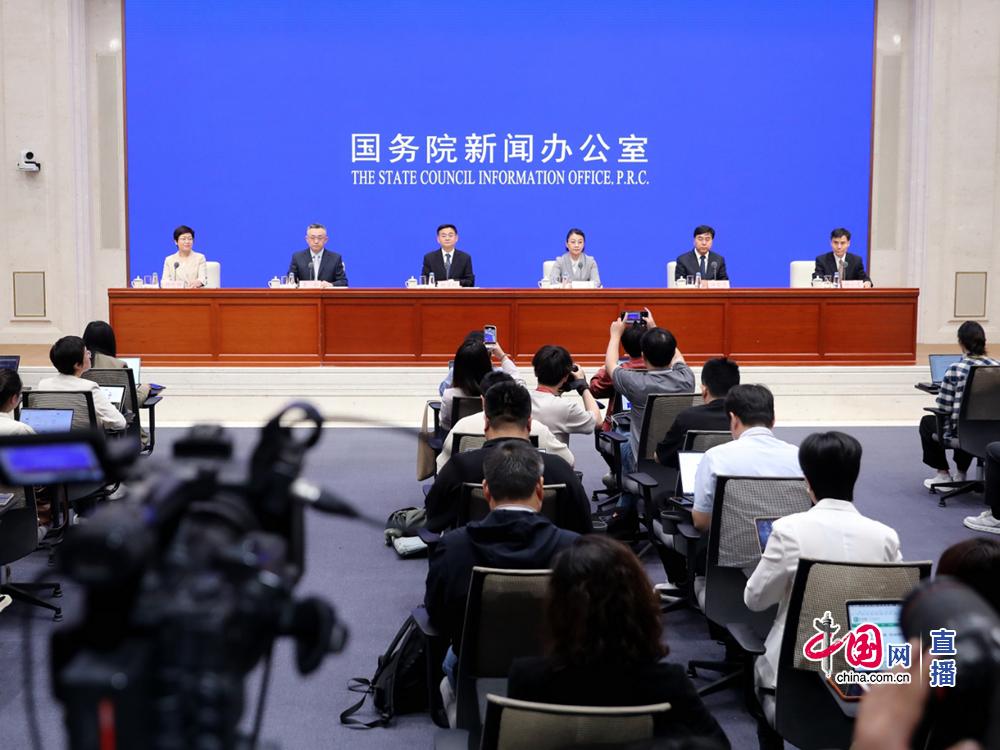
司法部:规范执法不是执法越宽越好,而是依法该严则严、当宽则宽
news flash· 2025-05-22 03:20
Group 1 - The core viewpoint of the news is the emphasis on flexible law enforcement methods to create a better business environment while maintaining strict adherence to legal standards [1][2] - Various regions are exploring flexible enforcement approaches, such as Shanghai's implementation of a list for minor violations that are not subject to administrative penalties [1] - Shenzhen Longhua District has established a "flexible enforcement" mechanism that allows for a green channel for enterprises that voluntarily self-correct minor violations [1] Group 2 - Administrative law enforcement is a crucial method for government agencies to manage economic and social affairs, requiring equal protection for all subjects and strict adherence to the principle of equality before the law [2] - The approach to law enforcement should not be overly lenient or non-enforcement; it must be strict when necessary, especially in areas affecting public health and safety, adhering to the "four strictest" requirements [2] - The goal is to achieve a balance in administrative law enforcement that combines both rigor and compassion, ensuring that enforcement is neither lacking nor excessive [2]
镇原县市场监管局“春雷行动”筑牢安全防线 护航高质量发展成效显着
Zhong Guo Shi Pin Wang· 2025-05-16 02:10
Group 1 - The core viewpoint of the news is the implementation of a two-month "Spring Thunder Action" by the Zhenyuan County Market Supervision Administration to enhance market safety and protect public interests [1] - The action focuses on six key areas related to people's livelihoods, including food, pharmaceuticals, and special equipment, aiming to create a safe and orderly market consumption environment [1] - The "1+19" smart supervision system has been fully implemented in 235 school canteens, with 211 food quick tests conducted and six illegal cases addressed [1] Group 2 - A "Protect Farmers and Ensure Cultivation" special action has been launched during the critical spring farming period, focusing on major agricultural products like fertilizers and agricultural films [2] - A comprehensive regulatory model has been established, including source control, circulation traceability, and terminal sampling, resulting in 40 batches of inspections and the seizure of 1,973 bags of substandard fertilizers [2] - A knowledge property protection initiative has led to the investigation of two trademark infringement cases and the establishment of a 24-hour complaint handling network, recovering economic losses of 72,800 yuan [2] Group 3 - The county's market supervision authority emphasizes that the action is both a defense of safety and an upgrade of the business environment, with plans to establish a task list of 55 key issues for rectification [3] - Training for all enforcement personnel will be conducted to shift the regulatory model towards a preventive approach, fostering a standardized market environment for county economic development [3]