
精酿啤酒

Search documents
永顺泰:与百威啤酒等知名啤酒制造商有超过20年合作历史
Jin Rong Jie· 2025-08-15 01:04
Core Viewpoint - The company aims to strengthen its leading position in the malt industry and become a world-class malt supplier, catering to various beer brewing customers' needs [2] Group 1: Company Strategy - The company's development strategy focuses on deepening its core malt business and maintaining its industry leadership [2] - The company has over 20 years of cooperation with major beer manufacturers such as Budweiser, Carlsberg, Heineken, and China Resources Snow Beer, indicating strong industry relationships [2] - The company's malt production bases are strategically located in key regions like Guangdong, Zhejiang, Jiangsu, Shandong, and Hebei, aligning with major beer brewing and consumption markets [2] Group 2: Market Position and Competition - The company is actively collaborating with regional small and medium-sized clients as well as craft beer customers, providing a wide range of specialty and customized malt products [2] - The company plans to continue focusing on high-end development in the malt sector, aiming for a combination of reasonable volume growth and effective quality improvement [2]
别说五粮液,连零食企业都涌来做啤酒能成吗?|热财经
Sou Hu Cai Jing· 2025-08-13 04:19
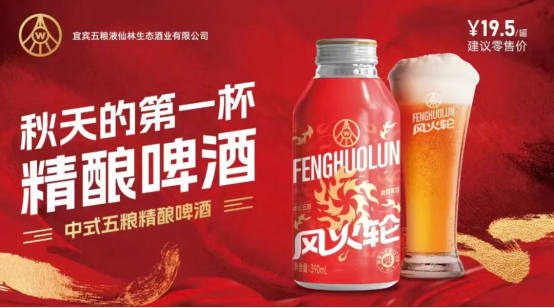
Core Viewpoint - The entry of various companies, including traditional liquor brands and food processing firms, into the craft beer market indicates a growing interest in this segment, driven by potential profitability and market opportunities despite the challenges of competition and consumer perception [1][3][4] Group 1: Market Entry and Competition - Yibin Wuliangye Xianlin Ecological Brewery announced the launch of a new craft beer named "Fenghuolun" priced at 19.5 yuan per can, highlighting the increasing participation of non-beer companies in the craft beer sector [1] - The craft beer market has a low entry barrier but is difficult to penetrate, with many brands still in the experimental phase [1] - Companies like Haoxiangni and Three Squirrels are also entering the beer market with unique flavors, such as red date and green tea, to cater to diverse consumer preferences [3] Group 2: Advantages and Challenges - Traditional liquor companies have advantages in channel networks, supply chain resources, brand strength, and marketing teams when entering the craft beer market, but the target consumers differ significantly from those of liquor [3] - Craft beer has a gross margin of 50%-70%, significantly higher than that of regular industrial beer (30%-40%), attracting companies seeking new profit growth points [4] - The beer industry is highly competitive, with new brands facing challenges from established giants, including price wars and distribution channel restrictions [4] Group 3: Consumer Engagement and Brand Strategy - Cross-industry brands can enhance consumer engagement through limited editions and collaborations, appealing to younger consumers with innovative product offerings [4] - Non-beer companies are leveraging their existing channels to expand into alcoholic beverages, enhancing customer loyalty and dining experiences through customized beer offerings [3][4]


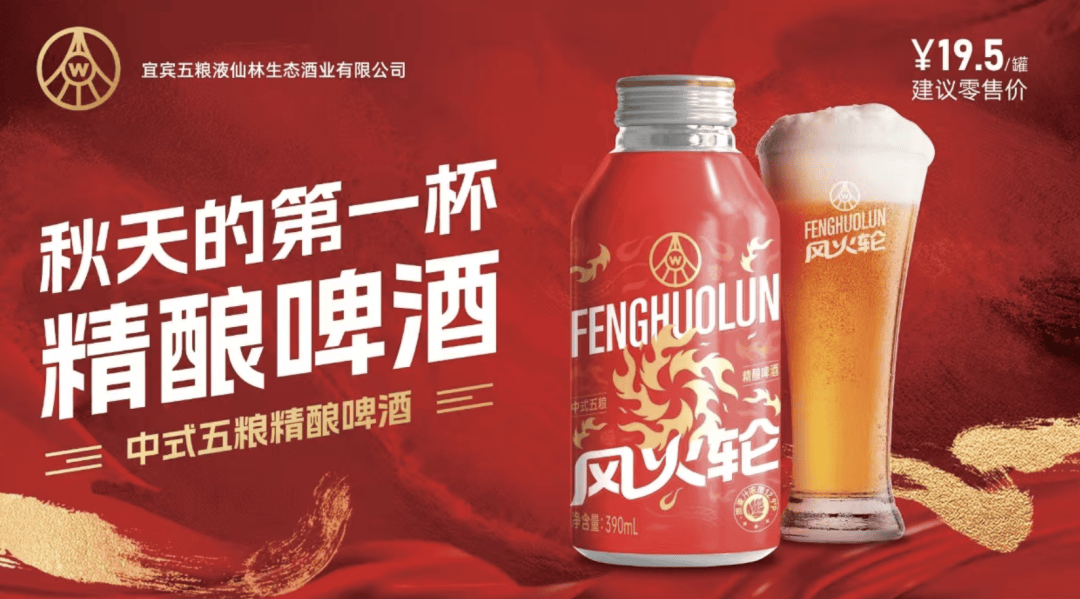
五粮液推出“秋天的第一杯精酿啤酒”
Mei Ri Shang Bao· 2025-08-12 22:21
Core Viewpoint - The entry of major liquor companies into the craft beer market indicates a growing interest and potential in the sector, with significant market growth projected in the coming years [1][4][5] Group 1: Company Developments - Yibin Wuliangye's subsidiary, Xianlin Ecological Wine Industry Co., announced the launch of a craft beer named "Fenghuolun" priced at 19.5 yuan per can, marking its entry into the craft beer market [1][2] - Zhenjiu Liduo recently launched a high-end craft beer called "Niushi," priced at 88 yuan per bottle, which gained significant attention during a live-stream event, leading to a notable increase in its stock price [3] - Guyue Longshan, known as the "first stock of yellow wine," has also entered the craft beer market with a product that achieved over 10 million yuan in orders within its first month [4] Group 2: Market Trends - The craft beer market in China is expected to grow significantly, with projections indicating a market size of 1.3 trillion yuan by 2025 and 1.6 trillion yuan by 2026 [5] - The craft beer sector is currently experiencing a "redemption period," with increasing consumer interest and a shift towards craft beer consumption among younger demographics [5] - The entry of various food processing companies, such as Haoxiangni and Three Squirrels, into the craft beer market reflects a broader trend of diversification and innovation aimed at capturing the younger consumer market [4]
珍酒李渡业绩大滑坡!88元一瓶的精酿啤酒能否救命?
Guan Cha Zhe Wang· 2025-08-12 10:51
Core Viewpoint - The company, Zhenjiu Lidu, is entering the beer market with its high-end craft beer product "Niu Shi News" amid a significant decline in its core liquor business performance [1][3][5]. Financial Performance - Zhenjiu Lidu's revenue for the first half of the year is projected to be between 2.4 billion to 2.55 billion yuan, representing a year-on-year decline of 38.3% to 41.9% [3]. - The company's net profit attributable to shareholders is expected to decrease by 23% to 24%, with adjusted net profit anticipated to drop by 39% to 40% [3]. - The company's performance post-listing has been poor, with the latest half-year report being the worst since its IPO [4]. Market Strategy - The launch of the "Niu Shi" beer is seen as a strategic move to capture growth in the craft beer segment, which is becoming increasingly competitive [7][11]. - The beer is priced at 88 yuan per bottle, and its development took three years, utilizing high-quality ingredients from various regions [7]. - Zhenjiu Lidu's entry into the beer market aligns with a broader trend of liquor companies diversifying into craft beer, as seen with other major players like Wuliangye and Luzhou Laojiao [10][11]. Brand and Product Development - Zhenjiu Lidu has four main liquor brands: Zhenjiu, Lidu, Xiangjiao, and Kaikouxiao, with Zhenjiu being the flagship brand [5]. - The company has faced challenges in its high-end product segment, with revenue from high-end products declining nearly 11% year-on-year [6]. - The company is also attempting to revitalize its liquor offerings with new products and marketing strategies, including the introduction of a premium product priced at 888 yuan [11]. Market Trends - The craft beer market in China is projected to grow significantly, with estimates suggesting it could reach 30 billion to 40 billion yuan by 2025 [10]. - The entry of liquor companies into the craft beer market is driven by their established distribution networks and brand recognition, which can support higher pricing for new products [11].
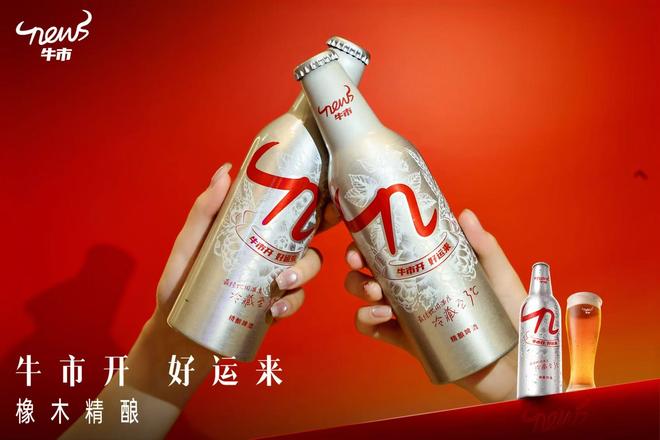
多家酒企跨界背后:年轻化布局新尝试
Zheng Quan Shi Bao Wang· 2025-08-12 00:41
Core Insights - The entry of various companies into the craft beer market reflects a trend towards youth-oriented product offerings and innovation in the beverage sector [2][5][6] Group 1: Market Dynamics - The craft beer market in China is projected to reach a scale of 130 billion yuan by 2025, with a penetration rate of 6.3% [6] - By 2026, the market size is expected to grow further to 160 billion yuan, driven by changing consumer preferences and the rise of the urban middle class [6] - Major foreign players like Budweiser and Carlsberg currently hold significant market shares with established craft beer products [2][6] Group 2: Company Strategies - Yibin Wuliangye's subsidiary, Yibin Wuliangye Xianlin Ecological Wine Co., plans to launch a new craft beer named "Fenghuolun" priced at 19.5 yuan per can [3][4] - Other companies, such as Good Idea and Three Squirrels, are also entering the craft beer space, with Three Squirrels launching three new brands targeting young consumers [4][5] - The entry of traditional liquor companies into the craft beer market is seen as leveraging their existing resources, although the target demographics differ significantly from their traditional consumer base [3][5] Group 3: Consumer Trends - The rise of younger consumers is shifting the demand for alcoholic beverages towards more personalized and emotionally resonant products [5] - Craft beer's diverse ingredients and flavors cater to the evolving tastes of younger consumers, who are more open to trying new products [5] - The craft beer market is characterized by a fragmented competitive landscape, with many brands vying for consumer attention, making it challenging for new entrants to establish a foothold [3][6]
五粮液入局啤酒?多家酒企跨界背后:年轻化布局新尝试
Zheng Quan Shi Bao· 2025-08-11 14:11
Core Insights - The craft beer market in China is attracting numerous new entrants, including companies from various sectors such as food and beverage, with a notable example being Yibin Wuliangye's launch of a new craft beer named "Fenghuolun" priced at 19.5 yuan per can [1][2] - Major foreign players like Budweiser and Carlsberg currently dominate the market with established craft beer products, indicating a competitive landscape where new brands may struggle to gain market share despite low entry barriers [1][8] Industry Trends - The rise of young consumers is reshaping the beverage market, with a shift towards personalized and emotional consumption experiences, prompting companies to innovate and target this demographic through craft beer offerings [7] - The craft beer segment is expected to grow significantly, with projections indicating that by 2025, the market size could reach 130 billion yuan, and further increase to 160 billion yuan by 2026, driven by changing consumer preferences and the expansion of the urban middle class [7][8] Competitive Landscape - The craft beer market in China is currently fragmented, with Budweiser and Carlsberg holding substantial market shares through their successful craft beer products, while the industry is anticipated to undergo consolidation in the future [8] - Traditional liquor companies, such as Wuliangye and Zhenjiu, are leveraging their existing resources and brand recognition to enter the craft beer market, although they may face challenges in connecting with a different target consumer base [4][6]
赵崇甫:珍酒的“牛市”,大概率是熊市
Sou Hu Cai Jing· 2025-08-10 09:47
Core Viewpoint - The launch of "Bull Market" beer by Zhenjiu Lidu is seen as a strategic move, contrasting with Wuliangye's "Fire Wheel" beer, which is more of an attempt to find new growth points. The challenges of transforming beer into a strategic business for liquor companies are significant [1]. Group 1: Market Insights - The craft beer market in China is on the rise, with young consumers favoring "three lows" (low hops, low malt, low alcohol). After deliberation, "Bull Market" was positioned at 5.9% alcohol content [3]. - The decision-making process involved whether to target high-end or mid-to-low-end consumers, ultimately opting for a high-end positioning [3]. - The product development for "Bull Market" took three years, focusing on taste and advocating for aging the beer for 2-10 months before consumption, which contrasts with traditional fresh beer consumption [3]. Group 2: Pricing and Consumer Behavior - The pricing of "Bull Market" is notably high, with a retail price of 88 yuan per 375ml can, leading to concerns about its affordability for consumers [3][4]. - The high price point raises questions about its viability as a gift product, as there are many alternatives available for the same price [5]. - The consumption behavior in high-end business settings may not align with the product's packaging size, as consumers typically drink larger quantities, which could limit repeat purchases [5][6]. Group 3: Strategic Considerations - There is uncertainty regarding whether to maintain a high-end niche strategy or consider repositioning and possibly lowering prices after the initial launch phase [6]. - The experience of the company's chairman, who has prior investment experience in the beer sector, may provide insights into navigating the challenges ahead [6]. - A cautious approach is suggested, allowing "Bull Market" to develop gradually rather than expecting immediate success [7].
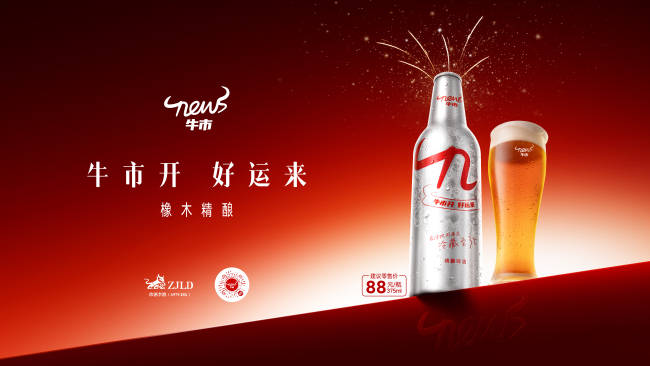
五个指标告诉你“牛市啤酒”不一定火。
Sou Hu Cai Jing· 2025-08-09 04:11
Group 1 - The article discusses the marketing strategies employed by successful individuals in the liquor industry, particularly focusing on the "white liquor godfather" Wu Xiangdong, who is known for creating buzz and topics around his products [1] - The launch of the "Bull Market" beer by Zhenjiu Li Du is highlighted, with a retail price of 88 yuan per 375ml aluminum bottle, showcasing a successful marketing event despite the high price compared to traditional options [6][8] - The craft beer market in China is experiencing explosive growth, with the market size projected to increase from 428 billion yuan in 2022 to 680 billion yuan in 2024, and a significant sales growth rate of 40% in single liquor stores [8] Group 2 - The craft beer industry is characterized by high profit margins, with an average gross margin of around 40%, attracting various players from different sectors [8] - Wu Xiangdong's investment in Heilongjiang Xinbahe Brewery, which has seen rapid sales growth, is noted, with projected sales reaching 1.9 million yuan in 2024 [9] - The production capacity of Xinbahe Brewery has increased significantly from 750 tons in 2019 to over 5000 tons in 2024, indicating a growth rate close to 50% [11] Group 3 - The article emphasizes the inherent conflict between quality and scale in the craft beer sector, where even a large craft brewery like Xinbahe remains small compared to traditional beer giants [13] - The lack of a strict definition for "craft beer" in China has led to a proliferation of industrial beer masquerading as craft beer, complicating the market landscape [18] - The future of the beer industry is expected to focus on high-end products, emphasizing quality and craftsmanship rather than just marketing hype [20][22]

五粮液卖啤酒!“秋天第一杯”
Sou Hu Cai Jing· 2025-08-08 10:54
Core Insights - Wuliangye is entering the craft beer market as part of its strategy to attract younger consumers and adapt to changing market trends [2][4] - The company aims to leverage its local advantages and the growing craft beer segment, which is expected to see significant growth in the coming years [2][3] Market Trends - The craft beer market in China is projected to grow from approximately 10 billion yuan in 2020 to between 30 billion and 40 billion yuan by 2025 [2] - The growth rate of the craft beer market is expected to outpace the overall beer industry in China over the next five years [2] Product Development - Wuliangye's new craft beer brand "Fenghuolun" is a result of over two years of research and development, combining traditional Chinese brewing techniques with modern craft beer styles [3] - The product line will include four categories of craft beers, focusing on both mainstream and high-end varieties [3] Consumer Targeting - The primary target demographic for Wuliangye's craft beer includes consumers aged 25 to 49, particularly those who value quality, individuality, and cultural experiences [2][4] - The company is strategically positioning itself to meet the structural changes in domestic alcohol consumption [2]
白酒、枣业扎堆跨界,精酿啤酒赛道涌入越来越多的“淘金者”
Di Yi Cai Jing· 2025-08-08 07:25
Group 1 - The craft beer segment is becoming increasingly crowded, with companies like Wuliangye and Haoxiangni entering the market, indicating a growing interest in craft beer despite the challenges of differentiation [1][2] - Wuliangye plans to launch a high-end craft beer named "Fenghuolun" priced at 19.5 yuan per can, while Zhenjiu Liduo Group is introducing a new beer called "Niushi" priced at 88 yuan per bottle, showing a trend towards premium positioning in the craft beer market [1][2] - The craft beer market is experiencing rapid growth, with a projected market size of approximately 680 billion yuan in 2024, expected to exceed 1 trillion yuan by 2025, driven largely by consumers aged 18 to 35 who contribute 65% of sales [3] Group 2 - The white liquor industry is currently facing a downturn, with a reported production decline of 5.8% in the first half of the year, leading companies to seek opportunities in the craft beer sector [2][4] - New entrants in the craft beer market are drawn by the growth potential, but the industry is also experiencing a "walled city" effect, where established brands dominate, making it difficult for newcomers without strong brand or channel advantages to succeed [4] - The advantages of white liquor companies entering the craft beer market include channel reuse and brand leverage, but they also face challenges such as consumer skepticism regarding their expertise in beer production and the mismatch between the business-oriented nature of liquor and the youthful, niche culture of craft beer [4]