
红色文化传承

Search documents
安徽、河南:推进文化旅游产业融合发展
Zheng Quan Shi Bao Wang· 2025-10-17 10:44
Core Viewpoint - The implementation plan for cooperation and development between Anhui and Henan provinces emphasizes the integration of cultural tourism industries and the promotion of red culture resources [1] Group 1: Cultural Tourism Development - The plan supports the collaboration in developing red culture resources related to the Huaihai Campaign, aiming to create a nationally recognized red culture heritage area [1] - Encouragement for neighboring regions to form scenic area alliances to enhance cooperation in cultural tourism [1] - The initiative includes the establishment of tourism routes featuring themes such as Huai River culture, Yellow River ecology, immersive performances, leisure vacations, medicinal cuisine, and cultural roots [1] Group 2: Health and Wellness Industry - The plan supports the collaborative development of the "World Capital of Traditional Chinese Medicine" in Bozhou and "China's Medicine Valley" in Zhumadian [1] - It promotes the joint development of health and wellness industries in Liu'an and Xinyang, focusing on expanding the medicinal cuisine, enzyme, and health product supply chains [1] - The initiative aims to enrich various health-related sectors, including traditional Chinese healing, sports rehabilitation, and forest wellness [1] Group 3: Economic Development - There is an active promotion of the development of the forest economy as part of the overall strategy [1]
好评中国|“红文化”蝶变“金名片”,看延安热土绘新篇
Zhong Guo Xin Wen Wang· 2025-10-17 06:05
Core Viewpoint - The article discusses the transformation of "red culture" in Yan'an into a vibrant cultural and economic asset, emphasizing the integration of historical significance with contemporary tourism and cultural experiences [1][4]. Group 1: Cultural Significance - Yan'an's red culture has evolved from a niche educational focus to a mainstream pursuit for spiritual roots among diverse demographics, showcasing its enduring relevance [2]. - The "Yan'an Spirit" has transitioned from a distant concept in textbooks to a tangible and relatable experience for visitors, connecting historical struggles with modern aspirations [2][3]. Group 2: Innovation in Expression - The transmission of red culture requires both emotional engagement and innovative methods, utilizing technology and creative storytelling to make history accessible and engaging for younger audiences [2][3]. - Various modern expressions, such as VR experiences and immersive performances, have revitalized interest in red culture, transforming passive learning into active participation [2][3]. Group 3: Youth Engagement - Increasing numbers of young people are actively promoting and sharing red culture, indicating a shift in how this history is perceived and valued by the younger generation [3]. - Young content creators are committed to documenting and disseminating red culture, integrating it into contemporary narratives and making it a part of their identity [3]. Group 4: Economic Impact - The growth of red cultural tourism in Yan'an is projected to attract 47.32 million domestic visitors in 2024, generating a total tourism expenditure of 38.1 billion yuan, reflecting a 15.2% year-on-year increase [4]. - The development of red tourism is driving local economic growth, improving infrastructure, and enhancing the livelihoods of residents through increased visitor spending [4]. Group 5: Future Outlook - The article emphasizes that the best way to honor history is through innovation and development, as Yan'an seeks to balance cultural heritage with economic progress [4]. - The commitment to both preserving and evolving red culture signifies a promising path for high-quality development in the region [4].
省委常委会召开会议学习习近平总书记重要讲话精神 部署革命文物保护利用和信访等工作
Shan Xi Ri Bao· 2025-10-16 23:18
Group 1 - The meeting emphasized the importance of the Party's comprehensive leadership over women's work, aiming to guide women to firmly follow the Party's direction [1] - There is a focus on stimulating women's innovation and entrepreneurship through key projects like the Qin Women's Maker Program and the Flower Bud Program, supporting the growth of women's handicrafts and e-commerce [1] - The meeting highlighted the need to legally protect women's rights, improve employment equality, enhance health services for women, and provide support for disadvantaged women [1] Group 2 - The meeting stressed the need to consolidate the achievements in revolutionary cultural heritage protection and to deepen the construction of the Yan'an Revolutionary Cultural Heritage National Protection and Utilization Demonstration Zone [2] - It was noted that there should be a focus on integrating revolutionary cultural heritage protection with rural revitalization and improving people's livelihoods, fostering new red tourism industries [2] - The meeting called for a strong commitment to resolving public grievances in the real estate sector, addressing issues such as water and electricity supply, delayed deliveries, and inadequate supporting facilities [2]
江苏打造习近平文化思想生动实践地③“这是开展革命传统教育、爱国主义教育的生动教材”
Xin Hua Ri Bao· 2025-10-15 23:30
Core Viewpoint - The emphasis on the importance of red resources and revolutionary history in Jiangsu province as a means to inspire patriotism and strengthen cultural confidence among the people [1][2][3] Group 1: Red Resource Utilization - Jiangsu has over 1,700 revolutionary historical sites and more than 1,100 patriotic education bases, attracting over 100 million visitors annually [4] - The upcoming "Jiangsu Province Red Resource Protection and Utilization Regulations" aims to provide solid support for the protection and inheritance of red resources [4] - The integration of technology in red culture, such as the "smart" new Fourth Army cultural service platform, enhances the accessibility and engagement of historical narratives [6][7] Group 2: Educational Initiatives - Various innovative educational programs, including music classes and theatrical performances, are being utilized to convey red culture and history to younger generations [8][10] - The annual national memorial ceremonies and activities, such as the flower offering by newlyweds to revolutionary martyrs, serve to instill a sense of respect and remembrance among the public [4][10] Group 3: Cultural Impact - The red resources are seen as a vital spiritual wealth that reflects the party's arduous and glorious history, with a focus on enhancing their influence and reach [2][5] - The promotion of red tourism and cultural activities has become a significant aspect of patriotic education, with locations like "Red Li Alley" and "Shajiabang" attracting large numbers of visitors [9]
镜观·回响|以文化人 以文育人
Xin Hua She· 2025-10-08 02:10
Group 1 - The core idea emphasizes the importance of both material and spiritual civilization for national strength and cultural revival [1] - The rich heritage of Chinese culture is highlighted as a source of deep-rooted power for nurturing and enlightening the spirit [1] Group 2 - Cultural construction focuses on people, aiming to enhance recognition of traditional Chinese culture through educational initiatives [5] - The integration of national intangible cultural heritage into school curricula is being implemented to enrich cultural life and promote traditional culture among students [7][8] Group 3 - Activities such as traditional ceremonies and community events are organized to promote traditional culture and foster harmonious neighborhoods [10] - Various community activities are conducted to educate citizens about traditional cultural knowledge, particularly around seasonal festivals [12] Group 4 - The importance of moral education is emphasized, with initiatives aimed at instilling traditional values in youth through cultural programs [13][14] - Red culture is being utilized to provide guidance for the younger generation, reinforcing the significance of historical narratives [16][18] Group 5 - The digital transformation of cultural education is underway, with new technologies reshaping how culture is taught and experienced [22] - Forums and exhibitions are being held to discuss the protection and innovation of cultural heritage, showcasing digital projects [24] Group 6 - The establishment of immersive cultural experience centers and digital museums is aimed at enhancing public engagement with cultural heritage [29][27]


假期消费热情“燃” 文旅融合新气象出彩又“出圈”
Yang Shi Xin Wen Ke Hu Duan· 2025-10-03 04:16
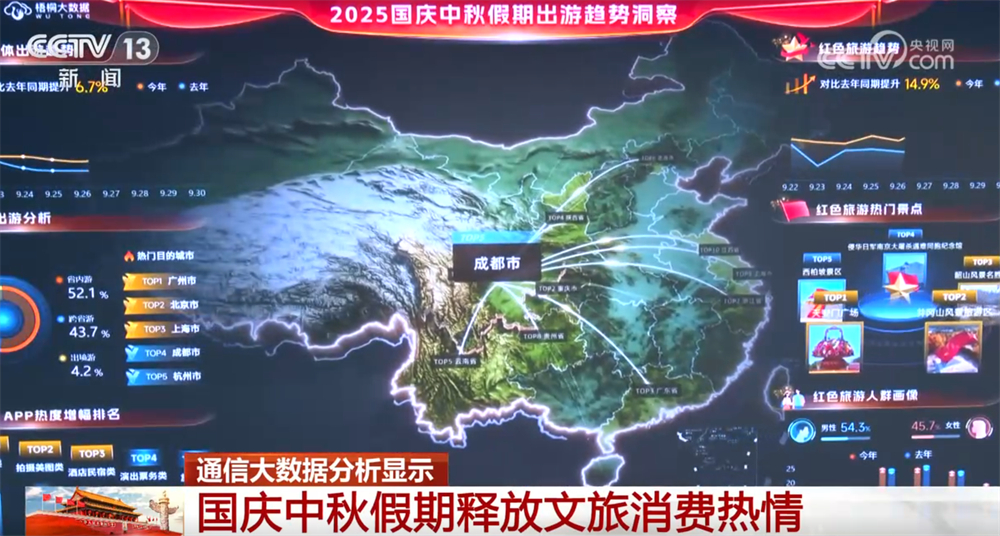
Core Insights - The National Day and Mid-Autumn Festival holiday, spanning 8 days, is expected to significantly boost tourism consumption across China, with many office workers opting for a "3 days off for 12 days" travel strategy [1][3] - Data indicates a 9% increase in daily travel volume from September 27 to 30 compared to the previous week, with an overall expected daily growth of 3.5% in travel volume compared to the same period last year [1][3] Travel Trends - The "3 days off for 12 days" vacation model has led to a preference for long-distance travel, with 18% of tourists choosing destinations over 500 kilometers away, a 5 percentage point increase from last year [3] - Popular long-distance travel routes include Shanghai to Beijing, Shenzhen to Changsha, and Beijing to Xi'an, among others [5] Tourism Activities - Various regions are hosting unique cultural and artistic events to attract tourists, such as performances in Sichuan showcasing local culture through dance and music [6][8] - In Jiangxi, the Tengwang Pavilion is offering immersive experiences to commemorate the 1350th anniversary of "Tengwang Ge," expecting over 150,000 visitors during the holiday [12] Local Attractions and Events - In Chongqing, traditional Sichuan opera performances are being held daily, allowing visitors to engage with local heritage [10] - The holiday coincides with the rice harvest season in southern China, leading to agricultural-themed events that enhance visitor experiences [14] Emerging Preferences - There is a growing trend for urban residents to seek nature and relaxation through camping and rural stays, with increased bookings for homestays in scenic areas [16][18] - The integration of cultural and tourism activities is evident in events like the flower parade in Wuhan, which features large floats and performances celebrating the 76th anniversary of the founding of the People's Republic of China [17][20]
西藏江达全力打造藏东红色文化地标
Xin Hua Wang· 2025-09-29 12:52
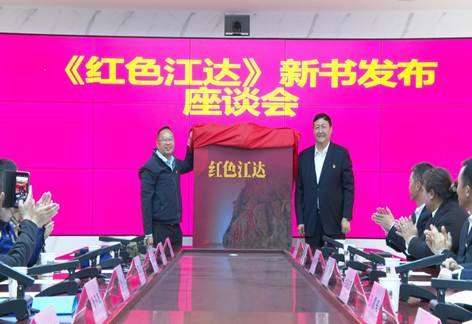
Core Viewpoint - The article highlights the efforts of Jiangda County in Changdu, Tibet, to promote red culture and tourism, aiming for high-quality development and social stability through various initiatives and investments [1][2][4][7]. Group 1: Red Culture Development - Jiangda County is focusing on building a red cultural landmark with the theme "Red Changdu, Revitalization and Progress," investing 45.46 million yuan in red education sites, including the former site of the 18th Army and a memorial museum [1]. - A bilingual book titled "Red Jiangda" has been published to provide authoritative reading material on red culture for local residents and youth [1]. - The county plans to host the first "Red Jiangda Tourism Day" in 2024, along with over 90 activities related to red culture, including film screenings and cultural performances [2]. Group 2: Ethnic Unity and Community Engagement - Jiangda County is actively promoting ethnic unity through the establishment of themed education centers and community activities, including visits to red cultural sites for local leaders and residents [2]. - The county organized red volunteer service activities to enhance community engagement and improve local governance capabilities [2]. - In 2024, Gangtuo Village was recognized as a "National Model Collective for Ethnic Unity and Progress" [2]. Group 3: Tourism and Economic Development - The county is developing its tourism industry by integrating red tourism with a structured layout along National Highway 317, aiming to create a red cultural tourism destination [4]. - An investment of 69.83 million yuan is planned for eight projects to enhance red tourism by 2025, including the renovation of warehouses in Gangtuo Village [4]. - From January to August 2025, Jiangda County received 541,400 tourists, generating an income of 89.71 million yuan [4]. Group 4: Community Welfare and Capacity Building - Jiangda County has launched the "Red in Jiangda, Dreaming East" development plan, conducting over 1,400 activities to improve traditional skills and community welfare, reaching more than 170,000 residents [4]. - The county is focusing on training skilled workers and promoting local employment, with over 150 individuals sent to work in Sichuan, earning an additional monthly income of 6,000 to 8,000 yuan [4]. - The "Red Jiangda: Fire Project" has been implemented to enhance leadership training and community engagement among party members [4].
【“两点一存”耀华夏】兰州沈家岭 西北新生地
Xin Hua Wang· 2025-09-24 07:46
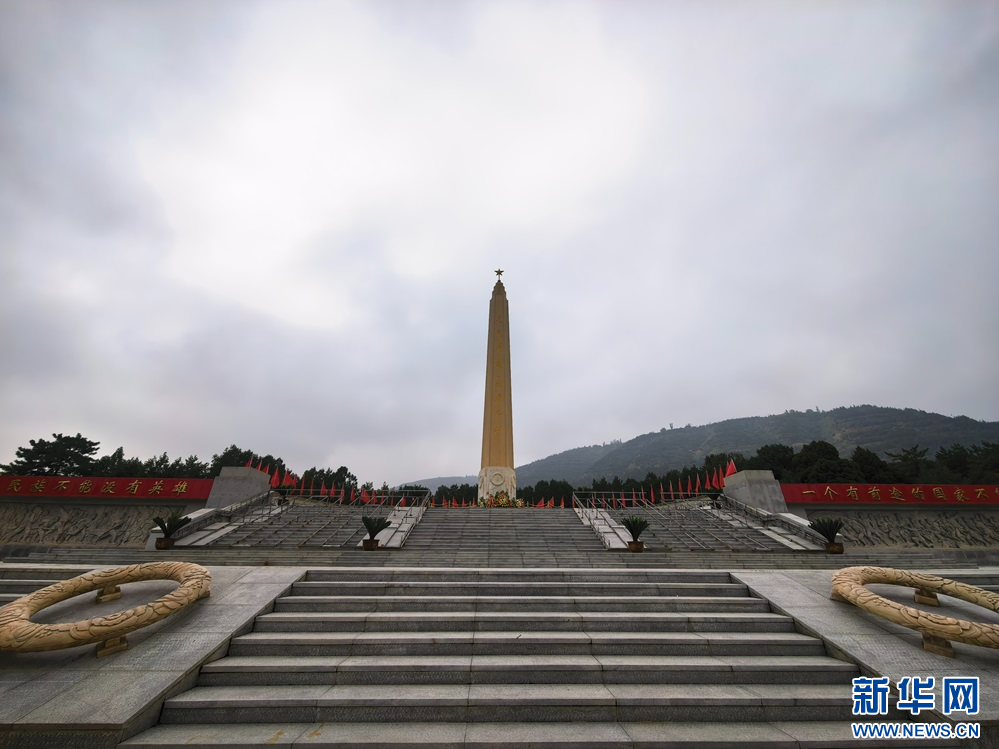
新华网兰州9月23日电(张静 刘欣瑜)22日,"红星照耀中国·'两点一存'耀华夏"网络主题宣传活动媒体采访团走进甘肃省兰州市。实地探访了 位于兰州市七里河区沈家岭的兰州市烈士陵园与兰州战役纪念馆,重温那段波澜壮阔的革命历史,感受革命先烈的崇高精神。 沈家岭,曾是兰州战役的主战场。如今,在其北麓,兰州市烈士陵园庄严肃穆,这里长眠着1540名为解放兰州英勇献身的革命先烈。他们用 鲜血和生命铸就了不朽的功勋,赋予这片土地和平与安宁。 图为兰州市烈士陵园。(张静 摄) 图为兰州战役纪念馆内陈列的革命文物。(张静 摄) 如今,兰州市烈士陵园和兰州战役纪念馆作为重要的爱国主义教育基地,每年有超过30万人次的干部群众前来瞻仰缅怀、接受教育。 近年来,兰州战役纪念馆不断创新宣教形式,通过主题签名旗、红歌传唱、红色故事会、"小小讲解员"培训等系列活动,让红色记忆代代相 传。(完) 图为兰州战役纪念馆内陈列的革命文物。(张静 摄) 兰州战役纪念馆内陈列的一张张珍贵的历史照片,一件件饱经沧桑的革命文物,无声地诉说着那段烽火连天的岁月。展厅通过奏响西进序 曲、实施千里追击、浴血南山之巅、聚歼青马主力、欢庆西北解放等篇章,清晰地再现了 ...
娃娃唱主角 书香“种”心田 边城阅读活动“舞”出红色传承
Zhen Jiang Ri Bao· 2025-09-16 23:57
Group 1 - The event "Ancient Charm of the East" in Juyuan City integrates red culture with youth reading, showcasing children's creativity and vitality [1] - Children performed self-created programs that captivated the audience, highlighting their innocence and artistic expression [1] - The event featured performances by cultural volunteers, enriching the cultural experience with traditional and contemporary themes [1] Group 2 - The local government is enhancing grassroots reading spaces, transforming farmer's bookstores into community cultural hubs [2] - New reading corners combine red culture education with daily reading, making literature more engaging for children [2] - The town plans to expand reading activities further, aiming to deepen cultural appreciation and community engagement [2]
【人民日报】革命热土 发展沃土
Ren Min Ri Bao· 2025-09-11 00:34
Group 1 - The articles highlight the transformation of regions in Northeast China, where historical sites of resistance during the Anti-Japanese War have evolved into modern urban and tourism hubs, showcasing a blend of red culture and green ecology [1][2] - The narrative emphasizes the ongoing spirit of struggle and dedication among the youth and various sectors, including scientific research and public service, as they continue the legacy of past heroes [2][3] - The text reflects on the resilience and self-reform of the Chinese nation, suggesting that the current generation is committed to carrying forward the ideals and sacrifices of their ancestors [3] Group 2 - The articles illustrate the economic potential of regions like Heilongjiang, Jilin, and Liaoning, where historical significance is being leveraged for tourism and local development, turning former battlegrounds into valuable resources [1] - The emphasis on environmental sustainability and cultural heritage indicates a strategic focus on integrating historical narratives with modern economic activities, enhancing both tourism and local economies [1][2] - The call for continued innovation and dedication in various fields suggests a broader commitment to national rejuvenation and addressing contemporary challenges, echoing the sacrifices made by past generations [2][3]