
自然灾害

Search documents
台风等恶劣天气致菲律宾30人死亡
news flash· 2025-07-26 04:20
Core Points - The Philippines has reported 30 fatalities and 7 missing persons due to the impact of Typhoons "Wipa," "Vansha," "Bamboo Grass," and the southwest monsoon [1] - Over 5.29 million people have been affected by the severe weather conditions [1] - Agricultural losses are estimated to exceed 760 million pesos (approximately 95 million RMB) [1] - Infrastructure damages are reported to be over 5 billion pesos (approximately 620 million RMB) [1] - A total of 154 municipalities across the Philippines have declared a state of disaster [1]
G20财长和央行行长会议公报:面临的挑战包括持续的战争、地缘政治和贸易紧张局势、高企的债务水平、频发的极端天气事件以及自然灾害。
news flash· 2025-07-18 12:59
Group 1 - The G20 finance ministers and central bank governors face challenges including ongoing wars, geopolitical tensions, and trade disputes [1] - High levels of debt and frequent extreme weather events, as well as natural disasters, are significant concerns [1]

上半年自然灾害致2503万人次受灾,直接经济损失541亿元
Nan Fang Du Shi Bao· 2025-07-16 16:09
Core Insights - The report highlights the significant impact of natural disasters in China during the first half of 2025, with a total of 25.037 million people affected and direct economic losses amounting to 54.11 billion yuan [1][5][7]. Earthquake and Geological Disasters - A total of 57 earthquakes of magnitude 4.0 and above occurred, with the most severe being a 6.8 magnitude earthquake in Tibet on January 7, resulting in 126 deaths and direct economic losses of 8.945 billion yuan [3][4]. - Geological disasters, particularly landslides in Sichuan and Guizhou, resulted in 74 deaths, accounting for 88.1% of the national total, with direct economic losses of 280 million yuan [4]. Flood and Rainfall Impact - The southern regions experienced severe flooding, with 7.98 million people affected and direct economic losses of 30.39 billion yuan during significant rainfall events in June [6][5]. - The report noted that the flooding was particularly severe in provinces like Guizhou, Guangxi, Guangdong, and Hunan, which accounted for 74.5% of the national death toll and 84.3% of economic losses [6]. Drought Conditions - Drought conditions were reported across various regions, affecting 10.836 million people and resulting in direct economic losses of 4.37 billion yuan [7]. - The drought was exacerbated by lower than average rainfall and higher temperatures, impacting agricultural production [7]. Wind and Hail Damage - Wind and hail disasters were reported to be relatively mild, affecting 4.633 million people with direct economic losses of 7.15 billion yuan [8]. - The report indicated that while there were numerous incidents, the overall impact was less severe compared to previous years [8]. Forest Fires and Other Disasters - A total of 200 forest fires occurred, primarily in March and April, resulting in 2 deaths [9]. - Other disasters included coastal storm surges and wildlife attacks, which caused additional fatalities and economic losses [9].


上半年我国自然灾害造成直接经济损失541.1亿元
Xin Jing Bao· 2025-07-15 12:22
Group 1: Production Safety Accidents - In the first half of the year, a total of 8,562 production safety accidents occurred, resulting in 8,079 deaths, representing a year-on-year decrease of 22.9% and 17.8% respectively [2] - Major accidents numbered 4 with 70 fatalities, showing a year-on-year decline of 20% and 25.5% respectively; significant accidents totaled 172 with 634 deaths, down 6.5% and 9.7% [2] - Despite the overall decline in accident numbers, certain regions and industries still face prominent safety issues, including major fire accidents in crowded places and illegal transportation in the transportation sector [2] Group 2: Natural Disasters - Various natural disasters affected 25.037 million people, with 307 reported deaths or missing persons, and 620,000 people were urgently relocated [3] - The direct economic loss from natural disasters reached 54.11 billion yuan, with significant damage to housing and agricultural land [3] - Key characteristics of natural disasters included a major earthquake in Tibet, a decrease in the number of significant earthquakes, and severe geological disasters in the southwest region [3]
暴风雨袭击美国东北地区 多地被淹 道路关闭
news flash· 2025-07-15 00:48
Core Viewpoint - Severe flooding caused by heavy rainfall has impacted large areas of the Mid-Atlantic and Northeast regions of the United States, particularly affecting New York City and northern New Jersey [1] Group 1: Impact on Regions - New Jersey has declared a state of emergency due to flash floods and heavy rainfall [1] - Significant flooding was reported in Union County, New Jersey, affecting most areas and prompting the deployment of water rescue equipment [1] - Flooding in New York State led to the closure of major roads, including the Taconic State Parkway and Spring Brook Park Avenue [1] Group 2: Emergency Response - New Jersey Governor Philip Murphy announced the emergency status in response to the severe weather conditions [1] - Local authorities are actively responding to the flooding situation, with no reports of fatalities at this time [1]
暴雨致法国部分地区发生洪灾,巴黎至米兰火车暂停运行
news flash· 2025-07-01 11:06
Core Viewpoint - A severe thunderstorm impacted the Savoie region of France and northwest Italy, leading to the temporary suspension of train services between Paris and Milan due to heavy rainfall [1] Group 1: Weather Impact - The storm caused significant flooding in the Charmax River, with water levels exceeding riverbanks, particularly affecting the towns of Modane and Fourneaux, where water depth reached 50 centimeters [1] - The Savoie government reported that this flooding event is the most severe in 70 years for the Charmax River [1] Group 2: Local Response - Schools in Fourneaux were inundated and will be temporarily closed starting July 1 [1]
5月中国各种自然灾害造成直接经济损失84.4亿元
Zhong Guo Xin Wen Wang· 2025-06-10 15:16
Group 1 - In May, various natural disasters in China caused direct economic losses of 8.44 billion yuan [1] - A total of 9.978 million people were affected by different degrees of disasters, with 55 reported dead or missing [1] - The average precipitation nationwide was 77.6 mm, which is 10.4% more than the same period in previous years [1] Group 2 - Floods and geological disasters affected 1.616 million people, resulting in 42 deaths or missing persons, and direct economic losses of 2.69 billion yuan [2] - Drought conditions were alleviated in southern regions, but eastern areas of the northwest still faced drought, affecting 6.265 million people with direct economic losses of 2.56 billion yuan [2] - Severe convective weather caused 1.982 million people to be affected, with 7 fatalities and direct economic losses of 3.16 billion yuan [2]
南方旱情因降雨基本缓解 2025年5月全国自然灾害情况发布
Yang Shi Wang· 2025-06-10 09:42
Core Insights - The article discusses the analysis of natural disaster situations in China for May 2025, highlighting the impact of various disasters including floods, geological hazards, droughts, and severe weather events [1] Summary by Categories Natural Disaster Overview - In May, natural disasters affected approximately 9.978 million people, resulting in 55 deaths or missing persons, and causing direct economic losses of 8.44 billion yuan [1] Floods and Geological Hazards - Southern China experienced frequent heavy rainfall, with an average precipitation of 77.6 mm, 10.4% above the historical average. Significant flooding and geological disasters occurred in regions like Guizhou and Guangxi, leading to 1.616 million affected individuals and direct economic losses of 2.69 billion yuan [1][2] Drought Conditions - Drought conditions in southern regions were alleviated due to rainfall, while parts of northern China, particularly in Gansu and Ningxia, continued to experience drought. Approximately 6.265 million people were affected by drought, with direct economic losses of 2.56 billion yuan [2] Severe Weather Events - Six strong convective weather events occurred, primarily affecting regions like Jiangxi and Hunan, resulting in 1.982 million affected individuals and direct economic losses of 3.16 billion yuan. Additionally, four sandstorm events were reported, impacting over 10,000 people [3] Cold Weather and Snow Disasters - Cold weather and snow disasters affected areas in northern China and the Tibetan Plateau, leading to 104,000 affected individuals and direct economic losses of nearly 31 million yuan. Notably, three fatalities were reported due to avalanches in Tibet [4] Forest and Grassland Fires - The overall fire risk was stable, with 22 forest fires reported, primarily in Shanxi and Shaanxi. No grassland fires were recorded during this period [5] Earthquake Activity - Earthquake activity was relatively calm, with only four earthquakes of magnitude 4.0 or above recorded, significantly lower than the historical average of 11.4 per month. The largest earthquake was a 5.5 magnitude event in Tibet, which did not result in significant damage [6]
贺博生:6.4黄金晚间小非农如何布局,原油最新独家多空操作建议指导
Sou Hu Cai Jing· 2025-06-04 10:18
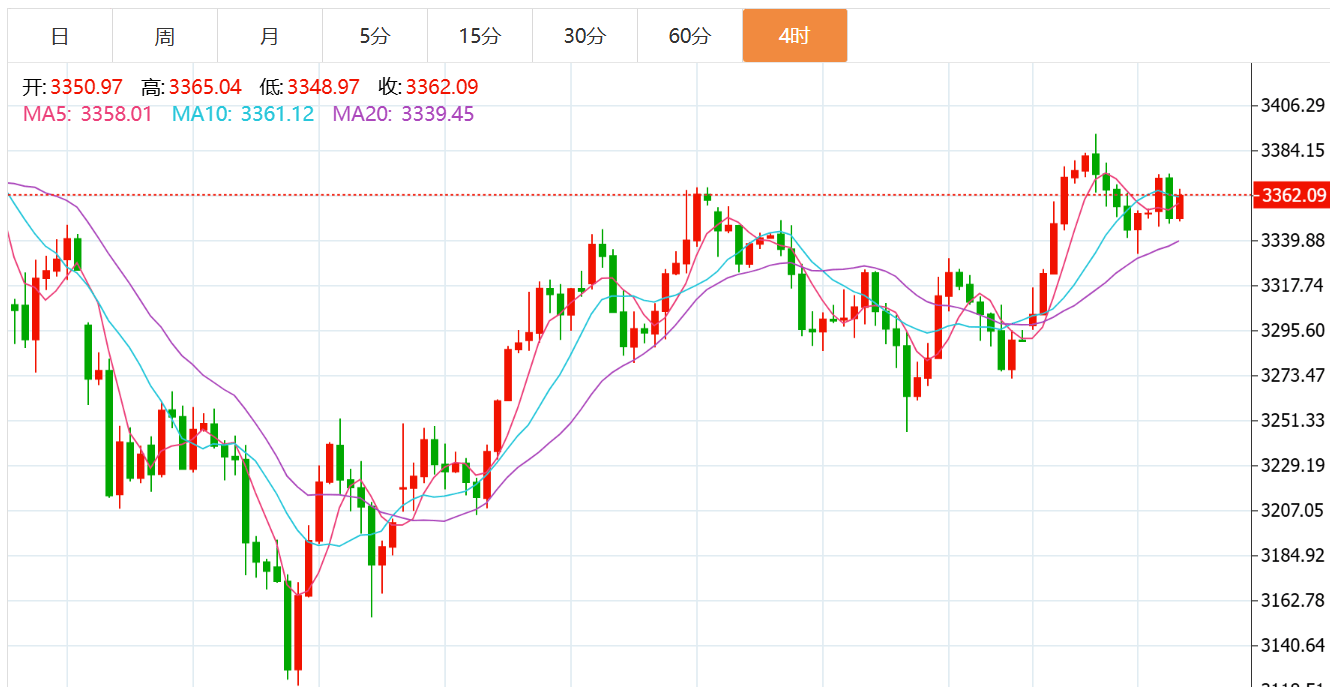
Group 1: Gold Market Analysis - The international gold market is experiencing a tug-of-war between bullish and bearish forces, with spot gold prices around $3355 per ounce, indicating underlying tensions despite a seemingly calm surface [1] - Strong performance in the U.S. job market is counterbalancing global trade tensions, while the OECD's latest warnings introduce new variables into the market [1] - Upcoming key data releases, particularly the ADP employment data and the non-farm payroll report, are expected to provide insights into Federal Reserve policy direction, which will influence gold market investment logic [1] Group 2: Technical Analysis of Gold - Gold is anticipated to enter a period of volatility, with short-term resistance at $3380 and support at $3345, indicating a potential range-bound trading environment [3] - The 30-minute moving average is showing signs of a downward trend, suggesting a possible adjustment if a bearish crossover occurs [3] - The trading strategy recommends focusing on buying on dips while considering selling on rebounds, with key levels to watch being $3380-$3390 for resistance and $3345-$3335 for support [3] Group 3: Oil Market Analysis - International oil prices have slightly declined due to a more balanced supply-demand scenario and concerns over the global economic outlook, with Brent crude at $65.58 per barrel and WTI at $63.32 per barrel [4] - Recent price drops follow a two-week high, influenced by factors such as wildfires in Canada disrupting oil production and geopolitical tensions affecting supply [4] - The oil market is currently influenced by competing forces, including geopolitical risks and OPEC+ production increases, leading to a potential high-level consolidation until clearer policy directions emerge [4] Group 4: Technical Analysis of Oil - The mid-term trend for oil prices is downward, with a potential test of the $50 mark after forming a bearish flag pattern [5] - Short-term movements are characterized by fluctuations around the moving average system, indicating a likely upward trend in the near term [5] - The trading strategy suggests focusing on buying on dips while considering selling on rebounds, with resistance levels at $64.5-$65.0 and support levels at $62.0-$61.5 [5]
达利欧:“交易的艺术”与“背后的力量”
Hua Er Jie Jian Wen· 2025-05-15 01:02
Core Viewpoint - The article discusses the fundamental forces driving the current shifts in international order, emphasizing the need for countries, particularly the U.S., to adopt effective strategies in response to these changes [1][2]. Group 1: Fundamental Forces - Five core forces are identified as driving global dynamics: debt monetization, domestic wealth and value gaps, international order/disorder, natural disasters, and technological advancements [3][6][11]. - Debt/monetary forces shape market and economic directions, influencing the monetary order [4][7]. - Domestic wealth and value gaps are creating political order challenges, leading to the rise of populism and authoritarian leadership, which threaten democracy and the rule of law [8]. - International order is characterized by a lack of a single dominant power, increasing unilateral decisions, and rising conflicts, with a shift from multilateralism to bilateral agreements [9]. - Natural disasters are worsening, causing significant economic losses, and countries' adaptability will be crucial [10]. - Human creativity, particularly through technological innovation, can lead to both significant benefits and potential disasters [11]. Group 2: Current Strategies and Implications - Current strategies include tariff designs to enhance tax revenue and competitive advantages for domestic companies, attracting foreign investment, and optimizing global investment layouts [12]. - The management of government debt and fiscal deficits is critical, with the ability to reduce the fiscal deficit to 3% of GDP being a pivotal factor for debt and currency value [7][12]. - The approach to handling these critical states will determine whether the situation is managed effectively or leads to instability [13].