
贸易失衡

Search documents
“对等关税”遭遇法律挑战,特朗普团队准备“B计划”
Guan Cha Zhe Wang· 2025-05-30 13:36
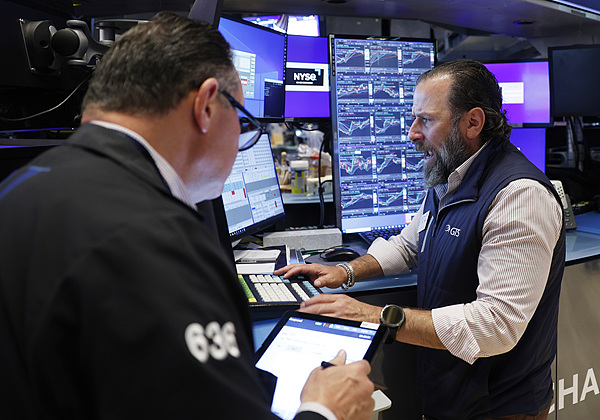
Core Viewpoint - The Trump administration is facing significant legal challenges regarding its tariff policies, prompting the consideration of a backup plan involving a two-step approach to implement tariffs more effectively [1][3][4]. Group 1: Legal Challenges and Responses - The U.S. International Trade Court ruled that the Trump administration's use of the International Emergency Economic Powers Act (IEEPA) to impose tariffs was illegal, which has created a setback for the tariff strategy [3][4]. - Following this ruling, the U.S. Court of Appeals temporarily reinstated the tariff measures, allowing the Trump administration to continue its tariff policies while exploring alternative legal frameworks [3][4]. - The Trump team is considering invoking Section 122 of the Trade Act of 1974 to impose a broad 15% tariff for 150 days, which would address trade imbalances with other countries [4][5]. Group 2: Proposed Two-Step Plan - The first step of the proposed plan involves a temporary broad tariff, while the second step would involve personalized tariffs for major trading partners based on Section 301 of the same Trade Act [4][5]. - This two-step plan is seen as more legally sound compared to the previously challenged IEEPA-based tariffs, as Section 301 has a history of being used effectively in trade disputes [9][10]. - The Trump administration believes that this approach could maintain leverage in ongoing trade negotiations without interruption from court rulings [4][5]. Group 3: Market Reactions and Implications - The uncertainty surrounding the tariff policies has led to fluctuations in the Wall Street market, reflecting investor concerns about the potential impacts of these legal challenges on trade negotiations [3][10]. - Analysts suggest that if the court's ruling against the IEEPA-based tariffs is upheld, it could eliminate key obstacles in U.S.-EU trade negotiations, paving the way for a more balanced agreement [10][11]. - The potential for a more pragmatic approach from both the U.S. and EU could lead to a resolution that benefits both parties, particularly in sectors like steel and automotive, which are currently under scrutiny [10][11].

挑战政府贸易政策,削弱白宫对外筹码,美法院叫停特朗普“关税战”
Huan Qiu Shi Bao· 2025-05-29 23:00
Core Viewpoint - The U.S. International Trade Court ruled that the Trump administration's tariff policies are illegal, stating that federal law does not grant the president "unlimited power" to impose tariffs on imports from nearly all countries [1][3][4]. Group 1: Legal and Political Implications - The court's decision prohibits the Trump administration from executing tariffs imposed under the International Emergency Economic Powers Act, asserting that the president cannot impose comprehensive tariffs based on "trade imbalance" [3][4]. - The ruling is seen as a significant legal challenge to the current administration's tariff strategy, which is described as having collapsed due to its own missteps [1][4]. - The White House criticized the ruling, claiming that trade deficits constitute a "national emergency" and that the resolution of such emergencies should not be determined by unelected judges [4][6]. Group 2: Economic Impact - The ruling may lead to a slowdown in the U.S. government's ability to impose tariffs, requiring more time-consuming trade investigations and reliance on other trade laws [1][4]. - The decision is viewed as a victory for states and businesses adversely affected by the tariffs, which have been described as a significant tax increase on American families and businesses [6][5]. - Following the court's ruling, financial markets reacted positively, with the U.S. dollar rising and Asian stock markets experiencing gains, indicating a potential easing of trade tensions [5][6]. Group 3: International Reactions - The ruling could weaken the U.S. government's efforts to negotiate new trade agreements globally, as it undermines the use of unilateral tariffs as leverage in negotiations [8][9]. - The European Union and Australia are considering the implications of the ruling, with calls for the U.S. to eliminate tariffs deemed unreasonable [8][9]. - Japan is also closely monitoring the situation, preparing for ongoing trade negotiations with the U.S. [8][9].
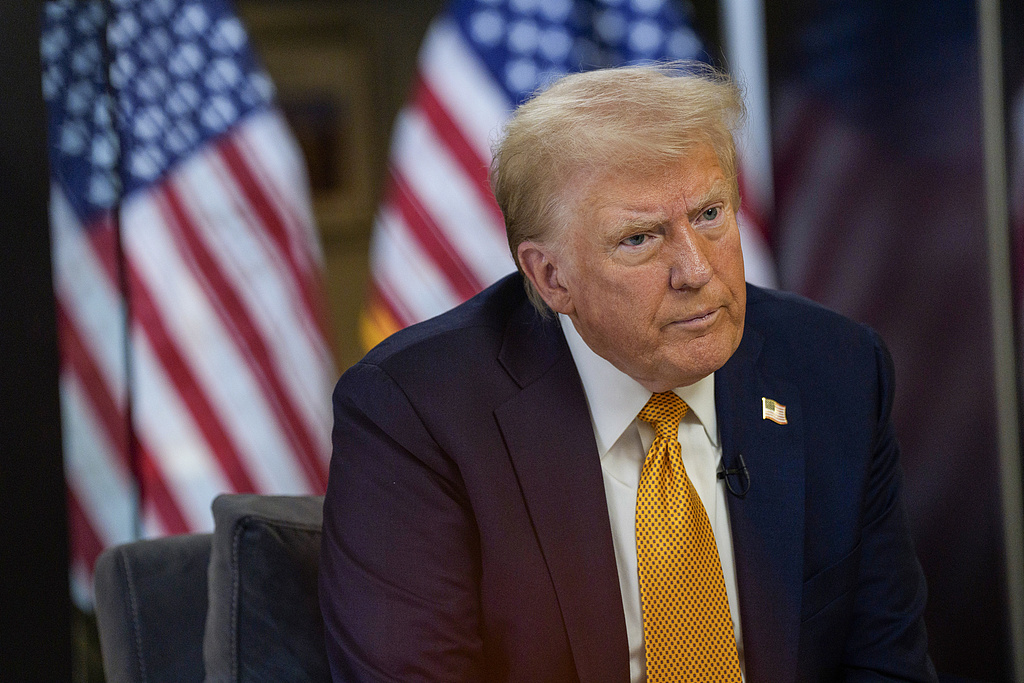
法国总统马克龙重申,关税不是解决贸易失衡的正确途径。
news flash· 2025-05-26 11:13
Core Viewpoint - French President Macron reiterated that tariffs are not the correct solution to address trade imbalances [1] Group 1 - The statement emphasizes the ineffectiveness of tariffs in resolving trade issues [1]
泰国财政部长:已向美国提交贸易提案以解决贸易失衡问题。
news flash· 2025-05-20 02:22
Core Viewpoint - Thailand's Finance Minister has submitted a trade proposal to the United States to address trade imbalance issues [1] Group 1 - The trade proposal aims to resolve ongoing trade deficits between Thailand and the United States [1] - The initiative reflects Thailand's efforts to strengthen economic ties and enhance trade relations with the U.S. [1]
美国财长贝森特将出席G7财金领导人会议,关注贸易问题
news flash· 2025-05-18 23:17
Core Viewpoint - US Treasury Secretary Yellen will attend the G7 finance leaders meeting to address trade imbalances and non-market economic behaviors [1] Group 1: Meeting Objectives - Yellen aims to refocus G7 discussions on resolving trade imbalances and addressing non-market economic practices [1] - Discussions will also include how to achieve more growth driven by the private sector [1] Group 2: Economic Strategy - Yellen emphasizes the need to "privatize" the US economy by reducing government spending and regulation, indicating a belief that the economy is overly reliant on the public sector for growth [1] - This approach reflects a shift towards encouraging private sector involvement in economic growth [1] Group 3: Previous Engagements - Yellen had initial face-to-face discussions with G7 finance leaders during the IMF and World Bank meetings in April, but no joint statement was issued [1]
胡晓炼:劳动密集型产业缺乏竞争力,关税政策难促美国制造业回流
Feng Huang Wang Cai Jing· 2025-05-17 10:29
Group 1 - The 2025 Tsinghua Wudaokou Global Financial Forum was held in Shenzhen, focusing on building an open and inclusive economic and financial system [1] Group 2 - Hu Xiaolian, former chairman of the Export-Import Bank of China, emphasized that the U.S.-led tariff policies are unlikely to achieve their intended goals, and the fundamental solution to trade imbalances requires adjustments in each country's economic structure [5] - The core objectives of the U.S. tariff policies include reducing trade deficits, increasing fiscal revenue, and restructuring the international economic order, but the actual return of manufacturing to the U.S. is uncertain and challenging [5] - Hu noted that the U.S. lacks competitiveness in general processing and labor-intensive industries, leading companies to prefer relocating to regions with lower tariffs and better cost structures, particularly in global South and emerging market countries [5] Group 3 - Hu further stated that the rebalancing of global trade will lead to profound adjustments in the internal economic structures of major economies, highlighting the need for countries to focus on domestic economic adjustments to effectively address trade imbalances [6] - Historical experience suggests that trade imbalances can only be effectively resolved when a country's internal economic structure develops in a more balanced manner [6]

特朗普上台100天,终于说出对中国看法,这次美国民众站中方一边
Sou Hu Cai Jing· 2025-05-08 07:17
Group 1 - Trump's recent statements reflect a "superior" attitude towards China and other countries, claiming he is "not just managing America, but the world" [1][3] - The U.S. Treasury Secretary echoed Trump's views, blaming China for the trade imbalance, stating that China's exports to the U.S. are five times greater than the reverse, and calling for China to ease tensions [3] - China's response highlighted that the trade war was initiated by the U.S., warning that there are no winners in a trade war and urging for dialogue based on equality and respect [3] Group 2 - The trade war has significantly impacted American farmers, with losses exceeding $20 billion due to reduced exports to China, as China diversifies its imports from other countries [5] - Trump's administration has faced increasing criticism from the public, including former supporters, with 52% of voters believing he has overstepped his authority [5] - The perception of Trump's governance as a threat to the system of checks and balances has led to growing dissent within the Republican Party [5] Group 3 - Trump's belief in "managing the world" is increasingly being rejected by the American public, with historical patterns suggesting that countries acting with hegemony will eventually decline [7]
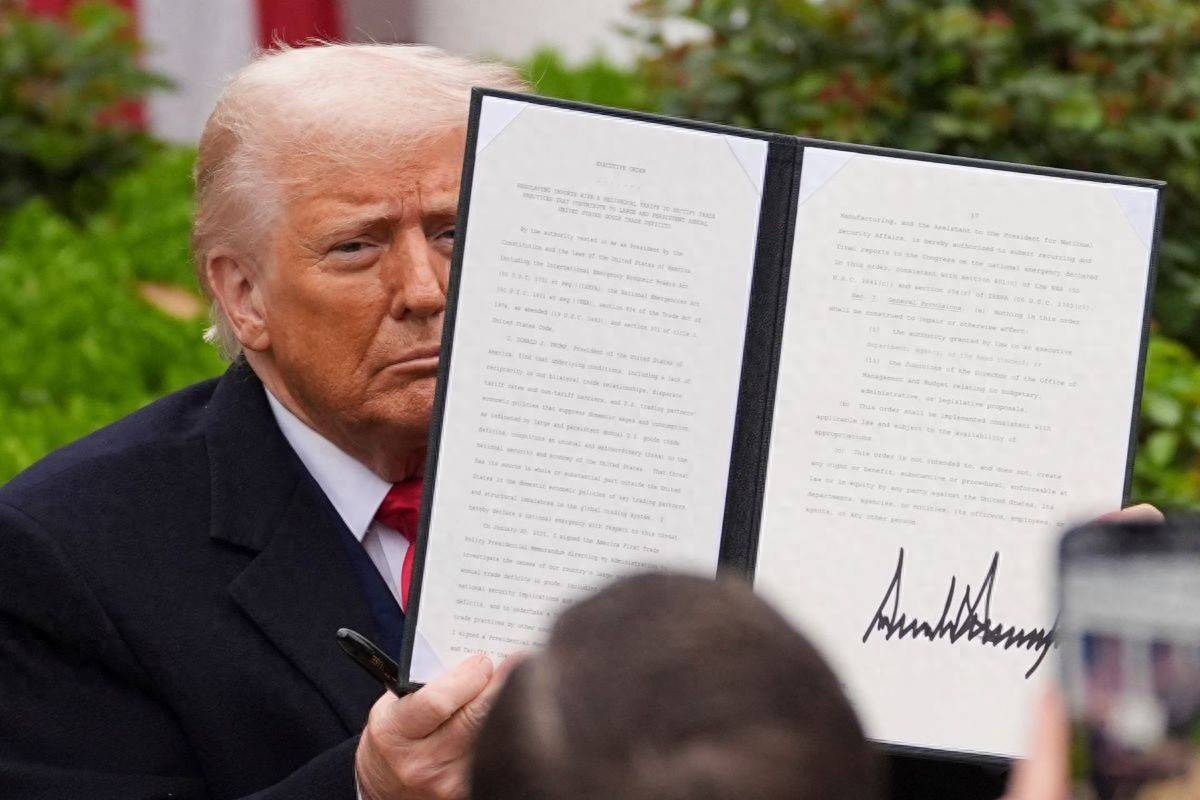
报道:官员称欧盟或将购买更多美国天然气和农产品
news flash· 2025-05-01 19:33
Core Insights - The European Union is considering purchasing more American natural gas and agricultural products to address trade imbalances [1] - The proposal aims to reduce the overall trade deficit of the U.S. with the EU to approximately 50 billion euros, taking into account U.S. service exports to the EU [1]

美国不想再拖了!等不到中方给的台阶,特朗普“无中生有”
Sou Hu Cai Jing· 2025-05-01 12:34
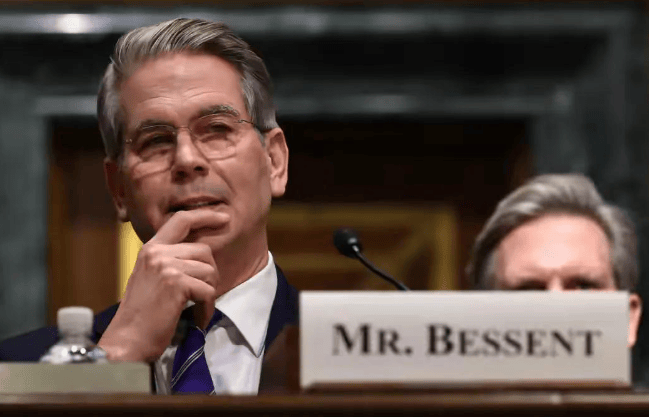
据和讯网消息,据北京日报,外交部发言人主持例行记者会。有外媒记者提问,美国财长周三表示,中 国依赖出口发展经济的模式是不可持续的,并且对世界造成了影响。中方对此有何评论?发言人指出, 我们看到的事实是,美方滥施关税,严重破坏世贸组织规则,损害的是各国人民的共同利益。 贝森特的公开声明强调,中国依赖出口的经济模式不仅会损害中国自身,也会对全球造成负面影响。他 同时宣称美国并非孤军奋战,而是联合贸易伙伴共同迎战所谓的贸易失衡问题。尽管贝森特强调美国及 其盟友的合作,实际情况是美国投资者对政府政策的反复无常深感头疼。同时,贝森特所描述的关税战 背后的逻辑也存在显著争议。通过制造业回流来解决贸易失衡问题,看似合理,但实际上基于美国当前 的经济构成和制造成本并不具有竞争优势。 美国财政部长贝森特(资料图) 显然美国只关注到自身商品贸易逆差,而中国国务院新闻办公室发布《关于中美经贸关系若干问题的中 方立场》白皮书显示,2023年美国对华服务贸易顺差为265.7亿美元,维持顺差持续增长的趋势;2022 年美资企业在华销售额4905.2亿美元,远高于中资企业在美786.4亿美元的销售额,差额高达4118.8亿美 元,综合考虑 ...
4月23日电,韩国产业部部长表示,将与美国对口官员讨论贸易失衡问题 。
news flash· 2025-04-23 00:47
智通财经4月23日电,韩国产业部部长表示,将与美国对口官员讨论贸易失衡问题。 ...