AI设计

Search documents
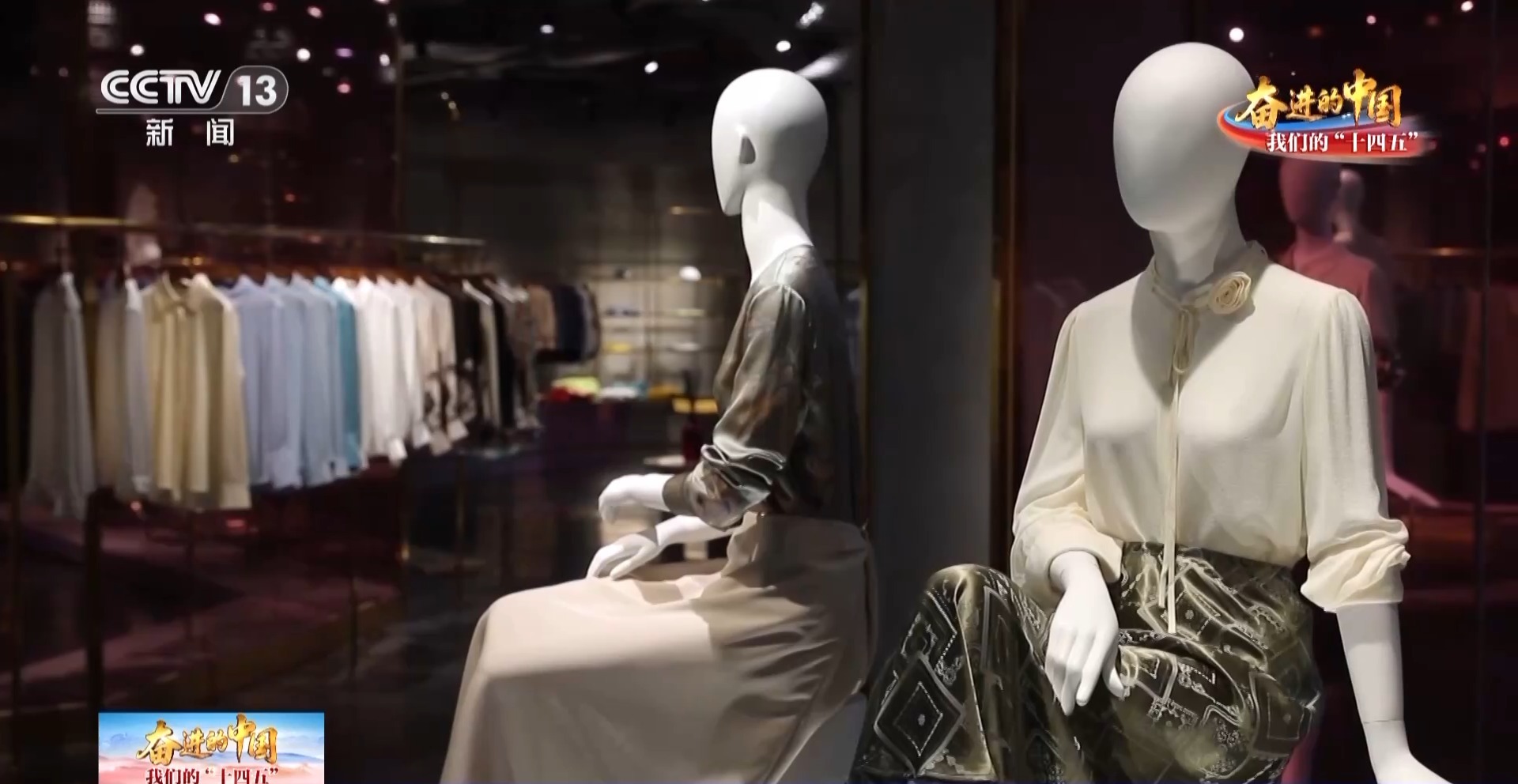
从“一根丝”到“全球链” 中国丝绸走向世界
Yang Shi Xin Wen· 2025-10-15 04:37
Core Insights - The silk industry is leveraging digital transformation to enhance its global competitiveness, evolving from a historical legacy to a modern global supply chain [1][11][17] Industry Developments - Dali Silk (Zhejiang) Co., Ltd. has innovated a fabric that interweaves mulberry silk and wool, addressing the issue of silk wrinkling, resulting in a 30% increase in orders from domestic and international clients [3][5] - The New Nanhai Weaving Factory in Huzhou produces 13 million meters of high-end silk fabric annually, with exports to the EU increasing by 23% in the first eight months of this year, attributed to stable color fastness and fine weaving [7] - The factory has collaborated with universities to develop new products targeting green and low-carbon materials, which have gained market favor [9] Technological Innovations - Digital transformation is revolutionizing the silk industry, enhancing efficiency across the entire supply chain from design to logistics [11] - Wanshili Group has established an AI lab that can design 100,000 unique silk scarves in one minute, utilizing over 300 AI models to streamline the design process [13] - An innovative waterless dyeing process has reduced dyeing time from three days to one, decreased water usage by 90%, and achieved nearly 100% dye adherence, meeting EU environmental standards [15]

依依不舍 运河畔嘉年华
Bei Jing Ri Bao Ke Hu Duan· 2025-10-09 00:15
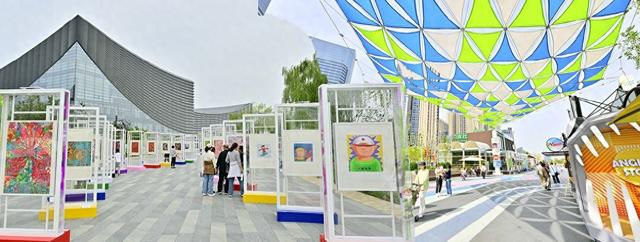
Core Points - The article highlights a series of vibrant cultural and tourism activities held during the Mid-Autumn Festival and National Day holidays in the Beijing urban sub-center, providing a diverse and engaging experience for residents and visitors [1][3][4]. Group 1: Events and Activities - The "Second West Bank·Beautiful Life Festival" launched on October 1, attracting over 70,000 visitors on its first day, featuring a mix of sports, fashion, music, and food [3]. - The "Water Rhythm·Newborn" 2025 Grand Canal Cultural Fashion Awards showcased over 80 original outfits designed by top national designers, transforming the canal into a natural stage for performances [4]. - The "2025 Beijing Grand Canal Music Festival" held on October 6-7 featured 16 performing artists, including well-known singers, attracting nearly 70,000 music fans [5][6]. Group 2: Cultural Engagement - The Beijing Grand Canal Museum hosted seven events during the holiday, including a classical culture performance and a situational drama, engaging audiences with traditional arts [7]. - The "2025 Public Art Season" at the Beijing Art Center displayed over 200 public art pieces, encouraging community participation in creating a collective art project [10]. - The "2025 International Children's Fashion Week" showcased innovative designs integrating AI technology with traditional Chinese clothing [11]. Group 3: Community and Local Celebrations - Various local markets and cultural activities in towns provided residents with opportunities to enjoy traditional foods and engage in community events, enhancing the festive atmosphere [14][15]. - The "Cultural Exchange Exhibition" at the Beijing City Library featured interactive experiences and discussions on traditional arts, attracting over 107,000 visitors during the holiday [9].
不会设计也能搞定电商图?AI帮你一键生成!
Sou Hu Cai Jing· 2025-09-29 04:43
Core Insights - The article discusses the rising importance of AI design tools in the e-commerce sector, particularly during promotional peaks like the Mid-Autumn Festival, where efficient production of visual content is crucial for merchants [1][12]. Group 1: AI Product Images - Traditional product image creation is time-consuming and costly, relying on professional photography and post-editing. AI technology simplifies this process significantly [1]. - Users can upload images of products in a clean environment, and AI will automatically recognize the subject and generate various backgrounds and atmospheric effects [1][3]. - The system can generate six different styles of product images at once, allowing for unified modifications or individual adjustments, thus enhancing material production speed and lowering the barriers for photography and post-production [5]. Group 2: AI E-commerce Main Images - E-commerce main images are critical as they directly influence click-through rates and purchasing decisions. AI tools greatly enhance the efficiency of this design process [5]. - The AI main image feature can automatically complete layout and design based on uploaded product images and text content. Users can specify styles through keywords, allowing for intelligent matching of color schemes and font layouts [5][11]. - Generated main images support online editing, enabling users to adjust titles, prices, or selling points easily, which saves time and reduces communication costs for e-commerce operators [11]. Group 3: AI Banner Images - Banner images serve as important visual entry points for promotional activities, guiding traffic and enhancing brand exposure [11]. - During festive promotions, the frequency of updates can overwhelm traditional design methods. The AI system can generate six different banner design options based on uploaded materials and promotional text [11]. - These automatically generated banners are professionally composed, making them suitable for homepage rotations and promotional sections, allowing for rapid deployment of festive marketing visuals [11]. Group 4: Trends in AI-Assisted E-commerce Design - The application of AI in design is shifting from "assisted creation" to "collaborative design," providing significant efficiency gains for e-commerce businesses [12]. - The value of AI tools is evident in three main areas: enhanced design efficiency, visual standardization for consistent brand image, and lowered barriers for non-professionals to create compliant visual materials [12]. - AI tools enable businesses to capitalize on short-term traffic spikes during festive periods, allowing for quick market responsiveness [12][13]. Group 5: Future of E-commerce Marketing - The core of competition in festive marketing lies in execution speed and efficiency, with AI design tools allowing small and medium-sized businesses to produce high-quality visual content at lower costs [13]. - As AI continues to evolve in visual design, the creative production model for e-commerce marketing is expected to become more intelligent and efficient [14]. - For brands focused on efficiency and innovation, early adoption of AI design tools is becoming a new trend in festive marketing [14].

现象级潮玩IP背后都有它的印记 这个小镇藏不住了
Yang Shi Xin Wen Ke Hu Duan· 2025-09-26 08:17
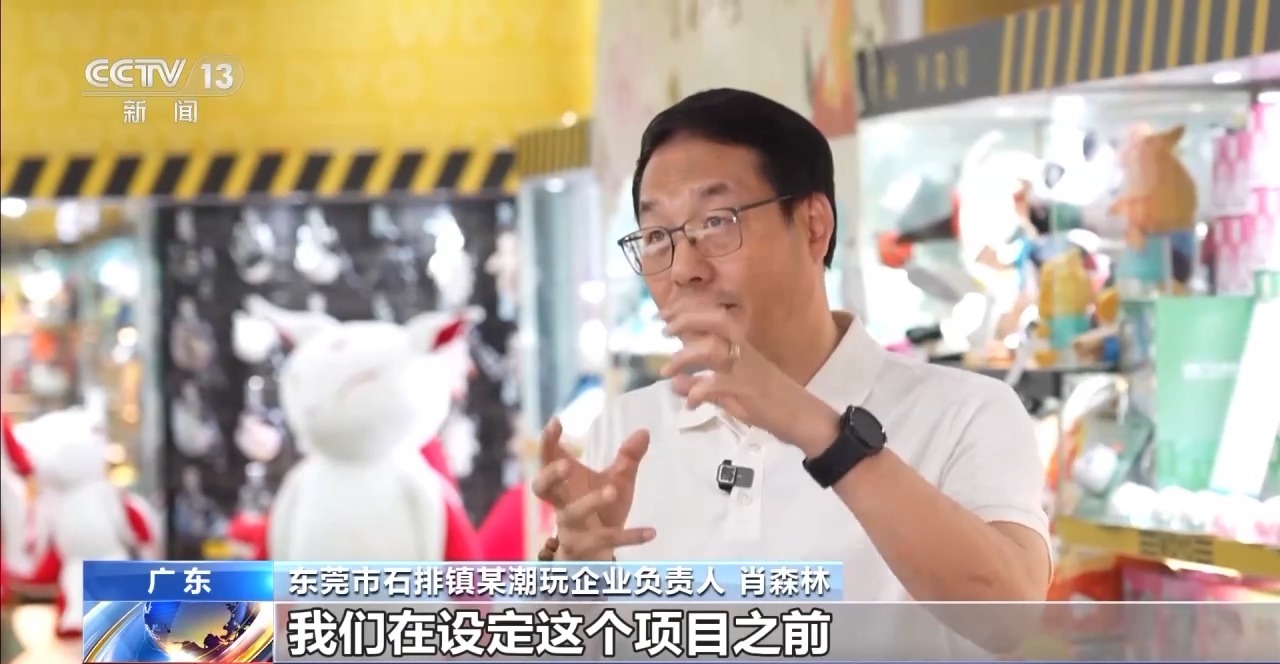
Core Insights - The潮玩 industry in Dongguan, particularly in Shipaizhen, has rapidly developed into a significant production base, with 85% of潮玩 products originating from this area, blending traditional culture with modern design [1][7][14]. Industry Overview - Shipaizhen has become a hub for潮玩 production, with a complete industry chain from design to manufacturing and sales established since the 1980s [7][8]. - The local潮玩 enterprises are increasingly incorporating Chinese cultural elements into their products, such as metal assembly toys inspired by traditional themes [5][8]. Innovation and Trends - Companies are responding to the rising demand for emotional value and trendy products by forming large design teams and rapidly launching new original IPs, including blind boxes and figurines [8][10]. - The introduction of digital and intelligent equipment has transformed潮玩 manufacturing from a labor-intensive to a technology-intensive industry, enhancing product quality and reducing labor intensity [17][27]. Production Efficiency - Shipaizhen is developing an潮玩 AI design center, which can complete prototypes within 48 hours and enter mass production within 72 hours, aiming to improve production efficiency by 20% [14]. - The local潮玩 industry has seen significant improvements in production precision, with some companies achieving accuracy levels of 0.02 mm in their manufacturing processes [23][25]. Cultural Impact -潮玩 products often reflect rich cultural narratives, such as the 千脚灯, which has gained international recognition for its craftsmanship and cultural significance [7][16]. - The integration of traditional cultural elements into潮玩 products allows young consumers to engage with and learn about their heritage in a playful manner [1][5].
稿定×华为云:共同推进AI设计领域应用创新
Sou Hu Cai Jing· 2025-09-19 15:53
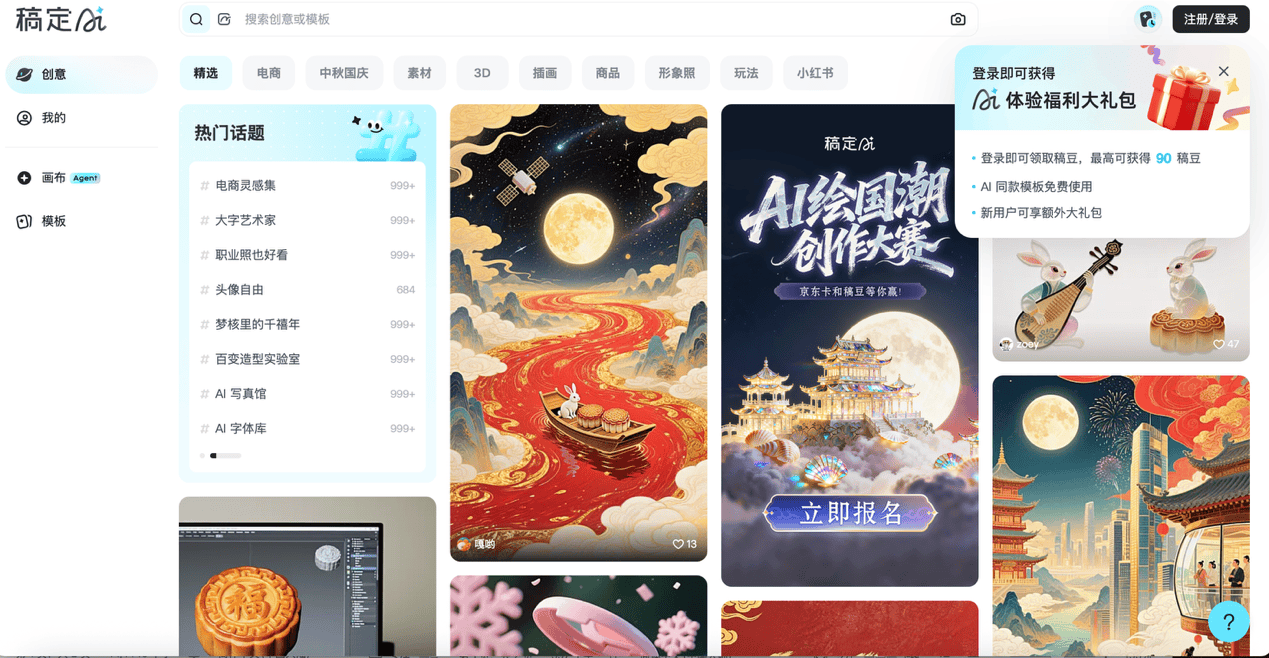
Core Insights - The article discusses how AI is reshaping the design delivery process, particularly through the launch of the "GaoDing AI" platform by GaoDing Technology, which leverages Huawei Cloud's Token services to provide a comprehensive solution for visual marketing in the AI era [1][2]. Group 1: AI Design Platform Features - "GaoDing AI" offers capabilities such as inspiration collection, creative stimulation, visual refinement, and design extension, making the creative process simpler and more efficient [1][3]. - The platform allows for a layered approach to content creation, where AI handles the generation of elements like scene images and marketing graphics, ensuring quality control and ease of adjustments [1][3]. Group 2: Technological Innovations - The platform features an "infinite canvas" and an AI design agent that automates tasks like inspiration collection and design conception, streamlining the creative process [2][3]. - The collaboration with Huawei Cloud has significantly enhanced the speed of multimodal model generation, with text-to-image models speeding up by 2 times and text-to-video/image-to-video models by 3.5 times [3]. Group 3: Market Impact and User Base - The AI capabilities have led to the creation of an AI creative community with over 80,000 certified designers and more than 100 million users, fostering a collaborative environment for inspiration [3]. - The platform aims to empower 5 million small and medium-sized enterprises and 100 million individual users to easily manage marketing design, addressing the growing demand for digital marketing solutions [3].
推动产业深度融合 河北国际工业设计周汇聚全球设计创新力量
Zhong Guo Xin Wen Wang· 2025-09-10 07:41
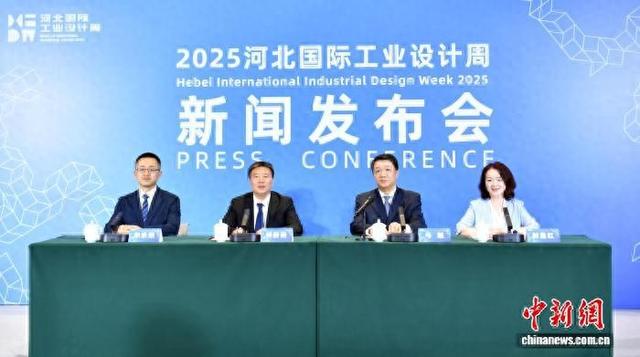
Core Points - The 2025 Hebei International Industrial Design Week aims to gather global design innovation resources to support the development of Xiong'an New Area and assist in the transformation and upgrading of Hebei's manufacturing industry [3][4] - The event will take place from September 20 to September 26, featuring a main venue in Xiong'an and three sub-venues in Shijiazhuang, Dingzhou, and Xinjic [3] - The theme for this year's design week is "Intelligent Design for a New Industrial Chapter," focusing on accelerating the application of intelligent design and integrating advanced design technologies with Hebei's leading industries [3][4] Event Details - The main exhibition area will cover 8,000 square meters, with seven exhibition zones and participation from 330 domestic and international exhibitors, showcasing 3,200 new design products [1][3] - Key activities include keynote speeches, the 6th Golden Reed Industrial Design Award ceremony, international product launches, and various design exchange events with Denmark, Italy, and AI design [3][4] - The event will feature 210 industry leaders and experts who will share insights on global design trends and industry developments during multiple forums [3] Online and Offline Integration - The design week will adopt a hybrid model, combining online and offline activities, including a 3D virtual exhibition hall for immersive viewing experiences and interactive features [4] - Online channels will enhance the event's reach through "cloud displays" and "cloud live broadcasts," creating a "never-ending" online design week [4]
不会设计也能出大片,我靠「指指点点」做完了一整套品牌视觉
36氪· 2025-09-03 23:50
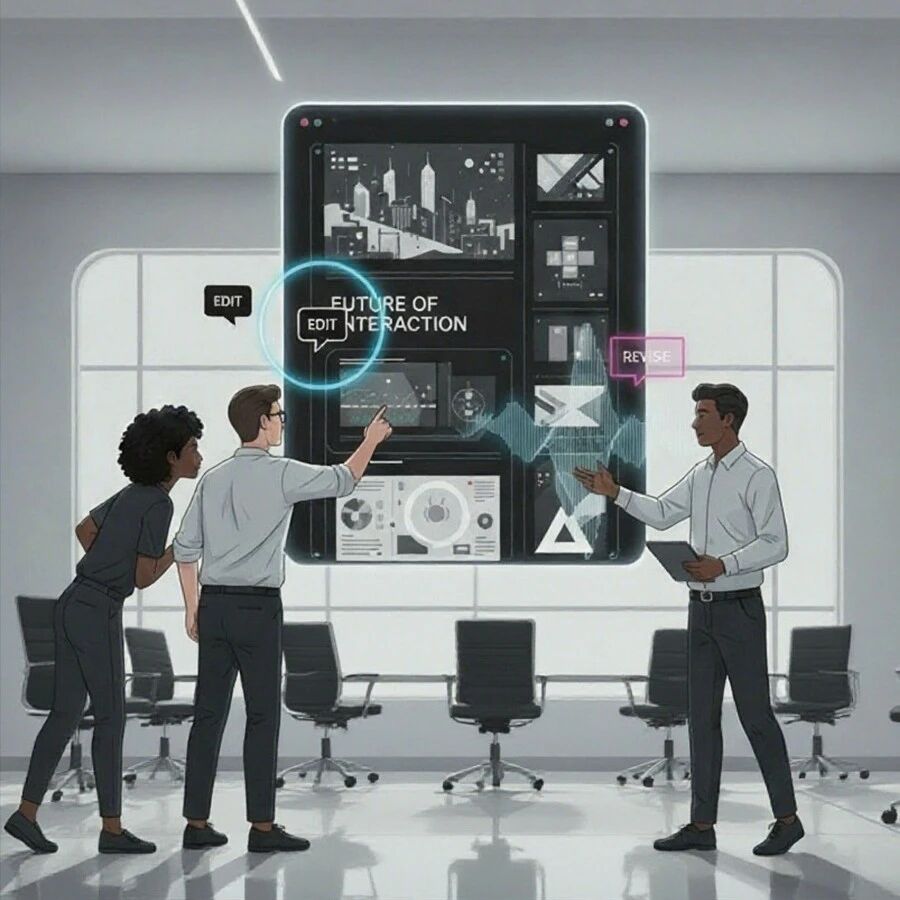
Core Viewpoint - The article discusses the emergence of Lovart, an AI design tool that has quickly gained popularity as a replacement for traditional design platforms like Canva and Figma, highlighting its user-friendly features and capabilities that cater to non-professional designers [7][8][10]. Group 1: Lovart's Features and Advantages - Lovart has attracted nearly 1 million users since its launch, positioning itself as a versatile design agent that operates like a full-time designer [8][10]. - The tool allows users to create designs using natural language commands, eliminating the need for prior design knowledge, which significantly streamlines the design process [13][14]. - Lovart's ChatCanvas feature enables users to interactively modify designs by pointing and clicking on elements, making the editing process more intuitive and efficient compared to traditional AI design tools [24][28]. Group 2: Integration of Advanced AI Models - Lovart recently integrated the Nano Banana image model, enhancing its capabilities in generating high-quality designs and improving user experience [30][35]. - The combination of Lovart and Nano Banana allows for more fluid design creation, including complex tasks like character positioning and interior design based on user specifications [36][37]. - Lovart's ability to remember and understand user preferences contributes to a more cohesive design output, maintaining style consistency across various materials [31][32]. Group 3: User Experience and Feedback - Users have reported a significant improvement in their design workflow, with Lovart enabling them to produce high-quality designs without the frustration typically associated with traditional design software [14][23]. - Despite some limitations, such as occasional interface lag and variability in output quality, Lovart has been praised for its ability to facilitate a collaborative and enjoyable design experience [37][38]. - The tool's capacity to generate a wide range of design materials, from logos to marketing assets, has made it a valuable resource for small business owners and non-designers [21][22].
花园设计软件哪个好用又好上手
Sou Hu Wang· 2025-09-03 01:30
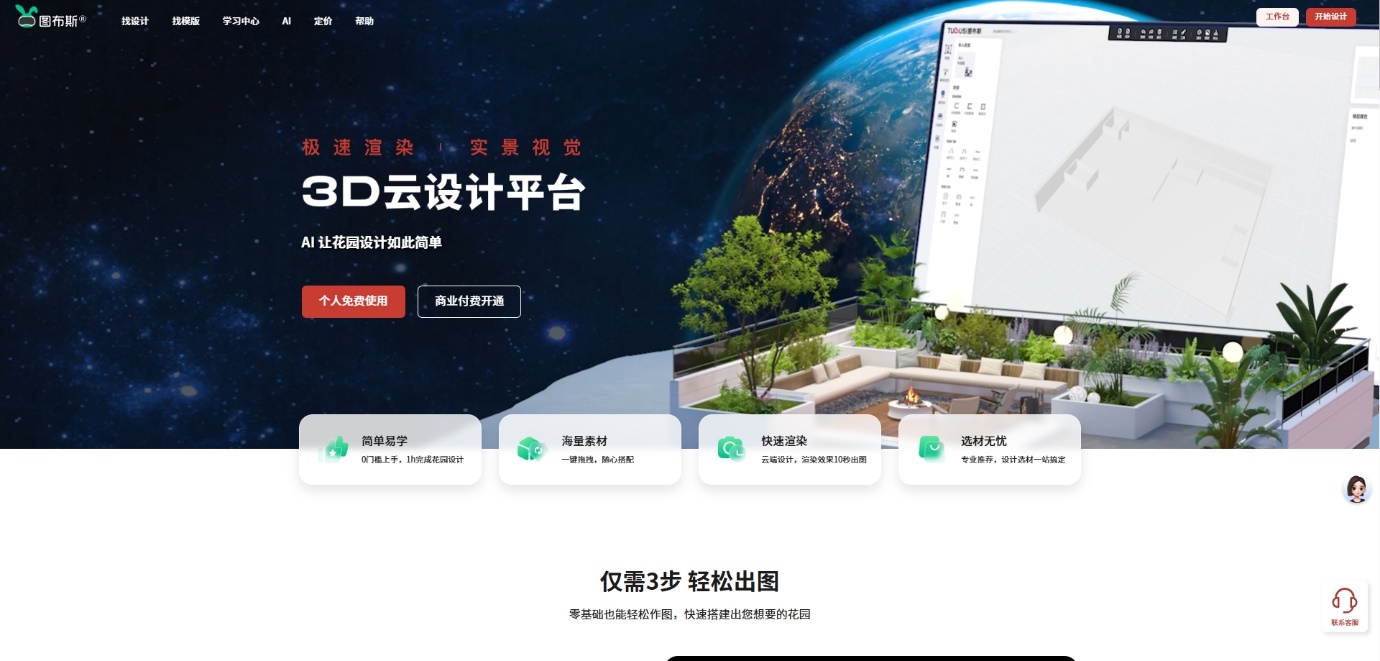
Core Viewpoint - The article discusses various garden design software, highlighting their features, ease of use, and suitability for different user needs, emphasizing that the best software depends on individual requirements rather than a universal "best" option [1][18]. Group 1: Software Overview - **Tuboos 3D Garden Cloud Design Platform**: An online tool that simplifies garden design by allowing users to upload a reference image to generate a 3D model quickly. It features over 530,000 pre-made 3D models and offers a "time machine" function to simulate seasonal changes [3][4]. - **3D MAX**: A detailed modeling software ideal for intricate designs, capable of creating realistic plant environments and complex terrains. However, it has a steep learning curve, requiring 2-4 weeks for basic modeling and up to 5 months for advanced features [6]. - **CoolJia**: Initially focused on interior design, it has expanded to outdoor design. It offers a user-friendly interface and quick setup for garden designs, with a learning time of 1-2 days for basic functions [8]. - **SketchUp**: Known for its simplicity and flexibility, it allows users to create 3D models easily. It supports various plugins and has a moderate learning curve of 1-3 days for basic use [10]. - **Three-Dimensional Home**: Utilizes AI to generate design suggestions based on user inputs. It streamlines the design process from concept to construction, with a learning time of 1-2 days for basic functions [12][13]. - **Lumion**: A rendering software that enhances existing models with realistic effects. It requires a modeling software for use and has a moderate learning curve of 1-3 days for basic rendering [15]. - **AutoCAD**: A standard tool for engineering drawings, suitable for precise garden design. It has a steep learning curve, requiring 2-3 weeks for basic functions and up to 2 months for advanced features [16]. Group 2: Learning Curve and Suitability - **Tuboos 3D Garden Cloud Design Platform**: Easy to learn, with basic operations achievable in half a day, making it suitable for beginners [3][4]. - **3D MAX**: Challenging for beginners, requiring significant time investment to master, making it suitable for experienced designers [6]. - **CoolJia**: Very easy to learn, with basic garden design achievable in 1-2 days, ideal for quick projects [8]. - **SketchUp**: Moderate difficulty, with basic modeling learned in 1-3 days, suitable for creative users [10]. - **Three-Dimensional Home**: Simple to use, with basic design functions learned in 1-2 days, suitable for teams and quick projects [12][13]. - **Lumion**: Moderate learning curve, with basic rendering learned in 1-3 days, suitable for enhancing designs [15]. - **AutoCAD**: Difficult for beginners, requiring extensive time to learn, best suited for professional teams working on large projects [16]. Group 3: Recommendations - For quick and easy garden design, Tuboos 3D Garden Cloud Design Platform is recommended. For detailed work, 3D MAX or AutoCAD is suitable. For creative freedom and appealing visuals, SketchUp combined with Lumion is ideal. For team collaboration from design to construction, Three-Dimensional Home is appropriate [18].
华福证券-居然智家-000785-H1租金减免影响盈利,数智化转型持续推进-250901
Xin Lang Cai Jing· 2025-09-01 15:39
Core Viewpoint - The company reported its 2025 interim results, showing a slight revenue increase but a significant decline in net profit, indicating challenges in maintaining profitability amidst ongoing business transformations and market conditions [1][2]. Revenue Performance - In H1 2025, the company achieved revenue of 6.44 billion yuan, a year-on-year increase of 1.5% [1][2]. - The revenue breakdown includes: - Leasing management business: 2.38 billion yuan, down 21.3% year-on-year [2]. - Franchise management business: 220 million yuan, up 3.9% year-on-year [2]. - Product sales business: 3.6 billion yuan, up 29.5% year-on-year [2]. - Q2 revenue was 3.13 billion yuan, a decrease of 2.4% year-on-year [1]. Profitability Analysis - The company reported a net profit attributable to shareholders of 330 million yuan in H1 2025, a decline of 45.5% year-on-year [1]. - The gross margin for H1 was 23.9%, down 9.5 percentage points year-on-year, influenced by rental concessions [3]. - The net profit margin was 5.1%, a decrease of 4.4 percentage points year-on-year [3]. Cost Management - The company has implemented effective cost control measures, resulting in a decrease in fixed leasing costs and improvements in management and sales expense ratios [3]. - The expense ratios for sales and management decreased by 2.2 percentage points and 1.1 percentage points, respectively [3]. Strategic Initiatives - The company is advancing its digital transformation, with a 47% year-on-year increase in paid users for its design services [2]. - The company has expanded its smart home sales, achieving over 3.49 billion yuan in sales, a 55.3% increase year-on-year [2]. - The number of stores for the smart home segment reached 164, with 14 new stores opened in H1 [2]. Future Outlook - The company forecasts net profits of 510 million yuan, 600 million yuan, and 680 million yuan for 2025, 2026, and 2027, respectively, reflecting a significant downward adjustment from previous estimates due to ongoing merchant subsidy policies [3]. - The projected growth rates for net profit are -33.5% for 2025, 16.3% for 2026, and 13.7% for 2027 [3].

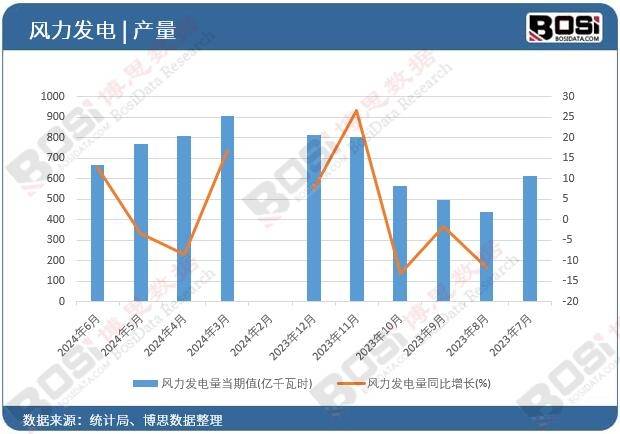
关税战下突围:中国风电叶片单批出口4600万,东南亚成新战场
Sou Hu Cai Jing· 2025-08-30 04:06
Industry Overview - Large wind turbine blades are core components of wind power units, typically exceeding 40 meters in length, responsible for capturing wind energy and converting it into mechanical energy. The primary materials used are glass fiber reinforced plastics (GFRP), accounting for over 70%, while carbon fiber reinforced plastics (CFRP) are gradually penetrating the market due to their lightweight advantages. The industry chain includes raw material supply, design and manufacturing, testing and certification, and operation and maintenance services, with high technical barriers [1]. Market Characteristics - The design of blades is becoming larger (with lengths expected to reach 153 meters by 2025) and smarter to enhance power generation efficiency in low wind speed environments [4]. - The industry is heavily reliant on policies, directly influenced by "dual carbon" goals and wind power subsidy policies, making demand closely tied to policy cycles [4]. - Production capacity is concentrated in coastal provinces such as Jiangsu and Shandong, leveraging port advantages to boost exports (with Jiangsu's single batch export value expected to reach 46 million yuan by 2025) [4]. Current Status (2015-2025) - The market size for blades is approximately 44.2 billion yuan in 2023, projected to increase to 49.1 billion yuan in 2024 (a year-on-year increase of 11.09%), and expected to surpass 50 billion yuan by 2025 [5]. - Blade length has increased from an average of 38 meters in 2010 to 153 meters by 2025, with low wind speed start-up technology significantly enhancing power generation efficiency [5]. - The market concentration is relatively low, with the top five companies (CR5) accounting for less than 40%, while leading companies like Times New Material are solidifying their positions through technological upgrades (e.g., TMT126BA floating blades) [5]. Future Trends (2025-2030) - The demand for offshore wind power will drive the penetration rate of carbon fiber blades, with 20MW floating units (paired with 126-meter blades) entering the testing phase [8]. - Smart upgrades utilizing AI design and digital twin technology will optimize blade aerodynamic performance, potentially increasing annual power generation by 600,000 kilowatt-hours per unit [8]. - Export expansion is being driven by tariff policies that compel supply chain optimization, with Southeast Asia and Europe identified as key export markets [8]. Challenges and Opportunities - The U.S. tariff policy is raising carbon fiber costs, while global wind power installations are expected to exceed 2,000 GW by 2030 [7]. - Extreme weather conditions are impacting blade durability, but low wind speed technology is broadening the inland market [7]. - Cost reduction pressures (with GFRP accounting for over 60% of costs) and breakthroughs in recycling technology are fostering a circular economy [7].