外汇储备

Search documents
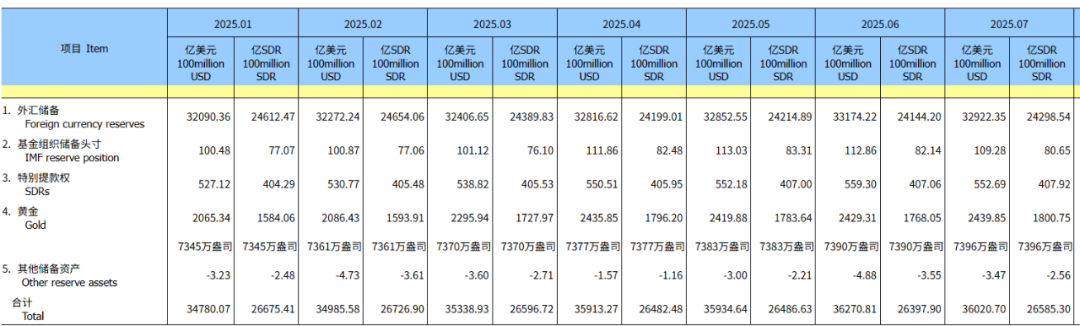
我国外汇储备规模为32922亿美元
Ren Min Ri Bao Hai Wai Ban· 2025-08-07 21:00
Core Viewpoint - As of the end of July, China's foreign exchange reserves stood at $32,922 billion, reflecting a decrease of $25.2 billion or 0.76% from the end of June [1] Group 1: Foreign Exchange Reserves - The decline in foreign exchange reserves is attributed to factors such as macroeconomic data, monetary policy, and expectations from major economies, leading to fluctuations in global financial asset prices [1] - The State Administration of Foreign Exchange indicated that despite the decrease, the long-term supportive conditions and fundamental trends for maintaining foreign exchange reserves remain unchanged due to China's strong economic foundation, advantages, resilience, and potential [1]


七月外汇储备保持稳定 央行黄金九连增
Zheng Quan Shi Bao· 2025-08-07 18:22
Group 1 - The latest statistics from the State Administration of Foreign Exchange show that as of the end of July 2025, China's foreign exchange reserves stood at $329.22 billion, a decrease of $25.2 billion from the end of June, representing a decline of 0.76% [1] - China's foreign exchange reserves have remained above $3.2 trillion for 20 consecutive months, indicating stability in the reserves despite fluctuations in global financial asset prices [1] - The appreciation of the US dollar and depreciation of non-US currencies have contributed to the decrease in foreign exchange reserves when calculated in dollar terms [1] Group 2 - The People's Bank of China has been increasing its gold reserves consistently for nine months, with the official gold reserves reaching 7.396 million ounces by the end of July, an increase of 60,000 ounces from the previous month [1] - The monthly increase in gold reserves has been maintained at around 60,000 to 70,000 ounces since April, reflecting a strategic balance between optimizing reserve structure and controlling acquisition costs [2] - It is anticipated that countries will continue to increase their gold reserves in the medium term, with a long-term strategy of diversifying international reserves and dynamically adjusting gold holdings [2]
央行连续9个月扩大黄金储备 专家表示持续增持黄金大方向不会变
Zheng Quan Ri Bao· 2025-08-07 16:27
Group 1 - As of the end of July 2025, China's foreign exchange reserves stood at $329.22 billion, a decrease of $25.2 billion from the end of June, representing a decline of 0.76% [1] - The decline in foreign exchange reserves was influenced by macroeconomic data, monetary policy, and expectations from major economies, leading to an increase in the US dollar index and a mixed performance in global financial asset prices [1][2] - The US dollar index rose by 3.4% in July, reaching a peak of 100.1042 on July 31, marking the highest level since May 23 [1] Group 2 - The depreciation of non-US currencies against the dollar resulted in a negative valuation effect on foreign exchange reserves, as the reserves are denominated in dollars [1] - The People's Bank of China has increased its gold reserves to 7.396 million ounces as of the end of July, adding 60,000 ounces since the end of June, continuing a trend of increasing gold holdings for nine consecutive months [2] - The long-term outlook for gold remains positive due to its advantages in hedging against risks, inflation, and maintaining value, with central banks expected to continue increasing gold investments amid global uncertainties [3]
央行连续9个月增持黄金背后
21世纪经济报道· 2025-08-07 15:55
Group 1: Foreign Exchange Reserves - As of July 2025, China's foreign exchange reserves stood at $32,922 billion, a decrease of $25.2 billion from June, marking a decline of 0.76% [1] - The decline in foreign exchange reserves is attributed to the rise in the US dollar index and fluctuations in global financial asset prices, despite the reserves remaining above $3.2 trillion for 20 consecutive months [1][5] - The current level of foreign exchange reserves is considered adequate, providing support for maintaining the RMB exchange rate at a reasonable equilibrium [1][4] Group 2: Gold Reserves - The People's Bank of China has increased its gold reserves for the ninth consecutive month, reaching 7,396 million ounces (approximately 2,300.41 tons) by the end of July, with a month-on-month increase of 6,000 ounces [2][8] - The gold reserve value increased by $1 billion to $24,398.5 billion, accounting for 7.41% of the total foreign exchange reserves, which is still below the global average of around 15% [2][8] - The central bank's strategy to increase gold reserves is driven by the need to optimize international reserve structure and enhance the credibility of the sovereign currency amid geopolitical uncertainties [8][10] Group 3: Economic Outlook - Despite facing risks and challenges, China's macroeconomic policies are prepared to adapt flexibly, with an emphasis on maintaining stable economic growth through proactive fiscal and monetary policies [6] - The central bank's continued accumulation of gold is seen as a strategic move to diversify international reserves and respond to changes in the global economic landscape [10][11] - A recent survey indicated that over 90% of central banks expect to increase their gold holdings in the next 12 months, reflecting a growing trend towards gold as a reserve asset [11]
央行连续第9个月增持黄金 7月末外汇储备规模近3.3万亿美元
Xin Jing Bao· 2025-08-07 15:43
Group 1: Central Bank Gold Reserves - The central bank's gold reserves increased to 73.96 million ounces by the end of July, marking a month-on-month increase of 60,000 ounces, continuing a trend of nine consecutive months of accumulation [1][2] - Despite the increase, the gold accumulation has been at a low level for five consecutive months, indicating a cautious approach to gold purchases [2] - The World Gold Council reported a 3% year-on-year increase in global gold demand in Q2, reaching 1,249 tons, with a significant 45% increase in value to $132 billion [2] Group 2: Foreign Exchange Reserves - As of the end of July, China's foreign exchange reserves decreased to $32,922 billion, a decline of $25.2 billion or 0.76% from the end of June, ending a six-month trend of increases [1][4] - The decline in foreign reserves was attributed to factors such as exchange rate fluctuations and changes in asset prices, with the dollar index rising by 3.2% during the month [4] - The decrease in reserves was primarily driven by the appreciation of the dollar, which negatively impacted the valuation of non-dollar assets held in reserves [4][5] Group 3: Market Outlook and Trends - The global gold price remained volatile in July, with fluctuations influenced by geopolitical factors and trade agreements, peaking above $3,400 per ounce [3] - UBS Wealth Management's Chief Investment Office maintains a positive outlook on gold, projecting a target price of $3,500 per ounce, with potential for $3,800 per ounce under adverse geopolitical or economic conditions [3] - The overall financial asset prices in China's foreign reserves increased, which helped mitigate the impact of the dollar's appreciation on reserve valuations [5]
人民银行黄金储备“九连增”
Bei Jing Shang Bao· 2025-08-07 15:39
Core Viewpoint - As of the end of July 2025, China's foreign exchange reserves decreased to $329.22 billion, a decline of $25.2 billion or 0.76% from the end of June 2025, influenced by various macroeconomic factors and currency fluctuations [1][2][3] Foreign Exchange Reserves - The decline in foreign exchange reserves is attributed to the rise in the US dollar index, which increased by 3.2% due to expectations of high inflation and strong economic data, leading to depreciation of non-US currencies [2][3] - Despite the decrease, the long-term outlook for China's foreign exchange reserves remains stable due to the country's strong economic fundamentals and resilience [2][3] Gold Reserves - As of the end of July 2025, China's gold reserves reached 73.96 million ounces (approximately 2300.41 tons), marking an increase of 60,000 ounces (about 1.86 tons) and continuing a trend of nine consecutive months of growth [4][5] - The increase in gold reserves is seen as a strategic move to optimize the international reserve structure, with gold accounting for 7% of total reserves, significantly lower than the global average of around 15% [4][5] Economic Context - China's exports showed an unexpected growth of 8% in July, supported by product structure optimization and diversification of trade partners, despite external pressures [3] - The domestic economy is expected to maintain a stable growth trajectory, bolstered by supportive fiscal and monetary policies, which will help sustain the balance of international payments and stabilize foreign exchange reserves [3]
外汇储备连续20个月超3.2万亿美元 黄金储备九连涨
2 1 Shi Ji Jing Ji Bao Dao· 2025-08-07 15:00
Group 1: Foreign Exchange Reserves - As of July 2025, China's foreign exchange reserves stood at $32,922 billion, a decrease of $252 billion from June, marking a decline of 0.76% [1] - The decline in reserves is attributed to the rise in the US dollar index and fluctuations in global financial asset prices, despite the reserves remaining above $3.2 trillion for 20 consecutive months [1][3] - Analysts indicate that the current level of foreign reserves is adequate to support the stability of the RMB exchange rate and to mitigate potential external shocks [1][3] Group 2: Gold Reserves - The People's Bank of China has increased its gold reserves for the ninth consecutive month, reaching 7,396 million ounces (approximately 2,300.41 tons) as of the end of July, with a month-on-month increase of 6,000 ounces [2][6] - The gold reserves now amount to $24,398.5 billion, representing 7.41% of the foreign exchange reserves, which is still below the global average of around 15% [2][6] - The increase in gold reserves is seen as a strategic move to diversify international reserves and enhance the credibility of the RMB in the context of a shifting international monetary system [2][6][8] Group 3: Economic Outlook - Despite facing risks and challenges, macroeconomic policies in China are prepared to adapt, with a focus on proactive fiscal and moderate monetary policies to support economic stability [5] - The central government emphasizes the need for sustained policy efforts to maintain overall balance in international payments and stabilize foreign exchange reserves [5] - The ongoing geopolitical uncertainties and trade tensions are expected to drive continued demand for gold as a safe-haven asset, influencing central banks' strategies globally [7][8]
32922亿美元!外汇局最新发布
Zhong Guo Zheng Quan Bao· 2025-08-07 14:21
Core Viewpoint - As of July 2025, China's foreign exchange reserves decreased to $329.22 billion, a decline of $25.2 billion or 0.76% from the end of June 2025, influenced by macroeconomic data and monetary policy from major economies [1] Group 1: Foreign Exchange Reserves - China's foreign exchange reserves stood at $329.22 billion as of July 2025, down from $331.74 billion in June 2025 [2] - The decline in reserves is attributed to the rise in the US dollar index and fluctuations in global financial asset prices [1][2] - The current level of reserves is considered to be at a moderately sufficient level, providing support for the stability of the RMB exchange rate [1] Group 2: Economic Outlook - The National Foreign Exchange Administration stated that China's economic fundamentals remain strong, with long-term positive trends expected to support the stability of foreign exchange reserves [1] - The domestic economy is expected to continue its stable growth due to supportive fiscal, monetary, and industrial policies [1] Group 3: Gold Reserves - As of the end of July 2025, China's gold reserves increased to 7.396 million ounces, marking the ninth consecutive month of gold accumulation by the central bank [1][2] - The increase in gold reserves is seen as a strategy to enhance the credibility of the sovereign currency and support the internationalization of the RMB [3]
【新华解读】7月外储规模保持基本稳定 黄金储备实现“九连增”
Xin Hua Cai Jing· 2025-08-07 14:02
Group 1: Foreign Exchange Reserves - As of the end of July, China's foreign exchange reserves decreased by $25.2 billion to $329.22 billion, marking a decline of 0.76% and ending a six-month growth streak [1][3][4] - The decline is attributed to the appreciation of the US dollar and the depreciation of non-US currencies, which resulted in a negative valuation effect on reserves [3][4] - The US dollar index rose by 3.2% in July, while major non-US currencies like the yen, euro, and pound depreciated by 4.5%, 3.2%, and 3.8% respectively [3][4] Group 2: Gold Reserves - As of the end of July, China's gold reserves increased by 60,000 ounces to 73.96 million ounces, marking the ninth consecutive month of net increases [1][6] - The gold reserves' value rose by approximately $1.1 billion to $244 billion, representing 7.41% of the total foreign exchange reserves, the highest in three months [6][8] - Despite the increase, the central bank's gold purchases have remained low, averaging 60,000 to 70,000 ounces per month, which is seen as a rational choice given the current high gold prices [6][8]
央行重磅!继续买买买
凤凰网财经· 2025-08-07 13:16
Group 1 - As of July 2025, China's foreign exchange reserves stood at $329.22 billion, a decrease of $25.2 billion from the end of June, marking a decline of 0.76% [1][5] - This is the first decline in foreign exchange reserves after six consecutive months of increase, with the previous six months showing increases of $6.679 billion, $18.2 billion, $13.441 billion, $41 billion, $3.6 billion, and $32.2 billion respectively [5] - The decline in reserves is attributed to factors such as exchange rate adjustments and changes in asset prices, influenced by macroeconomic data and monetary policy expectations from major economies [2][5] Group 2 - The People's Bank of China has increased its gold reserves for the ninth consecutive month, with gold reserves reaching 7.396 million ounces (approximately 2300.41 tons) by the end of July, an increase of 6,000 ounces from the previous month [2][5] - In the second quarter of 2025, global central banks net purchased 166 tons of gold, indicating a continued strong demand for gold despite a slight slowdown in purchasing pace [5][6] Group 3 - The spot price of gold reached $3,390 per ounce on August 7, 2025, reflecting a 3% increase over the past week [7][8] - Year-to-date, the spot price of gold has risen over 28%, with a peak of $3,500 per ounce in April 2025 [10] - UBS Wealth Management forecasts a target price of $3,500 per ounce for gold under baseline scenarios, with potential for prices to rise to $3,800 per ounce if geopolitical or economic conditions worsen [10]