
国际储备资产多元化

Search documents
专家谈我国外汇储备创十年新高金价年内创逾50次历史新高
Xin Lang Cai Jing· 2025-12-08 04:07
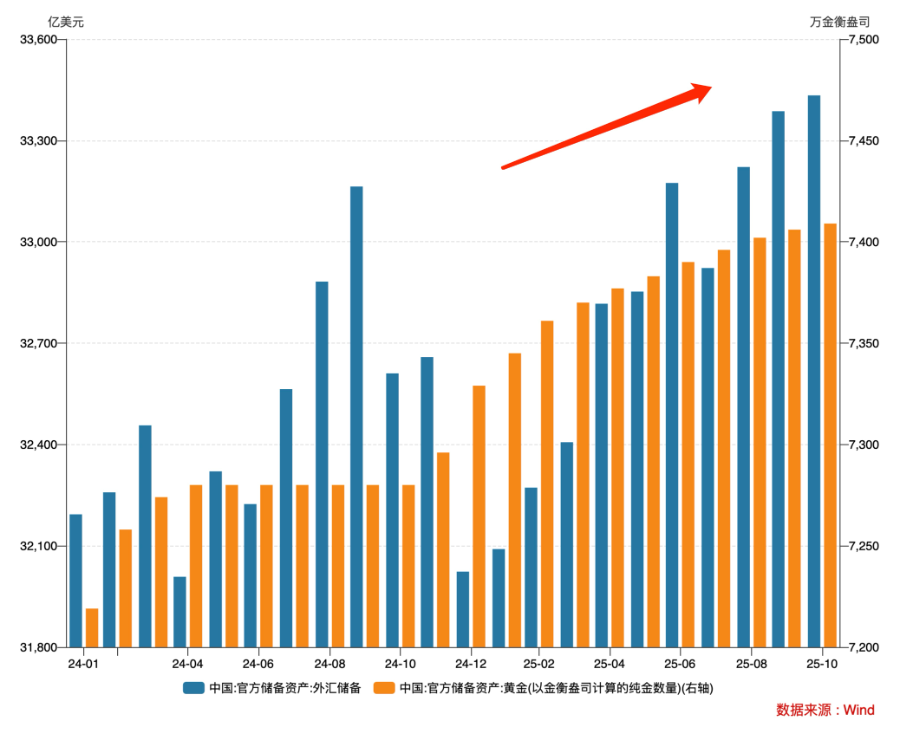
Core Insights - China's foreign exchange reserves reached a ten-year high of $33,464 billion by the end of November 2025, increasing by $3 billion from the end of October [1] - The increase in reserves is attributed to the positive valuation effects from currency policy, macroeconomic data, and asset price changes [1] - China's gold reserves rose to 7.412 million ounces, with an increase of 30,000 ounces, marking the 13th consecutive month of gold accumulation by the People's Bank of China [1] - The diversification of China's international reserve assets is progressing steadily amid increasing external uncertainties [1] - Gold prices have reached historical highs over 50 times this year, with a cumulative increase of over 60%, potentially marking the fourth strongest annual gain since 1971 [1]
我国外储规模连续4个月稳居3.3万亿美元上方 央行连续13个月增持黄金
Shang Hai Zheng Quan Bao· 2025-12-07 18:11
Core Viewpoint - China's foreign exchange reserves have increased slightly, reflecting a stable trend amid external uncertainties, with a notable rise in gold reserves indicating a diversification of international reserve assets [1][2][3]. Group 1: Foreign Exchange Reserves - As of the end of November, China's foreign exchange reserves stood at $33,464 billion, an increase of $30 billion from the end of October, marking a 0.09% rise and maintaining above $33 trillion for four consecutive months [1]. - The increase in foreign reserves is attributed to the combined effects of exchange rate adjustments and asset price changes, with the dollar index declining by 0.3% in November [2]. Group 2: Gold Reserves - China's gold reserves reached $310.6 billion by the end of November, with a proportion of 9.28% of total foreign exchange reserves, an increase of 0.39 percentage points, setting a new historical high [1][5]. - The People's Bank of China has continued to increase its gold holdings, adding 30,000 ounces in November, marking the 13th consecutive month of gold accumulation [1][4]. Group 3: Future Outlook - Experts predict that China's foreign exchange reserves are likely to remain stable due to the country's strong economic fundamentals and resilience [3]. - The ongoing geopolitical and economic uncertainties are expected to support the demand for gold, with central banks likely to continue purchasing gold as a means of optimizing their international reserves [4][5].
外储连续三月超3.3万亿美元,央行购金节奏放缓
2 1 Shi Ji Jing Ji Bao Dao· 2025-11-07 12:33
Group 1 - As of October 2025, China's foreign exchange reserves reached $33,433 billion, an increase of $47 billion from September, marking the highest level since December 2015 [1] - The People's Bank of China (PBOC) has increased its gold reserves for the 12th consecutive month, with gold reserves reported at 7,409 million ounces (approximately 2,304.457 tons), up by 30,000 ounces (about 0.93 tons) month-on-month [1] - The rise in foreign exchange reserves is attributed to the impact of major economies' monetary policies and macroeconomic data, with the dollar index rising and global financial asset prices generally increasing [1][3] Group 2 - The increase in foreign exchange reserves in October is primarily due to the valuation effects from changes in exchange rates and asset prices, with the latter having a more significant impact [2][3] - The dollar index rose by 1.9% in October, which typically leads to a decrease in foreign reserves due to the depreciation of non-dollar assets; however, this trend was countered by significant increases in global asset prices [2][3] - Major global stock indices, including the Nikkei 225, which surged by 16.6%, contributed to the increase in the valuation of China's foreign reserves [2][3] Group 3 - The PBOC's gold reserves increased by $139 billion to $297.2 billion, with the proportion of gold reserves to total foreign exchange reserves rising to 8.89%, a historical high [6] - The pace of gold accumulation by the PBOC has slowed this year, with monthly increases decreasing from 16,000 ounces in January to 3,000 ounces in October [6] - The demand for gold accumulation is driven by the need to optimize international reserve structures amid increasing global uncertainties [6][8] Group 4 - The price of gold reached a historical high of $4,381.48 per ounce in October, with a monthly increase of 3.76%, marking the third consecutive month of gains [7] - Central banks globally have accelerated gold purchases, with net purchases totaling 220 tons in Q3 2025, a 28% increase from Q2 [7] - The PBOC's strategy of gradual gold accumulation aims to smooth market volatility and manage costs effectively, reflecting a long-term consideration for the internationalization of the renminbi and diversification of foreign reserves [7][8]

央行连续第10个月增持黄金,8月末我国黄金储备为7402万盎司
Sou Hu Cai Jing· 2025-09-08 02:24
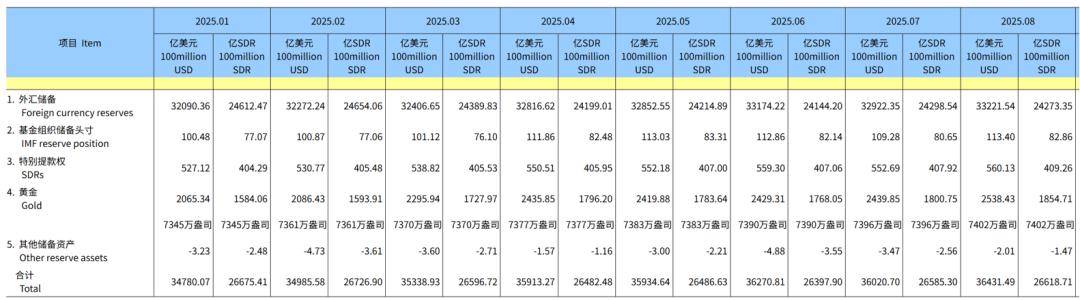
Group 1 - As of the end of August, China's foreign exchange reserves reached $332.22 billion, an increase of $29.9 billion from the end of July, marking a growth rate of 0.91% [1][2] - The increase in foreign exchange reserves is attributed to the depreciation of the US dollar index and the overall rise in global financial asset prices [2][3] - China's gold reserves increased by 60,000 ounces to 7.402 million ounces, marking the 10th consecutive month of gold accumulation by the central bank [1][3] Group 2 - The value of China's gold reserves rose by $9.9 billion to $253.8 billion, with the proportion of gold reserves to total foreign exchange reserves increasing by 0.23 percentage points to 7.64%, a historical high [3] - Analysts suggest that the current level of foreign exchange reserves is adequate and can provide important support for maintaining the RMB exchange rate at a reasonable equilibrium [2][3] - The steady increase in foreign exchange reserves reflects China's enhanced ability to withstand various economic shocks [2]
8月末我国外储规模环比上升
Zhong Guo Zheng Quan Bao· 2025-09-07 20:51
Group 1 - As of August 2025, China's foreign exchange reserves reached $33,222 billion, an increase of $299 billion from the end of July, representing a growth of 0.91% [1] - The increase in foreign exchange reserves is attributed to the depreciation of the US dollar index and the overall rise in global financial asset prices, which positively impacted the valuation of non-USD assets [1][2] - The current level of foreign exchange reserves is the highest since January 2016, indicating an enhanced capacity to mitigate various economic shocks [1] Group 2 - China's economic performance is stable and shows resilience, which supports the maintenance of foreign exchange reserves at a stable level [2] - As of August, China's gold reserves increased to 7.402 million ounces, marking a continuous increase for ten months, with a total value of $253.8 billion, accounting for 7.64% of total foreign exchange reserves, a record high [2] - The diversification of international reserve assets is progressing steadily, with the central bank's strategy to increase gold reserves being a key focus for long-term financial stability and risk management [2][3]
中银证券全球首席经济学家管涛:8月末我国外储余额再刷2016年以来新高,国际储备资产多元化稳步推进
Sou Hu Cai Jing· 2025-09-07 05:00
Core Viewpoint - As of the end of August, China's foreign exchange reserves reached $33,222 billion, an increase of $29.9 billion from the end of July, representing a growth rate of 0.91% [1] Group 1: Foreign Exchange Reserves - China's foreign exchange reserves increased to $33,222 billion by the end of August [1] - The reserves rose by $29.9 billion compared to the end of July, marking a 0.91% increase [1] Group 2: Economic Influences - The increase in foreign exchange reserves is attributed to expectations regarding monetary policies of major economies and macroeconomic data [1] - The decline of the US dollar index has contributed to the overall rise in global financial asset prices [1] - The appreciation of non-US currencies against the dollar and the increase in asset prices have created a positive valuation effect [1]

中国央行,增持黄金!连续第10个月
Zhong Guo Zheng Quan Bao· 2025-09-07 04:16
Core Insights - As of the end of August, China's foreign exchange reserves reached $332.22 billion, an increase of $29.9 billion from the end of July, marking a growth rate of 0.91% [1][3] - China's gold reserves stood at 7.402 million ounces at the end of August, with an increase of 60,000 ounces, representing the central bank's continuous accumulation of gold for the tenth consecutive month [1][4] Foreign Exchange Reserves - The increase in foreign exchange reserves is attributed to the depreciation of the US dollar index and the overall rise in global financial asset prices [3][5] - The foreign exchange reserves balance as of the end of August is the highest since January 2016, indicating improved capacity to withstand various shocks [3][5] - Current foreign exchange reserves are considered moderately sufficient, providing important support for maintaining the RMB exchange rate at a reasonable equilibrium level [3][5] Gold Reserves - In August, the expectation of interest rate cuts by the Federal Reserve led to a significant rebound in gold prices, with a cumulative increase of 3.9% for the month [5] - China's gold reserves increased by $9.9 billion to $253.8 billion, with the proportion of gold reserves to total foreign exchange reserves rising by 0.23 percentage points to 7.64%, setting a new historical high [5]
央行黄金储备九连涨
2 1 Shi Ji Jing Ji Bao Dao· 2025-08-08 00:33
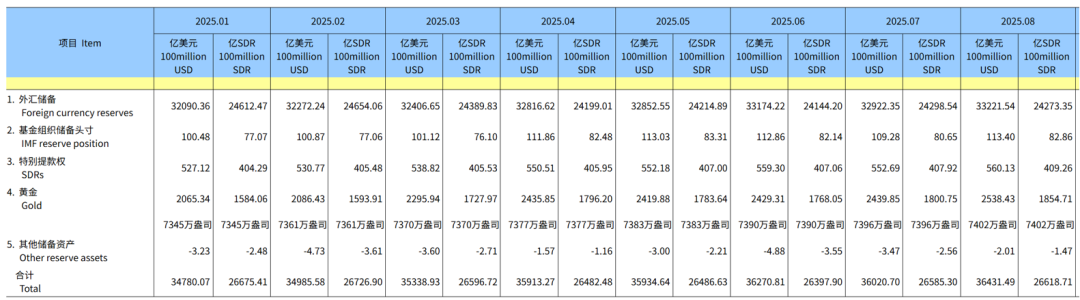
Group 1: Foreign Exchange Reserves - As of July 2025, China's foreign exchange reserves stood at $32,922 billion, a decrease of $252 billion from June, marking a decline of 0.76% [1] - The decline in reserves is attributed to the rise in the US dollar index and fluctuations in global financial asset prices, despite the reserves remaining above $3.2 trillion for 20 consecutive months [1][3] - The current level of foreign reserves is considered adequate, providing support for the stability of the RMB exchange rate amidst external volatility [1][3] Group 2: Gold Reserves - The central bank has increased its gold reserves for the ninth consecutive month, reaching 7,396 million ounces (approximately 2,300.41 tons) by the end of July, with a month-on-month increase of 6,000 ounces [2][5] - The value of gold reserves rose by $10 billion to $243.985 billion, representing 7.41% of the total foreign exchange reserves, which is still below the global average of around 15% [2][5] - The increase in gold reserves is driven by the need to diversify international reserve assets and enhance the stability of the currency amidst a changing global economic landscape [6][7] Group 3: Economic Outlook - Despite facing risks and challenges, macroeconomic policies are prepared to adapt flexibly, with an emphasis on proactive fiscal and moderately loose monetary policies to support economic stability [5] - The central bank's strategy includes a continued increase in gold reserves while potentially reducing holdings in US Treasury bonds, aiming to optimize the structure of international reserves [6][7] - A survey indicated that over 90% of central banks expect to increase their gold holdings in the next 12 months, reflecting a growing trend towards gold as a safe-haven asset [7]

央行连续9个月增持黄金背后
21世纪经济报道· 2025-08-07 15:55
Group 1: Foreign Exchange Reserves - As of July 2025, China's foreign exchange reserves stood at $32,922 billion, a decrease of $25.2 billion from June, marking a decline of 0.76% [1] - The decline in foreign exchange reserves is attributed to the rise in the US dollar index and fluctuations in global financial asset prices, despite the reserves remaining above $3.2 trillion for 20 consecutive months [1][5] - The current level of foreign exchange reserves is considered adequate, providing support for maintaining the RMB exchange rate at a reasonable equilibrium [1][4] Group 2: Gold Reserves - The People's Bank of China has increased its gold reserves for the ninth consecutive month, reaching 7,396 million ounces (approximately 2,300.41 tons) by the end of July, with a month-on-month increase of 6,000 ounces [2][8] - The gold reserve value increased by $1 billion to $24,398.5 billion, accounting for 7.41% of the total foreign exchange reserves, which is still below the global average of around 15% [2][8] - The central bank's strategy to increase gold reserves is driven by the need to optimize international reserve structure and enhance the credibility of the sovereign currency amid geopolitical uncertainties [8][10] Group 3: Economic Outlook - Despite facing risks and challenges, China's macroeconomic policies are prepared to adapt flexibly, with an emphasis on maintaining stable economic growth through proactive fiscal and monetary policies [6] - The central bank's continued accumulation of gold is seen as a strategic move to diversify international reserves and respond to changes in the global economic landscape [10][11] - A recent survey indicated that over 90% of central banks expect to increase their gold holdings in the next 12 months, reflecting a growing trend towards gold as a reserve asset [11]
外汇储备连续20个月超3.2万亿美元,黄金储备九连涨
Sou Hu Cai Jing· 2025-08-07 11:45
Foreign Exchange Reserves - As of July 2025, China's foreign exchange reserves stood at $32,922 billion, a decrease of $252 billion from June, marking a decline of 0.76% [1] - The decline in reserves is attributed to the rise in the US dollar index and fluctuations in global financial asset prices, with the dollar index increasing by 3.2% to 100.0, the highest since late May [3][4] - Despite the decrease, China's foreign exchange reserves remain above $3.2 trillion, providing a solid foundation for maintaining the RMB exchange rate at a reasonable equilibrium [3][4] Gold Reserves - The People's Bank of China has increased its gold reserves for the ninth consecutive month, reaching 7,396 million ounces (approximately 2,300.41 tons), with a month-on-month increase of 6,000 ounces [2][6] - The total value of gold reserves rose by $10 billion to $243.985 billion, representing 7.41% of the total foreign exchange reserves, which is still below the global average of around 15% [2][6] - The increase in gold reserves is driven by the need to optimize international reserve structure and enhance the credibility of the sovereign currency, especially in light of geopolitical uncertainties and the weakening confidence in the dollar system [6][7] Economic Outlook - The macroeconomic policies in China are prepared to adapt flexibly to ongoing risks and challenges, with a focus on maintaining stable economic growth supported by proactive fiscal and monetary policies [5] - The central bank's strategy includes a steady increase in gold reserves while managing costs and diversifying international reserves to mitigate market risks and geopolitical uncertainties [7][8] - A recent survey indicated that over 90% of central banks expect to increase their gold holdings in the next 12 months, reflecting a growing trend towards gold as a safe-haven asset [8]