
黄金储备

Search documents
央行连续16个月增持黄金,释放重要信号
21世纪经济报道· 2026-03-07 07:52
Core Viewpoint - As of the end of February 2026, China's foreign exchange reserves reached $34,278 billion, marking an increase of $287 billion or 0.85% from January, reflecting a positive valuation effect influenced by macroeconomic data and monetary policy from major economies [1][4]. Foreign Exchange Reserves - The foreign exchange reserves increased for the seventh consecutive month, surpassing $3.4 trillion for the first time since December 2025 [4][3]. - The rise in reserves is attributed to the impact of macroeconomic data, monetary policy expectations, and geopolitical tensions, which led to a rebound in the US dollar index [4][5]. - The dollar index rose by 0.6% to 97.6, ending a three-month decline, while global financial asset prices showed mixed results [4][5]. Gold Reserves - As of the end of February, China's gold reserves stood at 7,422 million ounces, an increase of 3,000 ounces from the previous month, marking the sixteenth consecutive month of gold accumulation [2][10]. - The increase in gold reserves is seen as a response to rising geopolitical risks and aims to optimize the structure of international reserves [11][10]. Future Outlook - The foreign exchange reserves are expected to remain stable due to the ongoing positive trends in China's economy and the government's commitment to expanding high-level openness [7][8]. - The stability of cross-border capital flows and the resilience of exports are highlighted as key factors supporting the foreign exchange reserves [7][8]. - Analysts suggest that the current level of reserves above $3.4 trillion is adequate, providing a buffer against external shocks and supporting the stability of the RMB exchange rate [8][6].

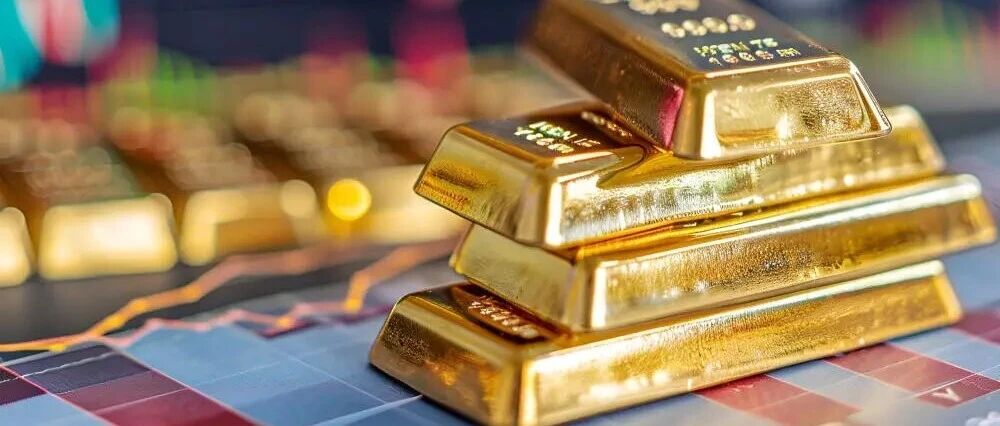
中国央行连续16个月增持黄金
第一财经· 2026-03-07 02:54
Core Viewpoint - The central theme of the articles highlights the continuous increase in gold reserves by the central bank, indicating a strategic move towards strengthening the country's financial stability and asset diversification [1]. Group 1: Gold Reserves - As of the end of February, the central bank's gold reserves reached 7,422 million ounces, marking an increase of 3 million ounces from January's 7,419 million ounces, representing the 16th consecutive month of gold accumulation [1]. - The value of gold reserves in USD rose from 3,695.82 million to 3,875.88 million, reflecting a positive trend in asset valuation [2]. Group 2: Foreign Currency Reserves - Foreign currency reserves increased from 33,990.78 million USD to 34,278.07 million USD, indicating a growth in the country's foreign exchange stability [2]. - The IMF reserve position slightly decreased from 111.98 million USD to 111.40 million USD, showing a minor adjustment in the country's financial positioning [2]. Group 3: Special Drawing Rights (SDRs) - The amount of Special Drawing Rights (SDRs) remained relatively stable, with a slight decrease from 562.34 million to 560.93 million, indicating a consistent level of international liquidity [2].

中国央行,连续16个月增持黄金
财联社· 2026-03-07 02:15
Core Viewpoint - The article highlights the significant increase in foreign currency reserves and gold holdings, indicating a strong position in international financial stability and asset diversification. Group 1: Foreign Currency Reserves - As of February 2026, foreign currency reserves reached USD 34,278.07 billion, up from USD 33,990.78 billion in January, reflecting a growth of approximately 0.85% [1] - The total reserves, including other assets, increased from USD 38,362.81 billion in January to USD 38,826.93 billion in February, marking a rise of about 1.22% [1] Group 2: Gold Reserves - The gold reserves stood at 74.22 million ounces by the end of February 2026, an increase of 30,000 ounces from 74.19 million ounces at the end of January, representing a continuous increase for 16 months [2]
全球央行购金热情大降八成
21世纪经济报道· 2026-03-04 14:14
Core Viewpoint - The gold market in 2026 is characterized by significant volatility, with prices fluctuating around $5000 per ounce and an annual amplitude exceeding 30%. Central bank gold purchases in January 2026 were only 20% of the average monthly demand since 2025, indicating a broadening demand base for gold reserves despite a slowdown in purchasing momentum [1][2]. Group 1: Central Bank Activities - In January 2026, central bank gold purchases were concentrated in Asia and Eastern Europe, with Uzbekistan's central bank buying 9 tons, raising its reserves to 399 tons, and increasing its gold reserve percentage from 57% in 2020 to 86% [2]. - Malaysia's central bank entered the gold market for the first time since 2018, purchasing 3 tons, bringing its total reserves to 42 tons, which is 5% of its total reserves [2]. - The Bank of Korea plans to include physical gold ETFs in its foreign exchange reserves for the first time since 2013, indicating a renewed interest in gold investments [3]. Group 2: Market Dynamics and Geopolitical Factors - The World Gold Council suggests that the demand from global central banks may become a core trend in 2026, as evidenced by the renewed interest from Malaysia and South Korea in increasing their gold exposure [3]. - Geopolitical tensions, particularly between the U.S. and Iran, are expected to maintain high market volatility and could drive gold prices higher in the short term, despite potential profit-taking pressures [3]. Group 3: Risk Management in Precious Metals Trading - Several banks have issued risk warnings and tightened trading rules due to increased volatility in the precious metals market, advising clients to participate in trading rationally [5][6]. - Banks like China Construction Bank and Industrial and Commercial Bank of China have implemented measures such as extending delivery times for physical gold orders and increasing margin requirements for trading [5][7]. - A recent survey indicated that 50% of fund managers view "going long on gold" as the most crowded trade, reflecting heightened interest in gold investments [7].






2025年阿塞拜疆国家石油基金黄金储备增至200吨
Shang Wu Bu Wang Zhan· 2026-02-25 03:04
Core Insights - The Azerbaijan State Oil Fund (SOFAZ) aims to increase its gold reserves to 200 tons by the end of 2025, representing a 36.4% increase from the beginning of the year, with a total value of $28.06 billion, accounting for 38.2% of the fund's total assets [1] Investment Portfolio Summary - SOFAZ's investment portfolio has reached $73.54 billion, reflecting a growth of 22.5% [1] - The allocation of investments includes 29.8% in bonds and money market instruments, 25.6% in equities, and 6.4% in real estate and infrastructure [1] Geographic Allocation - The geographical distribution of SOFAZ's investments shows Europe at 25.9% (down from 30.7% in 2024), North America at 23.9% (down from 28%), Asia at 8% (down from 12.9%), the Middle East at 1.4% (up from 0.6%), Oceania at 0.9% (down from 0.7%), and Latin America at 0.1% (unchanged) [1]
抛售14亿美元黄金,俄罗斯央行为何反向操作?
Sou Hu Cai Jing· 2026-02-24 04:35
Core Viewpoint - The Russian Central Bank has reduced its gold reserves by approximately 300,000 ounces, marking the first monthly decline since October of the previous year, primarily due to increasing fiscal pressures from the ongoing conflict and sanctions [3][5]. Group 1: Reasons for Gold Sale - The sale of gold is a strategic decision to address a growing fiscal deficit, with significant expenditures related to the ongoing war and reduced energy revenues due to sanctions and price discounts [5][11]. - The Russian government has been utilizing a "mirror operation" strategy, where the Ministry of Finance sells assets from the National Welfare Fund while the Central Bank adjusts its reserves to fill budget gaps [5][11]. - The sale of 300,000 ounces, approximately 9.3 tons, represents a minor adjustment, constituting less than 0.5% of Russia's total gold reserves of over 2,300 tons [7]. Group 2: Market Impact and Gold Value - The impact of this sale on the global gold market is expected to be minimal due to the relatively small scale of the sale compared to global gold production, which is around 3,600 tons annually [9]. - Domestic demand for gold in Russia is increasing, with the removal of VAT on gold purchases leading to a projected retail purchase of over 60 tons by residents in 2025, indicating strong absorption capacity in the local market [9]. - Despite the sale, the total value of Russia's gold reserves has increased to $402.7 billion, reflecting a 23% month-on-month growth due to rising gold prices, indicating that the sale does not diminish the overall asset scale [7][11]. Group 3: Strategic Importance of Gold - Gold remains a critical asset for Russia, serving as a buffer against economic instability and geopolitical tensions, and the recent sale should not be interpreted as a long-term strategy shift away from gold [11]. - The ongoing international environment underscores the strategic value of gold, reinforcing its role as a secure asset for central banks amid rising geopolitical conflicts and economic uncertainties [11].
俄罗斯银行再次出售黄金!看似高抛低吸,实则国库真没钱了?
Sou Hu Cai Jing· 2026-02-23 17:46
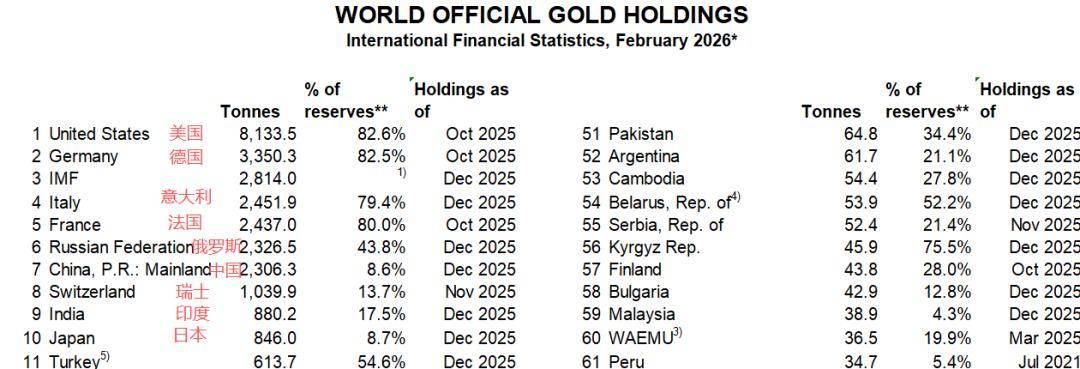
Core Viewpoint - The article discusses the contrasting behavior of the Russian central bank in selling gold reserves while global central banks are increasing their gold holdings, highlighting Russia's financial struggles and the implications for its economy [2][3][9]. Group 1: Global Gold Reserves - As of the end of 2025, Russia holds 2,326.5 tonnes of gold reserves, ranking fifth globally, behind the US, Germany, Italy, and France [3]. - The US leads with 8,133.5 tonnes, followed by Germany with 3,350.3 tonnes, Italy with 2,451.9 tonnes, and France with 2,437.0 tonnes [3]. - China has surpassed 2,300 tonnes in gold reserves and is on track to overtake Russia soon [8]. Group 2: Russia's Gold Selling - In January, the Russian central bank reported a reduction of 300,000 ounces of gold, bringing its total to 7,450,000 ounces, marking the second reduction in six months [3][6]. - The sale of 300,000 ounces at an average price of $4,700 per ounce generated approximately $1.41 billion in foreign exchange revenue for Russia [6]. Group 3: Economic Context - Russia's decision to sell gold is attributed to severe fiscal challenges, including a high budget deficit exacerbated by the Ukraine conflict and Western sanctions [9][12]. - The Russian economy is projected to grow only 1% in 2025, a significant decline from the previous year, indicating potential recession risks [13]. - The government has attempted to address the fiscal crisis through tax increases, but these measures may negatively impact economic activity and tax revenues [12]. Group 4: Future Implications - Continued asset liquidation, particularly gold reserves, is seen as a necessary measure for Russia to manage its budget amid ongoing financial strain [15]. - If the trend of selling 300,000 ounces per month continues, Russia risks depleting its gold reserves, leading to severe economic and fiscal consequences [15].
全球囤黄金!美国8133吨,俄罗斯2350吨,中国又是多少吨?
Sou Hu Cai Jing· 2026-02-22 08:54
Group 1 - The United States holds 8,133 tons of gold, accounting for over a quarter of the world's official gold reserves, primarily stored in Fort Knox, Kentucky [1] - Gold constitutes nearly 70% of the U.S. foreign exchange reserves, providing a safeguard for the dollar's credibility despite ongoing debt crises [1] Group 2 - Russia's official gold reserves stand at 2,350 tons, significantly increased from a few hundred tons at the time of the Soviet Union's collapse, with a consistent annual accumulation of gold over the past decade [3] - The necessity for Russia to accumulate gold stems from its awkward position in the global economic system, particularly outside the dollar framework, as a means to avoid dependency [3] - Recent military expenditures and declining oil prices have forced Russia to draw from its gold reserves, indicating that even substantial reserves cannot withstand continuous depletion [3] Group 3 - China's gold reserves are approximately 2,303.5 tons, ranking sixth globally, which is relatively low compared to its massive foreign exchange reserves of $3.4 trillion [5] - The Chinese central bank has been steadily increasing gold holdings since March 2025, reflecting a cautious and gradual approach to gold accumulation [5] - China's financial strategy differs from other nations, as it relies on U.S. Treasury holdings while incrementally increasing gold reserves to hedge against potential dollar risks [5] Group 4 - A significant shift occurred in early 2026 when gold surpassed U.S. Treasury bonds as the world's largest reserve asset for central banks, marking the first time in 30 years [7] - This change is driven by a growing recognition of the potential risks associated with the dollar, prompting central banks to purchase over 1,100 tons of gold in 2025 alone [7] - The rising demand for gold has implications for wealth preservation, investment strategies, and the choice of hedging tools, with gold being viewed as a stable asset rather than a quick profit generator [7]
黄金火热!金价短线抬升,北京1000克金条被扫货,单条价格超百万【附黄金行业市场分析】
Sou Hu Cai Jing· 2026-02-22 07:59
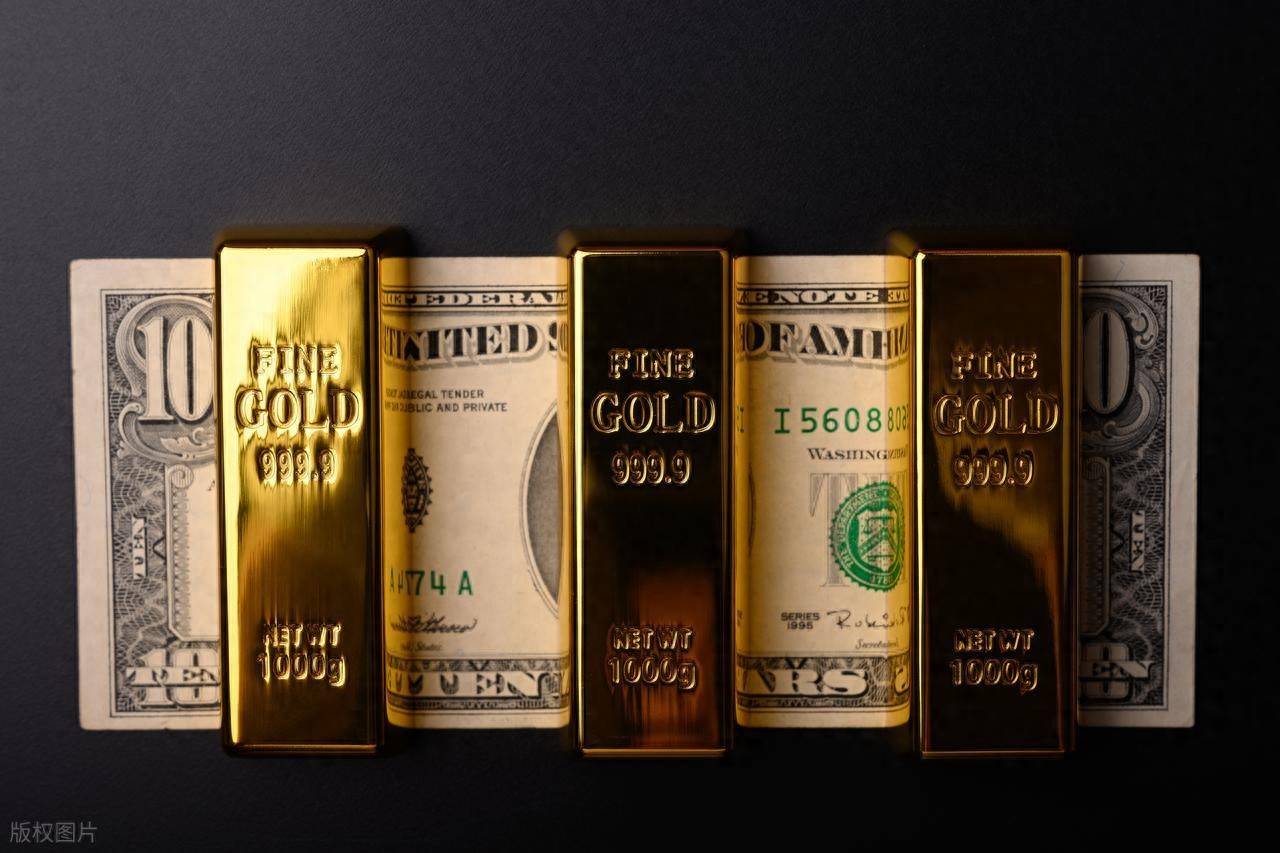
Group 1 - The international gold price experienced a brief rebound, with spot gold rising over $5020 per ounce, an increase of more than 0.9% [2] - Consumer enthusiasm for gold remains high despite prices reaching historical highs, with significant purchases reported during the Spring Festival in Beijing [2] - The World Gold Council's report indicates that Chinese investors are expected to purchase 432 tons of gold bars and coins in 2025, a year-on-year increase of 28%, marking a record high [2] Group 2 - Gold demand is categorized into consumption, reserve, and investment needs, with investment demand reaching a milestone of 2175 tons, while consumption and reserve demand growth has slowed [3] - China is the largest gold consumer and producer globally, with a projected gold production of 377.24 tons in 2024, accounting for 10% of global output [5] - China is also a major silver producer, with a forecasted silver production of 3300 tons in 2024, a decrease of about 100 tons from the previous year [6] Group 3 - The gold market is expected to see strong consumer and investment demand during the 2026 Spring Festival, despite high prices and potential volatility due to global monetary policies [9] - The market's future development will rely on rigid demand support, emphasizing the importance of rational allocation and market volatility awareness for long-term success [9]
IMF:马来西亚央行1月增加3吨黄金储备
Xin Lang Cai Jing· 2026-02-17 15:25
Core Insights - The International Monetary Fund (IMF) reported that Bank Negara Malaysia increased its gold reserves by 3 tons in January, marking the first increase since October 2018 [1] - Malaysia's total gold reserves now stand at 42 tons [1] Group 1 - The increase in gold reserves indicates a strategic move by Malaysia's central bank to bolster its asset base [1] - This action may reflect a broader trend among central banks to diversify their reserves amid global economic uncertainties [1]