
自由贸易

Search documents
携手打造更加繁荣、更具活力的亚太经济(国际论坛)
Ren Min Ri Bao· 2025-07-31 21:52
Core Points - The completion of the China-ASEAN Free Trade Area 3.0 negotiations demonstrates both parties' commitment to supporting free trade and multilateralism [1][2] - The upgraded FTA will enhance trade facilitation and support ASEAN's goal of becoming a regional economic growth center [2][3] Group 1: Economic Impact - The China-ASEAN Free Trade Area is the first FTA for ASEAN and has been a significant platform for bilateral economic cooperation since its establishment in 2010 [1] - China has maintained its position as ASEAN's largest trading partner for 16 consecutive years and is the second-largest source of foreign direct investment for ASEAN [1] - ASEAN has been China's largest trading partner for five consecutive years, indicating a growing interdependence in economic relations [1] Group 2: New Areas of Cooperation - The 3.0 version includes nine new chapters covering digital economy, green economy, supply chain connectivity, customs procedures, and trade facilitation [3] - The agreement aims to promote the free flow of products, services, and investments, creating a more resilient regional industrial chain network [3] - In the digital economy sector, the 3.0 version focuses on facilitating paperless trade, electronic invoicing, digital identity, and electronic payments, expanding cooperation in AI, cybersecurity, and fintech [3] Group 3: Regional Significance - The China-ASEAN Free Trade Area covers over 2 billion people, accounting for one-quarter of the global population, and represents over one-fifth of the world's economic output [3] - The partnership is positioned as a crucial engine for global economic recovery amid rising protectionism in some Western countries [3]
国际贸易谈判代表兼副部长李成钢会见瑞典对外援助与外贸大臣杜萨
人民网-国际频道 原创稿· 2025-07-31 02:10
杜萨表示,瑞典支持多边主义和自由贸易,视中国为重要经贸伙伴,鼓励瑞中双方企业进一步深化 绿色转型、创新研发等领域合作,支持欧盟与中国通过协商解决经贸摩擦,推动欧中、瑞中经贸关系迈 上新台阶。 人民网斯德哥尔摩7月30日电 (记者殷淼)7月30日,国际贸易谈判代表兼副部长李成钢在瑞典斯 德哥尔摩会见瑞典对外援助与外贸大臣杜萨,双方就中瑞、中欧经贸关系等议题进行交流。 李成钢表示,瑞典是首个与新中国建交的西方国家,也是首个与中国签订双边投资保护协定的国 家。今年是两国建交75周年,中方愿与瑞方一道,推动中瑞经贸合作翻开新的篇章。中国对外开放的大 门只会越开越大,愿进一步扩大瑞典优质商品进口,欢迎瑞典担任今年进博会主宾国,也欢迎瑞典企业 继续投资中国、深耕中国,希望瑞方为中国企业提供开放、公平、非歧视的营商环境。同时,希望瑞方 在欧盟内发挥积极作用,推动欧方与中方共同落实好中欧领导人会晤达成的共识,坚定维护以世贸组织 为核心的多边贸易体制,并妥善解决经贸摩擦。 ...
商务部副部长:愿进一步扩大瑞典优质商品进口
Xin Jing Bao· 2025-07-30 15:25
编辑 陈艳婷 据央视新闻消息,7月30日,商务部国际贸易谈判代表兼副部长李成钢在斯德哥尔摩会见瑞典对外援助 与外贸大臣杜萨,双方就中瑞、中欧经贸关系等议题进行交流。 杜萨表示,瑞典支持多边主义和自由贸易,视中国为重要经贸伙伴,鼓励瑞中双方企业进一步深化绿色 转型、创新研发等领域合作,支持欧盟与中国通过协商解决经贸摩擦,推动欧中、瑞中经贸关系迈上新 台阶。 李成钢表示,瑞典是首个与新中国建交的西方国家,也是首个与中国签订双边投资保护协定的国家。今 年是两国建交75周年,中方愿与瑞方一道,推动中瑞经贸合作翻开新的篇章。中国对外开放的大门只会 越开越大,愿进一步扩大瑞典优质商品进口,欢迎瑞典担任今年进博会主宾国,也欢迎瑞典企业继续投 资中国、深耕中国,希望瑞方为中国企业提供开放、公平、非歧视的营商环境。同时,希望瑞方在欧盟 内发挥积极作用,推动欧方与中方共同落实好中欧领导人会晤达成的共识,坚定维护以世贸组织为核心 的多边贸易体制,并妥善解决经贸摩擦。 ...
李成钢国际贸易谈判代表兼副部长会见瑞典对外援助与外贸大臣杜萨
Shang Wu Bu Wang Zhan· 2025-07-30 14:13
李成钢表示,瑞典是首个与新中国建交的西方国家,也是首个与中国签订双边投资保护协定的国家。今 年是两国建交75周年,中方愿与瑞方一道,推动中瑞经贸合作翻开新的篇章。中国对外开放的大门只会 越开越大,愿进一步扩大瑞典优质商品进口,欢迎瑞典担任今年进博会主宾国,也欢迎瑞典企业继续投 资中国、深耕中国,希望瑞方为中国企业提供开放、公平、非歧视的营商环境。同时,希望瑞方在欧盟 内发挥积极作用,推动欧方与中方共同落实好中欧领导人会晤达成的共识,坚定维护以世贸组织为核心 的多边贸易体制,并妥善解决经贸摩擦。 杜萨表示,瑞典支持多边主义和自由贸易,视中国为重要经贸伙伴,鼓励瑞中双方企业进一步深化绿色 转型、创新研发等领域合作,支持欧盟与中国通过协商解决经贸摩擦,推动欧中、瑞中经贸关系迈上新 台阶。 7月30日,李成钢国际贸易谈判代表兼副部长在斯德哥尔摩会见瑞典对外援助与外贸大臣杜萨,双方就 中瑞、中欧经贸关系等议题进行交流。 ...
商务部国际贸易谈判代表兼副部长李成钢会见瑞典对外援助与外贸大臣杜萨
Zheng Quan Shi Bao Wang· 2025-07-30 14:05
Core Viewpoint - The meeting between China's Vice Minister of International Trade Negotiations, Li Chenggang, and Sweden's Minister for Foreign Aid and Trade, Johan Forssell, emphasizes the importance of strengthening economic and trade relations between China and Sweden, particularly in light of the 75th anniversary of diplomatic relations [1] Group 1: Economic Cooperation - China expresses willingness to expand imports of high-quality Swedish goods and welcomes Sweden as the guest country for this year's China International Import Expo [1] - Both parties aim to deepen cooperation in areas such as green transformation and innovative research and development [1] Group 2: Trade Environment - China requests Sweden to provide an open, fair, and non-discriminatory business environment for Chinese enterprises [1] - Sweden supports multilateralism and free trade, viewing China as an important economic partner [1] Group 3: EU Relations - China hopes Sweden will play a positive role within the EU to facilitate the implementation of agreements reached during China-EU leadership meetings [1] - Both sides agree on the importance of resolving trade frictions through consultation and maintaining a multilateral trade system centered around the WTO [1]
法国炸锅:不能再当最后一个傻瓜!
Sou Hu Cai Jing· 2025-07-29 04:51
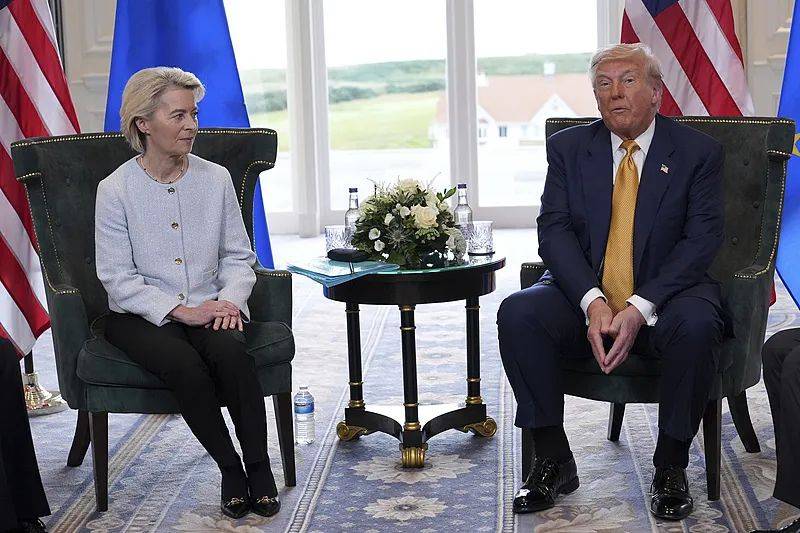
Group 1 - The EU has agreed to a trade deal with the US, accepting a 15% tariff on goods exported to the US, which is seen as a capitulation under the threat of US tariffs [1][2] - The deal includes a commitment from the EU to increase investments in the US by $600 billion and to purchase $750 billion worth of US energy products [1] - French officials have expressed strong criticism of the agreement, labeling it as a "sombre day" and arguing that it undermines European unity and values [2][3] Group 2 - German Chancellor Merz acknowledged that while the agreement avoids a trade conflict that could severely impact Germany's export-driven economy, he expressed dissatisfaction with the 15% tariff [6] - Many EU countries share a similar sentiment, recognizing the deal as imbalanced but supporting it to avoid escalating trade tensions [6][7] - The agreement is expected to be finalized in a joint statement by August 1, with further negotiations to establish a comprehensive deal [7] Group 3 - European stock markets reacted positively to the news, with the Stoxx 600 index reaching a four-month high, indicating a mixed sentiment among European companies regarding the deal [7] - Economists noted that while the 15% tariff is better than expected, there are concerns about the long-term competitiveness of European exports and the costs that US customers will incur due to the tariffs [7]

瑞典首相克里斯特松会见何立峰
券商中国· 2025-07-28 23:28
Group 1 - The meeting between Swedish Prime Minister Kristersson and Chinese Vice Premier He Lifeng highlights the strengthening of China-Sweden relations, marking the 75th anniversary of diplomatic ties [1] - Both parties expressed a commitment to deepen cooperation in various fields, emphasizing mutual respect, trust, and benefits [1] - China is keen to enhance communication and collaboration with Sweden to support multilateralism and free trade [1] Group 2 - Sweden's government remains focused on fostering cooperation with China and supports economic globalization and free trade [1] - The 75th anniversary of diplomatic relations is seen as an opportunity to achieve more positive outcomes in China-Sweden relations [1]
瑞典首相克里斯特松会见何立峰
news flash· 2025-07-28 20:41
Core Viewpoint - The meeting between Swedish Prime Minister Kristersson and Chinese Vice Premier He Lifeng highlights the strengthening of bilateral relations between China and Sweden, marking the 75th anniversary of diplomatic ties and emphasizing cooperation in various fields [1] Economic Cooperation - China and Sweden are committed to enhancing economic and trade cooperation, with a focus on mutual respect, trust, and benefit [1] - The two countries aim to support multilateralism and free trade, indicating a positive outlook for future economic collaboration [1] Strategic Leadership - The strategic guidance from the leaders of both nations is seen as a driving force for expanding cooperation across different sectors [1] - The anniversary of diplomatic relations is viewed as an opportunity to deepen practical cooperation and achieve more positive outcomes [1]
芝加哥玉米和大豆价格下跌,阿根廷大幅削减出口关税
news flash· 2025-07-28 14:18
Core Viewpoint - Chicago corn and soybean futures prices have declined due to market expectations that Argentina will increase sales after reducing export tariffs [1] Group 1: Policy Changes - Argentina's President Milei announced a reduction in export tariffs for soybeans from 33% to 26% and for corn from 12% to 9.5% [1] - The policy aims to appease domestic farmers who are looking for the fulfillment of free trade commitments [1] Group 2: Market Impact - The reduction in tariffs is expected to enhance Argentina's export capacity, intensifying market competition amid already sufficient global supply [1] - This increased competition may exert greater pressure on U.S. farmers [1]
【环球财经】法国总理抨击美欧新贸易协议 多位法国官员称协议“不平衡”
Xin Hua Cai Jing· 2025-07-28 13:10
Core Points - The European Union and the United States have reached a new trade agreement, with the U.S. imposing a 15% tariff on products imported from the EU [1] - French Prime Minister François Bérou criticized the agreement as a "surrender" by the EU, indicating dissatisfaction among French officials regarding the "imbalance" of the deal [1] - French officials express concerns that the current trade situation is unsustainable and highlights a structural change in U.S. trade policy, which they believe disregards World Trade Organization rules [1] Group 1 - The new trade agreement aims to provide temporary stability for economic participants threatened by U.S. tariff escalations [1] - French Minister for European Affairs Benjamin Haddad emphasized the need for a reevaluation of the trade relationship, stating that the current situation is not satisfactory and poses risks of being completely undermined [1] - Minister for Foreign Trade Laurent Saint-Martin pointed out the imbalance in trade, particularly in the digital services sector, and called for efforts to achieve a balance in trade relations [1] Group 2 - Saint-Martin advocates for a stronger and more assertive stance against the U.S., suggesting that the final agreement may differ if the EU demonstrates its counter-capacity [2]