台独

Search documents
国台办回应美智库人员涉台言论:“台独”的尽头就是“弃子”
Yang Shi Xin Wen Ke Hu Duan· 2025-08-27 07:51
Group 1 - The core viewpoint of the article highlights the U.S. prioritizing its own interests under the guise of "security guarantees," which leads to Taiwan's Democratic Progressive Party (DPP) relying on external support [3] - The spokesperson emphasizes that the DPP's attempts to collaborate with external forces will not change the fact that Taiwan is part of China, nor will it alter the international community's adherence to the One China principle [3] Group 2 - The article mentions that the DPP's actions are ultimately leading to a situation where they will be abandoned, referred to as "abandoning the pawn" [3]

国台办:大罢免结果充分表明任何“台独”政治操弄都必然失败
Zhong Guo Xin Wen Wang· 2025-08-27 06:42
Core Viewpoint - The recent "Great Recall" vote in Taiwan indicates a rejection of pro-independence political maneuvers, suggesting that such actions lack public support and are destined to fail [1] Group 1: Political Context - The failure of the "Great Recall" is linked to the dissatisfaction with Lai Ching-te's administration, exacerbated by stalled US tariff negotiations and heightened tensions in the Taiwan Strait [1] - The spokesperson emphasized that the root cause of cross-strait tensions is the Democratic Progressive Party's refusal to acknowledge the "1992 Consensus" and its collaboration with external forces to provoke independence [1] Group 2: Future Relations - The spokesperson asserted that only by adhering to the "1992 Consensus" and recognizing that both sides belong to one China can dialogue and cooperation be fostered, leading to improved cross-strait relations [1]
超500台军参加美方演习?美政府可能入股台积电?国台办回应
Mei Ri Jing Ji Xin Wen· 2025-08-27 06:14
Group 1 - The Taiwan industry is concerned that potential U.S. investment in TSMC could undermine Taiwan's industrial foundation, reflecting a broader anxiety about U.S. influence [1][3] - The spokesperson criticized the Democratic Progressive Party (DPP) for compromising Taiwan's interests by aligning too closely with the U.S., suggesting that this could harm local businesses and the public [3][5] - Recent polling indicates a significant increase in negative perceptions of the U.S. among Taiwanese citizens, with 40.5% expressing unfavorable views, a rise of 16.3 percentage points since July 2024 [10] Group 2 - The spokesperson emphasized that the future and welfare of Taiwan depend on peaceful cross-strait relations and national unification, highlighting the economic resilience and potential of mainland China as a favorable investment environment for Taiwanese businesses [10] - The DPP's actions against Taiwanese artists engaging with the mainland are seen as detrimental to cross-strait cultural exchanges, with the spokesperson asserting that such measures do not reflect the will of the Taiwanese people [12]
台海观澜 | 国民党主席应是没有杂质的“纯蓝人”
Jing Ji Guan Cha Wang· 2025-08-27 03:04
Group 1 - The Kuomintang (KMT) is set to hold a new party chair election on October 18, with several candidates announced, including Zheng Liwen, Luo Zhichang, Zhang Yachung, Zhuo Boyuan, Zhang Yaping, and Sun Jianping, while current chairman Zhu Lilun has called for Taichung Mayor Lu Xiuyan to run but has been publicly rejected [2] - The next KMT chairman is expected to be a "pure blue" individual, a concept inspired by Taiwan's leader Lai Qingde, who aims to eliminate "impurities" from the political landscape [3][4] - The KMT is perceived as a mixed party, and there is a pressing need for a leader who can guide the party out of its current predicament [6][7] Group 2 - A core issue for the KMT chairman is the adherence to the "One China" principle and recognition of the "1992 Consensus," as past chairmen have shown inconsistency, contributing to the party's decline [8] - Among the candidates, Zheng Liwen has publicly identified as Chinese, stating she would respond as "I am Chinese from Taiwan" when asked about her nationality [8] - The KMT's internal culture, referred to as "jar culture," has led to a lack of genuine leadership and has stifled talent development, which needs to be addressed for the party's revival [9][12] Group 3 - The next KMT chairman should possess strong combativeness, as a weak leader has historically been a common issue for the party [12] - Luo Zhichang has made a public commitment that if elected, he will not run in the 2028 elections and will support Lu Xiuyan, demonstrating a selfless and pure approach [10][11]
“大罢免”被完封展现台湾社会对民进党当局强烈不满
Xin Hua She· 2025-08-24 11:59
Group 1 - The core viewpoint of the articles indicates that the recent "mass recall" efforts initiated by the Democratic Progressive Party (DPP) have failed, reflecting public dissatisfaction with the DPP's governance and its focus on political maneuvering rather than economic issues [1][2][3] - The failure of the recall votes is seen as a clear expression of the Taiwanese public's desire for improved economic conditions and cross-strait cooperation, rather than the DPP's "anti-China" rhetoric [1][2][3] - Analysts suggest that the DPP's approach, particularly under Lai Ching-te, has increasingly alienated mainstream public opinion, leading to a growing backlash against the party and its policies [2][3] Group 2 - The articles highlight that the DPP's attempts to frame the recall efforts as a reflection of public sentiment have backfired, with the actual results showing a rejection of the party's agenda [3] - There is a consensus among commentators that if the DPP continues to ignore the core demands of the Taiwanese people, it risks further political isolation and potential electoral consequences in the future [2][3] - The sentiment among the public is shifting towards a preference for stability and prosperity, with a clear rejection of divisive political tactics [2][3]
“台独”是绝路,“跪美”无出路(日月谈)
Ren Min Ri Bao Hai Wai Ban· 2025-08-21 00:50
Group 1 - The Taiwanese government faces a significant increase in tariffs, with a new 20% tariff on top of existing rates, leading to a potentially disastrous "20%+N" tax burden on local industries [1][2] - Key sectors such as textiles, petrochemicals, steel, and machine tools are expected to be severely impacted, with the machine tool industry facing a combined tax rate of 24.7%, exacerbating competitive disadvantages against South Korean and Japanese products [2][3] - The Taiwanese government's response includes a commitment to increase investment in the U.S. by $400 billion, which is equivalent to half of Taiwan's annual GDP, indicating a willingness to spend taxpayer money to appease U.S. demands [2][3] Group 2 - The Taiwanese administration's approach of yielding to U.S. demands has not resulted in favorable outcomes, instead leading to increased pressure and unfavorable treatment compared to other trade partners [1][3] - The lack of transparency in negotiations, with claims of confidentiality, raises concerns about the effectiveness of the talks and the potential negative implications for Taiwan's economy [2] - The ongoing reliance on U.S. support while neglecting to strengthen cross-strait relations may lead to further economic challenges for Taiwan, as the government continues to pursue a confrontational stance against mainland China [3]
“时刻准备统一”!中国防长首次点名台湾,赖清德求助无门,反而等来了美国高额关税
Sou Hu Cai Jing· 2025-08-17 09:15
Economic Impact on Taiwan - The United States has imposed a 20% tariff on Taiwan, which is expected to increase to "20+N," significantly affecting Taiwan's economy [1] - Taiwan's economy is heavily reliant on exports, with the U.S. being the largest buyer, particularly for semiconductors and electronic components [1][4] - The semiconductor industry, a key pillar of Taiwan's economy, faces increased export costs, leading to reduced competitiveness and potential order declines [6] Agricultural Sector Challenges - Taiwan's agricultural products, including fruits and seafood, are also impacted by the new tariffs, resulting in decreased orders from U.S. importers [6] - Farmers and fishermen in Taiwan are struggling to sell their products, leading to significant economic distress [6] Political Context - The Taiwanese government, under Lai Ching-te, has been pursuing closer ties with the U.S. while facing backlash from the tariffs imposed [4][6] - The U.S. is perceived as prioritizing its own interests over Taiwan's, viewing Taiwan merely as a strategic asset against China [6] Military and Political Tensions - The Chinese government has expressed a strong stance against Taiwan's independence movements, emphasizing military readiness to counter any separatist actions [3][7] - The combination of military threats from China and economic pressures from the U.S. creates a precarious situation for Taiwan's independence aspirations [4][6]
国台办:民进党当局出卖台湾发展利益,台湾民众与企业深蒙其害
Xin Hua Wang· 2025-08-13 08:21
Group 1 - The Taiwanese government, led by the Democratic Progressive Party (DPP), is criticized for failing to strengthen cross-strait economic cooperation, which could enhance Taiwan's economic resilience against external risks [1] - The U.S. has imposed a 20% "reciprocal tariff" on Taiwan, with potential additional tariffs, leading to concerns about significant economic losses for Taiwan, particularly in key industries [1] - The DPP's proposed investment of $400 billion in the U.S. is equivalent to half of Taiwan's annual GDP, raising alarms about the impact on the local economy and public sentiment [1] Group 2 - Recent polls indicate a significant drop in public satisfaction with Lai Ching-te's administration, with over half of respondents expressing dissatisfaction and distrust [2] - The DPP's actions, perceived as prioritizing political interests over public welfare, have led to social division and a deterioration of cross-strait relations [2] - The DPP is investigating 16 mainland companies for allegedly hiring engineers illegally, which is seen as a distraction from the economic challenges posed by high tariffs [2] Group 3 - The DPP plans to block the entry of mainland brand vehicles into Taiwan, citing security and industrial development concerns [3] - The DPP's stance against mainland products, including innovative electric vehicles, is viewed as detrimental to consumer choice and economic collaboration [3] - The DPP's actions are criticized for harming the business environment in Taiwan and limiting economic growth opportunities [3]
国台办:无论搞多少小动作 都改变不了“台独”必然失败的下场
Yang Shi Xin Wen Ke Hu Duan· 2025-08-13 06:38
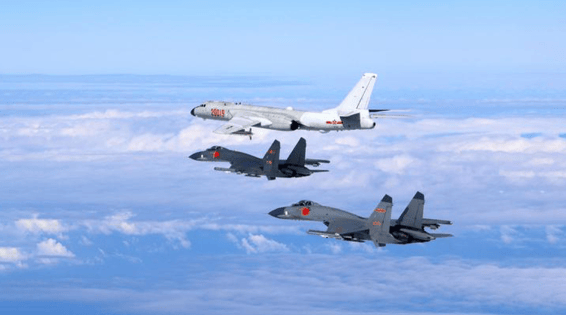
Core Viewpoint - The spokesperson from the Taiwan Affairs Office criticized the Democratic Progressive Party (DPP) for using military simulations to create a war atmosphere and provoke tensions regarding Taiwan's independence, asserting that such actions will not change the inevitable outcome of Taiwan's reunification with the mainland [1][3]. Group 1 - The DPP is accused of collaborating with external forces to amplify fears of war in the Taiwan Strait [3]. - The spokesperson emphasized that no amount of provocations by the DPP can alter the historical trend towards reunification [3]. - The statement serves as a warning to the DPP that their actions will ultimately lead to failure in their independence efforts [3].
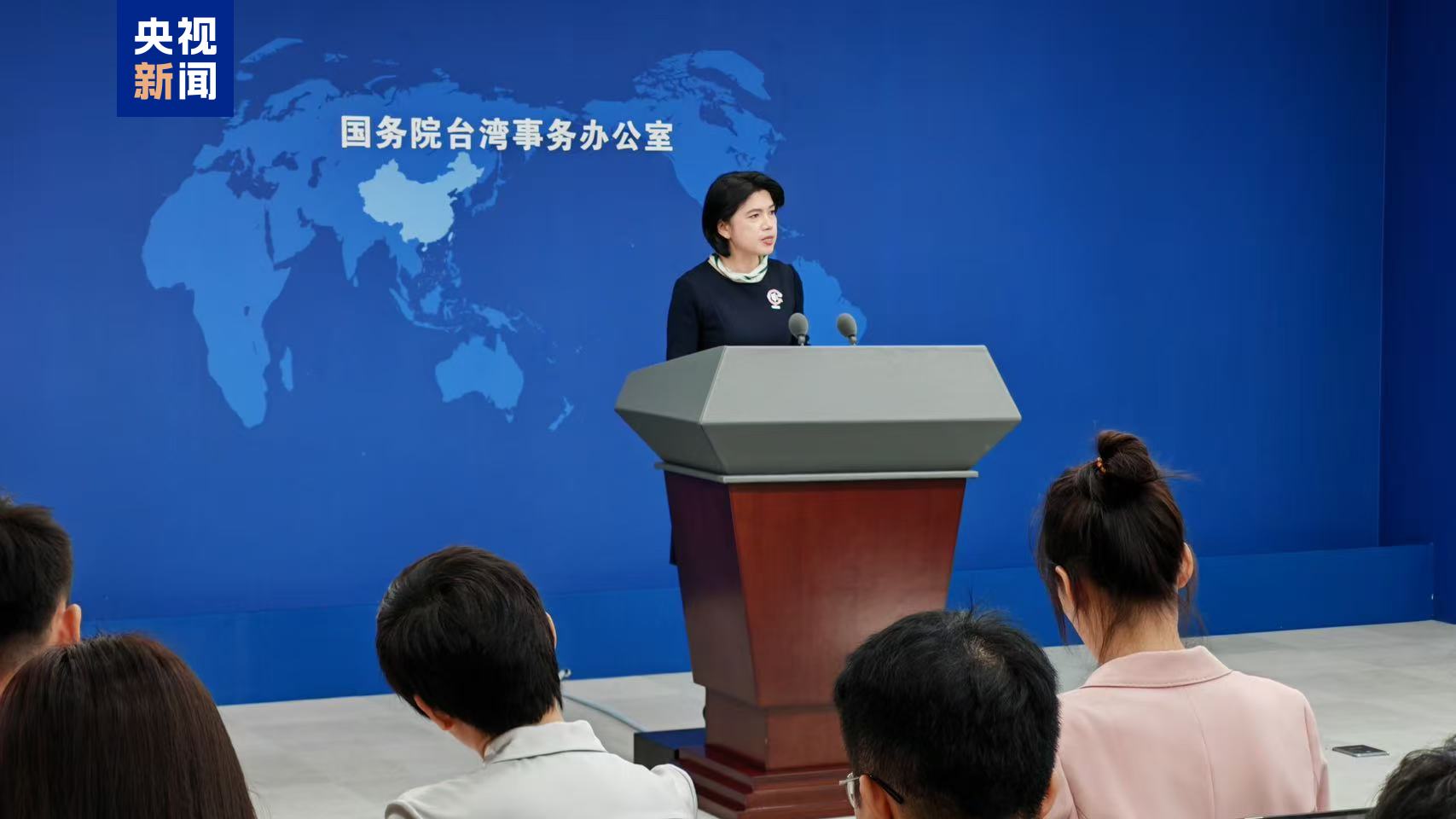
国台办回应民进党当局借所谓“国籍”问题打压大陆配偶
Yang Shi Xin Wen Ke Hu Duan· 2025-08-13 06:38
朱凤莲强调,广大在台定居落户的陆配群体是台湾社会的重要成员,是台湾同胞的家人和亲人,在不同岗位上为台湾经济社会发展作出贡献。民进党当局区 别对待、蓄意打压,充分暴露其"台独"本性,表明其宣扬的"民主""人权"都是骗人的鬼话。 (总台央视记者 赵超逸 黄惠馨) 责编:张青津、卢思宇 8月13日,国务院台办举行例行新闻发布会。有记者就民进党当局借所谓"国籍"问题打压大陆配偶一事提问。 对此,发言人朱凤莲表示,这是民进党当局借所谓"国籍"问题打压大陆配偶的又一恶行。民进党当局一再歧视欺凌大陆配偶群体,种种罪行,不一而足,其 目的就是制造"绿色恐怖",阻挠限制两岸交流,打击支持两岸关系发展的力量。 ...