
双碳目标

Search documents
国内首个“能碳管理”全链条协同平台成立 为产业系统性降碳提供中枢支撑
Xin Lang Cai Jing· 2026-01-27 22:08
Core Viewpoint - The establishment of the Energy Carbon Reduction and Carbon Asset Management Industry Sub-Association (referred to as "Carbon Sub-Association") marks a significant step towards achieving China's dual carbon goals, focusing on the systematic path for the green transformation of the energy sector during the 14th Five-Year Plan period [1][2]. Group 1: Establishment and Objectives - The Carbon Sub-Association aims to fill the gap in industry-level collaborative services for carbon reduction and carbon asset management, providing central support for systematic carbon reduction in the industry [1]. - The association's establishment is a crucial initiative by the China Industrial Development Promotion Association to support the national "dual carbon" goals, emphasizing the need for collaboration among various sectors [2]. Group 2: Key Tasks and Goals - The Carbon Sub-Association has released the "Action Outline," which defines its mission, key tasks, and three main goal orientations, focusing on aligning with national policy directions and enhancing carbon asset management levels [3]. - Experts from various fields have outlined core paths for the association's development, including effective policy transmission, industry standard construction, and empowering enterprises in carbon reduction and asset management [3][4]. Group 3: Innovation and International Cooperation - The association is tasked with promoting collaborative innovation and the application of advanced carbon reduction technologies, ensuring that research outcomes align with industry needs [4]. - There is a focus on deepening international cooperation and participating in the formulation of international standards and rules, which is essential for enhancing the competitiveness of China's energy industry [4]. Group 4: Talent Development - The Carbon Sub-Association recognizes the current shortage of professionals in carbon asset management and aims to establish training and exchange mechanisms to enhance the professional capabilities of the industry [4]. Group 5: Overall Impact - The outlined paths represent a multi-dimensional collaborative and systematic approach to carbon governance, indicating a shift from fragmented exploration to systematic integration, thus providing a mechanism to support the achievement of national "dual carbon" goals [5].
保供减碳齐发力 筑牢能源安全“压舱石”
Xin Lang Cai Jing· 2026-01-27 22:08
Core Insights - The National Energy Group achieved record highs in multiple operational indicators for 2025, maintaining an A-grade in performance assessments for eight consecutive years and surpassing a market capitalization of 1 trillion yuan [1] - The company focuses on deepening reforms and enhancing its core functions to drive high-quality development during the 14th Five-Year Plan period [2] Group Management and Reform - The National Energy Group has implemented a comprehensive management system that extends term systems and contractual management to all levels of middle management, achieving 100% coverage among state-owned enterprises [2][4] - The company has established a governance framework that integrates party leadership into corporate governance, enhancing risk management and digital control systems [2][3] Technological Innovation and Energy Supply - The company has made significant advancements in coal production, with an annual output exceeding 620 million tons, accounting for one-sixth of the national total, and has maintained stable electricity supply [8] - The National Energy Group has committed to 100% green electricity consumption across its entire industry and has integrated 167 power generation companies into the national carbon market [7] Environmental Initiatives - The company has launched several projects aimed at reducing carbon emissions, including the transformation of existing coal-fired power plants to enhance their efficiency and reduce carbon output [6][9] - By 2025, the National Energy Group aims to have 195 new energy storage projects operational, representing approximately 6% of the national new energy storage capacity [6] Future Goals and Strategic Focus - The company has designated 2026 as the "Management Strengthening Year," with a focus on becoming a world-class new energy supplier and enhancing safety, production, and ecological security [10] - The National Energy Group plans to deepen its reforms and improve its modern enterprise system while fostering technological independence and accelerating the construction of a digital energy platform [10]
加快构建全民参与型“双碳”目标技术支撑体系
Xin Lang Cai Jing· 2026-01-27 21:04
Core Viewpoint - The global energy landscape is undergoing profound adjustments, with a green and low-carbon transition becoming an irreversible trend, as highlighted in China's "14th Five-Year Plan" which emphasizes comprehensive green transformation for high-quality development [1] Group 1: Green Transition Initiatives - Southern Power Grid is actively exploring the use of digital technology to empower the green transition, contributing to a harmonious coexistence between humans and nature in China's modernization [1] - The "China's Energy Transition" white paper emphasizes the need for lifestyle and consumption patterns to shift towards simplicity, moderation, and green low-carbon practices, with public participation being crucial for the depth and breadth of this transition [2] - Southern Power Grid has initiated a series of green low-carbon transition practices based on digital technology, aiming to evolve from fragmented exploration to large-scale integration of the "dual carbon" goals [2] Group 2: Digital Technology and Data Utilization - A collaborative green digital foundation is being established, utilizing distributed cloud-native architecture to facilitate efficient data flow across energy sources, networks, loads, and storage, enabling accessible green electricity purchasing services [2] - The company is enhancing decision-making capabilities through AI-driven systems, including an AI energy efficiency diagnosis system that provides tailored energy management services for households and businesses [3] - Southern Power Grid has unified the collection of metering data across the southern region, monitoring 134 million terminals and serving 127 million users, with over 7000 MW of installed green energy capacity [3] Group 3: Public Engagement and Participation - Recommendations include constructing a technology support system centered on digital technology to lower participation barriers for the public in "dual carbon" actions, fostering a governance model that encourages government guidance, corporate responsibility, and public engagement [4] - The company aims to enhance public awareness and participation in green energy usage through improved infrastructure and services, including a unified platform for green electricity procurement and carbon footprint tracking [5] - A carbon account management system is being developed to quantify and incentivize individual low-carbon behaviors, allowing for traceable and measurable green energy actions [7] Group 4: Long-term Strategies and Demonstration Projects - The company is promoting diverse zero-carbon demonstration scenarios, focusing on community models that integrate distributed renewable energy, storage, and smart microgrids [8] - There is an emphasis on creating a collaborative low-carbon governance effort by integrating the technology support system into national digital governance frameworks, enhancing data connectivity across various sectors [8]
看变化 | 这一年,步履不停
Xin Lang Cai Jing· 2026-01-27 12:25
Core Viewpoint - The company has made significant progress in various sectors during 2025, focusing on high-quality development and innovation, while implementing the "11346" strategy, marking a pivotal year in its development history [1][16]. Part 1: Coalbed Methane Expansion - The company has expanded its coalbed methane resource area to 511.421 km², a 310.34% increase, by securing development rights and participating in resource auctions [3][17]. - The strategic focus is on comprehensive and efficient utilization of coalbed methane and transitioning the energy industry structure [4][17]. Part 2: Coal Chemical Energy Conservation and Environmental Upgrades - The coal chemical company's energy conservation and environmental upgrade project is a provincial key project aimed at transitioning from traditional to modern coal chemical processes [6][19]. - The project is progressing well, with construction phases moving towards equipment installation, aiming for production efficiency by December [6][19]. Part 3: Coal Resource Expansion - The company successfully acquired the exploration rights for the Shitiao coalfield, covering an area of 15.4903 km² with a total coal resource of 216.7 million tons, enhancing its coal industry foundation [8][21]. - The acquisition is part of a broader strategy to strengthen the company's core functions and ensure sustainable development [8][21]. Part 4: Smart Logistics Park Development - The logistics base project has achieved significant milestones, including the opening of the smart automotive park, which sold 7,099 vehicles generating approximately 687 million yuan in sales [10][23]. - The project aims to establish a regional agricultural product distribution center, contributing to the company's high-quality development [10][23]. Part 5: Jiaxiang Port Development - Jiaxiang Port, launched in August 2025, is the first comprehensive inland port in Shandong Province, focusing on smart logistics and operational efficiency [12][25]. - The port achieved a throughput of 6.6 million tons and revenue of 136 million yuan, setting new historical records [12][25]. Part 6: Wind Power Project Phase II - The company received approval for the second phase of the Qinshui Lanhua wind power project, which includes eight 6.25 MW wind turbines, aiming for a total capacity of 50 MW [15][28]. - This project is expected to significantly contribute to the region's annual electricity generation and support carbon neutrality goals [15][28].


索利斯锚定中国为关键创新策源地
Guo Ji Jin Rong Bao· 2026-01-27 11:47
Core Insights - Solstice Advanced Materials, having spun off from Honeywell and listed independently since October last year, is restructuring its global strategy with a focus on the Chinese market as a key growth driver [1] - The company aims to build a more resilient growth model that encompasses not only sales and production layout but also technology implementation, standard co-construction, and industry collaboration [1] Group 1: Strategic Focus - The company has established its Asia-Pacific headquarters in Shanghai to oversee operations across the region [1] - Solstice is concentrating on sectors such as refrigerants, semiconductor manufacturing, data center cooling, industrial fibers, and pharmaceutical packaging in China [1] - The business focus aligns closely with China's "dual carbon" goals and the "14th Five-Year Plan," boosting the company's confidence in future development in the region [1] Group 2: Research and Development - One of Solstice's four global R&D centers is located in Suzhou, Jiangsu, providing technical support for sustainable development, energy transition, advanced computing, and life sciences [1] Group 3: Manufacturing and Supply Chain - The refrigerant production base in Taicang, Jiangsu, has become a crucial node in Solstice's global supply chain, serving both domestic and international markets [2] - Products from this facility are exported to Japan, South Korea, the United States, and Europe, and are widely used in cold chain logistics, commercial buildings, and automotive air conditioning systems [2]
我国自研高性能变压器保护技术规模化应用
Ke Ji Ri Bao· 2026-01-27 09:31
Core Insights - The China Electric Power Research Institute has developed a "high-performance transformer inter-turn protection technology" that has been successfully applied in the State Grid Corporation's UHV and HVDC converter stations, addressing a long-standing technical challenge in the industry [1][2] - This technology has received the first prize of the State Grid Corporation's 2025 Science and Technology Progress Award, highlighting its significance in enhancing the safety and stability of large-scale AC and DC power grids [1] Group 1 - The transformer is a critical component in UHV and HV transmission systems, and its unique winding structure can lead to severe faults if minor inter-turn issues are not addressed quickly, posing risks to equipment and system safety [1] - Existing technologies have a response time of 50-60 milliseconds due to the complexity of fault processes, necessitating significant improvements in performance to reduce fault energy accumulation at high voltage levels [1] - The research team, guided by the State Grid Corporation, focused on key challenges in transformer protection principles and developed a new principle based on phase sequence differential current characteristics, reducing the protection response time to 20 milliseconds [1][2] Group 2 - Since 2022, the developed transformer protection technology has been implemented in 21 UHV and HVDC converter stations, with over 2000 units operating successfully [2] - The project has achieved a full-chain innovation from theoretical research to large-scale application, enhancing the protection technology of domestic high-end equipment and significantly improving transformer safety levels [2] - Under the "dual carbon" goals, this core technology will continue to support the safe and stable operation of China's large-scale AC and DC power grids, ensuring reliable electricity supply [2]
创历史新高!深圳电网固定投资完成111.02亿元
Sou Hu Cai Jing· 2026-01-27 08:48
Core Insights - Shenzhen Power Supply Bureau has achieved a record fixed investment of 11.102 billion yuan, marking a historical high in its financial performance [1] - The total number of substations has reached 378, with over 10,000 distribution lines, maintaining national leadership in power supply reliability and electricity quality [1] - Local clean energy power generation accounts for 77.8% of the total installed capacity, with green electricity trading volume exceeding 280 billion kilowatt-hours [1] Investment and Infrastructure Development - During the "14th Five-Year Plan" period, fixed investment increased by 43% compared to the "13th Five-Year Plan," supporting over 600 major projects [3] - The bureau has added 65 substations of 110 kV and above, including 24 substations supporting the "20+8" industrial clusters [3] - The bureau aims to ensure reliable power supply for the 2025 World University Games and the Special Olympics, introducing a new power supply model combining high-reliability city electricity, grid storage, and vehicle-grid interaction [3] Service Improvement and Community Engagement - The bureau has completed power supply renovations for 2,172 industrial parks and safety improvements for 185 urban villages, benefiting 120,000 households [3] - It has established the first service center for the business environment of private enterprises in the country and built 15 high-quality power supply leading areas and 4 high-quality electricity demonstration parks [3] Green Energy Initiatives - Shenzhen Power Supply Bureau has built 1,098 charging stations, leading globally in achieving "dual super" charging capabilities [5] - The bureau is actively promoting the integration of clean energy and has established the first virtual power plant management center in the country [5] - It has launched green electricity service products for residents, expanding green electricity consumption to the residential sector [5] Future Development Plans - In 2026, the bureau plans to enhance power supply reliability and address key bottlenecks in grid development through four major improvement actions [6] - It aims to create an internationally leading business environment for electricity use and develop a new model for electricity services that is integrated, online, intelligent, and contractual [6] - The bureau will continue to expand the scale of green charging stations and plan for the development of a "three-dimensional digital grid" [6]

产业资本加持!高能数造2025年双轮融资收官 领跑全固态电池赛道
Zhong Jin Zai Xian· 2026-01-27 08:08
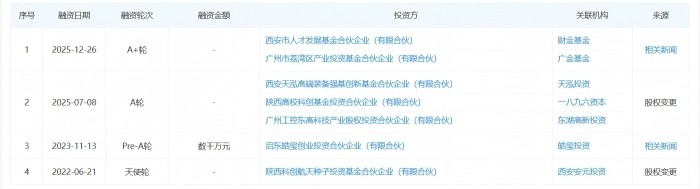
Core Insights - High Energy Manufacturing has successfully completed its Series A and A+ financing rounds, with a focus on solid-state battery technology and its industrialization by December 2025 [1][16] - The financing was led by Guangzhou Industrial Control Donggao Fund, with participation from various strategic investors, indicating strong market confidence in the company's technology and growth potential [1][2] Financing Overview - The financing rounds were completed in December 2025, with significant backing from key investors including local government funds and industry leaders [3] - The investment structure includes a multi-dimensional empowerment system combining industry ecology, academic innovation, and local policy support [2] Investor Profiles - Guangzhou Industrial Control Donggao Fund is a leading state-owned investment platform in the Greater Bay Area, providing critical resources for capacity collaboration and market application [4] - Xi'an Tianhong High-end Equipment Innovation Fund focuses on new energy equipment and will support High Energy Manufacturing with supply chain collaboration and production scaling [5] - Shaanxi Higher Education Innovation Fund aims to leverage top research resources for technology collaboration and talent acquisition [6] Regional Policy Support - Xi'an Talent Development Fund is a key policy-driven fund that supports high-level talent-led technology innovation projects, enhancing the company's access to policy support and high-end talent [8] - Guangzhou Liwan District Industrial Investment Fund aims to assist in expanding the company's market presence in South China [8] Industry Outlook - The global solid-state battery market is projected to exceed $100 billion by 2030, with a compound annual growth rate (CAGR) of over 50%, driven by the push for carbon neutrality and advancements in new energy technologies [10] - Solid-state batteries are recognized as a core solution to traditional lithium battery challenges, making them a competitive focus in the automotive and energy storage sectors [10] Competitive Advantages - High Energy Manufacturing possesses unique technological strengths, quality customer resources, and innovative service models, making it a focal point for both capital and market interest [13] - The company has established partnerships with leading battery manufacturers and research institutions, enhancing its market position and technological capabilities [13] Future Development - The recent financing will accelerate the company's technological industrialization and global market expansion, positioning it as a leading provider of solid-state battery solutions [16]
免费注册参会!生物基化学品与材料专场,就在杭州,第五届中国合成生物学及生物制造大会
synbio新材料· 2026-01-27 06:55
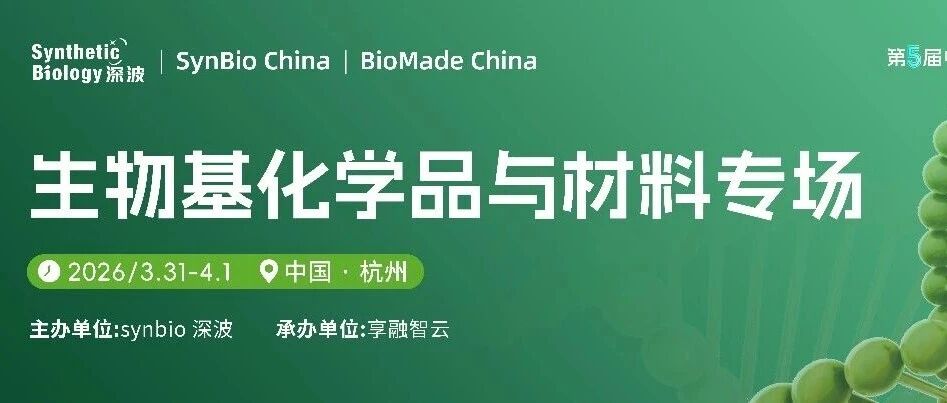
在全球推进绿色转型与"双碳"目标的战略背景下,生物基化学品与材料作为生物制造产业的核心支 柱,凭借原料可再生、全生命周期低碳环保等核心优势,正加速替代传统石油基产品,在包装、纺 织、汽车等领域展现出广阔应用前景,成为全球产业绿色转型的关键赛道。 我国高度重视该领域发展,将生物基新材料列为关键战略材料,多项产业扶持政策持续落地。然 而,产业仍面临包括综合成本竞争力、原料供应链稳定、产品性能优化及终端市场接受度等关键问 题。 基于此, 2026年3月31日-4月1日 ,"第五届中国合成生物学及生物制造大会"将在杭州举办,其中设 置 【 生物基化学品与材料专场】 ,旨在汇聚产学研用多方智慧,破解产业发展难题,助力生物基 化学品与材料产业高质量发展。 大会介绍 0 1 大会时间 | 2026年3月31日-4月1日 大会地点 | 杭州市 大会规模 | 1000人 主办单位 | synbio深波 承办单位 | 享融智云 媒体支持 | synbio新农食、synbio新美护、synbio新材料、生物制造圈、合成生物学俱乐部 扫码 免费 报名参会 请添加下方微信,备注 "报名路演" 商务合作 0 4 论坛设置 0 2 | | ...
发展绿色生产力 零碳工厂怎么建?
Xin Hua She· 2026-01-27 05:10
"十五五"规划建议提出,"建设零碳工厂和园区"。工业和信息化部等五部门日前联合印发《关于开 展零碳工厂建设工作的指导意见》,引导工业企业试点建设零碳工厂,带动行业减碳增效和绿色低碳转 型。 "零碳工厂不是绝对的'零'二氧化碳排放。"清华大学碳中和研究院院长贺克斌介绍,零碳工厂强调 通过技术创新、结构调整和管理优化等系统减排措施,充分挖掘减排潜力,是在当前技术经济条件允许 下,实现应减尽减并持续改进提升,保持工厂二氧化碳排放最低。 当前,零碳工厂建设的内涵与价值已超越了节能减碳范畴,正逐步发展成为驱动制造业绿色转型、 提质增效的全新发展模式。 中国国际工程咨询有限公司副总经理潘小海认为,零碳工厂能够推动技术、能源、资源、资本等要 素在工厂的集约优化配置,同时建设零碳工厂,有助于打造低碳增长新引擎,加速我国产业创新链价值 链升级,增强绿色发展新动能。 不过作为一个新生事物,各方面对于零碳工厂的认识还有较大差异。在业内人士看来,特别是在零 碳工厂建设过程中,面临着评价要求不统一、关键技术有待验证、碳排放统计核算基础薄弱等问题,亟 需加强方向指引和技术指导。 指导意见包括总体要求、主要目标、建设路径、工作要求四部分, ...