
数字技术赋能

Search documents
生态环境服务行业在农村有哪些新机遇?一号文件划出了重点
Zhong Guo Huan Jing Bao· 2026-02-25 00:21
Core Insights - The central document No. 1 for 2026 outlines a systematic approach to rural ecological environment governance, emphasizing integrated efforts in ecological protection, low-carbon agriculture, and improving rural living conditions, thus opening vast market opportunities for the ecological environment service industry [1] - The urban environmental service market is becoming saturated, while rural areas present strategic opportunities due to their widespread issues and lack of professional resources [1] Group 1: Key Focus Areas - The document identifies four key areas for ecological environment services in rural governance, including comprehensive services for rural wastewater management, integrated garbage collection and resource utilization, agricultural non-point source pollution management, and ecological restoration and low-carbon services [2] - A full-cycle service model for rural wastewater management is proposed, incorporating design, construction, operation, and monitoring, with a focus on cost reduction and efficiency through scale effects [2] - The document suggests a comprehensive approach to agricultural pollution, emphasizing the collection, storage, transportation, treatment, and return of resources, with a profit model involving government subsidies and payments from livestock farmers [2] Group 2: Innovative Business Models - The document highlights the importance of innovative funding models to address rural governance challenges, suggesting a packaged operation model for projects like toilet renovations, wastewater treatment, and garbage disposal [3] - It proposes a public-private partnership (PPP) model where enterprises lead construction and operation, with government payments based on performance, ensuring stable cash flow over 20 to 30 years [3] - The document encourages the use of digital technology to enhance efficiency and reduce costs, advocating for a smart operation platform that integrates monitoring and management functions [3] Group 3: Government-Enterprise Collaboration - Successful implementation of rural environmental services requires collaboration between government and enterprises, focusing on policy alignment and ensuring dedicated funding for operations [4] - The document recommends establishing performance-based standards linked to payment for services, ensuring quality in service delivery [4] - It also suggests creating model projects in specific counties to develop replicable frameworks for expansion into surrounding areas, transitioning from single-service providers to comprehensive ecological service providers [4]
开拓消费增长新空间 ——上海市徐汇区文商旅体展融合发展调查
Jing Ji Ri Bao· 2026-02-23 23:30
Core Viewpoint - The article discusses the transformation of the consumer landscape in Shanghai's Xuhui District, emphasizing the integration of culture, commerce, tourism, and sports to stimulate new growth in service consumption and enhance the local economy [1][5]. Group 1: Economic Growth and Consumer Engagement - By 2025, Xuhui District's economic output is projected to reach 415.308 billion yuan, ranking first among central urban areas, driven by a shift from "single-point operations" to "system integration" [1]. - The "FISE Urban Sports Carnival" held in October 2025 attracted 328,400 visitors, with a 69.51% increase in daily foot traffic and a 35.29% rise in daily sales compared to the previous week [2]. - The UFC Fight Night in August 2025 saw an average spending of 3,410 yuan per person, significantly boosting local dining, shopping, and entertainment [2]. Group 2: Event-Driven Consumption - A series of concerts in August 2025 attracted around 200,000 attendees, generating 156 million yuan in sales across 16 shopping malls and a 75% increase in hotel revenue in the vicinity [2][3]. - Over 400 events were held in Xuhui in 2025, drawing approximately 21 million visitors, a 138% year-on-year increase, showcasing the area's vibrant cultural and commercial activities [3]. Group 3: Integration of International Brands - International brands like lululemon have engaged deeply with the community, hosting events that attracted thousands of participants, indicating a strong connection between sports and community [4]. - The relocation of lululemon's China marketing headquarters to Xuhui signifies a deeper integration of international brands with local development [4]. Group 4: Innovative Ecosystem Development - Xuhui District has implemented a multi-layered ecosystem for integrated development, focusing on policy guidance and market response to sustain and replicate its success [6]. - The introduction of consumption vouchers in 2025 led to a 93.91% redemption rate, generating over 46 million yuan in orders and stimulating market activity [6]. Group 5: Future Strategies and Technological Integration - Future plans include leveraging digital technologies to create a comprehensive ecosystem for international technology consumption, enhancing consumer experiences through virtual and augmented reality [11]. - The focus will be on internationalization, enhancing immersion, and developing unique IPs for events, aiming to position Xuhui as a leading destination for inbound tourism [12]. Group 6: Collaborative Ecosystem - The "government-platform-enterprise" model in Xuhui promotes collaboration among various stakeholders, creating a sustainable and self-reinforcing economic cycle [10][13]. - The "ticket root economy" exemplifies a model where a single purchase can drive multiple business sectors, enhancing resource utilization and sustainability [10].
文旅商体展融合 花样消费任选 上海徐汇区“织”就城市生活新图景
Zheng Quan Ri Bao· 2026-02-23 16:27
Core Insights - The integration of culture, tourism, commerce, and sports in Xuhui is aligned with national strategies to promote deep integration of cultural and tourism development, enhancing consumer potential and economic growth [1][2][4] Group 1: Economic Impact - By 2025, the economic output of Xuhui District is projected to reach 415.308 billion yuan, ranking first among central urban areas [1] - During the FISE Urban Sports Carnival, the core business district received 328,400 visitors, with daily sales increasing by 35.29% compared to pre-event levels [2] - The Era Youth Concert generated 156 million yuan in sales over four days, attracting 1.9617 million visitors, with surrounding hotels experiencing a 75% revenue increase [2] Group 2: Event-Driven Consumption - Xuhui has successfully utilized event-driven strategies to stimulate consumption, with the UFC event attracting over 70% of attendees from outside the city, resulting in an average spend of 3,410 yuan per person [2] - The introduction of high-quality IP events, such as the LEGO World Play Festival and Disney experiences, has significantly enhanced consumer engagement and foot traffic [3] Group 3: Ecosystem Development - Xuhui has established a multi-layered ecosystem for sustainable development, integrating government, platforms, and enterprises to enhance collaboration and resource utilization [5][6] - The "West Bank Life" online community service platform has over 2 million members, facilitating ticketing and service information across various cultural and commercial venues [7] Group 4: Future Strategies - Future plans include leveraging digital technology to create a "Shanghai International Technology Consumption Functional Zone," enhancing consumer experiences through VR/AR and other innovations [8] - Experts suggest focusing on internationalization, immersive experiences, and proactive engagement in hosting international events to further enhance Xuhui's appeal [8]
2025印度工业发展探索:从服务业路径依赖转向路径重塑研究报告
Sou Hu Cai Jing· 2026-02-12 05:51
Core Insights - The report focuses on India's industrial development transition from a service-oriented path dependency to a path reconfiguration, analyzing the causes of deviation from traditional industrialization, the effectiveness and constraints of industrial development, and proposing policy recommendations for industrialization opportunities [1][6]. Group 1: Historical Context of India's Industrialization - India's industrialization has undergone two major phases: the state-led phase (1948-1991) and the market economy phase (1991-present), influenced by global dynamics and domestic strategic shifts [14][23]. - During the state-led phase, India adopted a planned economy model, focusing on heavy industry, which led to an initial industrial growth peak with an average GDP growth rate of 3.6% from 1960-1967 [15]. - The liberalization period starting in 1991 marked a shift towards a more market-oriented economy, with significant reforms in finance, infrastructure, and information technology, resulting in a rise in service sector GDP share from 32% to 42% [22]. Group 2: Drivers of Service-Oriented Path Dependency - The service-oriented growth path in India is driven by institutional, technological, and weak inter-industry linkages [24]. - Institutional factors include a risk-averse regulatory environment and low efficiency in governance, which have constrained industrialization while allowing the service sector to thrive due to lower dependency on traditional institutions [25]. - Technological dependency is characterized by low R&D investment in manufacturing, leading to a reliance on external resources for complex technologies, while the IT sector attracts skilled labor due to higher wages [26]. Group 3: Achievements and Constraints in Industrial Development - India has made progress in manufacturing, becoming the fifth-largest manufacturing economy globally, with a shift from labor-intensive to knowledge-intensive industries, particularly in pharmaceuticals and automotive sectors [2][29]. - Despite these advancements, significant gaps remain compared to leading countries, with manufacturing's GDP contribution stagnating around 15% and foreign investment levels being relatively low [30]. - The manufacturing sector faces challenges such as informal employment issues and limited job creation, with existing competitive advantages in pharmaceuticals and automotive industries hindered by insufficient R&D and a narrow export structure [2][29]. Group 4: Opportunities and Policy Recommendations for Industrialization - Current opportunities for India's industrialization include leveraging digital advancements and diversifying the industrial base to enhance manufacturing growth [7]. - The report suggests six key areas for path reconfiguration: advancing existing competitive industries, fostering high-value emerging sectors like semiconductors and green technologies, empowering manufacturing through digital technologies, restructuring the industrial base for sustainable growth, expanding domestic demand through government procurement and rural infrastructure, and enhancing international cooperation [7][10].


“投资于人”对实现人的现代化的价值意蕴
Xin Lang Cai Jing· 2026-02-08 18:31
Group 1 - The core idea emphasizes the importance of "investing in people" as a means to achieve human modernization, focusing on enhancing individual capabilities, social relationships, and spiritual qualities [1][2][3][4] Group 2 - "Investing in people" aims to improve individual capabilities by enhancing education levels, vocational skills, health status, and social adaptability, thereby transforming the population advantage into a talent quality advantage [2] - It promotes the construction of equitable and inclusive social relationships by improving individual agency and participation, which helps alleviate structural inequalities and enhances trust among different groups [3] - The initiative also focuses on cultivating modern spiritual qualities by promoting equal access to quality cultural resources, thereby expanding the spiritual life space of the populace [4] Group 3 - The practical requirements of "investing in people" include strengthening policy guidance and building a support system that covers the entire life cycle, ensuring quality education and social security for all age groups [5] - It emphasizes the need for innovative investment methods to enhance investment efficiency, focusing on high-return areas such as talent cultivation in key technologies and emerging industries [6] - Creating a favorable social environment is crucial for the successful implementation of the "investing in people" strategy, which includes fostering a culture that respects knowledge and encourages innovation [7]
加快构建全民参与型“双碳”目标技术支撑体系
Xin Lang Cai Jing· 2026-01-27 21:04
Core Viewpoint - The global energy landscape is undergoing profound adjustments, with a green and low-carbon transition becoming an irreversible trend, as highlighted in China's "14th Five-Year Plan" which emphasizes comprehensive green transformation for high-quality development [1] Group 1: Green Transition Initiatives - Southern Power Grid is actively exploring the use of digital technology to empower the green transition, contributing to a harmonious coexistence between humans and nature in China's modernization [1] - The "China's Energy Transition" white paper emphasizes the need for lifestyle and consumption patterns to shift towards simplicity, moderation, and green low-carbon practices, with public participation being crucial for the depth and breadth of this transition [2] - Southern Power Grid has initiated a series of green low-carbon transition practices based on digital technology, aiming to evolve from fragmented exploration to large-scale integration of the "dual carbon" goals [2] Group 2: Digital Technology and Data Utilization - A collaborative green digital foundation is being established, utilizing distributed cloud-native architecture to facilitate efficient data flow across energy sources, networks, loads, and storage, enabling accessible green electricity purchasing services [2] - The company is enhancing decision-making capabilities through AI-driven systems, including an AI energy efficiency diagnosis system that provides tailored energy management services for households and businesses [3] - Southern Power Grid has unified the collection of metering data across the southern region, monitoring 134 million terminals and serving 127 million users, with over 7000 MW of installed green energy capacity [3] Group 3: Public Engagement and Participation - Recommendations include constructing a technology support system centered on digital technology to lower participation barriers for the public in "dual carbon" actions, fostering a governance model that encourages government guidance, corporate responsibility, and public engagement [4] - The company aims to enhance public awareness and participation in green energy usage through improved infrastructure and services, including a unified platform for green electricity procurement and carbon footprint tracking [5] - A carbon account management system is being developed to quantify and incentivize individual low-carbon behaviors, allowing for traceable and measurable green energy actions [7] Group 4: Long-term Strategies and Demonstration Projects - The company is promoting diverse zero-carbon demonstration scenarios, focusing on community models that integrate distributed renewable energy, storage, and smart microgrids [8] - There is an emphasis on creating a collaborative low-carbon governance effort by integrating the technology support system into national digital governance frameworks, enhancing data connectivity across various sectors [8]
数字技术赋能湖南传统制造业绿色发展
Xin Lang Cai Jing· 2026-01-08 21:03
Core Viewpoint - Traditional manufacturing is the cornerstone of a modern industrial system, and accelerating its digital transformation while promoting advanced applicable technologies is essential for achieving high-quality industrial development [1] Group 1: Digital Transformation in Traditional Manufacturing - The need to deepen the penetration of digital technology throughout the production process to build a green production system is emphasized [1] - Leading companies like Hualing Steel are advancing pollution reduction and carbon emission cuts through smart manufacturing, although some enterprises have not achieved full digitalization in production [1] - Digitalization can optimize resource allocation at the production source, enhance energy efficiency during production, and promote resource recycling at the end of production [1] Group 2: Collaboration and Ecosystem Development - Hunan is actively building national advanced manufacturing clusters, but there are still shortcomings in digital empowerment for green industry ecosystem construction [2] - Accelerating digital collaboration among enterprises and strengthening digital collaboration across the industrial chain are necessary to achieve data sharing and reduce excess capacity [2] - Smart parks are being developed as pilot projects in industries like petrochemicals and metallurgy to promote deep integration of digital technology with green infrastructure [2] Group 3: Capacity Building and Talent Development - The "Smart Empowerment for Thousands of Enterprises" initiative is being implemented, but many small and medium-sized enterprises face challenges in digital transformation [2] - Enhancing awareness of digital empowerment for green transformation and addressing funding bottlenecks are critical for enterprises [2] - Collaboration between enterprises and vocational schools is encouraged to cultivate talents who understand digitalization, manufacturing, and green practices [2] Group 4: Policy Support and Development Environment - Hunan is creating green factories and parks, but the policy framework for digital empowerment in green development is still incomplete [3] - Strengthening top-level design and providing comprehensive supporting policies are necessary to promote the dual transformation of traditional manufacturing [3] - Enhancing the precision of public services and developing differentiated paths for digital empowerment in key industries like steel and chemicals are recommended [3]
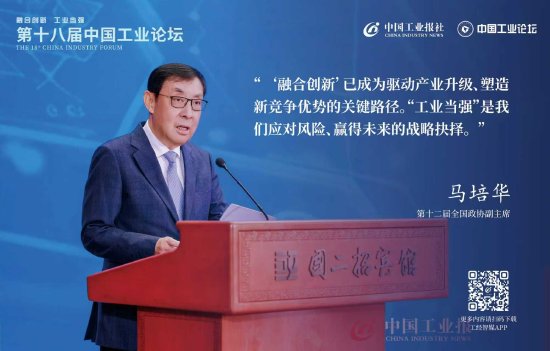
马培华:实现“工业当强”必须依靠“融合创新”这一核心引擎
Xin Lang Cai Jing· 2025-12-16 02:42
Core Viewpoint - The 18th China Industrial Forum emphasizes the theme "Integration Innovation, Industry Strength" and highlights the importance of "integrated innovation" as a core engine for achieving industrial strength [1][3]. Group 1: Key Strategies for Industrial Strength - Strengthening technological innovation leadership is essential to lay a solid foundation for industrial strength [1][3]. - Promoting digital technology empowerment is crucial to stimulate intelligence in achieving industrial strength [1][3]. - Advancing green and low-carbon transformation is necessary to enhance the quality of industrial strength [1][3]. - Deepening reform and opening up cooperation is vital to expand the scope of industrial strength [1][3]. - Cultivating and growing high-quality enterprises is fundamental to solidifying the pillars of industrial strength [1][3].
从互联网大数据看中小企业发展报告(2025)
Sou Hu Cai Jing· 2025-11-21 23:58
Overall Overview - The number and quality of small and medium-sized enterprises (SMEs) in China have significantly improved, with 63.487 million registered SMEs as of September 2025, contributing over 60% of GDP, 70% of technological innovation, and 80% of urban employment [13][14][16] - The average annual growth rates for the value added, operating income, and total profit of large-scale SMEs during the 14th Five-Year Plan period are 6.4%, 7.4%, and 5.4%, respectively, all exceeding those of large enterprises [13][14] Structural Distribution Regional Distribution - SMEs in eastern China account for 54.2% of the total, with Guangdong, Jiangsu, Shandong, Zhejiang, and Henan provinces collectively representing 40.9% [24][26] Industry Distribution - The wholesale and retail industry has the highest concentration of SMEs, accounting for over 30%, followed by leasing and business services, and scientific research and technical services, each exceeding 10% [27] Development Status Sustained Growth - In the first eight months of 2025, the value added of large-scale industrial SMEs increased by 7.6% year-on-year, with a continuous expansion of export indices for 17 months [2][36] Innovation Capacity - Over 178,000 SMEs hold patents, with a 55.1% industrialization rate for invention patents in 2024, and 35,000 new enterprises in artificial intelligence-related fields [2][17] Market Competitiveness - SMEs accounted for 99.3% of project-winning enterprises in 2024, with over 5,780 financing events totaling approximately 750.8 billion yuan, marking a 7.3% and 13.1% increase from 2023 [19][20] Employment Contribution - 71.8% of surveyed university students consider employment in SMEs, highlighting their role as a significant employment channel [20] Future Outlook - Continuous optimization of the business environment, enhanced cultivation systems, and deep integration of digital technologies will provide more opportunities for SMEs, contributing to economic and social development [2][36]

数字化驱动高颜值变高价值
Jing Ji Ri Bao· 2025-11-17 22:24
Core Viewpoint - The article emphasizes the importance of enhancing the value realization of ecological products through diversified ecological compensation mechanisms and the integration of digital technology, which is seen as a crucial step in implementing the "Two Mountains" theory [1]. Group 1: Challenges in Ecological Product Value Realization - The complexity of ecological product resources, including their cross-temporal and cross-spatial characteristics, poses significant challenges in resource inventory and rights confirmation [2]. - The low level of intelligence in agriculture and forestry, combined with the remoteness of high-quality ecological product areas, limits the scale of production and the ability to enhance product quality and brand premium [2]. - Geographic limitations, information asymmetry, and high transaction costs hinder the precise matching of supply and demand for ecological products [2]. Group 2: Digital Technology Integration - The integration of data elements with production factors such as land, labor, capital, and technology can enhance the production of ecological products, utilizing tools like drones and satellite monitoring for high-precision data collection [3]. - Establishing a digital trading platform for ecological products can effectively integrate fragmented resources and facilitate cross-regional transactions, utilizing technologies like AR/VR to create immersive consumer experiences [3]. Group 3: Digital Governance in Ecological Product Value Realization - The transition to digital governance enhances transparency, citizen participation, and collaboration among multiple stakeholders, leading to effective resource allocation and reduced institutional costs [4]. - The integration of government resources, including personnel, finance, and information, is essential for improving the overall experience of the public regarding ecological benefits [4].