
养老金融

Search documents
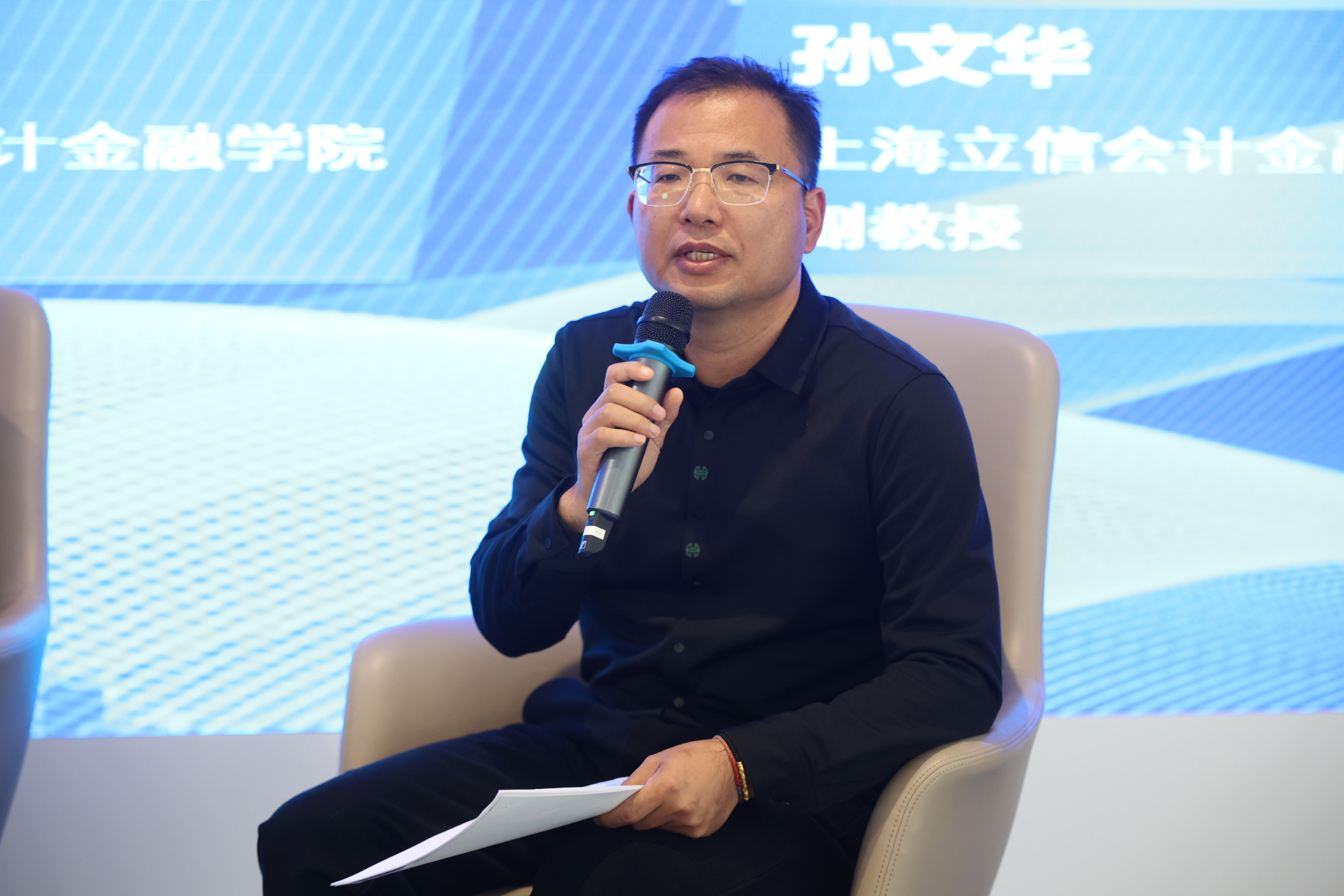
孙文华:金融赋能是长三角高质量发展“血脉通道”
Guo Ji Jin Rong Bao· 2025-12-01 05:30
Core Viewpoint - The financial empowerment system will play a crucial role in the high-quality development of the Yangtze River Delta, transitioning the regional economy from "geographical collaboration" to "functional integration" as part of the 14th Five-Year Plan [1][4]. Financial Empowerment System - The financial empowerment system is not just a tool for capital allocation but a comprehensive ecosystem that integrates long-term, innovative, collaborative, and risk-controlled elements [3]. - This system facilitates the efficient flow of core elements such as capital, technology, and talent, leading to a systemic leap from "individual efforts" to "collective strength" in regional development [4]. Support for High-Quality Development Model - The financial empowerment system is a key support for the "three-in-one 2.0 high-quality development model," which includes institutional guarantees, innovation-driven systems, and financial empowerment systems [4]. Five Major Areas of Financial Service - The financial empowerment system provides a clear practical path for integrated development in the Yangtze River Delta through five major areas: - Green finance guides capital towards low-carbon industries, aiding in the region's green transition [5]. - Technology finance accelerates the transformation of technological achievements through venture capital and intellectual property pledges [5]. - Digital finance enhances the accessibility and precision of financial services using big data and AI [5]. - Inclusive finance activates small and micro enterprises and rural economies by addressing the "last mile" of service [5]. - Pension finance extends the industrial chain, boosting regional consumption and social security capabilities [5]. Financial Security and Regional Integration - The financial empowerment system strengthens the financial security of the Yangtze River Delta, with Shanghai as the leading international financial center [5]. - The region is building a model of financial strength that promotes internal and external circulation, risk prevention, and functional integration [5]. Development Patterns and Challenges - The development pattern identified includes "institutional collaboration as a prerequisite, technological empowerment as a means, and industrial integration as a goal" [6]. - Examples of financial innovation include carbon-neutral bonds issued by Zhejiang New Energy Group and support for small tech enterprises through the Shanghai Equity Custody Trading Center [6]. Recommendations for Overcoming Challenges - Seven strategies are proposed to address current challenges such as institutional barriers and regional imbalances: - Unify regulatory standards and establish cross-regional policy coordination mechanisms [6]. - Balance regional financial support to break the "Matthew effect" [6]. - Build an innovative financial technology system to promote data sharing [6]. - Improve financial talent training and incentive mechanisms [6]. - Create a "smart financial corridor" to eliminate data barriers [6]. - Strengthen local financial firewalls and establish a risk prevention network [6]. - Enhance capital flow efficiency and promote cross-border financial facilitation policies [6].

储蓄国债(电子式)入列 个人养老金产品池再扩容
Jing Ji Ri Bao· 2025-12-01 02:26
Group 1 - The Ministry of Finance and the People's Bank of China announced that starting from June 2026, eligible savings bonds will be included in personal pension products, providing more investment options for personal pension asset allocation [1] - The inclusion of savings bonds is expected to enhance the attractiveness and coverage of the personal pension system, diversify product types, and optimize the investor structure in the bond market [1][2] - As of now, there are 1,245 personal pension products available, including various types such as savings, wealth management, insurance, and fund products, indicating a rapidly diversifying supply structure [2] Group 2 - The number of personal pension accounts has surpassed 72 million, reflecting continuous growth in account openings [3] - The addition of savings bonds is anticipated to lower the cognitive barrier for investors and optimize asset allocation, benefiting individuals, institutional development, and national growth [3] - Future development of personal pensions requires coordinated efforts in policy incentives, product supply, and market cultivation to ensure long-term health [3]
春风化雨润京华 光大银行北京分行服务首都实体经济高质量发展
Xin Jing Bao· 2025-12-01 02:25
Core Viewpoint - In 2025, China's economy is steadily advancing towards a new stage of high-quality development, with financial services playing a crucial role in supporting the real economy, as exemplified by the efforts of China Everbright Bank's Beijing branch in various sectors [1] Group 1: Supporting Private Economy - China Everbright Bank's Beijing branch has shifted from being a mere fund provider to a comprehensive service provider, addressing the financing challenges faced by small and micro enterprises through innovative supply chain financing models [2] - The bank has successfully implemented the "e-payment" financing product, leveraging the credit of core enterprises to provide flexible and low-cost financing to upstream small and micro suppliers [2][3] - As of September 2025, the bank has visited over 6,200 small micro enterprises, granting credit amounts exceeding 25.2 billion and disbursing over 15.4 billion, positioning itself among the top in Beijing's banking sector [3] Group 2: Elderly Financial Services - The bank has established specialized "Elderly Financial Service Centers," enhancing the professionalism and standardization of its services, with three branches recognized as such [4] - The bank has introduced seven exclusive services for elderly clients, including dedicated service personnel and educational activities to raise awareness about financial fraud [4][5] - By September 2025, the bank has opened 127,000 personal pension accounts with a total deposit amount of 230 million, leading the entire bank in this area [5] Group 3: Responsibility in Key Areas - The bank has actively participated in the financing coordination mechanism for urban real estate projects, providing nearly 2.5 billion in loans to support the stable development of the real estate market [7] - In response to extreme weather events, the bank demonstrated its emergency capabilities by quickly assisting over 80 migrant workers with banking services during severe rainfall in July 2025 [7] - The bank has conducted community outreach programs to enhance public awareness of anti-counterfeiting measures and fraud prevention [7] Group 4: Commitment to High-Quality Development - China Everbright Bank's Beijing branch emphasizes practical actions to fulfill its financial responsibilities, focusing on supporting the real economy and social welfare [8] - The bank aims to continue its commitment to the "financial for the people" philosophy, contributing to the economic and social development of the capital [8]

【董事周·业务发展篇】行业前瞻趋势洞察:商业银行价值重构与未来发展趋势解析
Sou Hu Cai Jing· 2025-12-01 02:10
Core Viewpoint - The Chinese banking industry has transitioned from a phase of scale expansion to a critical period of transformation, focusing on value reconstruction due to narrowing net interest margins and increasing market competition [2][6]. Group 1: Driving Factors of Banking Transformation - The transformation of commercial banks from a scale-oriented to a value-oriented model is driven by three main factors: economic transition, policy guidance, and technological innovation [8]. - The shift in economic focus from high-speed growth to high-quality development necessitates banks to allocate resources towards key areas such as technology, green finance, inclusive finance, and elderly care [8]. - Policies are continuously guiding banks to return to their core functions and promote high-quality development through differentiated regulation and performance assessments [8]. Group 2: Key Areas of Focus - The "Five Major Articles" (Technology Finance, Inclusive Finance, Green Finance, Elderly Finance, Digital Finance) serve as the core framework for high-quality development in the financial sector, aligning with national strategies and addressing homogeneous competition [5][6]. - Digital finance acts as the foundational support for the other four areas, facilitating their development while also being driven by their business needs [6]. Group 3: Implementation Pathways for Value Reconstruction - The "Five Major Articles" provide clear pathways for banks to transform their business models, including encouraging loans combined with external investments in technology finance and supporting carbon credit financing in green finance [7]. - Policies and value reconstruction in banking resonate with each other, becoming significant drivers for transformation [7]. Group 4: Collaborative Development of Digital Financial Ecosystem - The evolution of the digital financial ecosystem is essential for both the implementation of the "Five Major Articles" and the transformation of the banking sector [9]. - Key characteristics of this ecosystem include coordinated policy efforts, deep technological application, and the construction of a digital ecosystem that empowers various industries [9][10]. Group 5: Positioning of Different Types of Banks - Large state-owned commercial banks are expected to lead strategic developments, focusing on national priorities such as technological self-reliance and rural revitalization [21]. - Joint-stock commercial banks should adopt differentiated strategies to avoid competition with state-owned banks, focusing on niche markets [21]. - Regional city commercial banks should leverage their local advantages to integrate into regional economic development, providing tailored financial solutions [21]. Group 6: Future Directions for Banking - The banking industry is moving towards a competition based on value rather than scale, with a focus on creating long-term value through service to the real economy [22]. - Banks that can accurately grasp policy directions, deeply integrate into industrial ecosystems, and continuously innovate service models will thrive in the value reconstruction process [22].

用人工智能破解养老金融痛点
Ke Ji Ri Bao· 2025-12-01 00:54
Core Viewpoint - The 20th Central Committee's Fourth Plenary Session emphasizes the need to improve and implement a nationwide basic pension insurance system, accelerate the development of a multi-tiered pension insurance system, and incorporate "pension finance" into the construction of a strong financial nation [1] Group 1: Challenges in Pension Finance Development - Pension finance is a core driver of high-quality development in the silver economy and an important tool for building a strong financial nation [2] - There is a significant supply-demand mismatch in pension finance, with a projected total scale of the three pillars of pension funds around 15 trillion yuan by the end of 2024, which is less than 12% of GDP [3] - The current pension system shows an imbalance with a dominant first pillar, a weak second pillar, and an emerging third pillar, leading to differentiated needs among various income groups [3] Group 2: Issues in Pension Fund Allocation - The precision of cross-period allocation of pension funds is insufficient, with traditional fund allocation methods lacking flexibility to adapt to dynamic changes in population and economic conditions [3] - The traditional pension industry primarily follows a heavy asset model, which is less attractive to financial capital seeking short-term returns, resulting in a significant funding gap [4] Group 3: AI Empowerment in Pension Finance - Artificial intelligence (AI) can address the challenges in pension finance by optimizing cross-period allocation and enhancing the precision of pension fund planning [5] - AI can empower the silver economy by creating high-growth, high-return industries that provide quality investment targets for pension finance [6] - AI can help match supply and demand more accurately, breaking service coverage limitations and providing free planning and consultation services to low-income groups [7]
个人养老金产品池再扩容 储蓄国债(电子式)入列
Jing Ji Ri Bao· 2025-12-01 00:45
Group 1 - The core viewpoint of the news is the inclusion of electronic savings bonds into the personal pension product range, effective from June 2026, which enhances investment options for personal pension accounts [1][2]. - The addition of savings bonds is expected to attract more participants to the personal pension system by offering low-risk and stable returns, thus broadening the appeal and coverage of the system [1][3]. - The expansion of personal pension products is significant for individuals, the industry, and society, as it diversifies investment channels, encourages long-term capital inflow into the market, and helps address the challenges of an aging population [2][3]. Group 2 - As of November 2023, over 72 million personal pension accounts have been opened, indicating a growing trend in personal pension participation [3]. - The current personal pension product offerings include 1,245 products across various categories, such as savings, wealth management, insurance, and funds, reflecting a diverse supply structure [2][3]. - Experts suggest that the inclusion of savings bonds will lower the cognitive barrier for investors and optimize asset allocation, benefiting individuals, institutional development, and national growth [3].
金融向善·产业赋能 ——广东中行倾情助力第十一届SIC老博会
Nan Fang Du Shi Bao· 2025-11-30 23:08
Core Viewpoint - The article highlights the participation of the Bank of China Guangdong Branch in the 11th China International Aging Industry Expo, showcasing innovative financial products and services aimed at the elderly population, emphasizing a "financial + scenario" model to enhance elderly care services [8][9]. Group 1: Event Participation and Offerings - The 11th China International Aging Industry Expo was held from November 27-29, where the Guangdong Branch of the Bank of China presented various key elderly financial products and services [8]. - The bank's participation attracted numerous visitors, showcasing a one-stop service solution that includes wealth planning, livelihood services, and cultural activities for the elderly [8][9]. Group 2: Strategic Initiatives and Collaborations - The Guangdong Branch collaborated with the Guangzhou Social Welfare and Elderly Service Association to create the "2025 Happy Aging Market," featuring over a thousand elderly-friendly products and services [9][10]. - The bank has established a strategic partnership with the Guangzhou Civil Affairs Bureau in the elderly care sector, having served over 70,000 elderly clients through the "Silver Age Market" initiative over the past three years [9][10]. Group 3: Financial Innovation and Community Engagement - The bank introduced a community elderly care model called "15-minute elderly service circle," integrating financial services into daily activities such as shopping and health management [10]. - The "Bank of China Five Hearts" cross-border elderly financial service system was launched, focusing on providing tailored services for residents from Hong Kong and Macau [10][11]. Group 4: Commitment to Elderly Financial Services - The Guangdong Branch has established 110 elderly service demonstration points across the province, enhancing service quality and reducing wait times for elderly clients [11][12]. - Future plans include continuing to innovate in elderly financial services, optimizing service processes, and promoting cross-regional financial collaboration to support the high-quality development of the elderly economy in Guangdong [12].


储蓄国债(电子式)入列——个人养老金产品池再扩容
Jing Ji Ri Bao· 2025-11-30 22:32
Core Viewpoint - The inclusion of electronic savings bonds into the personal pension product pool is expected to enhance the attractiveness and coverage of the personal pension system, providing more investment options for individuals [1][2]. Group 1: Expansion of Personal Pension Products - The recent notification by the Ministry of Finance and the People's Bank of China allows qualified savings bonds to be offered as investment options for personal pension accounts starting June 2026 [1]. - The addition of savings bonds is seen as a way to fill the low-risk product gap, catering to conservative investment needs and facilitating the development of the pension finance sector [1][2]. - As of now, there are 1,245 personal pension products available, including 466 savings products, 437 insurance products, and 305 fund products, indicating a diverse supply structure [2]. Group 2: Market Impact and Investor Guidance - The expansion of personal pension products is significant for individuals, as it broadens asset allocation channels and accommodates various risk preferences [2]. - Savings products are characterized as a stabilizing component in investment portfolios, suitable for conservative investors due to their high safety and fixed returns [2]. - The growth in personal pension account holders has surpassed 72 million, reflecting a positive trend in the uptake of pension products [3]. Group 3: Future Development and Recommendations - For the sustainable development of personal pensions, a collaborative effort is needed in terms of institutional incentives, product supply, and market cultivation [3]. - Recommendations include optimizing tax incentives, enhancing financial literacy among investors, and encouraging product innovation to expand the range of eligible investment options [3].
清华经管报告:2025居民退休准备指数略有上升 养老预期向多维均衡转型
Zhong Guo Jing Ying Bao· 2025-11-30 12:04
中经记者 陈晶晶 北京报道 日前,同方全球人寿保险有限公司(以下简称"同方全球人寿")联合清华大学经济管理学院(以下简 称"清华经管学院")中国保险与风险管理研究中心共同发布了2025中国居民退休准备指数调研报告(以 下简称"报告")。 值得关注的是,随着退休准备水平(RRI)的提升,居民的养老担忧呈现系统性转移:低准备群体更担 忧"退休后收入下降""资产贬值"等经济保障问题;而高准备群体的焦虑更多转向"健康原因产生大额医 疗支出""自理能力下降后无人照顾"等健康与照护风险。这构成了"收入保障—健康安全—生活质量"的 层次性养老焦虑结构。 清华经管学院讲席教授冯润桓表示,居民养老金融选择整体呈"稳健为主、代际分层",个人养老金制度 已快速推广,但在认知普及、激励力度与产品适配上仍不足。代际维度上,各代际均以低风险偏好为共 性,但生命周期位置决定其差异化选择:70后及以上更强调资金安全与商业健康险保障;80后、90后在 购房、育儿与养老之间寻求平衡,倾向低风险产品保底,对商业养老险与健康险需求均衡;00后勇于尝 试多元配置,更偏好高灵活性产品。 此外,居民在养老金融产品的选择上,也形成了鲜明的偏好特征。报告显示 ...
2025年中国居民退休准备指数较去年略有上升
Zheng Quan Ri Bao Wang· 2025-11-30 11:51
Core Insights - The 2025 Retirement Preparedness Index for Chinese residents is reported at 5.49, a slight increase from 5.34 in the previous year, indicating a transition from awareness to action in retirement planning [1] - Significant improvements are noted in retirement responsibility awareness (7.45) and financial planning awareness (7.36), while areas such as retirement plan completeness (3.82), retirement savings adequacy (3.78), and confidence in achieving expected income (4.85) show lagging behaviors and pressure on confidence [1] Group 1: Income and Retirement Preparedness - The retirement preparedness index increases with income, but the gap between different income groups is narrowing, with notable improvements in low-income groups [1] - Some low-income individuals have retirement preparedness levels that exceed those of some high-income individuals, suggesting that factors beyond income, such as financial literacy and risk awareness, are also influential [1] Group 2: Characteristics of Prepared Individuals - Individuals with high preparedness indices tend to be "post-80s," married, in good health, have graduate degrees, and possess higher personal income and financial literacy [2] Group 3: Recommendations for Improvement - Suggestions to enhance the retirement preparedness index include integrating retirement preparedness measurement into pension financial services, improving accessibility and incentives for personal pension accounts, and promoting financial literacy and retirement planning education [2] - There is a call for better matching of pension financial products to diverse group needs and for the coordination of health management with retirement planning to enhance long-term security for residents [2]