
二线管住

Search documents
全岛封关运作会给我们带来哪些变化?
Hai Nan Ri Bao· 2025-11-19 01:24
Core Points - The Hainan Free Trade Port will officially start its full island closure on December 18, 2023, which signifies a higher level of openness rather than isolation [1] - The closure will create a customs supervision special area, characterized by "one line" being open, "two lines" being controlled, and free movement within the island [1][2] Group 1: Economic Impact - The "one line" refers to the open trade between Hainan and foreign countries, allowing goods and capital to enter more freely, with fewer restrictions and lower costs [1] - Foreign investment will have the same access as domestic investment in all sectors except those on the "negative list," including areas not fully opened in mainland China [1] - The "two line" will implement precise management for goods entering the mainland from Hainan, ensuring customs regulation and tax collection [1] Group 2: Business Environment - The internal freedom within Hainan will allow various factors to circulate freely, significantly reducing operational costs for businesses and fostering new business models and economic vitality [2] - Many administrative licensing requirements will be eliminated, allowing businesses to operate based on a commitment to meet conditions, facilitating market access [2] Group 3: Consumer and Investor Benefits - Consumers will have access to a wider variety of duty-free goods, including both domestic and international products, at lower prices [3] - For businesses, a policy allowing a 30% value-added processing exemption from tariffs will be implemented, benefiting goods worth over 10 billion yuan and exempting over 800 million yuan in tariffs [3] - The policy will be optimized to lower thresholds for businesses to qualify for benefits and expand the range of eligible imported materials [3] Group 4: Opportunities for Individuals - The favorable policies such as zero tariffs and low tax rates will attract global companies, creating numerous high-paying job opportunities and low-barrier entrepreneurial chances for job seekers and entrepreneurs [3] - Residents will benefit from improved quality of life due to easier access to international medical services, educational resources, and entertainment products [4]
海南封关运作准备就绪 实现“零关税”关键是搞清楚这12个字
Yang Shi Wang· 2025-11-18 23:05
Core Viewpoint - The Hainan Free Trade Port will officially commence its customs closure operations in one month, with significant implications for both internal and external trade dynamics on the island [1] Group 1: Customs Closure Operations - The customs closure is not a closure of the island but a policy aimed at creating a special customs supervision area, characterized by "first line" openness, "second line" control, and internal freedom [1] - The "first line" connects Hainan with foreign countries and regions, allowing for free and convenient entry and exit, while the "second line" connects Hainan with the mainland, requiring precise management [1][3] - The customs operations are set to begin with 10 "second line" ports conducting synchronized exercises, ensuring readiness for the upcoming closure [1][2] Group 2: Regulatory Framework - The customs authority has established a regulatory framework that emphasizes "first line" openness and "second line" control, ensuring efficient management of goods entering and exiting the island [3] - Specific measures include zero tariffs, processing value-added, and exemptions from tariffs for certain goods, which will be managed under a negative list system [4][5] Group 3: Zero Tariff Implementation - The zero tariff policy will allow a significant increase in the number of goods eligible for duty-free entry, expanding from over 1,900 to more than 6,600 tax items [4] - Only qualified entities can import goods under the zero tariff policy, excluding individuals, and goods processed in Hainan with over 30% value-added can enter the mainland without import duties [5] - Internal freedom allows for the flexible circulation of goods within the Hainan Free Trade Port, enabling businesses to trade surplus products among qualified entities [5]
海南全岛封关倒计时一个月 各项软硬件条件准备就绪
Zheng Quan Shi Bao· 2025-11-18 18:07
Core Viewpoint - The Hainan Free Trade Port is set to officially launch its full island customs closure operation on December 18, 2025, marking a significant step in expanding openness and establishing a special customs regulatory area on the island [1][2]. Group 1: Customs Closure Operation - The necessary hardware and software conditions for the full island customs closure operation have been prepared, and the customs regulatory system has been established [1]. - The customs closure operation will implement a policy characterized by "one line open, one line controlled, and free flow within the island" [1][2]. - The customs regulatory system for the Hainan Free Trade Port has been developed, including five supporting regulations and twelve customs-level supporting measures [2]. Group 2: Regulatory Framework - The customs regulatory measures clarify what is managed, how it is managed, and where it is managed, ensuring precise control while facilitating efficiency [2]. - A classification management system will be implemented for goods leaving the island, distinguishing between goods that require customs supervision and those that do not [3]. - Ten "second-line ports" have passed national acceptance, and the regulatory facilities are ready for use [4].
【海南自贸港全岛封关运作倒计时30天】何为“一线”放开 “二线”管住 岛内自由?
Yang Shi Wang· 2025-11-18 17:47
Core Points - The concept of "first line" opening and "second line" control is central to the discussion of Hainan's customs closure policy [1] - "Island freedom" refers to the regulatory environment within Hainan, allowing for certain liberties in trade and movement [1] Summary by Categories - **First Line Opening** - This term indicates the relaxation of restrictions for certain areas or sectors, promoting economic activity and investment [1] - **Second Line Control** - This refers to the maintenance of stricter regulations in other areas to manage and control economic activities, ensuring stability [1] - **Island Freedom** - This implies a more flexible and open economic environment within Hainan, aimed at fostering local development and attracting investment [1]
海南“封关”进入倒计时,将如何改变你我?专访李世杰
Sou Hu Cai Jing· 2025-11-11 11:51
Core Insights - The implementation of "full island closure" in Hainan Free Trade Port marks a significant shift towards a high-level openness, transforming the island into a customs supervision area where most foreign goods can enter duty-free and circulate freely [3][4]. Policy Design and Structure - The policy design of "one line open, one line manage, and free flow within the island" aims to facilitate the free movement and efficient allocation of global goods and resources within Hainan [4]. - Hainan Free Trade Port differs fundamentally from existing free trade zones, as it encompasses the entire island (33,900 square kilometers) rather than small pilot areas, and focuses on comprehensive openness rather than just internal reform [4]. Industry Transformation - The tourism industry is expected to evolve from mere sightseeing to becoming an "international vacation destination," with duty-free shopping categories expanding to 6,600 items, covering 74% of all customs tax items [5]. - The modern service industry will see internationalization and high-end development, with cross-border finance, international exhibitions, and logistics set to experience significant growth [5][6]. - High-tech industries will benefit from low-cost aggregation due to favorable tax policies, attracting sectors like biomedicine, digital economy, and green technology [6]. Market Opportunities - For businesses, the main attractions include significantly reduced tax costs, improved customs efficiency, and access to a vast market that allows for global procurement and national sales [7]. - Individuals will benefit from enhanced job opportunities and quality of life, with a capped personal income tax rate of 15% and improved international living conditions [7]. Regional Integration - Inland regions can leverage Hainan as a new development hub by establishing a comprehensive logistics network and creating collaborative platforms for bonded goods and industrial synergy [8][9]. - The integration of trade facilitation and regulatory cooperation between Hainan and inland areas can streamline customs processes and enhance cross-border e-commerce [10]. Challenges and Responses - Potential challenges include price fluctuations and intense talent competition, necessitating the establishment of price monitoring mechanisms and optimized talent policies [11]. - Financial risk management is crucial, with a need for a robust regulatory framework to monitor cross-border capital flows and prevent financial crimes [11]. Strategic Role in Global Trade - Hainan Free Trade Port serves as a critical intersection for domestic and international dual circulation, facilitating easier access for global goods and capital into China while enabling domestic products to reach international markets [12]. - The initiative signals China's commitment to high-level openness and provides a model for supply chain optimization and trade facilitation in the Asia-Pacific region and beyond [12].


赵晋平:以封关为契机推进高水平开放
Jing Ji Ri Bao· 2025-11-10 00:10
Core Viewpoint - The establishment of the Hainan Free Trade Port (FTP) represents China's commitment to high-level opening-up and global trade cooperation, with a focus on creating a customs supervision special area for the entire island, characterized by a "zero tariff" trade system and a unique "one line" and "two lines" policy framework [1][2]. Group 1: Hainan FTP Overview - Hainan FTP aims to implement a customs supervision special area with a "zero tariff" policy, showcasing China's determination to expand high-level openness amid a complex international economic environment [1]. - The FTP's design draws on successful management experiences from international free trade zones like Singapore and Dubai, with a significant distinction being that Hainan is not a separate customs area, necessitating the establishment of a "two-line" system [2]. Group 2: Key Tasks for Hainan FTP Development - The first priority is to enhance the openness of the modern service industry, which is crucial for increasing the global influence of Hainan's pillar industries and fostering new competitive advantages in service trade [3]. - The second task involves gradually increasing the level of liberalization for "one line" policies, expanding the range of "zero tariff" goods from 1,900 to approximately 6,600 items, thereby reducing the taxable and specially managed imports to below 26% [4]. - The third focus is on innovating "two line" regulatory policies to prevent "zero tariff" goods from impacting the inland market while ensuring smooth economic connections between Hainan and the mainland [5]. - The fourth task is to advance tax system reforms, emphasizing "zero tariff, low tax rates, and simplified tax systems" to enhance investor expectations and attract domestic and foreign enterprises [6][7].
海南自贸港封关展望点评
CAITONG SECURITIES· 2025-11-07 06:34
Policy Implementation - As of September 2025, the "zero tariff" import value reached CNY 27.06 billion, with tax reductions amounting to CNY 5.09 billion[3] - Cumulative domestic sales under the processing and value-added tax exemption policy reached CNY 11.08 billion, with a customs duty exemption of CNY 0.86 billion[3] Economic Strategy - The Hainan Free Trade Port aims to enhance domestic and international dual circulation, linking with major economic regions like the Guangdong-Hong Kong-Macau Greater Bay Area and the Yangtze River Economic Belt[3] - The strategic mission of Hainan Free Trade Port is to leverage unique policy advantages to capture supply chain restructuring benefits, particularly in digital trade and RCEP integration[3] Industry Development - The focus is on establishing a modern industrial system with Hainan characteristics, promoting industry upgrades and technological integration[3] - Key sectors expected to grow include biomedicine, offshore wind power, equipment manufacturing, and digital content processing, supported by a low-tax system and zero-tariff policies[3] Investment Outlook - Continuous monitoring of policy implementation, port closure progress, and key industry project developments is recommended[3] - The combination of "zero tariffs + value-added processing" policies is anticipated to unlock long-term growth potential in sectors like tourism, high-end manufacturing, and digital trade[3] Risk Factors - Potential risks include slower-than-expected policy progress, economic growth below forecasts, and escalating geopolitical conflicts[3]
海南自贸港全岛封关将于2025年12月18日正式启动
Xin Hua Wang· 2025-08-12 06:23
Core Points - The official announcement states that the Hainan Free Trade Port will officially start its customs closure on December 18, 2025, symbolizing China's commitment to high-level openness [2][3] - The customs closure will create a special customs supervision area across Hainan Island, implementing a policy characterized by "one line" opening, "two lines" management, and free flow within the island [2][3] Summary by Sections Customs Closure Details - The customs closure is designed to enhance international connectivity, allowing most goods, personnel, and transportation to enter and exit Hainan without additional documentation [3] - Specific management will be applied to certain goods entering the mainland from Hainan, including zero-tariff goods and those benefiting from processing and trade management policies [3] Future Developments - The customs closure marks a new starting point for the construction of the Hainan Free Trade Port, with plans to continuously improve the policy system in line with high-level free trade port standards [3]
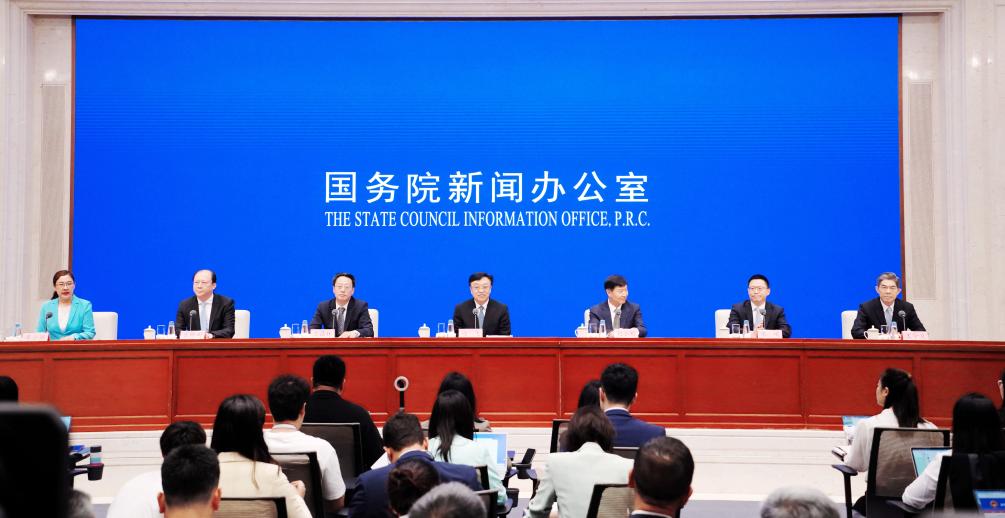
封关运作进入倒计时 海南自贸港加速提升国际竞争力
Sou Hu Cai Jing· 2025-08-01 11:51
Core Points - The Hainan Free Trade Port will officially start its full island closure operation on December 18, 2023, marking a significant historical milestone in China's reform and opening-up process [1] - The closure operation is expected to enhance Hainan's international competitiveness and facilitate smoother connections with global markets [1][2] - The new policies will implement a "one line open, two lines control, and island-wide freedom" approach, allowing for greater trade liberalization and facilitation [2] Policy Changes - The number of zero-tariff import items will increase from approximately 1,900 to about 6,600, raising the proportion of zero-tariff items from 21% to 74% [2] - The new negative list management for zero-tariff goods will replace the previous positive list, allowing for more comprehensive trade facilitation [2] - The introduction of a comprehensive list of prohibited and restricted import/export goods will enhance trade transparency and compliance with international standards [5] Economic Impact - Hainan's actual foreign investment reached 102.5 billion yuan over the past five years, with an annual growth rate of 14.6%, indicating strong global capital attraction [7] - The tourism sector, particularly duty-free shopping, is expected to see increased attractiveness, with Hainan currently holding over 8% of the global duty-free market share [9] - The modern service industry, including aircraft maintenance, is expanding rapidly, with over 2,200 aircraft serviced since the establishment of a one-stop maintenance base [9][10] Industry Development - The four leading industries now account for 67% of Hainan's GDP, with marine production growing at an annual rate of 13.9% [10] - High-tech industries are emerging as a core competitive advantage for Hainan, focusing on areas like genetic resource protection and deep-sea equipment development [10] - The green technology transition in manufacturing, exemplified by a lithium hydroxide project, is expected to enhance global competitiveness and achieve an annual output value exceeding 2 billion yuan [10][11] Future Prospects - The Hainan Free Trade Port aims to attract global asset management institutions, enhancing the investment landscape for international investors [8] - The ongoing optimization of the business environment is expected to lower operational costs for foreign enterprises, facilitating better market engagement [8] - Hainan's strategic location along the Maritime Silk Road positions it as a key player in global resource allocation and trade [8]
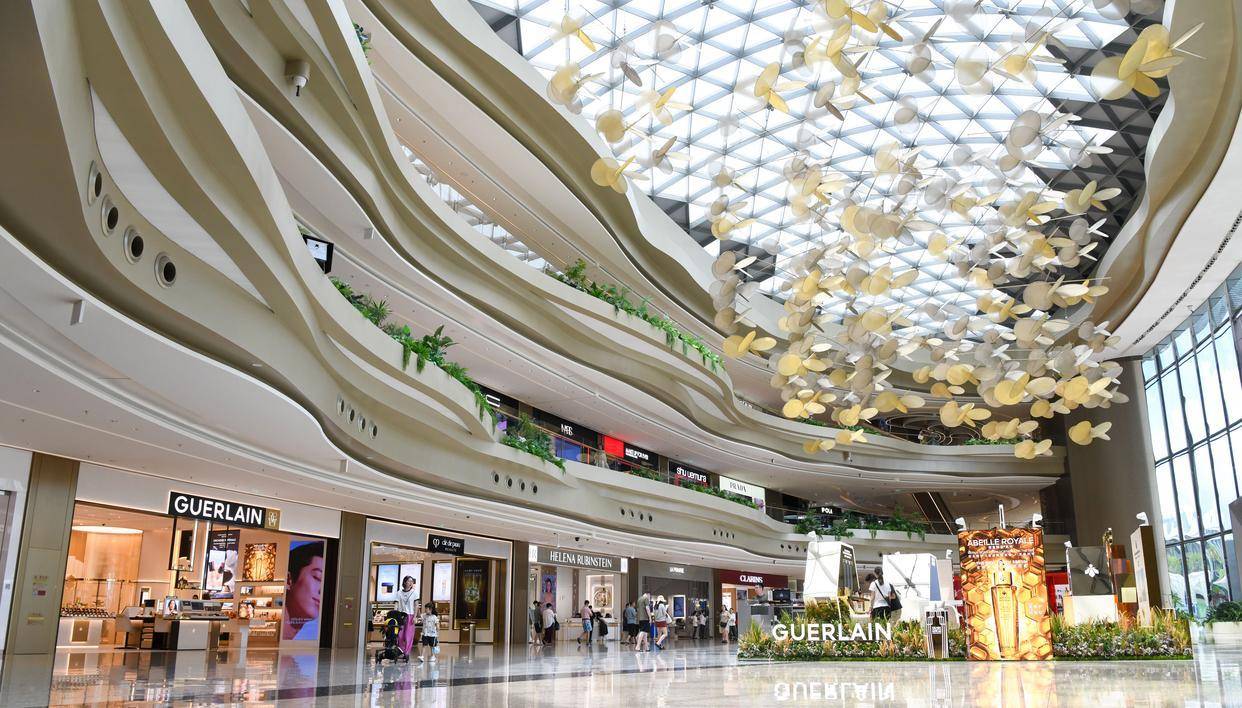
海口海关:海南自贸港封关后在“二线”仅对三类货物实行管理
Zhong Guo Xin Wen Wang· 2025-07-30 21:20
Group 1 - The core viewpoint is that after the closure operation of Hainan Free Trade Port, customs will implement a management system that features "open on the first line, controlled on the second line, and free within the island" [1] - Customs will manage three categories of goods at the "second line" port: "zero tariff" goods, goods enjoying processing value-added policies, and goods with relaxed trade management measures [1] - The customs will set up customs supervision channels and non-customs supervision channels at the "second line port" to facilitate trade between Hainan and the mainland [1] Group 2 - The customs will implement a convenient clearance model called "direct release" for imported "zero tariff" goods and bonded goods, which simplifies the declaration process significantly [2] - The "direct release" policy was first piloted in June 2020 and has been gradually expanded to various bonded areas, allowing for a reduction in the number of declaration items from 105 to 33 for eligible goods [2] - Goods eligible for "direct release" are generally low-risk as they do not involve inspection, certification, or taxation, leading to faster clearance times [2]