
党的创新理论

Search documents
同步推进强引领 铸魂育人启新程
Si Chuan Ri Bao· 2025-12-14 21:53
Core Viewpoint - The article highlights the efforts of Xihua University’s Marxism College in promoting ideological education and integrating it with practical applications, emphasizing the importance of theoretical training and innovative teaching methods to enhance the quality of ideological courses [2][3][10] Group 1: Theoretical Empowerment - The college prioritizes the theoretical training of ideological course teachers, establishing a multi-layered learning system to enhance understanding of Xi Jinping's Thought on Socialism with Chinese Characteristics for a New Era [4] - Activities such as reading classic texts and sharing insights are organized to deepen teachers' understanding of contemporary theoretical issues [4][5] - The college has produced over 100 theoretical interpretation articles published in mainstream media, reflecting its commitment to research and dissemination of innovative theories [5] Group 2: Faculty Development - The college focuses on improving the quality of ideological courses by building a strong teaching team characterized by political integrity and innovative thinking [6] - A training program for ideological course teachers has been implemented, resulting in nearly 100 teachers participating in national training sessions over the past three years [6] - Young teachers have received mentorship and have won 12 awards in various teaching competitions, showcasing the effectiveness of the training initiatives [6] Group 3: Practical Engagement - The college integrates classroom learning with social practice, establishing over 10 practical teaching bases in collaboration with various cultural and historical sites [8] - Students have participated in numerous social practice teams, producing high-quality research reports and over 5,000 micro-video projects related to their experiences [8][9] - The college encourages diverse community engagement activities, with over 60 sessions of theoretical presentations conducted by students in various settings [9] Group 4: Future Directions - Xihua University’s Marxism College aims to continue innovating and deepening the integration of ideological education with practical applications, enhancing the relevance and appeal of ideological courses [10]


聚焦成体特色 着力构建“大思政课”育人新格局
Si Chuan Ri Bao· 2025-12-14 21:53
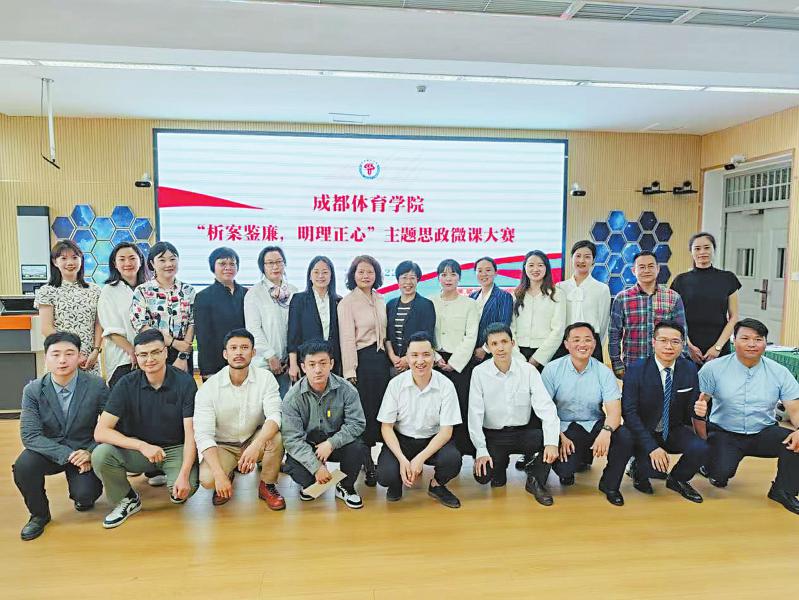
□马院宣(图片由成都体育学院马克思主义学院提供) 成都体育学院马克思主义学院坚持思政课建设与党的创新理论武装同步推进,紧紧抓住思政课程和课程思政同向 同行的主线,积极推动思政课堂与"以体育人"有效融合,狠抓特色思政课,探索课程教学和社会实践"走出去、请 进来"两手共建的育人路径,着力构建具有鲜明成体特色的"大思政课"育人格局。 构建全环节的体育特色"大思政"课程体系 用习近平新时代中国特色社会主义思想铸魂育人,及时有效开展"三进"工作,推动党的创新理论及时、准确、高 效地进教材、进课堂、进学生头脑,是坚持思政课建设与党的创新理论武装同步推进的题中应有之义。近年来, 学院充分把握理论发展和教材体系中"变与不变"的规律,确保思想政治理论课课程体系兼具经典性和前沿性。先 后增设"习近平新时代中国特色社会主义思想概论""中华民族共同体概论""《资本论》选读"及"四史"等课程,着 力落实党的创新理论进入思政课堂,帮助学生全面系统地理解习近平新时代中国特色社会主义思想的核心要义, 帮助学生以大历史观的视野把握世界历史的发展脉络及规律。与此同时,学院有机融合体育院校校本特色,开 设"体育美育""奥林匹克文化与精神""马克思 ...
“青年讲师团”培训班暨首场示范宣讲举行
Liao Ning Ri Bao· 2025-12-13 01:34
12月9日至12日,2025年辽宁"青年讲师团"培训班(辽宁共青团宣讲骨干培训班)暨首场示范宣讲 在沈阳举行。 本次培训旨在用党的创新理论凝聚青年、引领青年,设置理论学习、示范宣讲、实践演练等课程, 提升参训学员对党的创新理论的理解与把握。今年以来,团省委从各领域、各行业推荐的326名青年讲 师中,遴选出100名优秀骨干,组建了一支理想信念坚定、宣讲本领突出的辽宁"青年讲师团"宣讲队 伍。 "青年讲师团"将赴全省14个市开展"奋进'十五五' 青春挺膺担当"党的二十届四中全会精神示范宣 讲,推动理论宣讲与中心工作深度融合,在解疑释惑中回应青年关切。同时,辽宁"青年讲师团"将发挥 示范作用,逐级带动全省各级"青年讲师团"成员深入一线开展基层宣讲,引导广大青年深学细悟全会精 神,为奋力谱写中国式现代化辽宁篇章贡献青春力量。 ...
西南大学学生在实践中“墩苗壮骨”
Zhong Guo Qing Nian Bao· 2025-11-27 22:59
在西南大学校史馆里,一个装着泥土的小红布包静静陈列。1981年,70岁的中国生态农业奠基人叶谦 吉,把西南大学共青团花园的泥土分装进6个布包,送给他最后一届研究生,附信里写道:"祖国母校共 青团花园中百花树下的泥土,恋之爱之,勿违、勿失。" 这包带着谆谆教诲的泥土,成为西南大学最珍贵的精神信物。时至今日,西南大学在育人实践中始终扎 根泥土、拥抱大地。一代代西南大学学子在志愿服务、农耕实践、理论传播中"墩苗壮骨",在希望的田 野中积蓄青春之力。 "破土、扶苗、栽种、浇水,在这些劳动中的真实互动,让'团结的种子'生根发芽。"张婉莹说,她所在 的团支部有多名转专业的同学,大家通过一起劳动融合成一个新集体。 西南大学党委书记张卫国表示,学校农业教育底蕴深厚,走出了袁隆平、吴明珠等农科巨匠,一代又一 代西南大学人毕生服务"三农",崇尚劳动、躬身实践已然成为血脉中不变的基因。学校通过举办农耕劳 动实践教育类活动,将高校智力资源与乡村发展需求结合,力求为青年学生搭建服务社会的实践平台。 "以劳树德、以劳增智、以劳强体、以劳育美",西南大学以农耕、园艺、食育、科普四大模块构建沉浸 式实践育人场景。西南大学每年组织近万名学生到 ...
重视学习 善于学习
Zhong Yang Ji Wei Guo Jia Jian Wei Wang Zhan· 2025-11-25 00:33
Group 1 - The core viewpoint emphasizes the importance of continuous learning for the Communist Party of China (CPC) to maintain its vitality and effectiveness in governance [3][4][9] - The CPC has historically prioritized learning as a means to enhance its capabilities and adapt to changing circumstances, which is seen as essential for its success [4][6] - Recent initiatives have focused on integrating learning into the party's operational framework, ensuring that theoretical knowledge translates into practical applications [10][11] Group 2 - The CPC's commitment to learning is reflected in various educational campaigns and programs aimed at reinforcing party discipline and ideological coherence among its members [5][9] - Continuous learning is viewed as a necessary response to contemporary challenges, enabling the CPC to remain competitive and effective in governance [6][8] - The establishment of structured learning mechanisms and the promotion of a culture of learning within the party are critical for fostering a robust cadre of leaders [11]
“喜欢青年”的上海激活城市“年轻力”
Zhong Guo Qing Nian Bao· 2025-11-17 23:07
Core Points - Shanghai has implemented various youth-oriented policies to support entrepreneurship and community engagement, fostering a sense of belonging among young people [1][2] - The "Starfire" volunteer service team at Fudan University plays a significant role in promoting Marxist theory and engaging with the community through innovative storytelling [2][3] - The "Story Store" initiative in Changning District serves as a creative space for young entrepreneurs, showcasing local brands and facilitating community interaction [4][5] - The "24-hour Young Power Unit" in Zhangjiang Science City focuses on providing a balanced lifestyle for youth, integrating work, study, and social activities [6][7] - The "Rider-Friendly Community" model by Meituan enhances the working environment for delivery riders, promoting a supportive community [10] - The Huazhu Youchao community in Minhang District offers affordable housing and various community services, significantly improving living conditions for young workers [11][12] Group 1 - Shanghai has created a vibrant community for youth entrepreneurship and engagement through various supportive policies [1][2] - The "Starfire" service team enhances youth understanding of Marxist theory and engages with diverse audiences [2][3] - The "Story Store" initiative promotes local entrepreneurship and community storytelling [4][5] Group 2 - The "24-hour Young Power Unit" in Zhangjiang Science City provides comprehensive support for youth living and working [6][7] - Meituan's "Rider-Friendly Community" model improves the working conditions for delivery riders across the nation [10] - The Huazhu Youchao community offers affordable housing and essential services, fostering a sense of belonging among young residents [11][12]
国家能源局举办深入学习领会党的二十届四中全会精神专题培训班
国家能源局· 2025-11-15 02:30
Group 1 - The training program was organized by the National Energy Administration and Tsinghua University to deepen the understanding of the spirit of the 20th Central Committee's Fourth Plenary Session among party officials [2][3] - Experts from the Central Party School and Tsinghua University provided lectures focusing on the importance of implementing the spirit of the plenary session in all aspects of energy work [3] - The training emphasized the significance of the "Two Establishments" and aimed to enhance the "Four Consciousnesses," strengthen the "Four Self-confidences," and ensure the "Two Maintenances" among party members [3][4] Group 2 - Participants expressed that the training served as a profound spiritual cleansing and professional political training, reinforcing their commitment to the new energy system and energy power construction [4] - The training encouraged participants to integrate the party's innovative theories with their business work, promoting a deep fusion of party building and business operations [4] - There was a focus on high standards and service awareness, aiming to make officials more approachable and supportive to their colleagues [4]
红领巾巡讲团为孩子们培育精神底色
Zhong Guo Qing Nian Bao· 2025-11-14 21:35
Core Points - The article discusses the immersive learning experience of the "National Red Scarf Lecture Group" members, focusing on enhancing their ability to convey the Party's innovative theories to young audiences [1][2] - The training program includes various teaching methods and emphasizes the importance of storytelling in engaging children with historical and political content [5][6] Group 1: Training and Learning Experience - The training program consists of specialized lectures, on-site teaching, experiential learning, interviews, and demonstration lectures, with participants grouped by their professional backgrounds [2][4] - Participants are tasked with creating a 20-minute lesson plan based on collective preparation, which will be tested through practical presentations to local youth [2][5] - The program aims to equip members with the skills to effectively communicate the Party's theories and historical narratives to children [1][3] Group 2: Participants' Background and Motivation - Members of the training group come from various sectors, including education, law enforcement, and environmental protection, highlighting a diverse representation [4][5] - Participants express a strong commitment to their roles, with many feeling the pressure to perform well in their presentations, indicating the significance of their responsibilities [2][5] - The training encourages participants to rethink how to relate national policies and historical events to the younger generation, fostering a deeper understanding of their relevance [3][9] Group 3: Practical Application and Impact - The program includes hands-on experiences, such as cooking traditional meals and reenacting historical events, to instill a sense of revolutionary spirit among participants [8] - Participants are encouraged to transform complex political concepts into relatable stories for children, emphasizing the importance of making history accessible and engaging [5][6] - The initiative aligns with the Party's goals to enhance the ideological education of youth and promote cultural confidence through active participation [9][10]
陈希在中央党校(国家行政学院)2025年秋季学期第二批进修班开学典礼上强调 深入学习领会习近平总书记关于思想建党、理论强党的重要论述 自觉做党的创新理论的笃信笃行者
Xin Hua She· 2025-11-14 08:42
Core Points - The Central Party School (National Academy of Governance) held the opening ceremony for the second batch of training classes for the autumn semester of 2025, emphasizing the importance of Xi Jinping's thoughts on socialism with Chinese characteristics as a guiding principle [1] - The speech highlighted the need to deeply study and implement the spirit of the 20th National Congress of the Communist Party of China, focusing on the significance of ideological construction and theoretical strength [1] - The importance of unifying thoughts, will, and actions through the Party's innovative theories to support economic and social development was stressed [1] Summary by Sections - **Leadership and Ideological Guidance** - The president of the Central Party School emphasized the need for leaders to firmly support the "two establishments" and "two safeguards" [1] - The speech provided a scientific guide for strengthening the Party through revolutionary forging [1] - **Training and Development** - Cadres from various institutions, including Pudong, Jinggangshan, and Yan'an, participated in the opening ceremony via video conferencing [2]
海南省“理响自贸港 共谱新篇章”基层理论宣讲擂台赛决赛举
Hai Nan Ri Bao· 2025-11-14 03:17
Core Viewpoint - The event "Rational Voice of Free Trade Port, Co-writing a New Chapter" is a theoretical presentation competition aimed at promoting the Party's innovative theories and enhancing public understanding and engagement in Hainan's development [2][3]. Group 1: Event Overview - The final competition took place on November 13, 2023, in Haikou, featuring 14 teams from various sectors across Hainan [2]. - The competition began in March 2023, attracting participation from a wide range of individuals, including party members, enterprise employees, students, retirees, and enthusiasts [2]. - The event utilized engaging and relatable presentation styles to convey complex theories, making them accessible to the audience [2]. Group 2: Themes and Content - Presentations focused on key themes such as the high-standard construction of Hainan Free Trade Port, the operation of the island's customs closure, cultural heritage, social customs reform, ecological civilization, and improvements in public welfare [2]. - Participants used real-life examples and innovative expressions to transform abstract theories into practical stories, enhancing the audience's understanding [2]. Group 3: Future Implications - The Provincial Propaganda Department aims to leverage this competition to inspire party members and the public to strengthen their ideals and actively contribute to Hainan's reform and opening-up efforts [3]. - There is a focus on accurately interpreting the policies related to the island's customs closure operations, promoting a confident and proactive spirit in advancing Hainan's modernization [3].