
因地制宜

Search documents
中央经济工作会议上的这个细节,蕴含深意
Xin Hua Wang· 2025-12-16 01:38
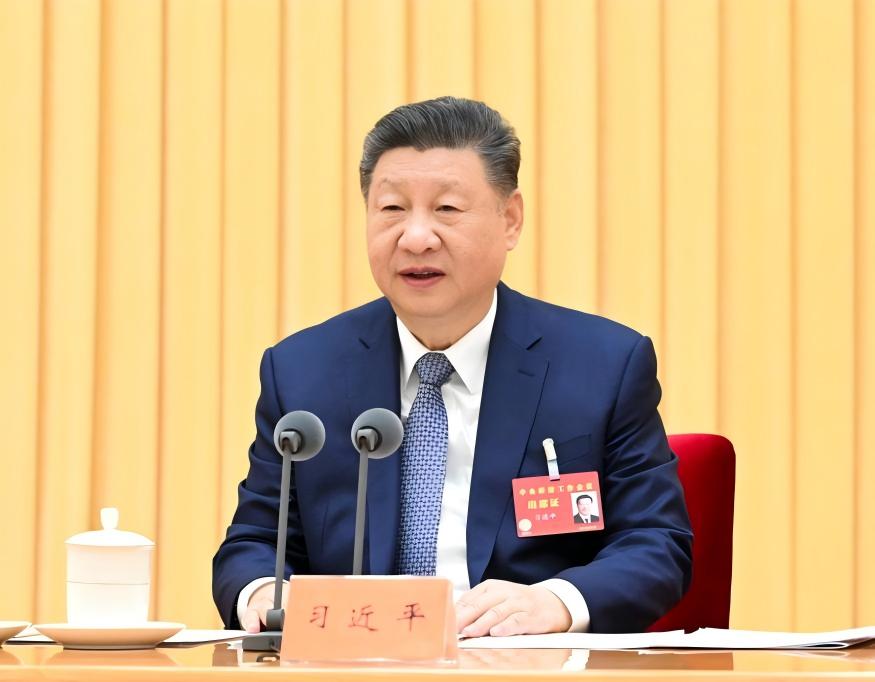
2025年12月10日至11日,中央经济工作会议在北京举行。中共中央总书记、国家主席、中央军委主席习近平出席会议并发 表重要讲话。新华社记者 燕雁 摄 【学习进行时】新华社近日播发2025年中央经济工作会议侧记,稿件记录下这样一个细节: "这次会议上,习近平总书记围绕发展新质生产力、生态环保、农村改厕等,进一步阐明因地制宜的重要性。 '因地制宜,本质就是实事求是。'总书记强调,落实中需要结合实际、因地制宜,但不能自行其是、搞本位主义。" 2018年,习近平总书记在深入推动长江经济带发展座谈会上一连提出几个问题,包括沿江三大城市群在各自发展过程中能 不能结合所在的区位条件、资源禀赋、经济基础,放在长江经济带高质量发展"一盘棋"中研究提出差异化协同发展的新目标新 举措?各大中小城市在明确自我发展定位和方向时能不能立足整个城市群的发展定位和方向,找到自己错位发展的重点方向, 解决好同质化发展的问题? 习近平总书记在中央经济工作会议上强调"结合实际、因地制宜,但不能自行其是、搞本位主义",着眼的既是明年经济工 作,也是"十五五"全局,是一以贯之的。 2025年12月10日至11日,中央经济工作会议在北京举行。中共中央 ...

学习进行时丨中央经济工作会议上的这个细节,蕴含深意
Xin Hua Wang· 2025-12-15 23:39
2025年12月10日至11日,中央经济工作会议在北京举行。中共中央总书记、国家主席、中央军委主席习近平出席会议并发表重 要讲话。新华社记者燕雁 摄 【学习进行时】新华社近日播发2025年中央经济工作会议侧记,稿件记录下这样一个细节: "这次会议上,习近平总书记围绕发展新质生产力、生态环保、农村改厕等,进一步阐明因地制宜的重要性。 '因地制宜,本质就是实事求是。'总书记强调,落实中需要结合实际、因地制宜,但不能自行其是、搞本位主义。" 因地制宜,就是根据不同地区的具体情况制定相应的妥善办法;实事求是,就是坚持一切从实际出发,理论联系实际,在实践 中检验真理和发展真理。强调因地制宜的本质是实事求是,凸显了落实党中央决策部署必须始终坚持的正确态度和科学方法。 习近平总书记在中央经济工作会议上强调"结合实际、因地制宜,但不能自行其是、搞本位主义",着眼的既是明年经济工作, 也是"十五五"全局,是一以贯之的。 2025年12月10日至11日,中央经济工作会议在北京举行。中共中央总书记、国家主席、中央军委主席习近平出席会议并发表重 要讲话。李强、赵乐际、王沪宁、蔡奇、丁薛祥、李希出席会议。新华社记者谢环驰 摄 会议强调 ...

习近平:“因地制宜,本质是实事求是”
Ren Min Ri Bao· 2025-12-15 06:08
"因地制宜,本质是实事求是" 时间:12月10日 日程:中央经济工作会议在京举行 "这些年我多次强调因地制宜的问题。"中央经济工作会议上,习近平总书记深刻解析做好经济工作的这 一方法论。 "党中央关于明年经济工作的思路、任务、政策,是经过充分论证、反复研究提出的。定了就要落 实。""落实中需要结合实际、因地制宜。" "十四五"即将收官,第二个百年奋斗目标新征程实现良好开局。迈向"十五五",战略机遇和风险挑战并 存、不确定难预料因素增多,发展形势错综复杂。 "形势越是复杂,越要加强党的领导,形成统一意志和强大合力。"围绕如何"加强党对经济工作的全面 领导",习近平总书记在会上条分缕析、语重心长,突出强调的关键之一就是"因地制宜"。 微镜头·习近平总书记在中央经济工作会议上 "生态环保要因地制宜。" 治理生态退化突出问题,要"宜林则林、宜草则草、宜沙则沙、宜荒则荒";保护利用水资源,要"以水 定城、以水定地、以水定人、以水定产"。提起这些具体的方法,总书记总结道,"人类发展就是一个与 自然共生的过程,脱离实际蛮干是行不通的。" "农村改厕也要因地制宜。" 习近平总书记对民生小事洞察深入:"南北差异那么大,改厕怎么 ...

“因地制宜,本质是实事求是”
Ren Min Ri Bao· 2025-12-13 22:01
时间:12月10日 日程:中央经济工作会议在京举行 "这些年我多次强调因地制宜的问题。"中央经济工作会议上,习近平总书记深刻解析做好经济工作的这 一方法论。 "党中央关于明年经济工作的思路、任务、政策,是经过充分论证、反复研究提出的。定了就要落 实。""落实中需要结合实际、因地制宜。" "十四五"即将收官,第二个百年奋斗目标新征程实现良好开局。迈向"十五五",战略机遇和风险挑战并 存、不确定难预料因素增多,发展形势错综复杂。 "形势越是复杂,越要加强党的领导,形成统一意志和强大合力。"围绕如何"加强党对经济工作的全面 领导",习近平总书记在会上条分缕析、语重心长,突出强调的关键之一就是"因地制宜"。 "发展新质生产力要因地制宜。" 习近平总书记对民生小事洞察深入:"南北差异那么大,改厕怎么能一个模式?大荒原上没几户人,也 搞标准厕所,有必要吗?不能把民心工程变成了'民怨工程'。" 字字千钧,发人深省。从强调"因地制宜发展区域特色产业""因地制宜推进城镇化进程",到提出城市规 划要"照纹劈柴",留住特有"基因",习近平总书记这些年一再强调"因地制宜"的重要性,叮嘱各地"'一 把钥匙开一把锁',不能刻舟求剑、拿一 ...
习言道|做好经济工作,中央强调重要方法论
Zhong Guo Xin Wen Wang· 2025-12-09 12:32
邯制 X E www.loung 0000000000 A MINITIAL CONSULTION CONSULTION CONTROLLETT 中國狗用網 中新网12月9日电 题:做好经济工作,中央强调重要方法论 2026年经济工作怎么看、怎么干?12月8日召开的中央政治局会议释放重要信息。 其中,会议强调了做好经济工作的重要方法论——树立和践行正确政绩观,因地制宜做好经济工作,实现高质量、可持续的发展。 我国幅员辽阔,有2800多个县级行政区、3.8万多个乡级行政区,各地资源禀赋、发展程度千差万别,实现高质量发展,必须尊重差异、尊重实际。 党的十八大以来,习近平总书记反复强调因地制宜的工作方法。 "有多少汤泡多少馍""入山问樵、入水问渔""一把钥匙开一把锁""切忌'捡进篮子都是菜'"……从总书记的这些形象比喻,即能读出因地制宜的精髓要义。 因地制宜,还彰显一域与全局的统筹兼顾。 抓改革、促发展,各地既要练就自身过硬的独唱功底,也要掌握不同声部的合唱韵律。 "十四五"时期,习近平总书记先后主持召开10场区域发展座谈会,各地如何找准定位各展所长,如何互动协同下好全国一盘棋,总书记谋篇布局、把脉定 向。 因地制 ...

中国减贫扶贫经验值得借鉴
Ren Min Ri Bao Hai Wai Ban· 2025-12-05 22:03
Core Insights - China's poverty alleviation strategy focuses on training and skill enhancement rather than one-time financial aid, which is crucial for sustainable livelihoods and serves as a valuable lesson for many developing countries [1] - The integration of industrial development, human capital construction, and grassroots governance in China's poverty alleviation efforts leads to quick and sustainable results [1] - The concept of "green development" is emphasized, indicating that poverty alleviation should not come at the expense of environmental degradation [1] Summary by Sections Poverty Alleviation Strategy - The approach to poverty alleviation in China is characterized by a systematic and targeted method, such as "precise poverty alleviation" and "tailored solutions" [1] - The example of Qingxi Village in Yiyang City, which leverages cultural influence to attract tourism and develop a unique rural cultural tourism industry, illustrates the potential for similar strategies in Malaysia and other countries [1] Future Cooperation Potential - There is significant potential for collaboration between Malaysia and China in poverty alleviation, particularly by adopting China's green concepts and technological pathways to promote sustainable rural economic development [2] - The emphasis on capacity building over mere financial aid is highlighted as a key success factor in China's approach, contrasting with the practices of many other countries that often lack follow-up and maintenance [2] Observations on Development - Increasing numbers of officials, scholars, and youth from developing countries are visiting China to witness its development firsthand, which is seen as more impactful than merely hearing about it [2]

专访丨中国减贫扶贫经验值得借鉴——访马来西亚新亚洲战略研究中心理事长许庆琦
Xin Hua She· 2025-12-01 03:11
Core Viewpoint - The experience of China's poverty alleviation and reduction is valuable for other developing countries, emphasizing sustainable development through skill enhancement rather than one-time financial aid [1][2]. Group 1: China's Poverty Alleviation Strategies - China's poverty alleviation approach combines industrial development, human capital construction, and grassroots governance, focusing on enhancing the sustainable development capabilities of the population [1]. - The implementation of "targeted poverty alleviation" and "localized strategies" in China is noted for its systematic and targeted nature, which can serve as a model for other countries [1]. Group 2: Lessons for Malaysia and Other Developing Countries - Malaysia can learn from China's experience in leveraging cultural influence to attract tourism and develop unique rural cultural and tourism industries, which can drive poverty alleviation [1]. - The concept of "green mountains and clear waters are as valuable as mountains of gold and silver" is highlighted as a crucial principle in poverty alleviation, stressing that development should not come at the expense of environmental degradation [2]. Group 3: Future Cooperation Potential - There is significant potential for cooperation between Malaysia and China in poverty alleviation, particularly in sustainable rural economic development through the adoption of green principles and technological pathways [2]. - The emphasis on capacity building over mere financial aid is a key takeaway, as many countries often fail to establish a feedback loop for resource allocation, which China effectively implements [2].
任正非不需要崇拜!老方说:你崇拜任正非,那你就不懂任正非!
Sou Hu Cai Jing· 2025-11-13 02:16
Core Insights - The admiration for Ren Zhengfei often stems from a misunderstanding of his true philosophy and approach to business [3][6] - Learning from Ren should focus on his principles and mindset rather than idolizing him as a figure [4][5] Group 1: Understanding Ren Zhengfei - Admiration for Ren Zhengfei can lead to a lack of true understanding of his methods and principles [3] - Ren emphasizes the importance of practical learning and contributing to society rather than seeking personal glory [4][9] - The notion of success is often misinterpreted; it is not about formulas but about hard work and dedication to one's craft [7][8] Group 2: Entrepreneurial Mindset - True entrepreneurs possess a clear vision and belief in their goals, which is essential for inspiring others [8] - The importance of humility in leadership is highlighted; successful leaders should not seek personal accolades but rather empower their teams [9] - The distinction between genuine vision and mere hype is crucial for sustainable success in business [8][9]

别再搞一哄而上的“人工智能+”
Jing Ji Ri Bao· 2025-09-20 22:11
Core Viewpoint - The recent issuance of the "Opinions on Deepening the Implementation of 'Artificial Intelligence+' Action" has sparked significant attention towards the development of the artificial intelligence industry, emphasizing the need to avoid disorderly competition and blind investment [1] Group 1: Industry Development Guidelines - The National Development and Reform Commission has highlighted the importance of avoiding chaotic competition and blind investment in the artificial intelligence sector, establishing a "red line" for healthy development [1] - The experience from other industries, such as new energy vehicles and photovoltaics, indicates that rapid influx of capital and talent without proper planning can lead to low-level repetitive construction and supply-demand imbalances, ultimately hindering sustainable development [1] - Sustainable development in the artificial intelligence sector requires a balance between capacity expansion and advancements in technology, application, and business model innovation [1] Group 2: Policy Recommendations - There is a need to enhance the precision of policy tools, shifting from a focus on quantitative indicators like investment amounts to a quality-oriented approach that aligns with actual development benefits [2] - Policies should be tailored to local conditions, taking into account regional characteristics, resource endowments, and industrial foundations to promote collaborative development with unique advantages [2] - The focus should be on addressing specific challenges and unlocking high-value scenarios for artificial intelligence applications, ensuring that "Artificial Intelligence+" serves as a strong engine for high-quality economic and social development [2]
城市之变 中国之进
Ren Min Ri Bao· 2025-08-04 04:08
Group 1 - The article emphasizes the importance of modern cities as a reflection of national progress and governance wisdom, highlighting the historical achievements in urban development since the 2015 Central Urban Work Conference and the new goals set for 2025 [1] - It discusses the transition of urbanization in China from rapid growth to stable development, focusing on high-quality urban development and the need for a shift from extensive expansion to improving existing urban quality [1][3] - The concept of "historical thinking" is presented as a crucial foundation for making scientific decisions and understanding current urban development strategies [2][5] Group 2 - The article outlines the challenges faced during rapid urbanization, such as aging infrastructure and the emergence of "big city diseases," and introduces the Xiong'an New Area as a model for optimized urban development [3] - It stresses the significance of preserving historical and cultural heritage in urban planning, using Fuzhou's Sanfang Qixiang as an example of successful cultural preservation [4] - The need for differentiated and localized urban development strategies is highlighted, advocating for unique competitive advantages based on regional characteristics to avoid homogenization [7][8] Group 3 - The article calls for a balanced approach to urban governance, emphasizing the integration of urban and rural development, and the importance of addressing public concerns in city management [10][11] - It discusses the coordination between industry and urban living, showcasing examples of successful industrial upgrades that improve living conditions while promoting economic growth [11] - The article concludes with the notion that effective urban governance requires meticulous attention to detail while maintaining a broad strategic vision [12]