
开放创新

Search documents
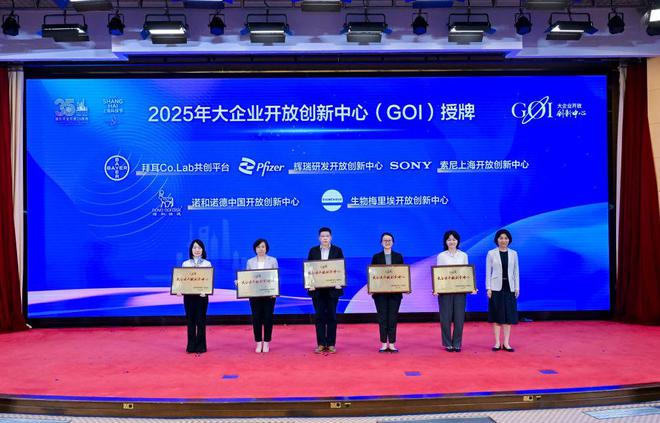
拜耳、辉瑞、索尼等5家跨国企业在浦东设立开放创新中心
Di Yi Cai Jing Zi Xun· 2025-05-20 02:08
Group 1 - Five international leading companies, including Bayer, Pfizer, Sony, Novo Nordisk, and Merieux, have joined the latest batch of the Pudong Open Innovation Center program (GOI) [1] - Since the launch of the GOI program in 2021, the number of GOI members has exceeded 100, empowering over 6,000 enterprises, and forming an "ecological matrix" [1] - The GOI initiative has facilitated technological breakthroughs for 3,600 companies and attracted investments exceeding 5.4 billion yuan, establishing Pudong as a global innovation hub [1] Group 2 - Seven major scientific facilities, including the Shanghai Advanced Research Institute of the Chinese Academy of Sciences, have responded to the national initiative for sharing major scientific infrastructure with enterprises [3] - The focus will be on optimizing open mechanisms and resource integration to enhance service efficiency, particularly in key industries like integrated circuits [3] - The dual drive of GOI ecosystem expansion and the opening of major scientific facilities aims to gather global innovation elements and deepen service for industrial innovation [3] Group 3 - Pudong is constructing a core area for an international science and technology innovation center, having gathered three national laboratories and 14 major scientific facilities [4] - Significant original innovations in frontier technologies, such as quantum computing, have been achieved, exemplified by projects like "Nine Chapters" and "Zhu Chongzhi" [4] - The region has seen strong development momentum in three leading industries, with over 5,000 high-tech enterprises and 51 companies listed on the Sci-Tech Innovation Board [4]


在开放创新中擦亮“投资中国”品牌(开放谈)
Ren Min Ri Bao Hai Wai Ban· 2025-05-19 21:22
Core Insights - The establishment of national economic and technological development zones (NEDZs) is a significant initiative for advancing reform and opening up in China, contributing to the construction of an open economy and regional coordinated development over the past 40 years [1][2]. Group 1: Role and Contributions of NEDZs - NEDZs have played a crucial role as pioneers in building an open economy, optimizing the business environment to attract foreign investment and promote international cooperation [1]. - They have evolved to focus on aligning with international high-standard trade rules and have formed replicable experiences in promoting trade and investment liberalization [1][2]. - NEDZs serve as demonstration zones for developing new productive forces tailored to local conditions, consistently leading in technological innovation and industrial upgrading [1]. Group 2: Achievements and Challenges - As of the end of 2023, cooperation between eastern and western NEDZs has increased, with 182 new collaborative projects established, enhancing regional openness and coordination [2]. - Despite positive developments, NEDZs face challenges such as the impact of global economic downturns and geopolitical tensions on export-oriented industries and foreign investment [2]. - Issues such as the need for transformation of labor-intensive industries, inadequate industrial support, and homogeneity in industrial layout are hindering sustainable development [2]. Group 3: Future Directions - NEDZs are encouraged to actively stimulate innovation and internal dynamics, participating in the construction of a new development pattern and promoting high-level opening up [3]. - There is a call for aligning with international standards in areas like data flow and intellectual property protection, and for exploring new operational models to enhance global competitiveness [3]. - Strategic planning is essential to avoid homogeneous competition and ensure effective coordination among various development zones, aiming for a new phase of development in NEDZs [3].

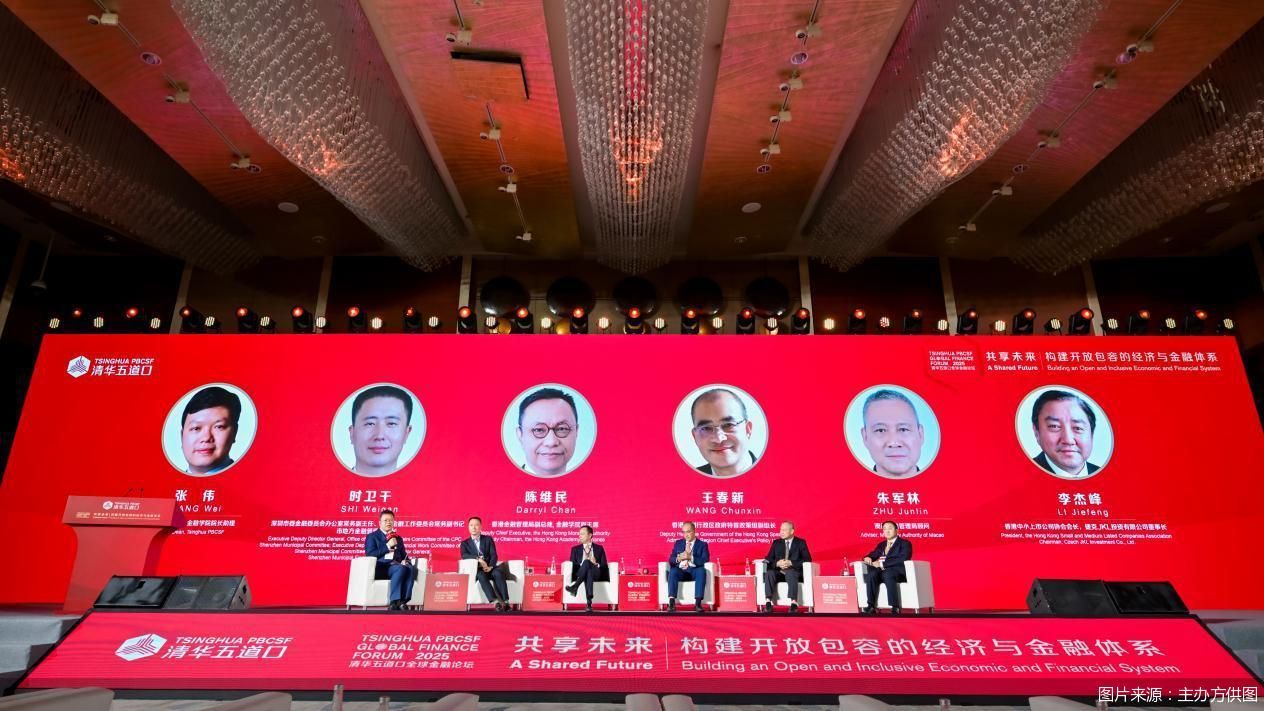
2025五道口金融论坛|粤港澳大湾区新机遇与挑战:以开放创新应对全球不确定性
Bei Jing Shang Bao· 2025-05-19 14:08
Core Viewpoint - The construction and development of the Guangdong-Hong Kong-Macao Greater Bay Area (GBA) has faced new opportunities and challenges after six years since the release of the development plan in 2019, particularly in the context of global uncertainties exacerbated by trade tensions initiated by the U.S. [1] Group 1: Guangdong's Role - Guangdong is actively promoting deep integration and cooperation within the GBA, establishing a solid foundation for collaborative development among the three regions [3] - The Shenzhen Financial Bureau has initiated four specialized teams to enhance financial cooperation with Hong Kong, focusing on areas such as enterprise overseas expansion and financial technology [3] - There is a strong emphasis on supporting GBA enterprises to list in Hong Kong and facilitating the return of qualified Hong Kong companies to the Shenzhen Stock Exchange [3] Group 2: Hong Kong's Contribution - Hong Kong plays an irreplaceable role in the GBA as an international financial center, focusing on four financial areas: innovative finance, green finance, livelihood finance, and Silk Road finance [5] - The introduction of the 18A listing rule has positioned Hong Kong as the second-largest biotech financing center globally, with potential for around 70,000 tech companies in the GBA to seek funding through this platform [5] - Hong Kong aims to enhance its role as a "super connector" for mainland enterprises seeking to expand internationally, leveraging its unique legal advantages and high-quality professional services [5][8] Group 3: Macao's Strategic Position - Macao is positioned as a "precise connector" targeting Portuguese-speaking countries, complementing Hong Kong's role [6][7] - The Macao Financial Management Bureau is focusing on enhancing connectivity with mainland and Hong Kong financial markets, including plans for a rapid payment system and digital currency integration [7] Group 4: Common Strategies Amid Uncertainty - Key strategies discussed by participants from Guangdong, Hong Kong, and Macao include open innovation to address global uncertainties and trade tensions [8] - Emphasis on strengthening the dual circulation hub function, enhancing domestic demand, and promoting deep integration with the mainland market [8] - The importance of leveraging the "One Country, Two Systems" advantage to enhance international cooperation and trade investment links, particularly with ASEAN and BRICS countries [8][9]
从上海车展“场”效应,看中国开放创新进行时
Huan Qiu Wang· 2025-04-28 03:24
Group 1: Event Overview - The 2025 Shanghai International Automobile Industry Exhibition attracted nearly 1,000 renowned automotive industry enterprises from 26 countries and regions, showcasing over 100 new car models [1][2][3] - The theme "Embrace Innovation, Win Together" highlights the global trend of open innovation and the attractiveness of the Chinese market to global enterprises [1][3] Group 2: Market Performance - In 2024, China's automobile production and sales reached 31.28 million and 31.43 million units respectively, maintaining its position as the world's largest market for the second consecutive year [2] - In the first quarter of 2025, cumulative automobile production and sales reached 7.561 million and 7.47 million units, representing year-on-year growth of 14.5% and 11.2% respectively [2] Group 3: Domestic Brands and Innovations - Domestic brands showcased luxury models at the exhibition, with vehicles like the Zeekr 9X and BYD's luxury model Yangwang U8L debuting, indicating a shift in focus from economy cars to high-end offerings [3] - Foreign and joint venture brands are also adapting to local market demands, with new high-end electric vehicle models being introduced [3][4] Group 4: Technological Advancements - The exhibition emphasized technological innovations, with companies like CATL unveiling sodium-ion batteries capable of operating at -40°C, and collaborations between Bosch and local tech firms for advanced driver assistance systems [4][5] - The automotive technology and supply chain exhibition area covered approximately 100,000 square meters, showcasing the importance of technology in transforming the automotive industry [5] Group 5: Investment Trends - Shanghai remains a favored investment destination for global automotive manufacturers, as evidenced by Toyota's announcement of a 14.6 billion yuan investment in a new electric vehicle and battery R&D facility [7][8] - The automotive supply chain is increasingly consolidating in China, with companies like BASF investing in local production capabilities to support the growing electric vehicle market [8][9] Group 6: Global Collaboration and Future Outlook - Global automakers are increasingly adopting Chinese technologies and collaborating with local suppliers for electric vehicle development [9] - The Chinese government is committed to creating a favorable environment for foreign investment, with plans to eliminate restrictions on foreign capital in the manufacturing sector by 2024 [9]
湖北省高水平开放创新研究院揭牌
news flash· 2025-04-28 01:36
Core Viewpoint - The establishment of the Hubei High-Level Open Innovation Research Institute is a strategic response by the provincial government to complex domestic and international changes, aimed at expanding openness and creating a new type of think tank for foreign trade [1] Group 1: Objectives and Goals - The institute aims to integrate five types of resources: industry, academia, research, government, and finance [1] - It is designed to create a first-class innovation platform that provides strong intellectual support and fosters a favorable innovation ecosystem [1] Group 2: Strategic Emphasis - The focus is on high-level planning, research, efficient transformation, and high-standard guarantees [1] - The initiative seeks to lead new intellectual supply through new openness demands, assisting enterprises in expanding market space and restructuring supply chains and industrial ecosystems with a global perspective [1]
挑大梁 江苏行∣417个重量级项目签约总投资超3400亿元,苏州重磅发布全球产业创新合作伙伴计划
Yang Zi Wan Bao Wang· 2025-04-27 06:42
Group 1 - The 2025 Suzhou Global Investment Conference opened with over 1,200 global business elites, including representatives from Fortune 500 companies and unicorn enterprises, highlighting Suzhou's position as a foreign investment hub [1][2] - The conference launched the Global Industrial Innovation Partnership Program, which includes 417 major projects with a total investment exceeding 340 billion yuan, aimed at enhancing collaboration and stability in global supply chains [1][2] - Suzhou's innovation capabilities are underscored by its ranking in various categories, such as the highest number of national technology-based SMEs and third in the number of Sci-Tech Innovation Board listed companies [2][3] Group 2 - Suzhou plans to maintain double-digit growth in innovation investment, supporting enterprises in increasing R&D efforts and establishing research institutions [3][4] - The city has established various funds, including a 100 billion yuan merger fund and a trillion yuan venture capital fund, to support innovation and provide financing based on a "Sci-Tech Innovation Index" [3][4] - Suzhou aims to enhance its open economy by improving investment and trade convenience, as well as expanding institutional openness in various sectors [3][5] Group 3 - The conference emphasized "open innovation" to attract global capital, showcasing Suzhou's advantages in its open economy and favorable business environment [5][6] - Suzhou has a dense concentration of foreign investment, with 14 national-level development zones and nearly 19,000 foreign enterprises, including 178 Fortune 500 companies [5][6] - The city is actively engaging in cross-border cooperation and has established international innovation platforms with countries like Singapore and Germany [6][7] Group 4 - Suzhou has implemented a series of facilitation measures for foreign nationals, enhancing the quality of public services and making the city more attractive for global talent [4][7] - The newly opened foreign national service center in Taicang provides comprehensive services to foreign residents, facilitating their integration into the local community [7][8] - The successful case of the German Berman Group establishing operations in Suzhou highlights the effectiveness of the city's investment promotion efforts and supportive business environment [8]