投资者适当性管理

Search documents
期货风险管理子公司暂停个股期权新开仓
Mei Ri Jing Ji Xin Wen· 2025-12-11 12:35
期货业场外衍生品市场迎来重要合规行动。 据《每日经济新闻》记者了解,近日,包括银河德睿资本在内的多家期货风险管理子公司已暂停新增个 股类场外期权业务。 期货协会要求年底自查 近日,一张关于银河德睿资本管理有限公司(以下简称银河德睿)发送给客户的通知在业内广泛流传。 该通知显示,这家期货风险管理子公司为落实交易者适当性管理要求,需开展专项核查,这期间将暂停 新增个股类场外期权业务,但平仓业务可继续进行。 公开资料显示,银河德睿是经中国期货业协会备案,由银河期货有限公司出资设立的期货公司风险管理 子公司,是市场仅有的7家符合开展个股场外衍生品业务要求的期货风险管理子公司之一。 就此事,《每日经济新闻》记者联系银河德睿工作人员,该工作人员表示并不清楚相关事项。不过,某 期货风险管理子公司资深人士向记者表示:"我们最近确实在进行合规检查,是否恢复新增业务还要等 通知。"另外,一位不愿具名的期货风险管理子公司的人士在回应中证实了新增业务的暂停:"确实有这 个事情,就是期货业协会要求年底自查,主要还是机构通道的事儿。" 也有上海某期货风险管理子公司相关业务人士坦言:"相关图片我没有看到,但据我了解,目前全行业 有资格开展 ...
建行等多家银行上调代销基金风险等级
Shen Zhen Shang Bao· 2025-12-07 22:39
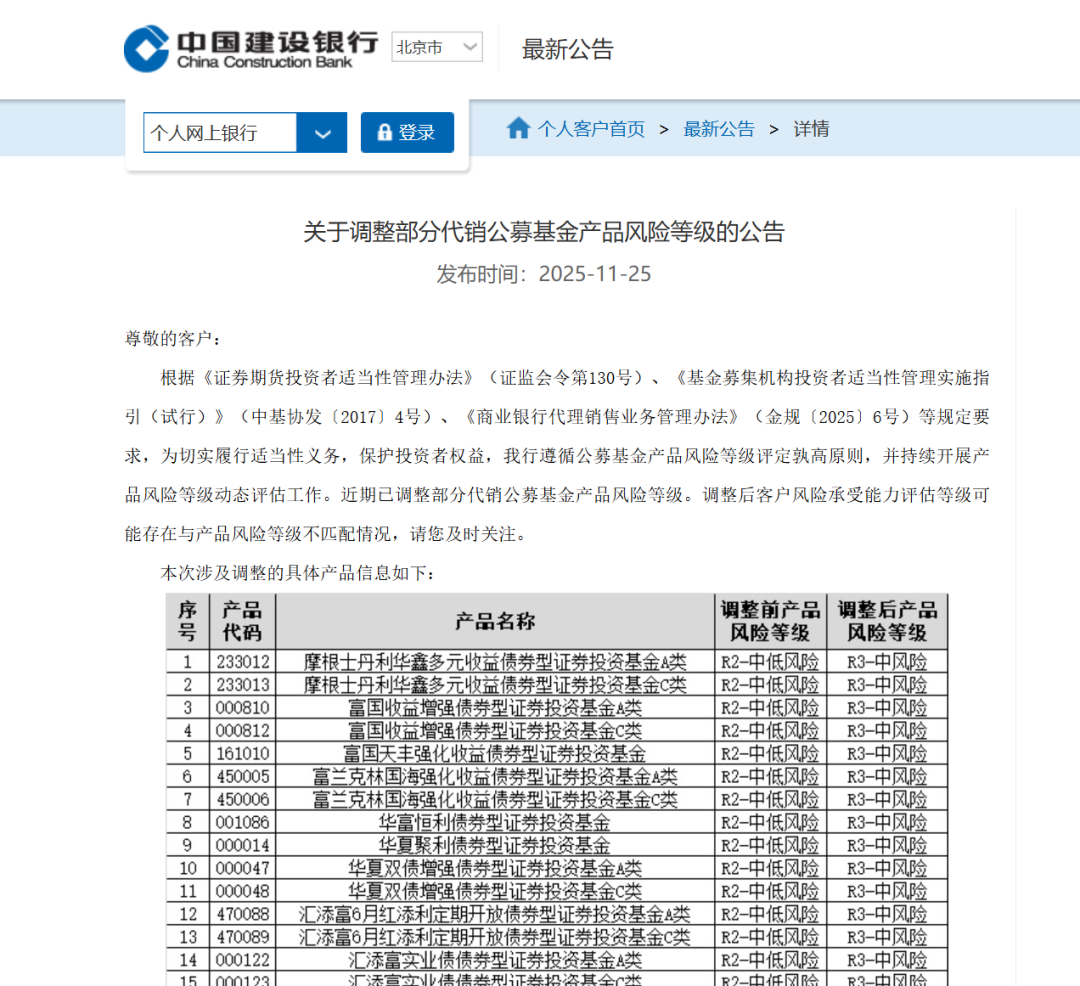
【深圳商报讯】(首席记者 谢惠茜)近期,包括建设银行、民生银行、邮储银行、中信银行在内的多 家银行纷纷上调部分代销公募基金产品风险等级。 在建设银行最新发布的《关于调整部分代销公募基金产品风险等级的公告》中表示,本次调整主要 是"根据《证券期货投资者适当性管理办法》(证监会令第130号)、《基金募集机构投资者适当性管理 实施指引(试行)》、《商业银行代理销售业务管理办法》等规定要求,为切实履行适当性义务,保护 投资者权益,我行遵循公募基金产品风险等级评定孰高原则,并持续开展产品风险等级动态评估工 作。" 具体来看,建设银行本次共调整87款公募基金产品,其中32款产品由R2(中低风险)调整至R3(中风 险);55款产品由R3(中风险)上调至R4(中高风险)。 除此之外,邮储银行、中信银行等银行也调整了部分代销基金的风险评级。尤其是中信银行,近期已是 年内第四次对代销产品风险评级进行调整。在此之前,今年5月9日、6月23日以及9月16日,该行均发布 过关于调整部分代销资产管理产品风险评级的相关公告。 "多家银行上调代销基金风险等级,是强化投资者适当性管理的主动行为,并不意味着公募基金市场整 体风险必然全面上升。上 ...



曲峰等:期货与风险管理子公司合规要点与实务建议解析
Sou Hu Cai Jing· 2025-12-07 12:46
Core Insights - The article emphasizes the importance of compliance in the operations of futures and risk management companies, highlighting the need for a dynamic compliance mechanism to navigate hidden compliance traps in business processes [3][5]. Compliance Key Points and Practical Recommendations 1. Key Compliance Nodes in Business Processes - Business entry must prevent internal cross-risk, ensuring risk isolation between futures companies and risk management companies as mandated by regulations [4]. - Recent cases reveal significant compliance failures, such as a brokerage firm failing to isolate customer information, leading to regulatory penalties [4][5]. 2. Contract Design: Substance Over Form in Rigid Payment Clauses - The Asset Management New Regulations prohibit any form of rigid payment clauses, with strict penalties for violations [6]. - Institutions must avoid ambiguous terms that imply guaranteed returns, as these may be deemed invalid in disputes [6]. 3. Margin Management: Building a Comprehensive Risk Control Loop - Margin management is critical for risk control, with recommendations for ensuring margin collection meets exchange standards and maintaining thorough records [7][8]. - Institutions should establish robust credit management systems and ensure that margin amounts are reasonable and aligned with contract risks [8][9]. 4. Investor Suitability Management Requirements - A dynamic customer assessment mechanism is essential, requiring ongoing evaluations of investors' risk tolerance [10][11]. - Strict product risk matching is necessary, prohibiting the sale of high-risk products to low-risk tolerance investors [12]. 5. Comprehensive and Intelligent Risk Control System - Institutions should develop a unified compliance data platform to standardize regulatory data collection and enhance real-time monitoring [15]. - Automated monitoring of key parameters and the implementation of algorithmic trading monitoring modules are recommended to improve compliance efficiency [16][17]. 6. Strengthening Data Security and Personal Information Protection - Institutions must classify and manage data according to its sensitivity, ensuring compliance with data protection laws [19][20]. - Long-term retention of business logs is necessary for regulatory audits and compliance verification [21]. 7. Cross-Border Business and Geopolitical Risk Prevention - The article discusses the increasing facilitation of foreign investor participation in China's futures market, while also highlighting the need for geopolitical risk management in cross-border contracts [25][26]. - Institutions are advised to include renegotiation mechanisms in contracts to address unforeseen geopolitical events [26]. Conclusion - The futures market is expected to develop with a focus on both compliance and innovation, necessitating futures companies to strengthen their compliance frameworks while seizing business opportunities [29].


股市高位震荡 银行上调近100只基金风险等级
2 1 Shi Ji Jing Ji Bao Dao· 2025-12-02 08:45
Core Viewpoint - Recent fluctuations in the stock market have led several banks to raise the risk levels of their distributed public funds, indicating a response to market volatility and regulatory requirements [1][2][3]. Group 1: Bank Actions - Multiple banks, including China Construction Bank and Minsheng Bank, have raised the risk levels of various public fund products, with some banks adjusting risk levels up to seven times this year [1][3]. - China Construction Bank announced an adjustment of 87 public fund products, with 32 moving from medium-low risk (R2) to medium risk (R3) and 55 from medium risk (R3) to medium-high risk (R4) [3]. - Minsheng Bank also raised the risk levels of eight funds from low to medium risk, marking its fourth adjustment in October alone [4]. Group 2: Market and Regulatory Context - Analysts suggest that the banks' actions are a result of a combination of product, market, and regulatory factors, particularly after a significant market rally that saw the Shanghai Composite Index exceed 4000 points [2][4]. - The adjustments are seen as a precautionary measure to protect investors from potential losses due to market volatility [2][4]. - Regulatory frameworks, such as the "Commercial Banks' Agency Sales Business Management Measures," emphasize the need for banks to independently assess and adjust risk ratings for the products they sell [5]. Group 3: Compliance and Regulatory Actions - Several banks have faced regulatory penalties for inadequate risk assessment and compliance failures in their fund sales operations, highlighting the importance of proper risk management practices [6][7]. - Regulatory bodies have issued corrective measures against banks like Zhejiang Chouzhou Bank and Huaxia Bank for failing to meet compliance standards in fund sales [6][7]. - The ongoing regulatory scrutiny is expected to lead to more frequent adjustments in risk ratings as banks strive to align with compliance requirements and protect investor interests [4][6].
多家银行上调代销基金产品风险等级 业内专家:或成常态化趋势
Sou Hu Cai Jing· 2025-12-01 11:39
Core Viewpoint - Several banks, including China Construction Bank, Minsheng Bank, Postal Savings Bank, and Citic Bank, have raised the risk levels of certain mutual fund products they distribute, reflecting a proactive approach to investor suitability management and compliance with regulatory requirements [1][2][3] Group 1: Risk Level Adjustments - China Construction Bank announced adjustments to 87 mutual fund products, with 32 products upgraded from R2 (low to medium risk) to R3 (medium risk) and 55 products from R3 to R4 (medium to high risk) [1] - Minsheng Bank also adjusted the risk ratings of 8 funds, moving them from lower risk to medium risk, emphasizing the priority of investor interests [1][2] - Citic Bank has made its fourth adjustment to risk ratings this year, indicating a trend of ongoing evaluations and adjustments in response to market conditions [2][3] Group 2: Regulatory Compliance and Market Conditions - The adjustments are primarily driven by regulatory compliance requirements, necessitating banks to dynamically assess and accurately disclose product risks [3] - The current market volatility, particularly in equity funds due to increased asset fluctuations and high concentration, has led to a more realistic reflection of risk characteristics through these adjustments [3] - The trend of banks adjusting risk ratings is expected to become a standard practice in the industry, aligning with the ongoing regulatory emphasis on investor suitability management [3] Group 3: Investor Guidance - Banks are encouraging investors to reassess their risk tolerance in light of the new risk ratings, providing options for redemption or conversion to more suitable products [2][3] - Investors are advised to verify their mutual fund holdings through various channels and make informed decisions based on their risk capacity [2]
银行上调代销公募基金风险等级 对投资者影响几何?
Nan Fang Du Shi Bao· 2025-11-27 23:14
Core Viewpoint - Recently, China Construction Bank announced an increase in the risk levels of 87 mutual fund products, following similar actions by Postal Savings Bank and Citic Bank. This move is seen as a response to regulatory requirements aimed at enhancing investor protection rather than an indication of an overall rise in market risk [2][4]. Summary by Sections Risk Level Adjustments - China Construction Bank adjusted the risk levels of 87 mutual fund products, with 32 moving from "R2—Medium-Low Risk" to "R3—Medium Risk" and 55 from "R3—Medium Risk" to "R4—Medium-High Risk" [3]. - Postal Savings Bank also made similar adjustments, changing the risk levels of 80 products on October 29, with 52 moving to "Medium-High Risk" and others adjusted accordingly. Another adjustment on November 6 affected 6 products [3]. - Citic Bank made adjustments to its asset management products in October, emphasizing compliance with regulatory requirements and the need for appropriate investor management [3]. Regulatory Compliance and Market Conditions - The adjustments are primarily driven by regulatory compliance pressures, the need to reflect the actual risk levels of certain funds, and to mitigate potential legal and reputational risks [5]. - Experts indicate that the changes focus on high-volatility products, particularly equity funds, and are a response to increased market fluctuations and asset valuation pressures [4][5]. Long-term Benefits for Investors - While investors may face limited choices in the short term, the long-term benefits include clearer risk warnings and more rational investment decisions, particularly for low-risk preference groups [6]. - The adjustments are expected to promote a shift in the wealth management industry from product selling to service selling, encouraging fund companies to enhance their research capabilities and fostering a healthier market ecosystem [6].


基金业加强投资者适当性管理
Jing Ji Ri Bao· 2025-11-27 21:44
《细则》明确限制风险测评频次,要求投资者在同一机构单日测评不超过2次,12个月内累计不超过8 次,并设定12个月的有效期,此举既可避免过度评估,又能确保时效性。此外,《细则》第十三条明 确,向65周岁以上普通投资者销售R4级及以上风险等级基金的,应当履行特别的注意义务,包括制定 更为审慎的销售流程,追加了解相关信息、强化风险提示、给予更多考虑时间、增加回访比例和频次 等。 "《细则》为老年投资者构筑了坚实的保护屏障,能有效减少误导销售、冲动买入和欺诈风险,保护养 老金与积蓄。"东源投资首席分析师刘祥东认为,改善产品匹配将减少高风险产品向承受力低群体流 入,促使发行、销售方提供更适宜的稳健产品,也将提升老年人长期理财能力与信心。 科学量化产品风险。《细则》要求基金管理人、基金销售机构结合股票仓位、基金净值历史波动率、最 大回撤等,通过定量和定性分析相结合的方法综合评定基金风险等级,并进行定期复核及动态调整。 近几年,直播等新型基金销售方式兴起,但也出现了风险提示碎片化、营销话术误导等问题。《细则》 明确,通过直播形式宣传推介基金的,要在直播过程中加强风险提示;通过互联网、电子传真等非现场 方式销售基金的,要确保 ...
多家银行调整代销基金产品风险等级 强化投资者适当性管理
Jin Rong Shi Bao· 2025-11-27 03:30
Core Viewpoint - Several banks in China, including Minsheng Bank and China Construction Bank, have adjusted the risk ratings of certain publicly offered mutual funds to enhance investor protection and comply with regulatory requirements [1][2][3]. Group 1: Risk Rating Adjustments - Minsheng Bank announced on November 18 that it would change the risk ratings of eight mutual fund products from low risk to medium risk, effective November 19 [1]. - China Construction Bank has adjusted the risk ratings of 87 mutual fund products, with 32 products moving from "R2 - Medium-Low Risk" to "R3 - Medium Risk" and 55 products from "R3 - Medium Risk" to "R4 - Medium-High Risk" [1][2]. - Other banks, such as Postal Savings Bank and Citic Bank, have also made similar adjustments, with Postal Savings Bank raising the risk ratings of 80 mutual fund products and Citic Bank adjusting 17 asset management products [2][3]. Group 2: Regulatory Compliance - The adjustments are based on regulatory requirements, including the "Measures for the Management of Investor Suitability in Securities and Futures" and the "Implementation Guidelines for Investor Suitability Management by Fund Raising Institutions" [2]. - Banks are required to adhere to the principle of "higher risk rating" for similar products and must continuously evaluate product risk ratings in response to market and policy changes [3]. Group 3: Market Considerations - The adjustments reflect banks' responses to current market volatility, with increased net asset value fluctuations and liquidity risks in certain equity funds due to concentrated holdings [3]. - The changes are seen as proactive measures to enhance investor suitability management and do not indicate a general increase in risk across the mutual fund market [4].
多家银行调整代销基金产品风险等级
Jin Rong Shi Bao· 2025-11-27 02:22
Core Viewpoint - Several banks in China, including Minsheng Bank and China Construction Bank, have recently adjusted the risk ratings of certain publicly offered mutual funds, reflecting a broader industry trend towards stricter investor suitability management and compliance with regulatory requirements [1][2][3] Group 1: Risk Rating Adjustments - Minsheng Bank announced on November 18 that it would adjust the risk ratings of eight mutual fund products from low risk to medium risk, effective November 19 [1] - China Construction Bank has adjusted the risk ratings of 87 mutual fund products, with 32 products moving from "R2 - Medium-Low Risk" to "R3 - Medium Risk" and 55 products from "R3 - Medium Risk" to "R4 - Medium-High Risk" [1][2] - Other banks, such as Postal Savings Bank and Citic Bank, have also made similar adjustments, with Postal Savings Bank raising the risk ratings of 80 mutual fund products and Citic Bank adjusting 17 asset management products [2][3] Group 2: Regulatory Compliance - The adjustments made by banks are primarily based on regulatory requirements, including the "Securities and Futures Investor Suitability Management Measures" and the "Commercial Bank Agency Sales Business Management Measures" [2] - Banks are required to adhere to the principle of "higher risk rating" for similar products and must continuously evaluate product risk ratings in response to market and policy changes [2][3] Group 3: Market Considerations - The increase in risk ratings is driven by current market volatility, with certain equity funds showing increased net asset value fluctuations and liquidity risks due to concentrated holdings [3] - The adjustments are seen as proactive measures by banks to enhance investor suitability management and do not necessarily indicate a general increase in risk across the mutual fund market [3]
建行、邮储等多家银行宣布:上调!
Jin Rong Shi Bao· 2025-11-26 07:33
Core Viewpoint - Several major state-owned and joint-stock banks have recently announced adjustments to the risk levels of certain publicly offered fund products they distribute, indicating a trend towards increased risk assessment in the banking sector [1][5]. Group 1: Adjustments by Banks - China Construction Bank (CCB) announced on November 25 that it has adjusted the risk levels of some publicly offered fund products to fulfill its suitability obligations and protect investor rights [1][5]. - The adjustments include a total of 87 products, with 32 products' risk levels raised from "R2 - Medium-Low Risk" to "R3 - Medium Risk," and 55 products raised from "R3 - Medium Risk" to "R4 - Medium-High Risk" [3][4]. Group 2: Regulatory Compliance - The adjustments made by CCB are based on regulatory requirements, including the "Securities and Futures Investor Suitability Management Measures" and other relevant guidelines [4][6]. - Other banks, such as Postal Savings Bank, Citic Bank, and Minsheng Bank, have also made similar adjustments to their fund risk ratings, indicating a broader industry trend [5][6]. Group 3: Market Considerations - The adjustments are driven by both regulatory compliance and current market volatility, with banks needing to accurately reflect product risks due to increased fluctuations in underlying assets [7]. - The trend of raising risk ratings is seen as a proactive measure by banks to enhance investor suitability management and does not necessarily indicate a universal increase in market risk for publicly offered funds [7].