持股过节

Search documents
A500ETF基金(512050)近5日吸金13.32亿元,机构称持股过节性价比较高,A500ETF基金一键布局A股核心资产
Mei Ri Jing Ji Xin Wen· 2025-09-29 01:48
Group 1 - The A-share market experienced a collective decline on September 26, with the Shanghai Composite Index down 0.65%, the Shenzhen Component down 1.76%, and the ChiNext Index down 2.6% [1] - The A500 ETF (512050), which tracks the CSI A500 Index, saw a slight pullback of 1.03% with a trading volume exceeding 5.4 billion yuan, ranking first among similar products [1] - The A500 ETF has seen a net inflow of funds for three consecutive trading days, accumulating 1.332 billion yuan in the past five days [1] Group 2 - The National Bureau of Statistics reported that from January to August, the total profit of industrial enterprises above designated size reached 46,929.7 billion yuan, a year-on-year increase of 0.9%, reversing the profit decline trend since May [1] - The profit growth in the equipment manufacturing industry was 7.2%, contributing to the recovery of industrial profits [1] - As the National Day holiday approaches, investors are considering whether to hold stocks, with CITIC Securities suggesting that pre-holiday liquidity often contracts due to emotional factors, but typically, the market experiences a "post-holiday rally" [1] Group 3 - The new generation core broad-based A500 ETF (512050) helps investors easily allocate to core A-share assets, covering all 35 sub-industries with a strategy that combines industry balance and leading company selection [2] - The A500 ETF is overweight in new productivity sectors such as AI, pharmaceuticals, and renewable energy compared to the CSI 300 Index, providing a natural "dumbbell" investment characteristic [2]
中信建投:为什么我们看好持股过节?
智通财经网· 2025-09-28 23:52
Group 1 - The report from CITIC Securities indicates that the liquidity contraction observed before the National Day holiday is primarily "emotional shrinkage" rather than a fundamental issue [1][2] - Historically, the A-share market shows a 60% probability of rising in the five trading days following the National Day holiday, particularly during bull markets where the gains tend to be more sustained [2] - Recent market focus has shifted towards domestic policies and structural economic conditions, with a noted lack of attention on US-China relations, which have shown signs of improvement since September [2][3] Group 2 - Following concentrated trading in the computing power sector, market funds are gradually shifting towards other low-growth sectors, maintaining a stable overall market sentiment [3] - The mid-term market is expected to continue a slow bull trend, with structural growth sectors becoming key investment opportunities [3] - Key sectors to watch for catalytic events include semiconductors, renewable energy, humanoid robots, innovative pharmaceuticals, and non-ferrous metals [3]

持股还是持币?节后市场行情可能怎么走?一线私募人士最新解读来了
Xin Lang Cai Jing· 2025-09-28 07:08
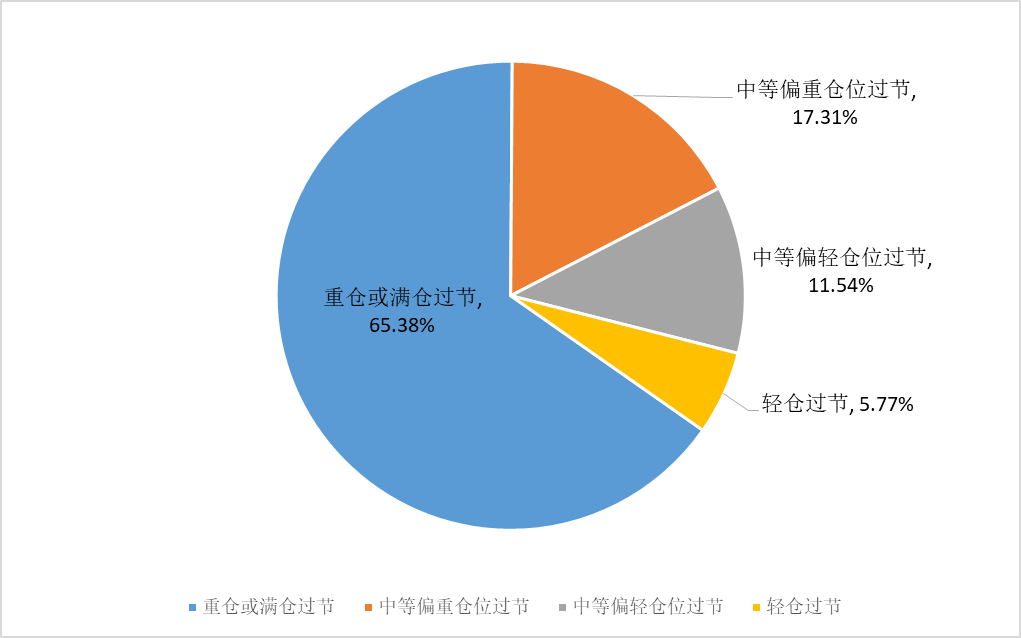
Core Viewpoint - The decision of whether to hold stocks or cash during the upcoming National Day holiday is a significant dilemma for many investors, with a consensus among private equity firms leaning towards maintaining high positions in the market [1][3]. Group 1: Investor Sentiment and Strategies - A survey indicates that 65.38% of private equity firms prefer to hold heavy or full positions (over 70% allocation) during the holiday, while 17.31% opt for a moderately heavy position (50% to 70%) due to perceived opportunities in individual stocks [1][3]. - Some investors, like the manager of Huahui Chuangfu, suggest maintaining a position of 5-7% to avoid missing out on potential gains while managing risks associated with market fluctuations [1][3]. - The general sentiment among private equity firms is to hold stocks over the holiday, with a focus on identifying quality stocks that align with policy encouragement and sustained capital inflow [6][9]. Group 2: Market Performance and Historical Data - Historical data shows that the probability of the Wind All A Index rising after the National Day holiday is over 70% for the first, fifth, and twentieth trading days, with an 80% probability for the tenth trading day [4][6]. - The index's performance varies yearly; for instance, in 2024, it surged by 7.14% on the first day post-holiday but fell by 1.57% over the next five days [4][6]. Group 3: Future Market Outlook - The market outlook remains optimistic, with 70.19% of private equity firms expressing a positive view on post-holiday performance, while 20.19% and 9.62% hold neutral and cautious views, respectively [9]. - Key investment themes identified include AI, semiconductors, humanoid robots, smart driving, and innovative pharmaceuticals, with a secondary focus on new energy and real estate sectors [9]. - Analysts predict a potential "second half" of the bull market, particularly in sectors like new energy and robotics, as the market may experience a recovery after a period of adjustment [8][9].

券商把脉长假持股策略 市场驱动逻辑或转向盈利验证
Zhong Guo Zheng Quan Bao· 2025-09-26 20:54
Core Viewpoint - Investors face a dilemma between holding stocks or cash as the National Day holiday approaches, with anxiety over missing out and fear of declines intertwining, making decision-making more challenging [1][2] Market Sentiment and Strategy - Historical trends indicate that before long holidays, there is a tendency for funds to reduce positions to avoid uncertainty, leading to potential index pressure [2] - If no major risk events occur during the holiday, funds may flow back into the market, boosting risk appetite and indices post-holiday [2] - Analysts suggest that active investors should consider holding stocks during the holiday, while conservative investors may focus on high-dividend or domestic consumption sectors to mitigate volatility [2][4] Liquidity and Market Dynamics - Current market uptrend is supported by liquidity and policy backing, with trading activity remaining high, particularly in financing transactions [3][4] - Analysts believe that the A-share market's upward trend is likely to continue, with a focus on sectors driven by liquidity such as AI, chips, and robotics for active investors [3] Investment Strategies - A "long-term base + short-term flexibility" investment model is gaining attention, aiming to balance steady long-term returns with short-term risk control [5] - Investors are encouraged to adopt a barbell strategy, combining low-valuation, high-cash-flow defensive assets with high-growth potential sectors [6] Economic Factors and Market Outlook - The recovery of the domestic economy is crucial for market performance, with external factors like U.S. monetary policy and geopolitical issues having indirect impacts [7][8] - The recent 25 basis point rate cut by the Federal Reserve may influence capital flows and affect A-share market dynamics, particularly in foreign-invested sectors [7] Risk Management - To address uncertainties, investors are advised to implement multi-layered hedging strategies and consider defensive assets like gold and high-dividend stocks [8] - Emphasis is placed on constructing portfolios centered around high-quality companies with strong competitive advantages and healthy financials to enhance resilience against market fluctuations [8]
持股过节,应验!
格兰投研· 2025-06-03 14:27
Core Viewpoint - The article discusses the recent performance of the stock market, particularly focusing on the rise of bank stocks and the implications of U.S. trade policies under Trump, highlighting the gathering opposition against him and the investment behavior in the banking sector [1][4][6]. Market Performance - On the first trading day of June, the market experienced a broad increase, with 3,390 stocks rising and an average price increase of 0.76%, although trading volume remained at 1.14 billion [2]. - The technical judgment for the Shanghai Composite Index remains focused on a target of 3,600 [3]. U.S. Trade Policies - A U.S. court ruling deemed Trump's tariff policies illegal, marking a significant moment for the opposition against him [4][5]. - This ruling signals a potential shift in political dynamics, as it highlights the growing discontent regarding Trump's policies, particularly as they affect various industries and consumer welfare [6][7]. Banking Sector Insights - Bank stocks have shown strong performance, particularly influenced by significant capital inflows from Hong Kong, with net purchases exceeding 23 billion HKD for major banks like CCB and BOC [8]. - The investment logic behind the rise of bank stocks is complex, as traditional views suggest that strong economic performance leads to better bank earnings, yet current economic conditions do not fully support this [9][10]. Investment Behavior - The surge in bank stocks is primarily driven by institutional investors, particularly insurance funds, which are attracted to the high dividend yields offered by banks [11][12]. - Insurance companies have launched significant investment products focused on stable, high-dividend blue-chip stocks, indicating a strategic shift towards long-term holdings in the banking sector [13]. - Index funds and public funds have also contributed to the rise, although public funds have historically underweighted bank stocks [14][15]. Market Outlook - Despite the recent gains, there are concerns about the sustainability of bank stock prices, as the dividend yield has decreased to just over 4%, making them less attractive compared to other sectors like liquor [16]. - The article warns that if market sentiment shifts, the concentrated investments in bank stocks could lead to a rapid decline in their prices, echoing past market behaviors [17].