指数增强策略

Search documents
追求长期稳健表现,兴证全球基金田大伟:打造指数增强策略“工业化”体系
Zhong Guo Zheng Quan Bao· 2025-10-20 00:40
Core Insights - The domestic index investment has seen significant growth, with investors increasingly seeking clear risk-return characteristics [1] - The company, Xingzheng Global Fund, has rapidly developed a diverse range of index-enhanced products, leveraging its expertise in quantitative investment [1] Group 1: Quantitative Investment Team Development - The quantitative research team has been established over the past two years, developing over 2,000 alpha factors and a modular quantitative management system [2] - The team operates in a collaborative environment that encourages sharing of results and strategies, enhancing overall productivity [2] - The focus is on achieving full automation in the quantitative system, ensuring stable operations and enhancing modularity and fault tolerance [2][3] Group 2: Alpha Factor Exploration - The core focus of the quantitative strategy is on the exploration of alpha factors, which are crucial for generating excess returns while closely tracking index characteristics [4] - The team employs a systematic approach to develop and optimize alpha factors, ensuring their effectiveness is tested over longer periods [4][5] - Continuous iteration and optimization of alpha factors are conducted to adapt to market changes and incorporate the latest machine learning models [4] Group 3: Product Line Expansion - The company has recognized the growth potential in index-enhanced funds, which currently represent only a fraction of the scale of equity ETFs [6] - Recent product launches include various index-enhanced funds, particularly in the Hong Kong market, where the company has developed proprietary risk models and factor libraries [7] - The company aims to build a comprehensive product line that includes various styles such as quality, value, and growth to meet diverse investor needs [8]
兴证全球基金田大伟: 打造指数增强策略“工业化”体系
Zhong Guo Zheng Quan Bao· 2025-10-19 20:16
Core Viewpoint - The domestic index investment has seen significant growth, with investors increasingly seeking clear risk-return characteristics. Xingzheng Global Fund is leveraging its expertise in index-enhanced investment to build a diverse range of products covering large-cap, mid-cap, and Hong Kong stocks [1]. Group 1: Development of Quantitative Investment Team - Since joining Xingzheng Global Fund over two years ago, the quantitative research team has developed over 2,000 alpha factors and established a modular quantitative management system, supported by ample GPU resources [2]. - The company fosters a collaborative environment where team members share results and strategies, enhancing the overall effectiveness of the quantitative models [2]. - The team has achieved a high level of automation in its quantitative system, from data cleaning to portfolio generation, aided by strong technical support from the IT department [3]. Group 2: Focus on Alpha Factor Exploration - The core focus of the quantitative strategy is on the exploration of alpha factors, which are crucial for generating excess returns while closely tracking index characteristics [4]. - The team employs a systematic approach to develop and optimize alpha factors, including self-research and referencing external factor libraries and academic reports [4]. - Continuous iteration and optimization of alpha factors are essential, with the team integrating the latest machine learning models and conducting in-depth research on sell-side analyst expectations [4][5]. Group 3: Expansion of Index-Enhanced Product Line - Xingzheng Global Fund has identified significant growth potential in index-enhanced funds, currently only a fraction of the size of equity ETFs [7]. - The company has successfully launched several index-enhanced products, including the CSI 500 Index Enhanced strategy, which is noted for its maturity and ability to leverage alpha factors for excess returns [7][8]. - Future plans include expanding the product line to cover various styles such as quality, value, and growth, to meet diverse investor needs [8].
打造指数增强策略“工业化”体系
Zhong Guo Zheng Quan Bao· 2025-10-19 20:13
Core Viewpoint - The rapid development of index investment in China has led to a growing demand for clear risk-return characteristics among investors, prompting the company to enhance its index-enhanced investment products across various styles and markets [1][4]. Group 1: Quantitative System Development - The company has established a relatively complete quantitative research team, developing over 2,000 alpha factors and a modular quantitative management system [1][2]. - The quantitative system has achieved a high level of automation, from raw data cleaning to target portfolio generation, supported by the company's strong IT capabilities [2][3]. - The focus is on the exploration of alpha factors, which are crucial for generating excess returns while closely tracking index characteristics [3][4]. Group 2: Product Line Expansion - The company has launched several index-enhanced products, including the CSI 500 index enhancement strategy, which is one of the most mature strategies in operation [4][5]. - There is a significant potential for growth in index-enhanced funds, as their current scale is only about one-tenth of the equity ETF market, which exceeds 3 trillion yuan [3][4]. - The company aims to build a comprehensive product line that includes various styles such as quality, value, and growth strategies to meet diverse investor needs [5].
权益因子观察周报第125期:上周估值因子表现较好,本年中证2000指数增强策略超额收益为23.32%-20251014
GUOTAI HAITONG SECURITIES· 2025-10-14 08:53
Group 1 - The core viewpoint of the report indicates that valuation factors performed well last week, with the year-to-date excess return of the CSI 2000 index enhancement strategy reaching 23.32% [1] - The report tracks the performance of public index enhancement funds for major broad-based indices, including the CSI 300, CSI 500, CSI 1000, and CSI 2000, providing weekly updates for investor reference [8][9] - The report highlights the top-performing public index enhancement funds for the year, with specific excess returns noted for each fund across different indices [10][16][21][26] Group 2 - The report details the performance of public enhancement funds for the CSI 300 index, noting that the top five funds have year-to-date returns ranging from 24.89% to 32.31%, with corresponding excess returns [10][12] - For the CSI 500 index, the top five funds achieved year-to-date returns between 36.56% and 41.67%, with excess returns noted for each fund [16][19] - The CSI 1000 index enhancement funds also showed strong performance, with the top five funds reporting year-to-date returns from 42.53% to 44.54% [21][24] - The CSI 2000 index enhancement funds had year-to-date returns ranging from 38% to 46.5%, with significant excess returns for the leading funds [26][31] Group 3 - The report analyzes the performance of various factors used in quantitative stock selection models, emphasizing the importance of valuation, profitability, growth, corporate governance, and volume factors [33] - It discusses the methodology for neutralizing factors, particularly the treatment of market capitalization and industry effects, to better reflect the investment logic and stock selection effectiveness [33][34] - The report provides insights into the performance of single factors, highlighting the best and worst performing factors across different stock pools for the past week and year [35][36]
正瀛资产:新晋百亿私募!四大优势助力指增超额排名居前且低回撤!
私募排排网· 2025-10-09 07:00
Core Viewpoint - Zhengying Asset has experienced significant growth in assets under management, surpassing 10 billion yuan in September 2025, driven by a combination of subjective and quantitative investment strategies [2][3]. Group 1: Company Overview - Zhengying Asset was established in 2015 and has adopted a hybrid investment model that combines subjective and quantitative approaches, enhancing market insight and risk management [2]. - The company is recognized as one of the early participants in the on-site options market, possessing deep expertise in options volatility trading [2]. - In 2021, Zhengying Asset began to expand into stock trading by introducing a high-frequency trading team, which includes members from prestigious universities [2]. Group 2: Strategy and Performance - From the end of 2021 to 2023, the company primarily focused on margin trading T0 strategies, transitioning to core T0 strategies in 2023 [3]. - By August 2023, the stock high-frequency T0 strategy had grown from zero to 7.5 billion yuan in scale [3]. - The current scale of the stock neutral T0 strategy product line is approximately 4 billion yuan, while the stock index enhancement T0 strategy product line stands at around 3.5 billion yuan [5]. Group 3: Risk Management - The company prioritizes risk control, ensuring a balance between profitability and liquidity [6]. - A dedicated team manages risk across all strategy operations, adhering to a comprehensive risk control process that includes preemptive measures, real-time monitoring, and post-evaluation [13][14][15]. Group 4: Competitive Advantages - Zhengying Asset's rapid rise in the stock high-frequency sector is attributed to four main advantages: strong computing power, integrated software and hardware, low-latency systems, and meticulous management [7][8][9][10][11]. - The company employs a unique index enhancement strategy that combines artificial intelligence and machine learning for factor extraction, optimizing factor combinations based on risk and return [19]. Group 5: Product Performance - The company's index enhancement product "Zhengying Qiji Index Enhancement No. 17" has achieved significant excess returns, ranking third among similar products with over 5 billion yuan in scale [16]. - The strategy focuses on replicating index constituents daily to achieve excess returns, maintaining a historical maximum excess drawdown of less than 1% and a daily excess win rate of around 90% [18].


上周超预期因子表现较好,本年中证2000指数增强策略超额收益为21.18%
GUOTAI HAITONG SECURITIES· 2025-09-16 12:57
Group 1 - The report indicates that the performance of major public index enhancement funds has been tracked weekly, focusing on the returns of the funds against their respective benchmarks, including CSI 300, CSI 500, CSI 1000, and National Index 2000 [7][8]. - As of September 12, 2025, the CSI 300 enhancement funds have 53 products with a total scale of 77.3 billion, while the CSI 500 enhancement funds have 66 products with a scale of 43.7 billion [8][9]. - The report highlights that the CSI 2000 enhancement strategy has achieved a year-to-date excess return of 21.18%, indicating strong performance compared to its benchmark [1][4]. Group 2 - The report details the top-performing CSI 300 enhancement funds for the year, with the top five funds achieving returns of 28.33%, 27.65%, 23.15%, 22.67%, and 21.93%, respectively, with corresponding excess returns of 13.41%, 12.73%, 8.23%, 7.75%, and 7.01% [9][11]. - For the CSI 500 enhancement funds, the top five funds have returns of 35.46%, 35.31%, 35.02%, 34.39%, and 32.41%, with excess returns of 10.62%, 10.47%, 10.19%, 9.56%, and 7.58% [15][19]. - The CSI 1000 enhancement funds show similar strong performance, with the top five funds achieving returns of 40.4%, 39.68%, 39.21%, 38.57%, and 38.44%, with excess returns of 15.81%, 15.08%, 14.62%, 13.98%, and 13.85% [21][25]. Group 3 - The report emphasizes the performance of the National Index 2000 enhancement funds, with the top five funds achieving returns of 45.03%, 44.3%, 43.56%, 37.72%, and 35.56%, with excess returns of 16.01%, 15.28%, 14.54%, 8.7%, and 6.54% [29][30]. - The report also tracks the performance of various factors used in quantitative stock selection models, highlighting the effectiveness of different factors across various stock pools [34][37]. - The report provides insights into the excess returns of single factors, indicating that certain factors have performed better over different time frames, which can guide investment strategies [38][39].
英华号周播报|如何把握趋势与市场情绪?长持30年VS频繁换基,哪种收益更佳?
Zhong Guo Ji Jin Bao· 2025-09-10 11:03
Group 1 - The article discusses the comparison between long-term holding of investments for 30 years versus frequent fund switching, analyzing which strategy yields better returns [1] - It highlights the recent performance of the ChiNext 50 Index, which saw a weekly increase of 3.42%, indicating a strong market trend in the new energy sector [1] - The article emphasizes the importance of understanding market trends and investor sentiment in making informed investment decisions [1] Group 2 - The article features insights from various financial institutions, including a focus on risk management as a primary investment objective [2] - It mentions the upgrade of the "China Manufacturing" investment research system by China Europe Fund, indicating a shift towards more sophisticated investment strategies [2] - The article includes a quote from a fund manager emphasizing the need to control risks while aiming for excess returns, underscoring the balance between risk and reward in investment strategies [2]
Alpha因子拥挤度高企的当下,指数增强基金是否依然有魅力?
Sou Hu Cai Jing· 2025-09-04 07:53
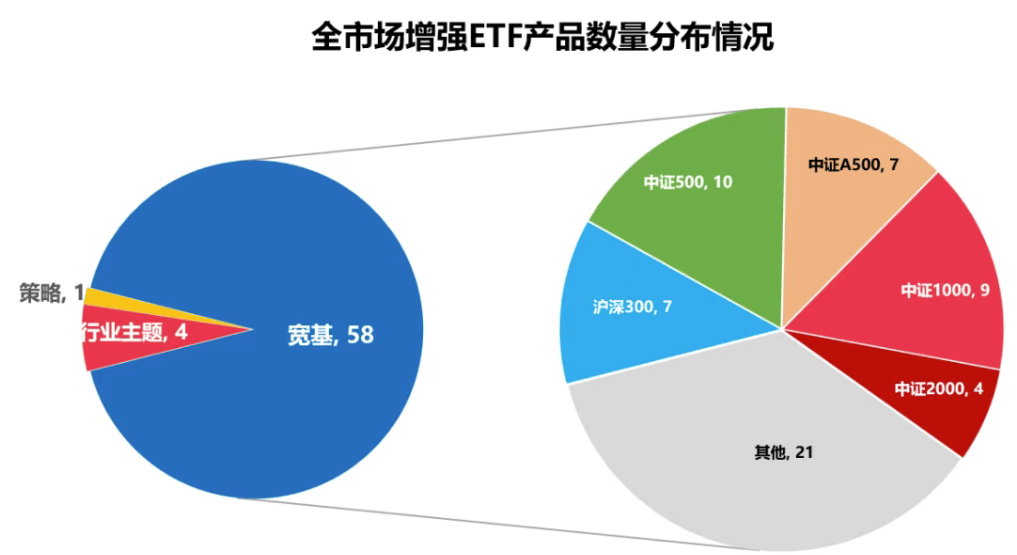
Core Insights - The article discusses the concept of enhanced index funds, which aim to achieve excess returns (Alpha) while passively tracking an index, using various strategies such as multi-factor models and quantitative analysis [1][9] - Enhanced index ETFs have seen significant growth, with over 60 products available as of August 22, 2025, nearly half of which were established in the last two years [1][9] Performance Analysis - Traditional index-enhanced strategies have faced challenges, with some funds underperforming compared to fully replicated index ETFs, particularly in the past year [2][4] - For instance, the annual returns of several enhanced strategy ETFs, such as the Guotai Hushen 300 Enhanced Strategy ETF, were lower than those of standard ETFs [3][4] Market Dynamics - Large-cap stocks, like those in the Hushen 300 index, are often well-covered by institutions, leading to high pricing efficiency and making it difficult for quantitative strategies to identify mispricings [4] - Conversely, small-cap stocks, particularly those in indices like the CSI 2000, have shown higher Alpha potential due to less institutional coverage and greater pricing inefficiencies [5][6] Long-term Trends - Enhanced index strategies have demonstrated superior long-term performance, with the CSI 500 Enhanced Index outperforming its benchmark over three, five, and ten-year periods [7][8] - The article emphasizes that the probability of achieving excess returns with enhanced index funds is over 90%, making them an attractive option for both retail and professional investors [9]
量化超额突发回撤,与2024年有什么不同?
私募排排网· 2025-08-20 10:15
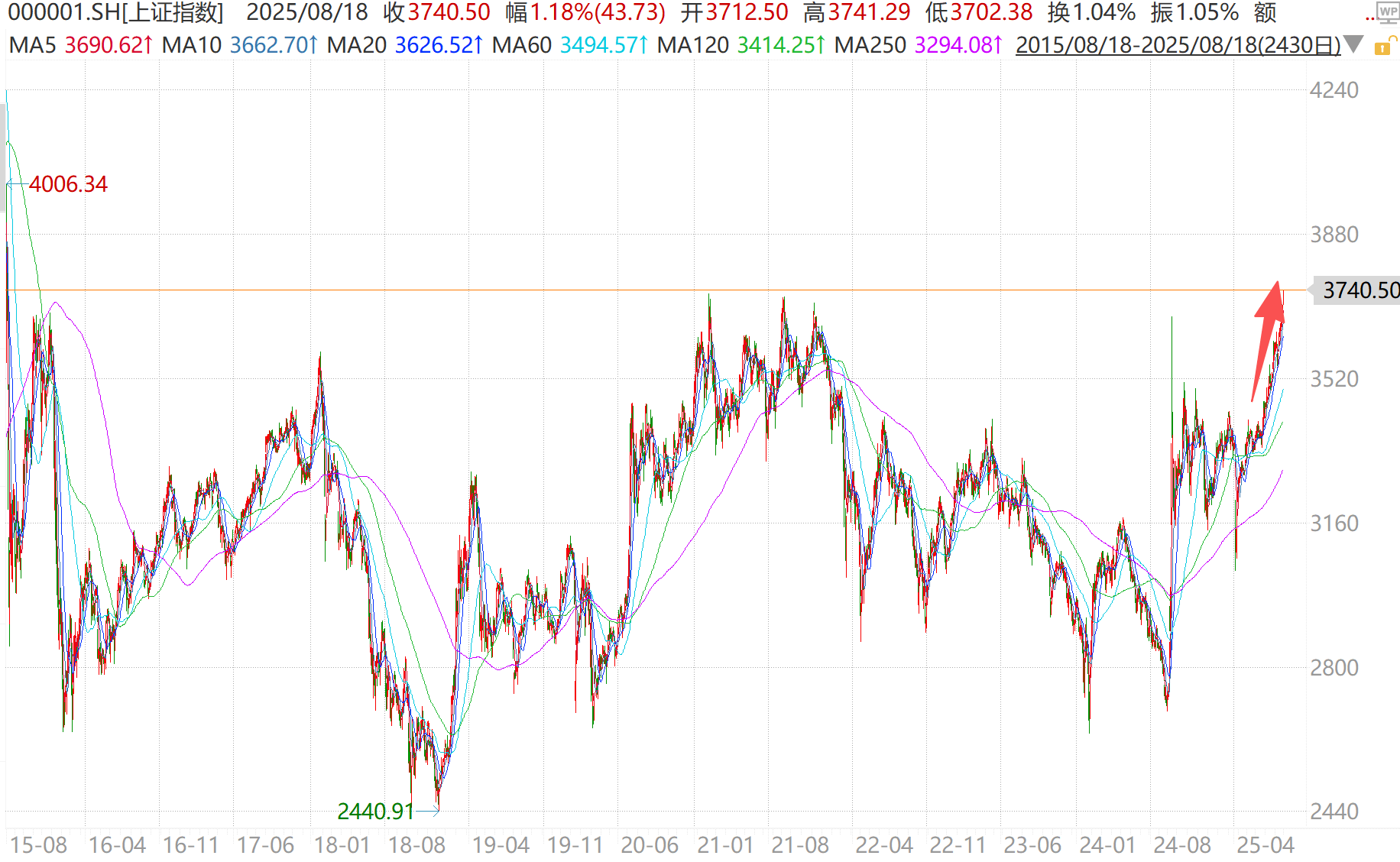
Core Viewpoint - The A-share market experienced a broad rally last week, with the Shanghai Composite Index reaching the critical level of 3700, while index-enhanced strategy products significantly underperformed the benchmark indices [2] Group 1: Market Performance - The excess returns of various index-enhanced products were negative, with the Shanghai 300 Index Enhanced, CSI 500 Index Enhanced, and CSI 1000 Index Enhanced showing excess returns of -0.49%, -1.09%, and -1.26% respectively [2] - The performance of individual stocks was relatively weak, with less than 50% of stocks in the quant management pool outperforming the benchmark indices during the week [2][3] - The proportion of stocks outperforming the Shanghai 300 Index was below 40% for most of the week, indicating increased difficulty in achieving excess returns [2] Group 2: Strategy and Market Dynamics - The difficulty in obtaining alpha returns is attributed to rapid convergence of basis, where the short positions in futures are weaker than long positions, leading to a decline in neutral strategy products [3] - Market sentiment was high, but the rapid rotation of sector styles made it challenging for stock selection strategies to generate excess returns [2][3] - Quant managers believe that the recent alpha pullback is within a normal range and is not indicative of issues with stock selection strategies [7] Group 3: Future Expectations - Historical data suggests that after periods of alpha decline, there is a high probability of recovery in subsequent market conditions, even if indices experience profit-taking [7][10] - Investors are encouraged to remain optimistic about the potential for recovery in quant management products despite current challenges [7]

沪指10年新高,A股市值破100万亿,这只宽基ETF一年翻倍!
Sou Hu Cai Jing· 2025-08-18 05:32
Core Viewpoint - The A-share market has reached significant milestones, with the Shanghai Composite Index hitting 3741 points, marking a new high since August 2015, and the total market capitalization of A-shares surpassing 100 trillion yuan for the first time in history [1][3]. Market Performance - The Shanghai Composite Index has faced minimal resistance beyond 3731 points, indicating a strong upward trend [3]. - The total market capitalization of A-shares exceeded 100 trillion yuan, a historic achievement [1]. ETF Performance - The top-performing ETF over the past year is the CSI 2000 Enhanced ETF (159552), which recorded a remarkable increase of 102.16% [3]. - The CSI 2000 Enhanced ETF (159552) has achieved a total return of 106.19% since September 24, 2024, outperforming the index by 27.42% [5][6]. - The CSI 2000 Enhanced ETF has attracted over 10 billion yuan in net inflows this year, making it one of the top funds in terms of capital absorption [6]. Investment Strategies - The strong performance of small-cap stocks reflects a significant inflow of quantitative funds and an increase in market risk appetite [4][9]. - The CSI 2000 Enhanced ETF and the CSI 1000 Enhanced ETF (159680) have demonstrated their ability to outperform the index during both rising and falling markets [7][9]. - The growing demand for enhanced index strategies is driven by the challenges of stock selection and volatility in small-cap investments [9][11]. Market Dynamics - The margin trading balance has been rising, exceeding 2 trillion yuan for two consecutive weeks, indicating increased market activity and attracting more leveraged funds [11]. - Small-cap stocks are favored due to their agility in responding to market changes, making them attractive to investors [11].