
民营企业融资

Search documents
民营经济促进法专门规定投资融资促进,金融监管总局这样推进落实
Bei Ke Cai Jing· 2025-05-09 06:29
Group 1 - The "Private Economy Promotion Law" was passed by the 15th meeting of the 14th National People's Congress Standing Committee and will take effect on May 20, marking a significant milestone in the development of the private economy in China [1] - The law includes a chapter on "Investment and Financing Promotion," which outlines several regulations aimed at enhancing financial support for the private economy [1][3] - The Financial Regulatory Administration has tailored a series of differentiated financial regulatory policies specifically for small and micro enterprises, which constitute the majority of private enterprises [2] Group 2 - The average annual growth rate of loans to private enterprises has been 1.1 percentage points higher than the average growth rate of all loans over the past five years, with a loan balance of 76.07 trillion yuan as of the end of Q1 2025, reflecting a year-on-year increase of 7.41% [2] - The balance of inclusive small and micro enterprise loans reached 35.3 trillion yuan, with a year-on-year growth of 12.5% [2] - A no-repayment renewal loan policy has been implemented, resulting in a renewal loan balance of 7.4 trillion yuan, which is a year-on-year increase of 35.7% [2] Group 3 - A coordination mechanism for supporting financing for small and micro enterprises has been established between the Financial Regulatory Administration and the National Development and Reform Commission, leading to new loans of 12.6 trillion yuan being issued to small and micro entities at an average interest rate of 3.66% [3] - The Financial Regulatory Administration aims to implement the Private Economy Promotion Law through regulatory guidance, policy incentives, mechanism promotion, and institutional guarantees, focusing on precise measures for enterprises of different industries, sizes, and development stages [3]
李云泽:总局近期将推八项增量政策 稳外贸有几大金融支持措施
Xin Lang Cai Jing· 2025-05-07 06:47
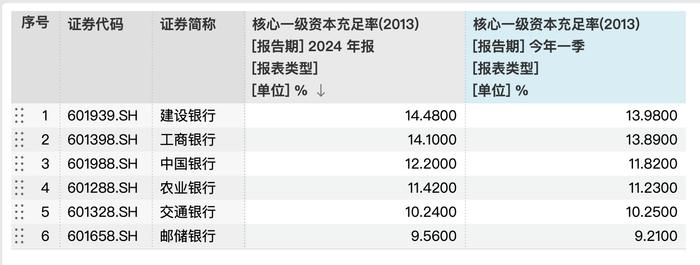
Core Viewpoint - The Chinese government is implementing a comprehensive financial policy package to stabilize the market and expectations, focusing on real estate financing, foreign trade financial support, and the establishment of Asset Investment Companies (AIC) by commercial banks [1][2]. Financial Stability - The overall financial operation is stable, with major regulatory indicators in a healthy range. The capital adequacy ratio of banks and insurance companies is improving, with a decrease in non-performing loan ratios by approximately 0.1 percentage points year-on-year and an increase in provision coverage ratios by about 10 percentage points [2][3]. - In the first quarter of 2024, the core Tier 1 capital adequacy ratios for major banks were as follows: China Construction Bank at 13.98%, Industrial and Commercial Bank of China at 13.89%, Bank of China at 11.82%, Agricultural Bank of China at 11.23%, Bank of Communications at 10.25%, and Postal Savings Bank of China at 9.21% [2][3]. Policy Measures - Eight new policies will be introduced to support financial stability: 1. Develop financing systems compatible with new real estate development models to stabilize the real estate market [4]. 2. Expand the pilot scope for long-term insurance fund investments to introduce more incremental funds [5]. 3. Optimize regulatory rules to lower investment risk factors for insurance companies, supporting capital market stability [6]. 4. Implement a comprehensive policy to support financing for small and private enterprises [6]. 5. Formulate policies to support foreign trade development, particularly for businesses affected by tariffs [6]. 6. Revise management measures for merger loans to promote industrial transformation [6]. 7. Expand the establishment of AICs to qualified national commercial banks to increase investment in technology enterprises [8]. 8. Develop high-quality development opinions for technology insurance to support innovation [8]. Real Estate Financing - The approved "white list" loans by commercial banks have increased to 6.7 trillion yuan, supporting the construction and delivery of over 16 million residential units. In the first quarter of this year, the real estate loan balance increased by over 750 billion yuan, with new personal housing loans showing the largest quarterly increase since 2022 [8][9]. Support for Foreign Trade - In the first four months, the banking and insurance sectors provided approximately 17 trillion yuan in new financing for the real economy. The no-repayment renewal loan policy has facilitated 4.4 trillion yuan in renewals for small and micro enterprises [10][11]. - A comprehensive policy package will be introduced to support small and private enterprises, focusing on increasing supply, reducing costs, improving efficiency, and enhancing the business environment [12]. AIC Establishment - The establishment of AICs is progressing, with signed intent amounts exceeding 380 billion yuan. The pilot program has expanded to 18 cities, with relaxed investment limits and optimized assessment mechanisms [13][14].

稳楼市、稳股市、护航外贸发展……金融监管总局“出招”
Zheng Quan Shi Bao· 2025-05-07 04:20
Core Viewpoint - The Chinese government is implementing a comprehensive financial policy package aimed at stabilizing the market and boosting expectations, with a focus on the real estate and capital markets, as well as supporting small and micro enterprises and foreign trade development [1]. Group 1: Real Estate Market Support - The National Financial Regulatory Administration is enhancing the city real estate financing coordination mechanism, with bank-approved "white list" loans increasing to 6.7 trillion yuan, supporting over 16 million housing units [2]. - In Q1, the real estate loan balance increased by over 750 billion yuan, with new personal housing loans reaching the largest quarterly increase since 2022, and housing rental loans growing by 28% year-on-year [2]. - Future plans include improving financing systems to match new real estate development models and ensuring stable financing for high-quality housing [2]. Group 2: Capital Market Stability - The National Financial Regulatory Administration is leveraging insurance funds as long-term capital to stabilize the stock market, with recent reforms allowing for increased investment from insurance funds [3]. - Specific measures to support the capital market include expanding long-term investment trials for insurance funds, increasing the investment limit by 60 billion yuan, and adjusting risk factors for stock investments [3]. - The administration aims to promote a long-term investment approach by enhancing performance evaluation mechanisms for institutions [3]. Group 3: Support for Small and Micro Enterprises - A comprehensive policy package will be introduced to support financing for small and micro enterprises, focusing on increasing supply, reducing costs, improving efficiency, and creating a favorable environment [4]. - Efforts will include deepening financing coordination, increasing the availability of loans, and simplifying internal processes to expedite loan approvals [4]. - The administration will also enhance collaboration among monetary, fiscal, industrial, and regulatory policies to create a more conducive development environment [4]. Group 4: Foreign Trade Development Support - The National Financial Regulatory Administration plans to implement policies to support foreign trade development, focusing on financial assistance amid increasing external pressures [5]. - Measures include expanding financing coordination to all foreign trade enterprises and providing tailored services for businesses facing challenges due to tariffs [6]. - The administration will optimize export credit insurance policies and support the transition of foreign trade enterprises to domestic sales, thereby enhancing consumption and expanding domestic demand [6].
稳楼市、稳股市、护航外贸发展……金融监管总局“出招”!
证券时报· 2025-05-07 04:12
Core Viewpoint - The Chinese government is implementing a comprehensive financial policy package to stabilize the market and manage expectations, focusing on real estate, stock markets, small and micro enterprises, and foreign trade support [1]. Group 1: Real Estate Market Support - The financial regulatory authority is enhancing the real estate financing coordination mechanism, with commercial banks approving loans amounting to 6.7 trillion yuan, supporting over 16 million housing units [2]. - In Q1, the real estate loan balance increased by over 750 billion yuan, with new personal housing loans reaching the largest quarterly increase since 2022, and housing rental loans growing by 28% year-on-year [2]. - Future efforts will include improving financing systems to match new real estate development models and ensuring stable financing for high-quality housing [2]. Group 2: Stock Market Stabilization - The financial regulatory authority is leveraging insurance funds as long-term capital to stabilize the stock market, having increased the investment limit for insurance funds in equity assets [3]. - Upcoming measures include expanding the long-term investment pilot for insurance funds by an additional 60 billion yuan and adjusting solvency regulations to encourage more stock market investments [3]. - A long-term assessment mechanism will be promoted to incentivize institutions for sustained investments [3]. Group 3: Support for Small and Micro Enterprises - A comprehensive policy package will be introduced to support financing for small and micro enterprises, focusing on increasing supply, reducing costs, improving efficiency, and creating a favorable environment [4]. - Efforts will include enhancing financing coordination, increasing the issuance of first loans and credit loans, and simplifying internal processes for faster loan approvals [4]. - The aim is to ensure that the growth rate of loans to small and micro enterprises exceeds the average growth rate of all loans [4]. Group 4: Foreign Trade Development Support - The financial regulatory authority plans to implement policies to support foreign trade development, expanding financing coordination to all foreign trade enterprises [5][6]. - Measures will include optimizing export credit insurance policies, enhancing export stability, and providing financing guarantees for foreign trade enterprises transitioning to domestic sales [6]. - The goal is to boost consumption and expand domestic demand while supporting the integration of domestic and foreign trade [6].

赋能民企高质量发展 证券交易所多举措畅通股债融资
Xin Hua She· 2025-05-07 02:48
Core Viewpoint - Private enterprises are crucial for technological innovation, and enhancing financing support for them through capital markets is essential [2][7] Group 1: Financing Support for Private Enterprises - The issuance of innovative bond financing products and the establishment of indices for private enterprises are being prioritized to meet their financing needs [2][6] - The first public company bond supporting small and micro enterprises was successfully issued, with a scale of 500 million yuan, aimed at providing liquidity support [2][3] - Since 2022, over 500 billion yuan of asset-backed securities have been issued to support small and micro enterprises in the Shanghai market [2][3] Group 2: Asset Securitization and Technology Innovation - Asset securitization products are effective tools for addressing the financing characteristics of small and micro enterprises, which often require short-term, small, and frequent funding [3] - The issuance of technology innovation corporate bonds has seen significant growth, with over 26.1 billion yuan issued in the first quarter of this year, representing a year-on-year increase of over 32.9% [4][5] Group 3: Market Infrastructure and Indices - The exchanges are actively expanding their index systems and supporting the growth of ETFs to attract long-term capital to quality private enterprises [6][7] - The number of private enterprises listed on the Shanghai Stock Exchange has exceeded 1,200, with a total market value surpassing 14 trillion yuan, contributing significantly to high-quality economic development [7] Group 4: Future Outlook - The China Securities Regulatory Commission is committed to enhancing support for private enterprise financing through a multi-tiered market system and fostering patient capital [7] - With the implementation of favorable policies and product innovations, financing channels for private enterprises are expected to become more accessible, injecting more financial momentum into the development of the private economy [7]

金融监管总局:尽快推出支持小微企业、民营企业融资一揽子政策
news flash· 2025-05-07 01:44
金十数据5月7日讯,金融监管总局局长李云泽5月7日在国新办举行的新闻发布会上表示,将尽快推出支 持小微企业、民营企业融资一揽子政策,做深做实融资协调工作机制,助力稳企业稳经济。制定实施银 行业保险业护航外贸发展系列政策措施,对受关税影响较大的市场主体提供精准服务,全力帮扶稳定经 营、拓展市场。 (新华社) 金融监管总局:尽快推出支持小微企业、民营企业融资一揽子政策 ...
央行上海总部联合上海市委统战部、市工商联举办民营企业融资对接暨惠企政策发布和集中签约活动
news flash· 2025-04-30 03:42
Core Insights - The People's Bank of China Shanghai Headquarters, in collaboration with the Shanghai United Front Work Department and the Shanghai Federation of Industry and Commerce, held a financing event aimed at supporting the high-quality development of the private economy in 2025 [1] Group 1: Investment Agreements - Five equity investment institutions, including the Shanghai Science and Technology Innovation Fund, signed investment intention agreements with five technology-oriented private enterprises, with a total investment amount of 330 million yuan [1] - The invested companies are classified as gazelle or unicorn enterprises, possessing qualifications such as specialized, sophisticated, and innovative enterprises or high-tech enterprises [1] Group 2: Financial Support - Five financial institutions, including the Industrial and Commercial Bank of China, received support from the People's Bank of China for technology innovation and technical transformation re-loans, signing agreements with five private enterprises for a total credit amount of 2.88 billion yuan [1] - Five financial institutions, including Agricultural Bank of China, received support for stock repurchase and increase re-loans, signing agreements with five private enterprises for a total credit amount of 860 million yuan [1] Group 3: Policy Impact - The event emphasized the role of low-cost funds from the central bank in supporting enterprises' financing needs for large-scale equipment updates and market value management [1]


央行答一财:更大力度推动完善民营企业融资配套机制
Di Yi Cai Jing· 2025-04-28 04:16
央行副行长邹澜在国新办发布会上回答第一财经提问时表示,督促金融机构不盲目抽贷、断贷、压贷,积极满足民营外贸企业合理的资金需求。 近期,中美贸易战再升级,民营企业发展面临新的困难和挑战。 二是更有针对性地拓宽民营企业多元化融资渠道。发挥民营企业债券融资支持工具的作用,扩大民营企业债券融资规模。推广"两新"债务融资工 具,支持民营企业等主体发债融资。用好股票回购增持再贷款,满足民营上市公司市值管理的资金需求。完善跨境投融资便利化政策,提高民营 企业利用外资的效率。 三是更大力度推动完善民营企业融资配套机制。全面推广全国中小微企业资金流信用信息共享平台运用,研究建立民营中小企业增信制度,破解 民营中小企业信用不足、信息不对称等融资制约。继续加强金融与财政、产业等政策的协同,共同营造更优的民营企业发展环境。 近年来,人民银行积极健全政策框架,推进金融服务能力建设,完善激励约束机制,强化督导落实,为民营经济高质量发展提供强有力的金融支 持。注重金融、财政、产业等政策协调配合,在增加金融供给的同时,引导民营企业依法合规诚信经营、健全融资配套机制,确保各项政策同向 发力,形成合力,引导金融资源更多流向小微和民营企业。 4月 ...

为民营企业创造更好融资环境(财经观·改革说)
Ren Min Ri Bao· 2025-04-27 22:11
Core Viewpoint - The article emphasizes the need for continued efforts to address the financing difficulties faced by private enterprises in China, advocating for structural reforms in financial services to better meet the diverse financing needs of these businesses [1][2][3]. Group 1: Financing Challenges - Many private small and micro enterprises, as well as individual businesses, have never received credit from the banking system, highlighting the issue of "first loan difficulty" [2]. - Obtaining the first loan significantly increases the likelihood of securing subsequent loans for private small and micro enterprises [2]. - Medium-sized private enterprises also face financing challenges, as some no longer meet the standards for inclusive finance after growing [2]. Group 2: Financial Support and Services - A multi-tiered financial service system is essential, with a focus on enhancing credit availability from large banks while leveraging the strengths of smaller financial institutions to serve local small and micro enterprises [3]. - The capital market plays a crucial role in the growth of private enterprises, with nearly two-thirds of listed companies on the A-share market being private [3]. - Policies such as the "Eight Measures for the Sci-Tech Innovation Board" and "Six Measures for Mergers and Acquisitions" should be effectively implemented to support private enterprises in capital market development [3]. Group 3: Policy Recommendations - There is a need to establish diversified financing mechanisms and improve the credit rating and evaluation systems for small and micro enterprises [3]. - Enhancing the support from government financing guarantee institutions for private small and micro enterprises is crucial for risk sharing and mitigation [3]. - A collaborative approach among various stakeholders is necessary to address risk management and improve information transparency in the financing process [3].
2024年以来深交所支持民企发行公司债券融资近2000亿元
news flash· 2025-04-13 06:54
Core Insights - The Shenzhen Stock Exchange has supported private enterprises in issuing corporate bonds amounting to nearly 200 billion yuan since the beginning of 2024 [1] Group 1: Corporate Bond Issuance - From early 2024 to April 6, 2025, the Shenzhen Stock Exchange has facilitated the issuance of 114 corporate bonds by private enterprises, raising a total of 196.68 billion yuan [1] Group 2: Asset-Backed Securities - During the same period, 142 asset-backed securities were issued, generating financing of 91.82 billion yuan [1]