
气候融资

Search documents
特稿丨推动全球气候治理进入新阶段——联合国气候变化贝伦大会前瞻
Xin Hua She· 2025-11-10 17:09
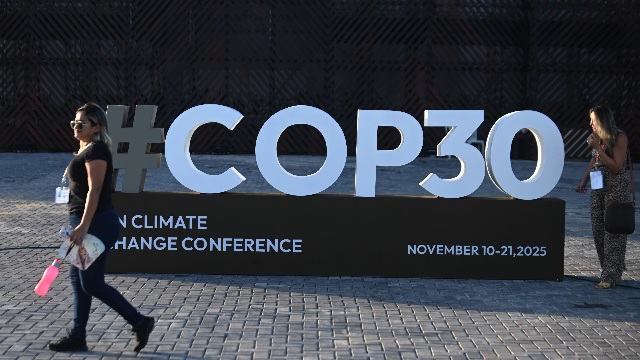
Core Points - The COP30 conference is taking place in Belem, Brazil, from November 10 to 21, marking the 10th anniversary of the Paris Agreement and aiming to advance global climate governance [1][2] - The focus of the conference is on the new round of Nationally Determined Contributions (NDCs), with a significant concern regarding the slow progress of countries in submitting ambitious targets [2][3] - The conference aims to bridge the gap between developed and developing countries regarding emissions reduction and funding, emphasizing the need for a clear and credible path to achieve climate financing goals [4][5] Group 1: Nationally Determined Contributions (NDCs) - The new round of NDCs is expected to be a focal point of the Belem conference, with less than one-third of parties to the Paris Agreement having submitted updated contributions that include 2035 reduction targets as of September 30 [2] - A report indicates that even if current NDC commitments are fully implemented, global warming is projected to reach 2.3 to 2.5 degrees Celsius this century, exceeding the 2 degrees Celsius target set by the Paris Agreement [2] Group 2: Climate Financing - The conference will address the critical issue of financing, with a target of providing $1.3 trillion annually to developing countries by 2035, and developed countries are expected to raise $300 billion annually [4] - Brazilian President Lula emphasized the need for a governance mechanism within the UN framework to ensure the effective implementation of climate commitments and to discuss penalties for non-compliance [4] Group 3: South-South Cooperation - The conference highlights South-South cooperation, with Brazil inviting multiple countries to participate in protecting the Amazon rainforest and promoting renewable energy development in impoverished regions [6][7] - China's contributions to climate change efforts, particularly in South-South cooperation, are expected to be a significant focus, with China having submitted its 2035 NDC goals and signed numerous cooperation agreements with developing countries [6][7]
联合国气候变化贝伦大会开幕 呼吁合作应对气候危机
Xin Hua She· 2025-11-10 16:33
Core Points - The 30th Conference of the Parties (COP30) to the United Nations Framework Convention on Climate Change opened in Belem, Brazil, focusing on global cooperation to address the climate crisis and accelerate emission reductions [1][2] - The conference emphasizes the need for countries to submit more ambitious Nationally Determined Contributions (NDCs) as per the Paris Agreement, aiming for a strategic transformation and climate financing goals [1] - Brazilian President Lula called for countries to fulfill their climate commitments and accelerate climate action, highlighting three priority areas: strengthening multilateralism, linking climate mechanisms to real-life and the economy, and expediting the implementation of the Paris Agreement [2] Group 1 - COP30 aims to promote climate action integration into economic activities and job creation, with a focus on inclusive and just transitions [1] - The conference will run until November 21, attracting representatives from over 190 countries and regions, including government officials, scientists, and NGOs [2] Group 2 - The Executive Secretary of the Convention, Simon Steele, emphasized the need for faster progress in emission reductions and resilience enhancement, urging consensus on actionable steps for inclusive and just transitions [1]
联合国气候变化框架公约》第三十次缔约方大会在巴西开幕
Yang Shi Xin Wen· 2025-11-10 13:45
Core Points - The 30th Conference of the Parties (COP30) to the United Nations Framework Convention on Climate Change officially commenced in Belem, Brazil, on November 10, 2023, with thousands of officials and representatives discussing climate action plans [1] - The conference aims to achieve a climate financing target of $1.3 trillion annually and to propose new measures to support countries in adapting to climate change and transitioning to a clean economy [1] - This year marks the 10th anniversary of the Paris Agreement and a new round of Nationally Determined Contributions submissions, representing a critical juncture in global climate governance [1] - UN Secretary-General António Guterres warned of severe socio-economic consequences from rising global temperatures and expressed hope that COP30 could initiate a decade of accelerated development and action [1] - The Chinese delegation will actively participate in formal agendas and host multiple events at the "China Corner" to showcase China's policies and achievements in addressing climate change [1] - The conference will conclude on November 21, 2023, and the U.S. government confirmed it will not send any high-level officials, marking the first absence of the U.S. from UN climate negotiations in 30 years [1]
欧盟就2040年减排目标达成一致 强调致力于实现《巴黎协定》目标
Zhong Guo Xin Wen Wang· 2025-11-10 13:20
Core Points - The European Union (EU) has reached an agreement among its member states on the greenhouse gas emission reduction target for 2040, aiming for a 90% reduction, which includes 85% from internal reductions and 5% from international carbon credits [1] - The EU has submitted a new Nationally Determined Contribution (NDC) under the Paris Agreement, targeting a reduction of net emissions by 66.25% to 72.5% from 1990 levels by 2035 [1] - In 2024, the EU and its member states will provide €31.7 billion for climate financing to developing countries, along with an additional mobilization of €11 billion in private funds to support these countries in addressing climate change [1] - The EU is committed to achieving climate neutrality by 2050 and emphasizes its dedication to the goals of the Paris Agreement [1]
美国30年来首次缺席国际气候谈判,COP30如何研判“交卷年”?
Di Yi Cai Jing· 2025-11-10 12:29
Core Points - The absence of the U.S. at COP30 marks the first time since 1995 that the country has not sent senior officials to a COP meeting, which raises concerns about global climate cooperation [1][5] - COP30 is crucial as it aims to assess collective progress on climate actions and convert the scientific consensus on the 1.5°C target into practical measures [3][4] - The conference will focus on submitting new Nationally Determined Contributions (NDCs) from countries, which outline their emission reduction targets and specific measures [3][4] Group 1 - The global temperature is on track to exceed the 1.5°C limit set by the Paris Agreement, necessitating a 60% reduction in global emissions by 2030 to stay within this target [3][4] - The current NDCs are projected to achieve only about 10% of the required emission reductions, highlighting a significant gap in climate action [3][4] - The NRDC reports that since the Paris Agreement, clean energy has created 36.2 million jobs, surpassing employment in fossil fuel sectors [4] Group 2 - COP30 aims to mobilize $1.3 trillion annually for climate financing, with a focus on supporting countries in adapting to climate change [6][8] - The conference will also review the "Baku to Belem $1.3 trillion roadmap report," which outlines five priority areas for resource mobilization [7] - The U.S. withdrawal from the Paris Agreement has created a funding gap of $100 billion to $150 billion in the climate financing roadmap, complicating efforts to meet climate goals [8]

记者Vlog丨探访COP30媒体中心 这里的“亚马孙含量”有点高
Yang Shi Xin Wen Ke Hu Duan· 2025-11-10 06:18
Group 1 - The climate summit and the 30th Conference of the Parties to the United Nations Framework Convention on Climate Change are being held in Belem, Brazil from November 6 to November 21, highlighting the significance of the Amazon region [1][3] - The event aims to showcase the unique characteristics of the Amazon, including its flora, fauna, and indigenous cultures, emphasizing the region's importance in the global climate agenda [1][3] - The conference will review national climate plans, advance climate financing goals, and accelerate the transition to a clean economy [3]

《联合国气候变化框架公约》秘书处:应对气候变化需加强国际合作
Xin Hua She· 2025-11-08 05:49
Core Insights - The speech by Simon Steele emphasizes the importance of international cooperation and collective action to effectively address climate change, highlighting the progress made in the clean energy revolution since the Paris Agreement was established ten years ago [1][2] Group 1: Climate Change and International Cooperation - The Paris Agreement has played a crucial role in controlling the rise in global temperatures, indicating that climate cooperation is effective despite ongoing risks [1] - Steele stresses the necessity for all countries to participate fully in climate initiatives to avoid irreversible climate scenarios [1] Group 2: Clean Energy Investment - Global investment in renewable energy reached $2 trillion last year, which is double that of fossil fuels, with 90% of new energy capacity coming from renewable sources [1] - The upcoming climate financing goals set by the UN Climate Change Conference include a target of at least $300 billion annually from developed countries by 2035 and a total climate financing goal of at least $1.3 trillion per year [1] Group 3: Benefits of Climate Solutions - Investment in climate solutions is expected to yield multiple benefits, including job creation, cleaner air, improved health, resilient global supply chains, and enhanced energy and food security [2] - There is a call to scale up, accelerate, and fairly distribute funding to ensure that all countries can benefit quickly and comprehensively from climate initiatives [2]
古特雷斯:希望COP30开启“加速和落实的十年”
Yang Shi Xin Wen· 2025-11-07 07:53
Core Points - The UN Secretary-General António Guterres emphasized the urgent need for global action to combat climate change, warning that the world has failed to keep temperature rise below 1.5 degrees Celsius [1][2] - Guterres called for significant emission reductions, accelerated fossil fuel phase-out, and increased investments in adaptation and resilience over the next decade [1][2] - A clear and credible path for climate financing, particularly for developing countries, is essential, with a target of providing $1.3 trillion annually by 2035 [2][3] Group 1 - Guterres highlighted the severe socio-economic consequences of rising global temperatures and the potential for catastrophic impacts on ecosystems and human habitation [1] - Immediate large-scale actions are necessary to minimize temperature rise and achieve net-zero emissions by 2050, transitioning to net-negative emissions thereafter [1] - The importance of international collaboration and a bold, credible response plan was stressed, including the development of renewable energy and modern energy infrastructure [2] Group 2 - Developing countries require a fair and just climate justice framework post-COP30 to ensure dignity and opportunities [3] - Guterres urged that the upcoming COP30 should be a turning point in the global response to the climate crisis, advocating for alignment with scientific recommendations and justice for future generations [3]
【环球财经】多国领导人呼吁加速应对气候危机行动
Xin Hua She· 2025-11-07 07:29
Core Points - The Belem Climate Summit, hosted by Brazil, aims to unite countries and international organizations to accelerate actions against the climate crisis [1][2] - Key topics include climate and nature, energy transition, assessment of the Paris Agreement's tenth anniversary, national contributions, and climate financing [1] - UN Secretary-General Guterres emphasizes the need for faster and more effective actions, particularly from wealthier nations, to reverse the current climate situation [1] - Brazilian President Lula highlights energy transition and nature protection as the most effective ways to combat global warming, advocating for science to guide decision-making [1] - French President Macron stresses the importance of respecting scientific evidence in climate issues and calls for increased clean energy investment and financing mechanisms for developing countries [1] Group 1 - The Belem Climate Summit serves as a political direction for the upcoming COP30 negotiations [1] - The summit's discussions are centered around the urgency of climate action and the need for international cooperation [1][2] - Leaders are calling for a unified approach to fulfill existing climate goals and find equitable solutions to the climate crisis [2]
是什么让这一国宣布迁都?
Jin Rong Shi Bao· 2025-11-06 12:48
Group 1 - The Brazilian government has decided to temporarily move the capital from Brasília to Belém from November 11 to 21 to host the COP30 conference [1] - COP30 is the 30th Conference of the Parties to the United Nations Framework Convention on Climate Change (UNFCCC), aimed at stabilizing greenhouse gas concentrations in the atmosphere [1] - The focus of COP30 will be on transforming commitments into actionable steps, emphasizing collaboration among nations for a prosperous, safe, and resilient future [1] Group 2 - The World Resources Institute (WRI) states that COP30 could drive significant change if substantial outcomes are achieved, building on the commitments made at COP29 [2] - COP29 established a goal for developed countries to provide at least $300 billion annually by 2035 to support developing nations in addressing climate change, with a long-term target of $1.3 trillion per year [2] - The "Baku to Belém Roadmap" is a joint plan to achieve the $1.3 trillion goal, requiring countries to establish national platforms for coordinating diverse climate funding [2] Group 3 - There is an expectation for countries to set more ambitious emission reduction targets aligned with their net-zero goals during the conference [3] - Key sectors such as energy, agriculture, and transportation are anticipated to undergo systematic transformations [3] - The conference aims to send a positive political signal supporting the UNFCCC and the Paris Agreement, emphasizing the irreversible trend towards global green and low-carbon transformation [3]