海上丝绸之路

Search documents
“海昏侯遇见南越王”国庆探馆:从南越国到海昏侯国,管窥西汉盛世之形成
Xin Hua She· 2025-10-06 00:40
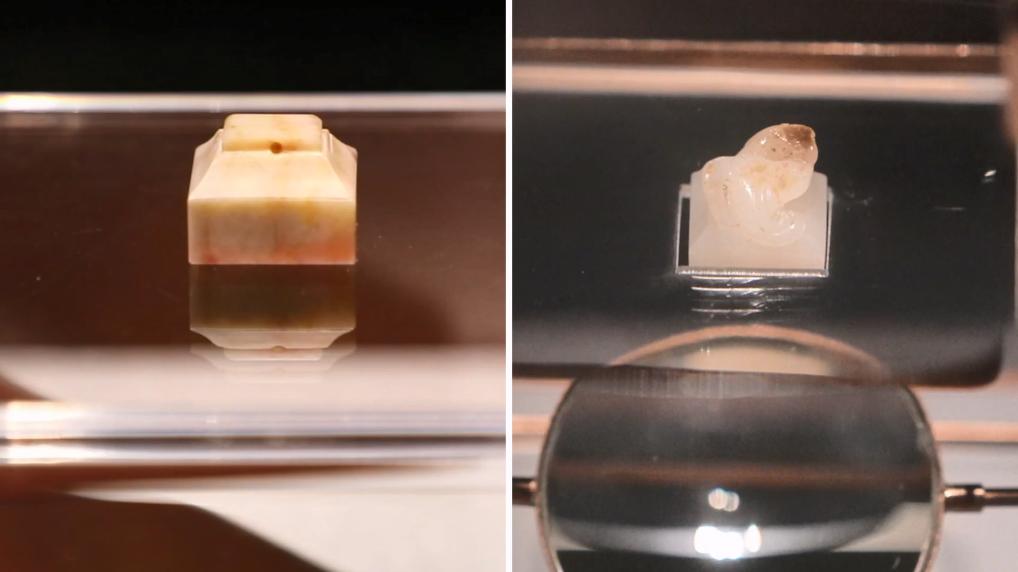
Core Viewpoint - The article highlights the cultural exchange and historical significance of the artifacts discovered from the Han Dynasty tombs of the South Yue Kingdom and the Haihunhou Kingdom, showcasing the prosperity and openness of the Western Han civilization through their burial practices and artifacts [2][16]. Group 1: Artifacts and Their Significance - The South Yue Kingdom and Haihunhou Kingdom artifacts reflect the integration of Central Plains and Baiyue cultures, emphasizing the open and inclusive nature of their civilizations [2]. - The jade seals found in the tombs of Zhao Mo and Liu He serve as private seals, with distinct designs indicating their status; Liu He's seal is made from higher quality jade and features more intricate craftsmanship [4]. - The jade burial suit from Zhao Mo's tomb, made of 2,291 pieces of jade, is the only complete example of its kind found in China, highlighting the high status of its owner [6]. Group 2: Trade and Cultural Exchange - The artifacts indicate that the South Yue Kingdom engaged in maritime trade, becoming a precursor to the Maritime Silk Road, which facilitated trade with Southeast Asia and South Asia [10]. - The discovery of imported frankincense in Zhao Mo's tomb suggests that foreign resin-based fragrances were already entering China during the early Western Han period, replacing traditional herbal scents [11]. - The unique design of the incense burners from both tombs illustrates the evolution of incense use and the aesthetic preferences of the time, reflecting a blend of practicality and beauty [13]. Group 3: Cultural Interactions - The artifacts from both tombs demonstrate the cultural exchanges between the Central Plains and the grassland cultures, as seen in the decorative motifs on the gold and silver items [14]. - The findings from these two significant archaeological sites provide a comprehensive view of the development of Western Han society, illustrating the grandeur of the Han civilization [16].

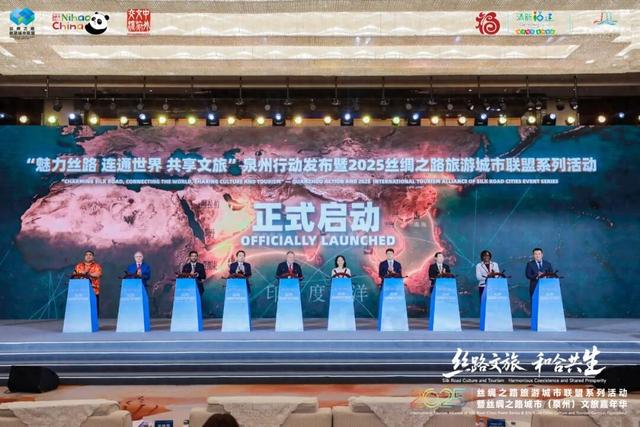
2025丝绸之路旅游城市联盟系列活动暨丝绸之路城市(泉州)文旅嘉年华正式开幕
Xin Lang Cai Jing· 2025-09-20 04:23
Core Points - The event "2025 Silk Road Tourism Cities Alliance Series Activities and Silk Road City (Quanzhou) Cultural Tourism Carnival" was officially launched in Quanzhou, aiming to promote high-quality inbound tourism and the long-term development of the Silk Road Tourism Cities Alliance [1][14] - Representatives from over 26 countries attended the event, highlighting the international collaboration and cultural exchange [1][3] Group 1: Event Highlights - The opening ceremony featured traditional performances, including Nanyin music and puppet shows, creating a rich cultural atmosphere [3] - Seven new member cities were awarded certificates, enhancing the alliance's cultural diversity and cooperative vitality [5][7] - Quanzhou was designated as the rotating chair city for the Silk Road Tourism Cities Alliance for 2025-2026, symbolizing its leadership role in promoting cultural tourism [8] Group 2: Key Speeches and Recommendations - Notable speakers included former UNWTO Secretary-General Francesco Frangialli, who emphasized Quanzhou's historical significance in the Maritime Silk Road and suggested developing themed tourism products [8][9] - Former Irish Minister of State for Tourism Frank Fahey praised Quanzhou's rich history and cultural diversity, recommending it as a must-visit destination [9] Group 3: Industry Initiatives - China Eastern Airlines expressed its commitment to supporting the Belt and Road Initiative by optimizing its international flight network and promoting cultural tourism [10] - The event included a global promotion of Quanzhou's tourism resources, showcasing its cultural heritage, diverse cuisine, and convenient services [11] Group 4: Project Launch - The "Silk Road Tourism City Travel Guide Series" project was launched to showcase the charm of Silk Road cities, connecting their stories and landscapes [13]
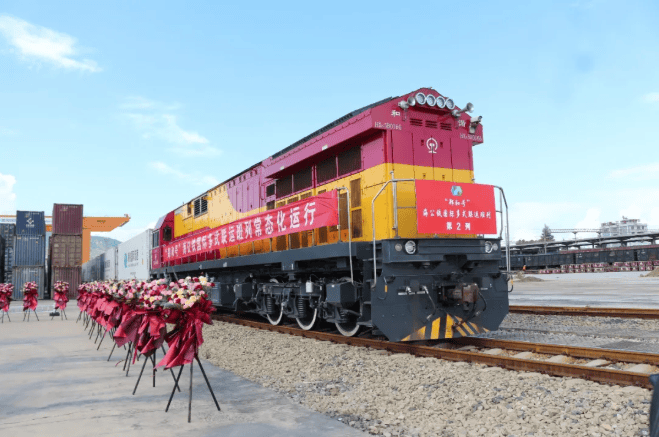
第二列“郑和号”从腾俊国际陆港出发,助力建设南向国际陆海通道
Sou Hu Cai Jing· 2025-09-01 07:43
Core Points - The "Zheng He" international multimodal transport train service has officially entered a regular operation phase, connecting Yunnan with the Indian Ocean and enhancing international logistics capabilities [1][2] - The service aims to promote the "Belt and Road" initiative by facilitating trade and logistics between Yunnan and Southeast Asian countries, thereby optimizing resource allocation and industrial collaboration [2][5] Group 1: Service Launch and Operations - The second "Zheng He" train departed with nearly 300 tons of fresh Yunnan fruits and vegetables, marking the commencement of regular operations [1] - The train will travel along the China-Laos Railway to Vientiane, Laos, and then connect to Thailand's Laem Chabang Port before shipping to Singapore, distributing Yunnan products globally [1] Group 2: Government Support and Strategic Goals - Local government departments are actively implementing strategies to enhance the multimodal transport service, focusing on improving logistics efficiency and reducing costs [2][5] - The initiative is expected to deepen ties between Yunnan and South Asian/Southeast Asian countries, fostering a new level of regional economic integration [5] Group 3: Future Development and Impact - The "Zheng He" service is set to expand its routes and increase frequency, contributing to the construction of the international land-sea corridor [5] - The operation of the "Zheng He" train is seen as a model for developing multimodal transport and enhancing the "Belt and Road" initiative, providing valuable experience for future projects [5]
文化中国行丨探访宋代“超级工程” 揭秘古代造桥“黑科技”
Yang Shi Wang· 2025-08-23 22:11
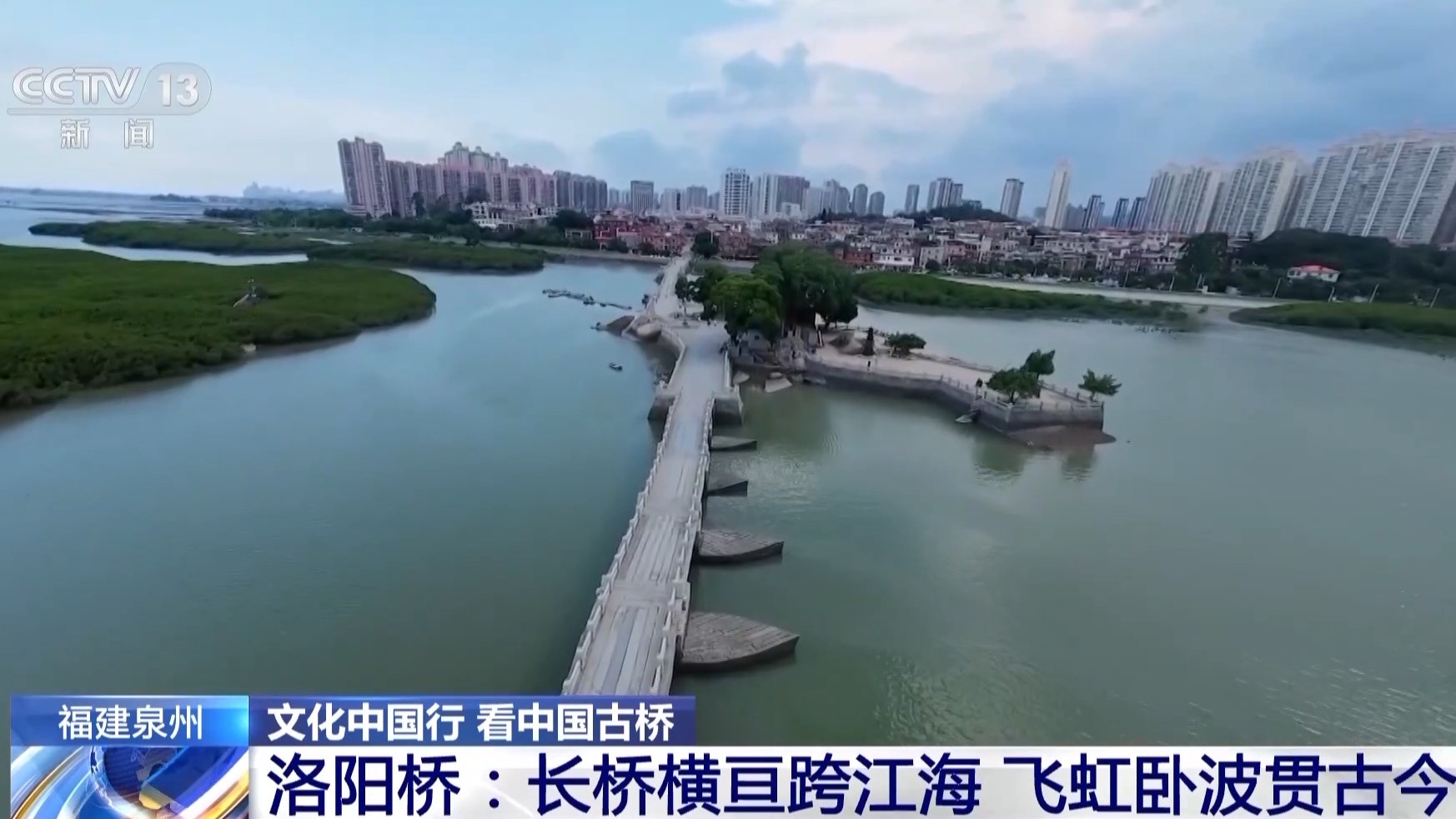
Core Viewpoint - The article highlights the historical and architectural significance of the Luoyang Bridge, the first cross-sea beam stone bridge in China, built during the Northern Song Dynasty, and its role as a vital transportation artery and cultural heritage site [2][4][5]. Historical Significance - Luoyang Bridge, located in Quanzhou, Fujian Province, was constructed in 1059 and is recognized as a world-class engineering feat of the Song Dynasty [5][15]. - It is part of the "Quanzhou: World Maritime Trade Center of the Song and Yuan Dynasties" heritage site, which was included in the World Heritage List in 2021 [4]. Architectural Features - The bridge spans approximately 731 meters in length and 4.5 meters in width, supported by 45 stone piers made of granite, with a deck paved by over 300 large stone slabs [2][5]. - The construction utilized innovative techniques such as the raft foundation and floating transport for heavy stone slabs, showcasing advanced engineering methods of the time [7][11][13]. Cultural Heritage - The bridge features four stone generals and numerous stone carvings, which are significant for studying Song Dynasty stone carving techniques [18][20]. - The bridge has been a crucial part of the maritime Silk Road, facilitating trade and cultural exchange for nearly a millennium [21][30]. Modern Preservation Efforts - Continuous maintenance and restoration efforts have been made, including the installation of monitoring systems to ensure the bridge's structural integrity against environmental threats [27][29]. - The preservation team follows a "minimal intervention" principle to maintain the bridge's historical features while incorporating modern technology for monitoring [27][29]. Economic Impact - The Luoyang Bridge has historically transformed transportation routes, enhancing trade connections between Quanzhou and other regions, thus contributing to the economic development of the area [15][32]. - The surrounding area has evolved into a vibrant cultural and commercial hub, attracting nearly 800,000 visitors in the current year, showcasing a blend of traditional crafts and modern cultural elements [38].
厦门港再添“金砖航线” 总数增至24条
Zhong Guo Xin Wen Wang· 2025-08-17 14:47
Core Insights - The new shipping route "Mairitesku Mai" from Xiamen Port to Indonesia marks the addition of the 24th "BRICS route" at Xiamen Port [1] - Indonesia has officially become a member of the BRICS nations this year, enhancing trade cooperation opportunities between Fujian Province and Indonesia [1] - The new route is operated monthly by Mairites (MTS), connecting Xiamen to major ports in Indonesia, which will facilitate the transport of goods like marble products [1] Trade and Economic Cooperation - Xiamen Port has established 24 maritime "BRICS routes" covering 20 major ports in six BRICS countries, including India and South Africa [1] - The new route has fewer stopover ports compared to traditional routes, reducing transit time by nearly 25%, which is beneficial for the transportation of bulk commodities and industrial parts [1] - The route aims to meet the demand for stable transportation cycles from trade partners along the route, particularly for goods requiring balanced transport timing [1]
南海西北陆坡一号、二号沉船遗址“重见天日” 水下考古,从浅海迈向深海(科技自立自强)
Ren Min Ri Bao· 2025-08-13 22:00
Core Insights - The article highlights the significant archaeological discoveries made in the South China Sea, particularly the excavation of two ancient shipwrecks at a depth of approximately 1500 meters, marking a historic breakthrough in underwater archaeology for China [2][8]. Group 1: Archaeological Discoveries - The "Deep Sea Warrior" manned submersible discovered a large number of ancient ceramic jars during its 500th dive, located about 150 kilometers southeast of Sanya, in the South China Sea's northwest slope [2][3]. - The excavation of the two shipwrecks, which were found to contain thousands of artifacts, demonstrates the prosperity of ancient maritime trade along the Maritime Silk Road [4][6]. Group 2: Technological Advancements - The "Deep Sea Warrior" submersible, developed with over 95% domestic technology, has a working capacity of up to 4500 meters underwater, enabling Chinese archaeologists to explore previously unreachable depths [3][4]. - The successful extraction of artifacts involved advanced technologies such as high-resolution imaging and 3D scanning, which aid in documenting and preserving the archaeological findings [5][6]. Group 3: Exhibition and Preservation - The "Deep Blue Treasures" exhibition at the China (Hainan) Nanhai Museum showcases the archaeological findings and emphasizes the importance of artifact preservation through a dynamic approach of simultaneous excavation and exhibition [7][8]. - The preservation process for artifacts extracted from the deep sea is complex, requiring careful cleaning and desalination to prevent deterioration due to environmental changes [7][8].
【牢记嘱托·看见美好中国】用心用情保护传承,让文化遗产焕发新生
Yang Guang Wang· 2025-08-10 04:20
Core Points - The article highlights the historical significance of Penglai as a starting point of the Maritime Silk Road and the ongoing efforts to protect and promote cultural heritage in the region [1][2]. Group 1: Cultural Heritage Protection - The Penglai Pavilion is one of China's four famous ancient towers, and efforts have been made to enhance the protection and restoration of cultural relics, including ancient ships [2]. - In 2023, the staff implemented comprehensive protection measures for the ancient ship to minimize damage during exhibitions [2]. - The management emphasizes that the protection of cultural relics is an ongoing process, addressing issues such as wood cracking and deformation through tailored conservation efforts [2]. Group 2: Historical Resource Development - The Penglai Pavilion scenic area is integrating historical resources with tourism, featuring non-heritage projects and small scene performances to enhance visitor experiences [4]. - The scenic area has partnered with local schools to engage students as "little guides," allowing them to share stories of historical figures like Qi Jiguang with visitors [7]. - The initiative aims to make museums interactive learning environments, promoting the stories of the Maritime Silk Road and national heroes [7].
画在大盘子上的“航海日志”
Yang Shi Xin Wen· 2025-08-10 02:37
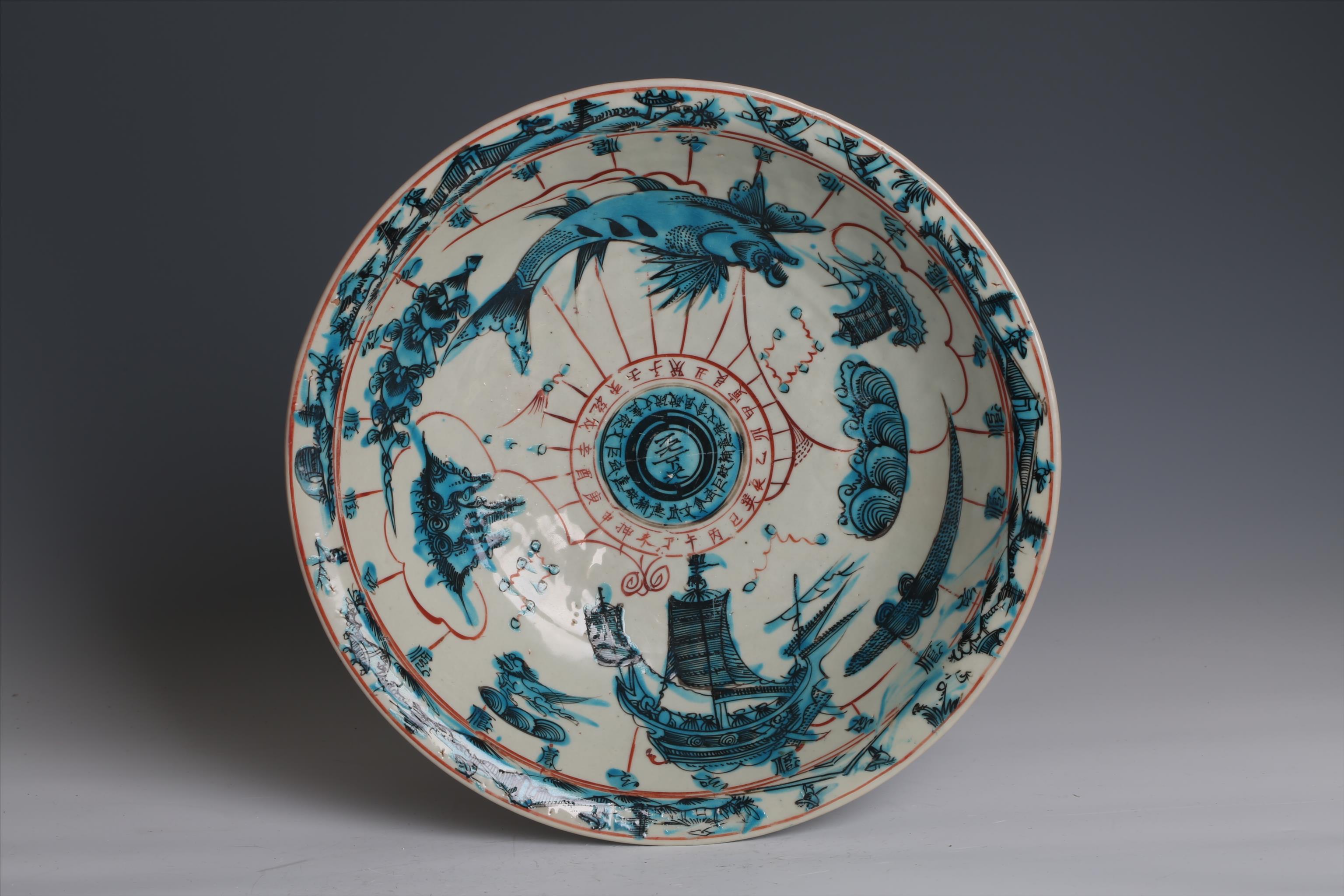
Core Viewpoint - The Ming Dynasty Zhangzhou kiln's maritime porcelain plate serves as a significant artifact for studying maritime history, showcasing the cultural and technological advancements of ancient Chinese navigation [4][21]. Group 1: Historical Significance - The porcelain plate is a key physical evidence for research on Ming Dynasty maritime history, reflecting the era's oceanic character and cultural exchanges [4][21]. - Zhangzhou port emerged as a crucial hub for foreign trade in the late Ming Dynasty, facilitating cultural interactions between the East and West, which contributed to the prosperity of Zhangzhou kiln [21][24]. Group 2: Artistic and Cultural Elements - The plate features distinct maritime motifs, including landscapes, ships, and mythical sea creatures, which represent a faithful record of maritime scenes and the lifestyle of seafaring communities [7][11]. - The central compass design on the plate, a representation of ancient navigation technology, indicates the sophistication of maritime practices during the Ming Dynasty [15][20]. Group 3: Technological Aspects - The compass on the plate is a genuine ancient navigation system, utilizing a 24-direction format based on Chinese astrology and philosophy, allowing for precise directional guidance [15][18]. - The plate's design incorporates elements of astronomy, with star patterns that served both navigational and cultural functions, reflecting the integration of science and art in ancient Chinese society [20][24]. Group 4: Export and Influence - Zhangzhou kiln porcelain became a major export product, significantly contributing to the "Maritime Silk Road" and reaching markets in Japan, Southeast Asia, and even Europe and the Americas [24][26]. - The unique characteristics of Zhangzhou kiln porcelain, including its "anti-counterfeiting" features, distinguish it from other kilns, highlighting its historical and cultural value [33].
开埠前的上海并非小渔村,唐宋已是贸易港口
Di Yi Cai Jing· 2025-07-28 05:13
Core Viewpoint - The article discusses the historical development of Shanghai's civilization over 6000 years, highlighting its archaeological findings and cultural evolution from prehistoric times to its status as a modern international metropolis [1][2][6]. Group 1: Historical Development - Shanghai's prehistoric culture began over 6000 years ago, encompassing various cultural phases such as Majiabang, Songze, Liangzhu, Guangfulin, and Maqiao cultures [1][2]. - Archaeological discoveries since 1935 have identified around 40 sites in Shanghai, primarily in the western regions, revealing significant artifacts like pottery, stone tools, and burial sites that provide insights into early Shanghai's cultural and social characteristics [1][6]. Group 2: Cultural Significance - The integration of northern Central Plains culture with local traditions around 4000 years ago led to the formation of Guangfulin and Maqiao cultures, indicating Shanghai's role in the "multicultural" framework of Chinese civilization [2][4]. - The Maqiao culture, dating back to the Xia and Shang dynasties, showcases a rich diversity of artifacts, particularly the duck-shaped pot, which reflects cultural exchanges between regions [4]. Group 3: Archaeological Insights - The article mentions the upcoming exhibition "Starry China: Sanxingdui and Jinsha Ancient Shu Civilization," which will feature artifacts like jade cong, suggesting potential cultural connections between the Longjiang and Chengdu regions despite significant temporal and spatial gaps [4]. - The Qinglong Town site, identified as Shanghai's earliest foreign trade port, thrived during the Tang and Song dynasties, highlighting the city's historical role in international trade long before modern times [6][7]. Group 4: Urban Development - By the Song dynasty, Qinglong Town evolved into a significant port facilitating broader trade networks, which later shifted to Shanghai Town during the Yuan dynasty due to changes in water systems [7]. - The historical narrative emphasizes that Shanghai's identity as a port city has deep roots, contributing to its open, innovative, and inclusive urban character [7].
深海宝藏中的丝路传奇(文化中国行·走进专题博物馆)
Ren Min Ri Bao· 2025-07-13 22:20
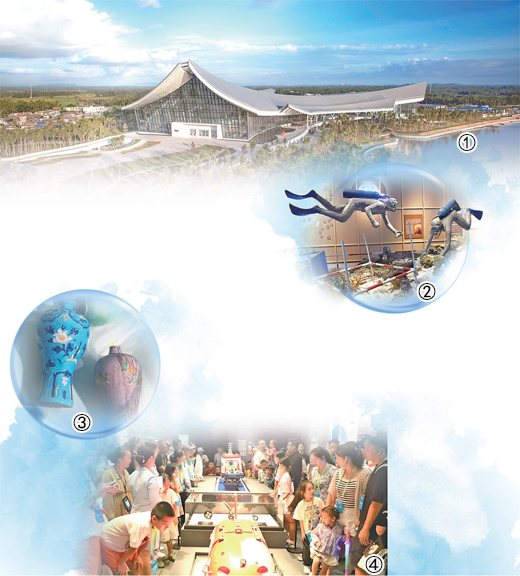
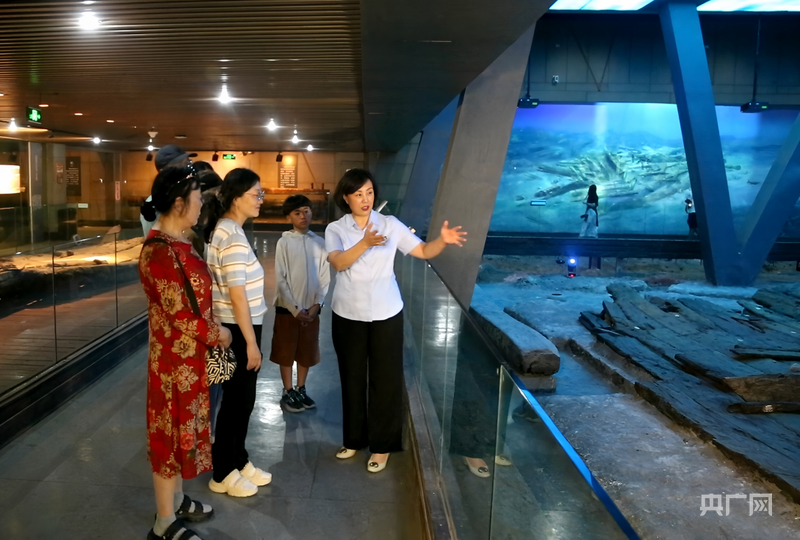
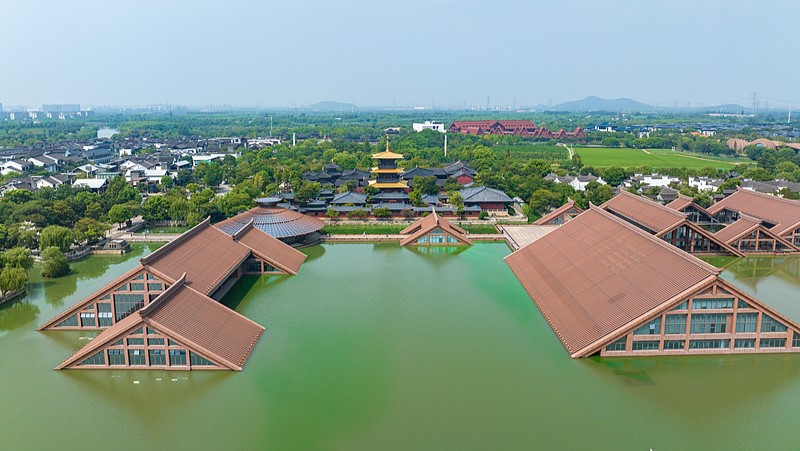
Core Viewpoint - The China (Hainan) South China Sea Museum serves as a significant cultural and historical institution, showcasing artifacts from the Maritime Silk Road and contributing to the understanding of ancient maritime trade and cultural exchanges [2][12]. Group 1: Museum Overview - The museum, opened in 2018, houses over 100,000 artifacts salvaged from the South China Sea, highlighting the historical significance of the Maritime Silk Road [2][11]. - The architectural design of the museum reflects the waves of the sea, symbolizing its connection to maritime culture [2]. Group 2: Archaeological Discoveries - The "Hua Guang Reef No. 1" shipwreck exhibition features a South Song Dynasty merchant ship that sank 800 years ago, providing insights into ancient maritime trade [3][4]. - Artifacts recovered from the ship include various types of porcelain, indicating the ship's likely route from Quanzhou to Southeast Asia [3][4]. - The museum showcases the evolution of Chinese shipbuilding, particularly the "Fuchuan" type, known for its deep draft and large cargo capacity, which played a crucial role in maritime trade [3][4]. Group 3: Advancements in Underwater Archaeology - China's underwater archaeology has advanced significantly, with recent expeditions using advanced technology to explore shipwrecks at depths of over 1,500 meters [5][8]. - The "Deep Sea Warrior" submersible and other high-tech equipment have enhanced the capabilities of underwater archaeological investigations [7][8]. Group 4: Cultural Significance - The artifacts displayed, such as the exquisite "Fahua" porcelain, reflect the blend of Chinese craftsmanship and foreign influences, showcasing the historical trade relationships [10][11]. - The findings from the "South China Sea Northwest Slope No. 1 and No. 2" shipwrecks fill historical gaps in the understanding of ancient maritime routes and trade practices [11][12]. Group 5: Future Prospects - The museum aims to continue its role as a cultural exchange platform along the 21st Century Maritime Silk Road, with plans for a new building to enhance its exhibitions and educational outreach [12][13].