海洋命运共同体

Search documents
精耕深蓝,加快建设海洋强国
Shang Hai Zheng Quan Bao· 2025-08-13 17:48
Group 1 - The article emphasizes the importance of optimizing the development and management of coastal cities to achieve high-quality marine economic development and refined marine space control [1] - Suggestions include assessing marine resources, enhancing environmental carrying capacity, and creating distinctive marine industrial systems [1][3] - China's advancements in marine technology are highlighted, including the launch of the first domestically produced aircraft carrier and significant achievements in deep-sea exploration [2][3] Group 2 - The article discusses the need for innovation in marine technology and the development of emerging industries such as offshore wind power and marine biomedicine [3][4] - It mentions the establishment of marine ranches and the goal of increasing marine product output in Shandong province [4] - China's commitment to global marine governance is illustrated through international collaborations in scientific research and training programs for developing countries [5][6][7] Group 3 - The article outlines China's efforts to enhance its role in international maritime cooperation, including the development of key ports and shipping routes [7] - It highlights the growth in cruise tourism and the increase in passenger traffic at cruise ports [6][7] - The focus on sustainable marine development and the construction of a marine community with a shared future is reiterated [6][7]
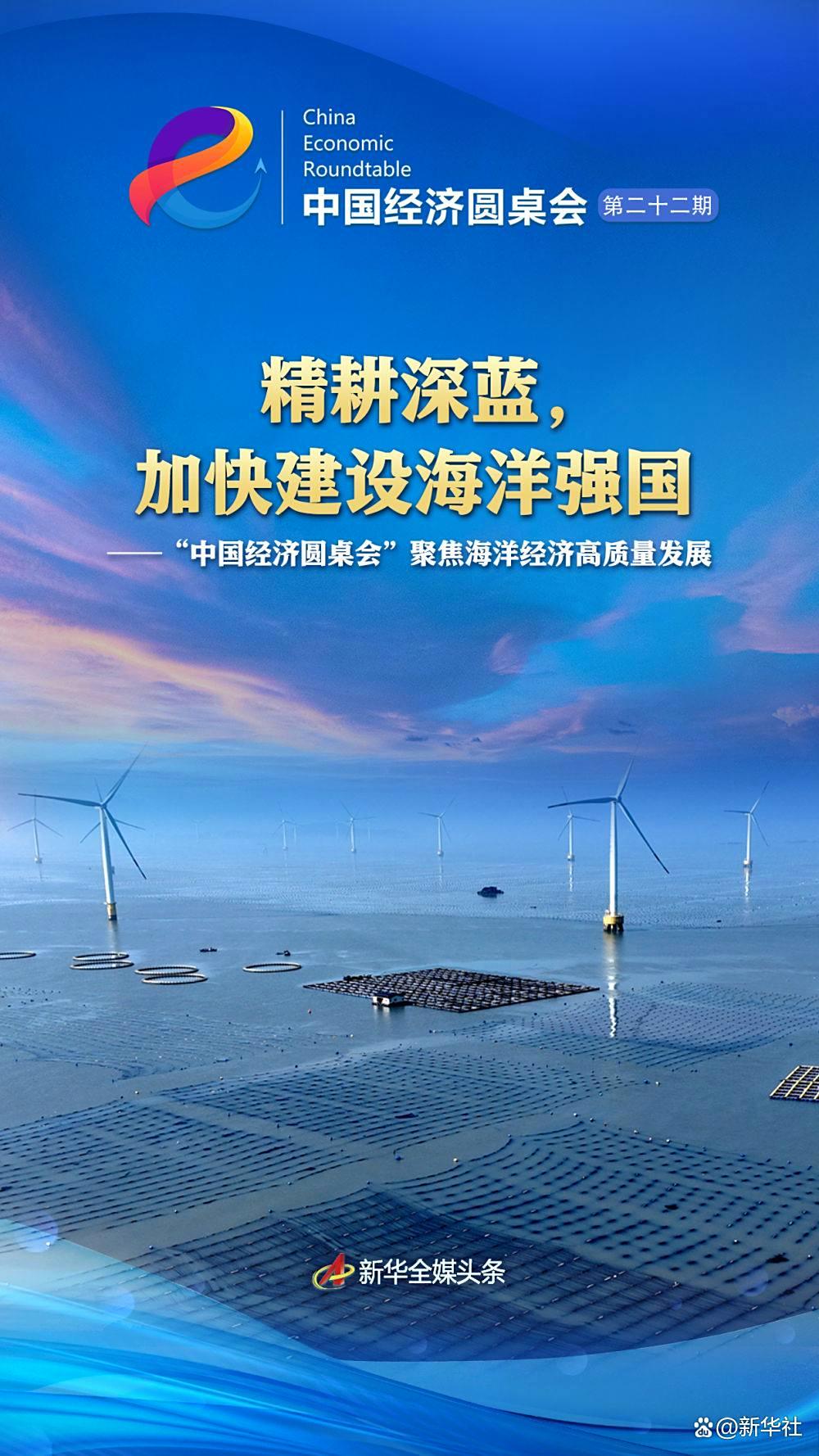
精耕深蓝,加快建设海洋强国——“中国经济圆桌会”聚焦海洋经济高质量发展
Xin Hua She· 2025-08-13 05:11
Core Viewpoint - The article emphasizes the importance of high-quality development of the marine economy in China, highlighting the need for innovation, efficient collaboration, industrial upgrades, harmony between humans and the sea, and win-win cooperation [3][6][31]. Group 1: Marine Economy Development - China's marine production value is expected to exceed 10 trillion yuan in 2024, more than doubling since 2012 [6]. - The country holds approximately one-third of the global shipping volume and container throughput, with a 50% share in the marine engineering equipment market [6]. - China has maintained over 50% of the global market share in shipbuilding completion, new orders, and backlog orders in the first half of this year, with new orders at a high of 68.3% [6]. Group 2: Technological Innovation and Industry Upgrades - The article discusses the shift in marine economy from "fishing" to "strategic deep blue" development, with a complete marine industry system covering all 15 major marine industries [6]. - There is a focus on enhancing marine technology and innovation, with significant advancements in deep-sea exploration and marine scientific research capabilities [20][25]. - The government plans to implement major projects to cultivate new productive forces in the marine sector, including large-scale utilization of marine energy and the development of marine biomedicine [25][27]. Group 3: Integration and Collaboration - The article highlights the integration of marine industries with urban development, particularly in Shandong, where port construction and logistics systems are being optimized [11][13]. - It emphasizes the importance of international cooperation in marine governance, with China actively participating in global marine ecological protection and scientific research [31][34]. - The growth of cruise tourism is noted, with a significant increase in passenger numbers and cruise ship calls, reflecting the rising popularity of maritime travel [34][35].

中国经济圆桌会·新华全媒头条|精耕深蓝,加快建设海洋强国——“中国经济圆桌会”聚焦海洋经济高质量发展
Xin Hua She· 2025-08-13 04:01
Core Viewpoint - The article emphasizes the importance of high-quality development of the marine economy in China, highlighting the need for innovation, efficient collaboration, industrial upgrades, and harmonious human-ocean relationships to build a strong marine nation [1][2]. Marine Economic Development - China's coastline spans over 18,000 kilometers, with a vast marine area of approximately 3 million square kilometers, serving as a strategic space and resource treasure for economic development [2]. - The marine economy has evolved from traditional fishing to a comprehensive approach that includes various sectors such as marine fisheries, shipbuilding, and deep-sea resource utilization [2]. - By 2024, China's marine production value is expected to exceed 10 trillion yuan, more than doubling since 2012, with significant shares in global shipping and marine equipment markets [2]. Integration of Marine Industries - The integration of marine industries is evident in the development of port infrastructure and the promotion of coastal industries, with projects like the construction of large-scale wind turbine blades in Shandong [3]. - Shandong aims to enhance its port services and develop high-end shipping services, transitioning from a "port cluster" to an "urban cluster" [3]. Marine Technology and Innovation - China has made significant advancements in marine technology, including the launch of its first domestically produced aircraft carrier and deep-sea exploration vehicles [5]. - The government is focusing on overcoming technological shortcomings and promoting the transformation of traditional marine industries while fostering emerging sectors like offshore wind energy and marine biotechnology [6]. Sustainable Marine Development - The article discusses the importance of sustainable marine development and global cooperation, with China actively participating in international marine governance and ecological protection efforts [8][9]. - Initiatives such as the establishment of the "Ocean Decade" China Committee and various training programs for developing countries highlight China's commitment to global marine collaboration [9]. Future Directions - The article outlines plans for the future, including the promotion of new marine production capabilities and the development of a modern marine industry system [7][10]. - Emphasis is placed on the need for tailored strategies for different marine areas and the integration of marine cities, industries, and ports to achieve high-quality marine economic development [4].
中国代表呼吁维护以国际法为基础的国际海洋秩序
Xin Hua She· 2025-08-11 22:44
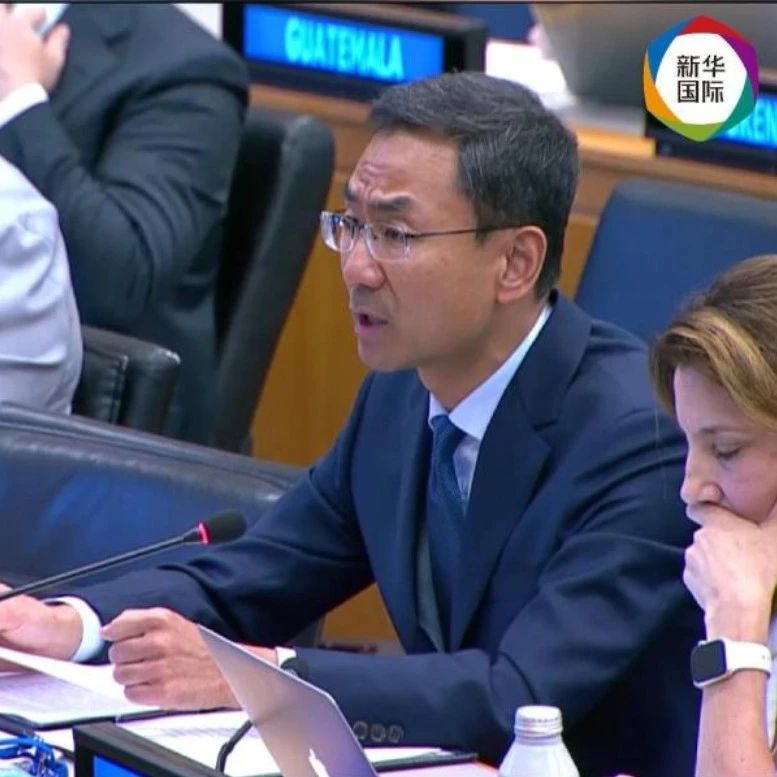
Core Viewpoint - The Chinese representative at the UN emphasizes the importance of maintaining an international maritime order based on international law, particularly the United Nations Convention on the Law of the Sea [1][2] Group 1: International Maritime Order - The United Nations Convention on the Law of the Sea is highlighted as a comprehensive legal document that underpins modern maritime order, alongside other international treaties and customary international law [1] - There is a call for a complete, accurate, and good-faith interpretation and application of the Convention, rejecting selective application and double standards [1] - The need for improved crisis communication and regional cooperation is stressed, with a focus on peacefully resolving disputes over historical maritime territorial and rights issues through friendly negotiations among direct parties [1] Group 2: China's Role in Global Maritime Governance - As a developing maritime power, China actively fulfills its obligations under the United Nations Convention on the Law of the Sea and constructively participates in global maritime governance [2] - China has taken the lead in signing and is actively promoting the ratification of the Agreement on the Conservation of Marine Biological Diversity in Areas Beyond National Jurisdiction [2] - The country has provided various maritime public goods, including maritime route surveys, navigation, weather forecasting, satellite communication, security, and medical support, having dispatched 47 escort fleets to the Gulf of Aden and the waters off Somalia [2] Group 3: Commitment to Peace and Stability - China is committed to resolving maritime disputes through dialogue and negotiation, working with regional countries to maintain maritime peace and stability [2] - The country aims to continue its efforts alongside the international community to build a maritime community with a shared future [2]
如何走好人海和谐的海洋经济绿色发展道路?
Zhong Guo Huan Jing Bao· 2025-08-06 23:13
Core Viewpoint - The development of a high-quality marine economy is essential for China's modernization and is emphasized by the need for innovation, collaboration, and sustainable practices [1][2][3]. Group 1: Marine Economy Development - In 2024, China's marine GDP is projected to reach 10,543.8 billion yuan, growing at a rate 0.9 percentage points higher than the national GDP, accounting for 7.8% of the national GDP and contributing 0.4 percentage points to economic growth [3]. - Coastal provinces, which cover approximately 13.5% of the country's area, support 45% of the population and 54% of the national GDP, indicating significant potential for marine economic development [1]. Group 2: Environmental Protection and Green Development - Transitioning to a green marine economy is crucial for protecting marine ecosystems and enhancing public well-being, as traditional resource-intensive practices have led to severe ecological degradation [2][5]. - The emphasis on ecological civilization requires integrating marine ecological protection into overall marine development strategies, ensuring sustainable practices that enhance biodiversity and ecosystem stability [2][5][6]. Group 3: International Cooperation and Influence - The marine economy plays a vital role in enhancing China's international influence and fostering global marine prosperity, with the global marine market valued at approximately $3 trillion annually, representing about 5% of global GDP [4]. - Promoting green marine development aligns with global trends and necessitates the establishment of new international marine governance frameworks to mitigate human impact on marine environments [4][8]. Group 4: Strategic Pathways for Development - High standards in marine ecological civilization construction are essential, requiring a comprehensive approach to marine ecosystem management and pollution control [5][6]. - The development of new marine productive forces should focus on optimizing industrial structures and fostering emerging strategic industries, leveraging regional advantages for sustainable growth [6][7]. Group 5: Policy and Governance Framework - A higher-level governance system is needed to facilitate the green and high-quality development of the marine economy, emphasizing the collaboration between market mechanisms and government responsibilities [7]. - Optimizing policy frameworks to support marine ecological protection and high-quality development is critical, ensuring a balance between economic growth and environmental sustainability [7].
夯实向海图强坚实根基
Jing Ji Ri Bao· 2025-07-29 22:12
Core Viewpoint - The development of the marine economy is a key area for China's future growth, with recent government meetings emphasizing high-quality development in this sector [1] Group 1: Achievements and Current Status - China has made significant progress in marine economic development, achieving breakthroughs in marine technology, including the successful deployment of major projects like the "Jiaolong" deep-sea submersible and the "Deep Sea No. 1" gas field [1] - Regions such as Shandong, Jiangsu, and Fujian are actively promoting marine industry policies to enhance development capabilities [1] Group 2: Resource Development and Security - The marine environment is viewed as both a resource reservoir and a strategic barrier, with China prioritizing the protection of marine rights and security [1] - Efforts include the development of marine oil and gas, fisheries, and renewable energy industries, alongside strengthening maritime enforcement and management systems [1] Group 3: Technological and Ecological Strategies - There is a recognized gap in key core technologies compared to global marine powers, necessitating a multi-faceted approach to enhance marine capabilities [2] - The focus is on developing marine technology plans that address real-world needs, particularly in clean energy for ports and high-end marine equipment [2] - Ecological considerations are integral to marine development, with strict adherence to ecological protection measures and promotion of green marine industries [2] Group 4: International Cooperation - China aims to actively participate in global marine governance and advocate for a marine community with a shared future [3] - Strengthening cooperation with countries along maritime routes is essential for enhancing trade and technological exchanges [3] - China seeks to contribute to international marine rule-making, thereby increasing its influence in global marine governance [3]
海南在海洋文化传播中具有独特优势
Hai Nan Ri Bao· 2025-07-11 02:05
Core Viewpoint - Hainan possesses unique advantages in marine cultural dissemination due to its rich maritime cultural resources and geographical location [2][3] Group 1: Marine Cultural Resources - Hainan is surrounded by the sea, providing a strong attraction to the ocean, which can be leveraged for marine education [2] - The China (Hainan) South China Sea Museum houses a wealth of maritime artifacts, enhancing public engagement with maritime culture [2] - Facilities such as lighthouses, beaches, shells, and marine life serve as connections between youth and the ocean, allowing for direct experiences of its natural and cultural values [2] Group 2: Importance of Marine Education - The primary goal of marine education activities is to raise public awareness of the strategic importance of the ocean to China [2] - There is a need for a large number of professionals to support the construction of a marine community and promote high-quality development of the marine economy [2] - Marine education is crucial for attracting and nurturing talent in the maritime field [2][3] Group 3: Historical Context and Future Recommendations - The legacy of Zheng He’s voyages, which passed through Hainan, serves as a means to promote maritime knowledge and the spirit of teamwork [3] - Future recommendations include establishing a more systematic marine education framework based on Hainan's marine resources to support the development of marine industries [3]
中方代表点名美国
券商中国· 2025-06-26 23:26
Core Viewpoint - The article emphasizes that the United States is abusing the United Nations Convention on the Law of the Sea (UNCLOS) rules, acting as a speculator and a disruptor of international maritime order [1][2]. Group 1: U.S. Actions and Attitudes - The U.S. has not joined UNCLOS but frequently references it to criticize other countries' compliance while seeking to benefit from its provisions without fulfilling its responsibilities [2]. - The U.S. disregards collective international efforts under UNCLOS, opting for unilateral development of deep-sea resources and politicizing issues like undersea cables [2][3]. - The U.S. opposes the United Nations' 2030 Sustainable Development Agenda and has shown a lack of engagement in international marine governance, including not participating in significant conferences [3]. Group 2: Regional Implications - The U.S. is seen as a disruptor of peace and stability in the South China Sea, misinterpreting UNCLOS to justify military presence and infringing on the sovereignty of other nations [3][4]. - The U.S. undermines regional cooperation efforts aimed at maintaining peace and friendship in the South China Sea, creating distrust among neighboring countries [3]. Group 3: China's Position - China, as a contracting party to UNCLOS, commits to upholding the spirit of the convention and fulfilling its obligations, opposing selective application and misuse of dispute resolution procedures [5]. - China calls for all nations to practice multilateralism and work together towards sustainable development goals, promoting a shared maritime community [6].
滨海城市可持续发展的海洋方案工具包发布
Zhong Guo Zi Ran Zi Yuan Bao· 2025-06-23 03:28
Core Viewpoint - The article discusses the launch of the "Marine Solutions Toolkit for Sustainable Coastal City Development," aimed at addressing climate change impacts on coastal cities and promoting sustainable development through scientific collaboration and innovation [1][2][3] Group 1: Toolkit Development and Features - The toolkit consists of six core modules and 24 sub-modules, covering critical areas such as marine and climate warning, marine navigation safety, nearshore ecological health, integrated coastal management, blue economy support, and marine literacy [3] - It integrates marine big data, advanced numerical models, and artificial intelligence technologies to provide visualized products and services for end-users and decision-makers in coastal cities [3] Group 2: Global Collaboration and Participation - The toolkit was developed through collaboration among multiple countries and research institutions, emphasizing a shared design, development, and benefit approach, and is made available to global users for free [2] - Chinese research teams have been deeply involved in the "Ocean Decade" initiative, contributing to strategic planning and platform construction, and leading international scientific programs to enhance global marine governance capabilities [2][3] Group 3: Implications for Sustainable Development - The launch of the toolkit reflects China's commitment to global marine governance and the construction of a marine community with a shared future, aiming to provide technological support for the 21st Century Maritime Silk Road and the establishment of a strong marine nation [3] - The toolkit is expected to facilitate the rapid transfer of scientific knowledge to the public and decision-makers, offering cost-effective solutions for various marine management activities [2]
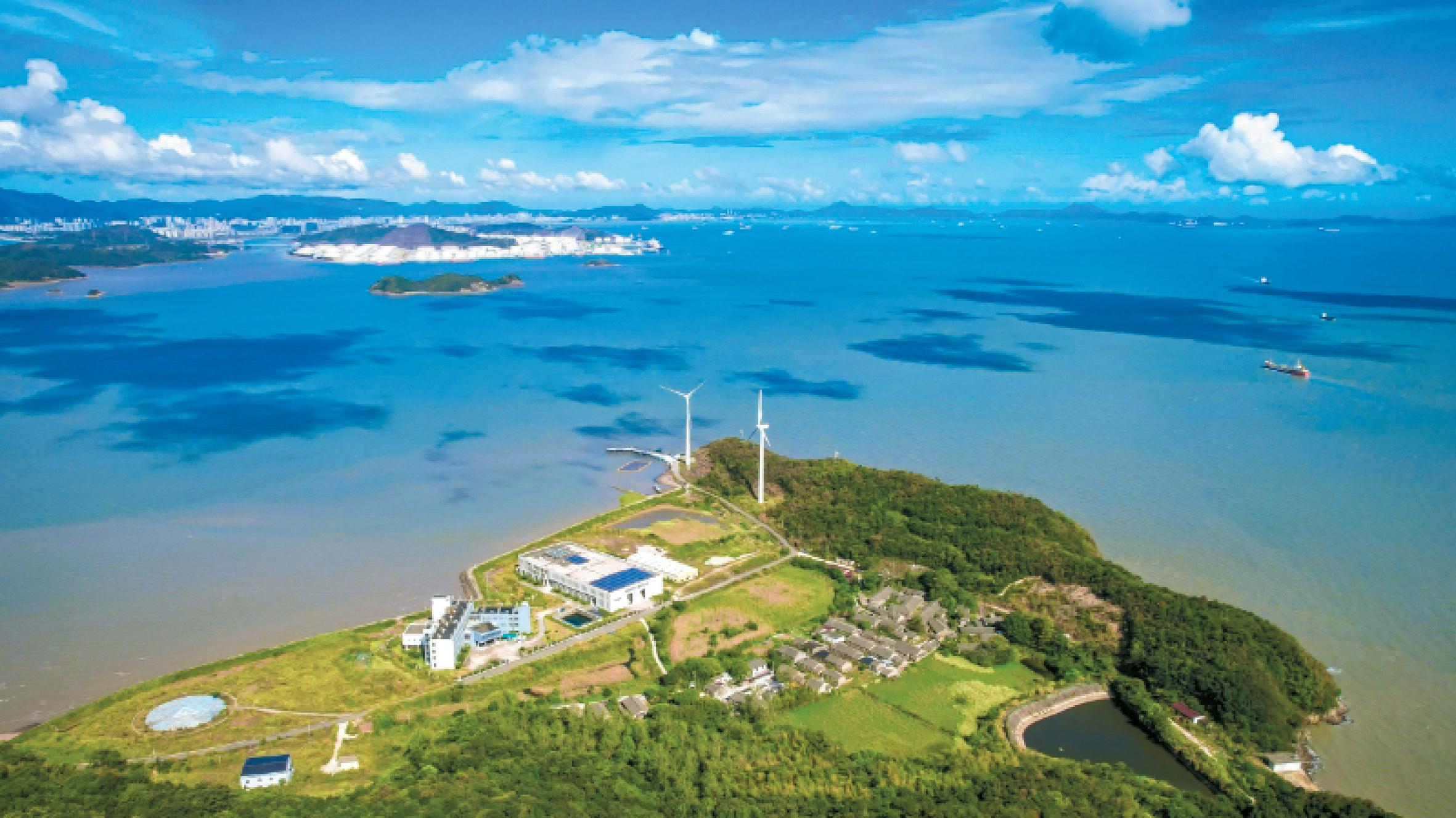
打造蓝色科技方舟——浙江大学摘箬山海洋科技示范岛建设纪实
Zhong Guo Zi Ran Zi Yuan Bao· 2025-06-20 02:25
Core Viewpoint - The establishment of the National Marine Comprehensive Experimental Field in Zhoushan, supported by Zhejiang University and local government, aims to enhance marine technology innovation and industry development through collaboration among academia, research institutions, and enterprises [4][7][9]. Group 1: Infrastructure and Facilities - The Zhikua Mountain Marine Science Demonstration Island, the first of its kind in China, was officially launched in 2011 and completed a 15,430 square meter experimental base by 2014, which includes various marine research facilities [6][16]. - The base has secured a research and teaching sea area of 18.5 hectares and supports practical training and research through the "Zijin Port" vessel docked at the Zhoushan scientific research terminal [6][16]. - Additional infrastructure, such as the ferry and ramp docks, was completed in 2017 to ensure efficient operations for experimental vessels [6][16]. Group 2: Research and Development Projects - Since its opening in 2014, the facility has developed over ten marine technology demonstration projects, including the "Huajiachi" floating scientific experimental platform and a tidal energy power generation test station [9][17]. - The "Huajiachi" platform is the first floating marine test platform in China, capable of conducting various tests related to marine conditions and renewable energy [9][17]. - The tidal energy test station includes a 60 kW unit, which is the longest-running tidal energy unit in China, and a 120 kW unit that was among the first to be connected to the grid [9][17]. Group 3: Collaborative Efforts and Educational Impact - The Zhikua Mountain facility promotes collaboration among universities, research institutions, and enterprises to accelerate marine technology transfer and industrialization [9][12]. - It serves as a practical training base for marine science students, supporting various undergraduate courses and summer practice activities for both domestic and international students [12][22]. - The facility also engages in outreach activities, such as the "Big Hand Pulling Small Hand" initiative, to inspire local students and raise awareness about marine science [12][22].