
电力体制改革

Search documents
专家解读丨《电力市场计量结算基本规则》出台 构建全国统一电力市场的重要基石
国家能源局· 2025-08-09 02:30
Core Viewpoint - The introduction of the "Basic Rules for Electricity Market Measurement and Settlement" marks a significant step towards establishing a unified national electricity market in China, aiming to standardize and enhance the transparency of measurement and settlement processes [3][5]. Summary by Sections Background and Significance - The need for reform in the electricity market's measurement and settlement processes has become critical due to existing issues such as inconsistent rules across provinces, lack of data transparency, and varying settlement cycles, which hinder efficient resource allocation [6]. - The issuance of the rules aligns with national policies aimed at breaking local protectionism and promoting efficient resource flow, thus providing a necessary institutional guarantee for market transactions [6]. Key Components of the Rules - The rules cover measurement management, settlement management, and supervision management, defining the scope of measurement and settlement to include all types of electricity market transactions, including virtual power plants and new energy storage [4]. - The settlement process is divided into three stages: preparation, basis compilation, and electricity fee settlement, with an emphasis on transparency and the prohibition of "imbalance funds" [4]. Importance of the Rules - The rules establish a standardized framework that reduces cross-provincial transaction costs and enhances market efficiency by promoting a "daily clearing and monthly settlement" model in regions with continuous spot market operations [11]. - By ensuring transparency in settlement processes and reinforcing risk prevention measures, the rules protect the legitimate rights and interests of market participants, thereby increasing market confidence and attracting more investment [12]. Digital Transformation and New Energy System Support - The rules support the digital transformation of the electricity market by requiring the establishment of a unified data platform for automatic data collection and interaction, paving the way for future applications of technologies like blockchain and smart contracts [13]. - By including new entities such as virtual power plants and new energy storage in the settlement system, the rules facilitate their participation in auxiliary services and capacity markets, thus supporting the construction of a new energy system [14]. Challenges Ahead - Despite the establishment of a unified framework, challenges remain, particularly regarding the insufficient data infrastructure needed to support the high-frequency settlement required by the rules [16]. - Issues such as inadequate coverage of distributed energy measurement devices, insufficient data collection frequency, and delays in data transmission networks need to be addressed to fully realize the potential of the new rules [16].


《电力市场计量结算基本规则》出台 促进电力资源在全国范围内自由流通
Ren Min Ri Bao Hai Wai Ban· 2025-08-08 02:32
人民日报海外版记者 廖睿灵 电力市场计量结算标准不统一,结算周期差异大……这些阻碍电力交易的问题,将更好得到解决。 近日,国家发展改革委、国家能源局印发《电力市场计量结算基本规则》(以下简称《规则》),规范 结算业务管理,强化结算风险管理,统一电费收付要求。 "《规则》出台后,标志着以《电力市场运行基本规则》为基础,电力中长期、现货、辅助服务规 则为主干,信息披露、市场注册、计量结算为支撑的电力市场'1+6'基础规则体系构建完成,为建设全 国统一电力市场奠定坚实规则基础。"国家能源局有关负责人说。 此次《规则》的出台,进一步推动了电力市场计量结算业务统一。北京电力交易中心有关负责人分 析,《规则》统一了计量数据采集、传输、校验、校核流程标准。在国家层面明确市场经营主体、电力 交易机构、电力调度机构、电网企业等各类市场成员在计量装置管理、计量数据管理方面的权利与义 务,奠定计量数据质量基础、提升计量数据管理水平。 此外,统一了结算周期及时限要求。"此前,电力市场结算时序由各地自行制定,部分地区电费结 算时间较晚,个别地区结算时间长达1个月。"国家能源局有关负责人说。《规则》规范了结算准备、结 算依据和电费账单编 ...
专家解读丨《电力市场计量结算基本规则》出台 为全国统一电力市场计量结算工作筑牢根基
国家能源局· 2025-08-07 01:52
Core Viewpoint - The introduction of the "Basic Rules for Electricity Market Measurement and Settlement" serves as a crucial institutional guarantee for the construction of a unified national electricity market, filling the last gap in the "1+6" foundational rule system [3][4]. Group 1: Institutional Foundation - The new rules aim to address the final bottleneck in the nationwide circulation of electricity, aligning with the national goal of establishing a high-efficiency and fair competitive unified market by 2025 [4]. - The "1+6" foundational rule system, which includes the new measurement and settlement rules, is designed to standardize the entire process from transaction declaration to settlement, resolving long-standing inconsistencies in measurement and settlement standards [4][5]. Group 2: Fair and Efficient Market Operation - The rules establish a unified settlement cycle based on natural months, providing a framework for accurate electricity cost management for market participants [6]. - A comprehensive standardization of the settlement preparation phase is mandated, requiring a unified data exchange platform to facilitate efficient data flow across all segments of the electricity market [6][7]. Group 3: Impact and Future Outlook - The implementation of the rules is expected to enhance the quality and efficiency of electricity market measurement and settlement, breaking down regional barriers and promoting resource circulation [9]. - The rules will significantly lower transaction costs and improve transaction efficiency, facilitating a more integrated and competitive electricity market [9][10]. - The introduction of these rules marks a milestone in the reform of the electricity system, laying a solid foundation for a transparent, efficient, and unified electricity market that supports energy transition and high-quality economic development [10].

国家能源局有关负责同志就《电力市场计量结算基本规则》答记者问
国家能源局· 2025-08-06 09:46
Core Viewpoint - The issuance of the "Basic Rules for Metering and Settlement in the Electricity Market" aims to unify and standardize the metering and settlement processes across the national electricity market, addressing existing inconsistencies and inefficiencies in the system [3][4]. Group 1: Background and Purpose - The rules are a continuation and enhancement of previous regulatory documents since the 2015 electricity system reform, aiming to establish a unified national electricity market [3][4]. - The need for these rules arose from various issues such as inconsistent metering management, unclear responsibilities among market participants, and delays in electricity settlement [3][4]. Group 2: Main Content of the Rules - The rules consist of 6 chapters and 56 articles, covering general provisions, overall requirements, metering management, settlement management, supervision management, and supplementary provisions [5]. - Key areas include defining rights and obligations of market participants, managing metering devices and data, and establishing clear settlement processes and timelines [5]. Group 3: Requirements for Unified Metering and Settlement - Emphasis on independent metering conditions and regular calibration of metering devices, with clear responsibilities for costs [6]. - Standardization of settlement processes, including rights and obligations of various market participants, and unification of measurement units and settlement cycles [6][7]. - Introduction of risk management measures for settlements, including the requirement for market participants to provide guarantees [6]. Group 4: Responsibilities in Market Settlement - Clear division of responsibilities between electricity trading institutions and grid companies in the settlement process, with trading institutions responsible for compiling settlement data and grid companies for providing metering data and issuing bills [8]. - The rules clarify the responsibilities of grid companies in verifying settlement data and outline the verification process [8]. Group 5: Settlement Timing Regulations - The rules standardize the timing of settlement processes, which previously varied by region, ensuring timely issuance of settlement data and bills [9]. - Specific timelines are established for the issuance and confirmation of settlement data, with provisions for dispute resolution [9].

盐城建成全国首个真正实现绿电可溯源的产业园区
Xin Hua Ri Bao· 2025-08-03 23:43
Core Viewpoint - The establishment of the zero-carbon industrial park in Yancheng's Dafeng Port represents a significant step towards integrating green electricity into manufacturing processes, particularly for the electric bicycle industry, as companies adapt to stringent international carbon footprint regulations [1][4]. Group 1: Company Developments - Shanghai Permanent Import and Export Co., Ltd. is launching its first production line for high-end electric bicycles that utilizes physically traceable green electricity, aiming to produce 200,000 units annually for global export [1]. - The company has transitioned its production line to meet the carbon footprint tracing requirements set by the EU's Battery and Waste Battery Law, which poses challenges for companies unable to trace their carbon emissions [1][4]. - Other companies, such as Zhongke Hanyu Technology, are also set to connect to the green electricity line, indicating a broader industry shift towards sustainable practices [4]. Group 2: Industry Trends - The introduction of a dedicated green electricity line at Dafeng Port is a response to the increasing demand for traceable green energy sources, driven by international trade regulations [2][3]. - The establishment of the first 10 kV "green electricity dedicated line" in the country has enabled direct supply of renewable energy to enterprises, enhancing the traceability of carbon emissions [3]. - The local government is actively promoting green electricity projects to attract foreign investment in battery and green fuel sectors, thereby boosting the regional economy [5]. Group 3: Regulatory and Policy Framework - The local government has implemented a high-standard plan to adapt to international green trade rules, incorporating physical traceability of green electricity and high consumption ratios into its development strategy [2][3]. - The collaboration with international certification bodies aims to standardize carbon footprint assessments, facilitating smoother international trade for local manufacturers [4]. - The provincial development and reform commission is committed to enhancing the green competitiveness of key industries, particularly in battery production, through the promotion of green electricity initiatives [5].
A股尾盘,多股异动拉升涨停
Zheng Quan Shi Bao· 2025-07-21 10:31
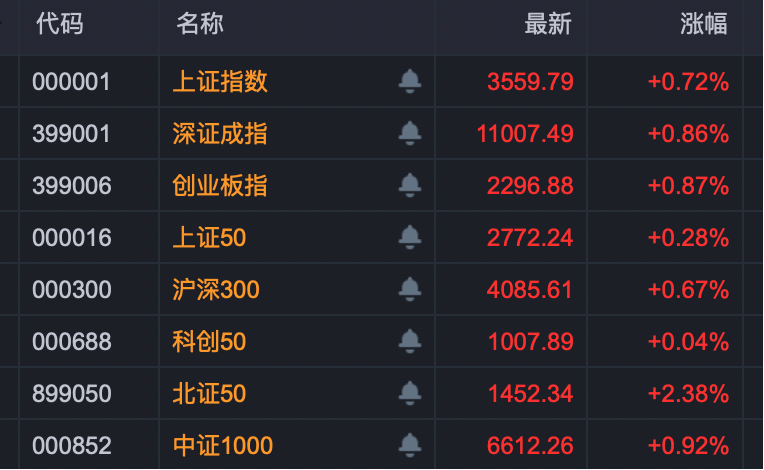
Market Performance - The three major A-share indices collectively rose, with the Shanghai Composite Index closing at 3559.79 points, up 0.72%, reaching a new high for the year [1] - The Shenzhen Component Index closed at 11007.49 points, up 0.86%, breaking through the 11000-point mark [1] - The ChiNext Index closed at 2296.88 points, up 0.87%, also achieving a new high for the year [1] - Over 4000 stocks in the market rose, with total trading volume exceeding 1.7 trillion yuan [1] Sector Performance - Traditional infrastructure sectors such as cement, water conservancy, engineering machinery, and civil explosives saw significant gains, while banking and education sectors remained sluggish [1][4] - The cement and machinery sectors experienced a surge due to the commencement of the Yarlung Tsangpo River downstream hydropower project, benefiting related companies [4] Stock Movements - Electric grid equipment stocks saw notable increases, with companies like China West Electric and XJ Electric hitting the daily limit up [6] - The electric grid sector index rose by 3.23%, indicating strong investor interest [7] - Solid-state battery stocks also remained active, with companies like Huazi Technology and Defu Technology seeing substantial gains [8][9] Future Outlook - Institutions predict that the electric grid investment is expected to maintain a growth rate of over 10% by 2025, driven by the dual carbon transition and the expected rollout of reserve projects [6] - The power sector is anticipated to benefit from ongoing reforms and rising electricity demand, with the maximum national power load recently reaching a record high of 1.506 billion kilowatts [8]
用电负荷破纪录,电力股“高温”不退
2 1 Shi Ji Jing Ji Bao Dao· 2025-07-17 13:15
Core Insights - The national electricity load in China has reached a historical high, surpassing 1.5 billion kilowatts for the first time, indicating a significant increase in electricity demand due to high temperatures this summer [1][2] - Multiple provinces have reported record-breaking electricity loads, with Sichuan, Shaanxi, and Zhejiang among those experiencing substantial increases [2][3] - The National Energy Administration is implementing measures to ensure electricity supply during peak demand periods, with a focus on coal inventory and inter-provincial electricity trading [7][9] Electricity Demand and Supply - As of July 16, 2023, the national maximum electricity load reached 1.506 billion kilowatts, an increase of 0.55 million kilowatts compared to the previous year [1] - The summer of 2023 has seen multiple records broken for electricity load, with 36 instances of historical highs reported across various provincial grids [2] - The National Energy Administration has noted that coal inventories at regulated power plants remain above 200 million tons, ensuring over 30 days of supply [7] Market Performance - The electricity sector index has risen by 2.22% this year, with significant net inflows into electricity stocks, totaling 2.444 billion yuan over the last 10 trading days [4] - Companies like Huayin Electric have seen stock price increases of over 80% in July, reflecting strong market interest [4][5] - The performance of electricity companies is bolstered by lower coal prices, which have reduced operational costs and improved profit margins [5][6] Policy and Regulatory Environment - The National Development and Reform Commission and the National Energy Administration are working on a mechanism for regular inter-grid electricity trading to enhance supply stability during peak periods [9] - The ongoing electricity market reforms are expected to reshape the profitability of thermal power generation, with a focus on integrating renewable energy sources [6][9] - The establishment of a unified national electricity market is anticipated to improve resource allocation and resilience of the electricity grid [7][9]
甘肃容量电价新政点评:市场化以需定价,提高容量电价标准和覆盖面
Xinda Securities· 2025-07-16 07:58
Investment Rating - The industry investment rating is "Positive" [1] Core Insights - The new capacity pricing policy in Gansu Province significantly raises the coal power capacity price standard to 330 CNY/kW·year, exceeding market expectations and providing a two-year implementation period [3][4] - The policy expands the coverage of capacity pricing to include various power generation types such as energy storage, hydropower, wind, and solar, with different capacity coefficients based on their contributions to grid capacity [4][6] - Gansu's capacity pricing reform is expected to lead the direction of electricity market reform in China, with the potential for a nationwide adjustment in capacity pricing, benefiting coal power companies [5][7] Summary by Sections Section 1: Policy Highlights - The Gansu capacity pricing policy introduces a significant increase in the coal power capacity price standard, with a planned increase to no less than 165 CNY/kW·year by 2026 [3] - The policy creatively includes various power generation types in the compensation scope, determining capacity fees based on their effective capacity contributions [4] Section 2: Market Impact - The new policy is seen as a major breakthrough, potentially accelerating the transformation of coal power functions amid the rapid growth of renewable energy installations during the "14th Five-Year Plan" [5] - The market-oriented approach to capacity pricing is expected to yield higher compensation levels by 2026, reflecting actual supply and demand dynamics [6] Section 3: Investment Recommendations - Gansu is positioned as a leader in national electricity market reform, with the potential for value reassessment of coal power companies due to the unexpected increase in capacity pricing [7] - Key beneficiaries include Gansu Energy and Huaneng International, with other coal power companies encouraged to follow Gansu's model [7]
电改巨轮即将启航 面对险滩要有预案
Zheng Quan Shi Bao· 2025-07-09 18:44
Core Viewpoint - The launch of a national unified electricity market in China is set to support the "dual carbon" goals and efficient energy allocation, indicating a profound transformation in the electricity system, accompanied by new challenges [1] Group 1: Challenges and Risks - The transition to a national electricity market may lead to resource siphoning from underdeveloped regions to developed ones, raising concerns about market efficiency and regional equity [1] - New market participants face uncertainty in market signals, particularly as renewable energy projects move away from guaranteed planning electricity, making investment decisions precarious [1] Group 2: Strategies for Adaptation - Participants need to enhance market adaptability and manage price volatility, with examples including adjusting production schedules to low-price periods and optimizing costs through time-based electricity pricing [1] - Companies must shift from passive acceptance to strategic participation in the market [1] Group 3: Institutional Framework - Activating diverse stakeholders and strengthening transparent regulation are crucial for breaking the zero-sum game, requiring more users to enter the spot market and ensuring fair and transparent rule mechanisms [2] - The transformation challenges not only technology but also the wisdom of institutional design and the strategies of various participants [2] - There is a need for further linkage between renewable energy development models and electricity market prices, with all players, including renewable energy companies, contributing to the overall reduction of electricity costs [2]
歧路无喧,电启新程——公用事业行业2025年度中期投资策略
2025-07-09 02:40
Summary of Key Points from the Conference Call Industry Overview - The conference call focuses on the **public utility industry**, particularly the **thermal power sector** and its dynamics in the context of coal prices and electricity pricing strategies [1][2][3]. Core Insights and Arguments - **Coal Price Impact**: A significant drop in coal prices has not led to a notable increase in thermal power valuations, as the market is primarily pricing based on future profit recovery [1][2]. - **Electricity Pricing Reform**: Starting in 2026, the recovery of fixed costs in coal-fired capacity pricing will be no less than 50%, which is expected to reduce the cyclicality of thermal power [1][3]. - **Dividend Attractiveness**: Leading companies like Huaneng International have attractive dividend yields, exceeding 6.5%, which is appealing to investors [1][3]. - **Investment Environment**: The competition in the thermal power sector is categorized into emerging and classical paradigms, with the latter showing a clearer window for investment from March to July [1][4]. - **Profitability Concerns**: The profitability of thermal power is influenced by fluctuations in coal and electricity prices, with market confusion regarding electricity pricing limiting profit expectations [1][6][7]. Additional Important Content - **Valuation and Profitability**: The thermal power sector has opportunities, but systemic valuation expansion remains uncertain. The market has not shown significant valuation increases despite initial expectations during the 14th Five-Year Plan [2][3]. - **Green Energy Transition**: The green energy sector is in a reversal phase, with policies like Document 136 alleviating concerns over long-term project returns, signaling a recovery in the fundamental outlook [2][18]. - **Regional Pricing Dynamics**: In Guangdong, coal prices fell by 20%, but electricity prices remained stable, indicating a complex relationship between coal and electricity pricing [13][16]. - **Long-term Investment Value**: The thermal power industry shows long-term investment potential, with companies experiencing significant revenue growth compared to broader market indices [9][30]. - **Green Certificate Market**: The green certificate market has faced supply-demand imbalances, but recent policy changes are expected to stabilize the market and improve transaction volumes [21][22]. Conclusion - The public utility sector, particularly thermal power, is navigating a complex landscape influenced by coal prices, regulatory reforms, and market dynamics. Investors are advised to focus on companies with strong dividend yields and favorable positioning in the evolving energy landscape. The green energy sector is also poised for recovery, presenting potential investment opportunities.