资本配置

Search documents
SunCoke Energy(SXC) - 2025 Q4 - Earnings Call Transcript
2026-02-17 17:02
Financial Data and Key Metrics Changes - Consolidated adjusted EBITDA for Q4 2025 was $56.7 million, down $9.4 million year-over-year, primarily due to lower coke sales volumes and market conditions [9][10] - Full-year consolidated adjusted EBITDA was $219.2 million, a decrease of $53.6 million compared to the previous year [9][10] - The net loss attributable to SunCoke for Q4 2025 was $1 per share, down from $1.28 per share in Q4 2024, driven by one-time items totaling $0.85 per share net of tax [8] - Full-year net loss attributable to SunCoke was $0.52 per share, down from $1.64 per share in 2024, impacted by one-time items totaling $0.97 per share net of tax [8] Business Line Data and Key Metrics Changes - Domestic coke business delivered full-year adjusted EBITDA of $170 million, down $64.7 million from the prior year, affected by contract and spot coke sales mix changes and lower contract economics [10] - Industrial services segment, including Phoenix Global, delivered full-year adjusted EBITDA of $62.3 million, an increase of $11.9 million year-over-year, primarily due to the addition of Phoenix Global [11] - Corporate and other expenses increased by $800,000 year-over-year to $13.1 million, reflecting costs from legacy operations [11] Market Data and Key Metrics Changes - The domestic coke segment is expected to deliver adjusted EBITDA between $162 million and $168 million in 2026, with sales of approximately 3.4 million tons [16][18] - Industrial services adjusted EBITDA is projected to be between $90 million and $100 million in 2026, reflecting expectations for improved market conditions [19][20] Company Strategy and Development Direction - The company plans to utilize free cash flow to support capital allocation priorities, including paying down revolver balance and maintaining dividends [22] - Focus on seamless integration of Phoenix Global and exploring new growth opportunities across all business areas [23] - The company aims to maintain strong safety and environmental performance as a competitive advantage [22] Management's Comments on Operating Environment and Future Outlook - Management anticipates a meaningful recovery in 2026, supported by an optimized coke fleet and extended contracts [15] - The company expects to generate positive free cash flow in 2026, with gross leverage targeted around 2.45x, below the long-term target of 3x [15] - Management highlighted challenges in 2025 due to market conditions but remains optimistic about future performance [15] Other Important Information - The company returned approximately $41 million to shareholders via dividends in 2025 and plans to continue this in 2026 [7] - The integration of Phoenix Global is progressing well, with expectations for significant contributions in 2026 [15] Q&A Session Summary Question: Status of litigation with Algoma regarding contract breach - Management confirmed ongoing arbitration with Algoma, expecting to recover losses from the breach, which could amount to up to $70 million [28][29] Question: Anticipated EBITDA contribution from Phoenix Global - Management affirmed expectations of an annual EBITDA contribution of roughly $60 million from Phoenix Global [31] Question: One-time integration costs incurred with Phoenix Global - One-time costs included site closure costs of about $3.9 million and transaction costs of approximately $600,000 [32] Question: Permanence of Haverhill One closure and potential reopening - Haverhill One closure is permanent unless significant capital investment is made, which is not currently justified [40] Question: Expected improvement in tons handled in the industrial segment - Guidance includes a full year of the new KRT contract and modest recovery across both KRT and CMT [49]

Sunoco LP(SUN) - 2025 Q4 - Earnings Call Transcript
2026-02-17 16:02
Financial Data and Key Metrics Changes - The partnership achieved record adjusted EBITDA of $706 million in Q4 2025, excluding approximately $60 million of one-time transaction expenses, reflecting ongoing operational strength and contributions from the Parkland acquisition [5][6] - Full year 2025 adjusted EBITDA reached a record $2.12 billion, a 36% increase over the prior year, driven by solid growth in the base business and contributions from acquisitions [6][16] - The trailing twelve-month coverage ratio finished at a strong 1.9x, indicating robust cash flow relative to distributions [6] Business Line Data and Key Metrics Changes - In the fuel distribution segment, adjusted EBITDA was $391 million in Q4 2025, up from $238 million in Q3 and $192 million in Q4 2024, with a 44% increase in distributed gallons compared to the previous quarter [9][10] - The pipeline system segment reported adjusted EBITDA of $187 million in Q4, consistent with the previous year, while throughput remained stable at 1.4 million barrels per day [12] - The terminal segment's adjusted EBITDA was $87 million in Q4, up from $76 million in Q3 and $61 million in Q4 2024, benefiting from the Parkland acquisition [13] - The new refining segment generated adjusted EBITDA of $41 million in Q4, reflecting improved performance following the Parkland transaction [14] Market Data and Key Metrics Changes - The U.S. fuel distribution market showed flat to slightly declining demand, but the company outperformed these trends due to effective capital deployment [26] - Canadian refined product demand has been slightly up, with strong margins in regulated markets, indicating a favorable environment for growth [28] - The Caribbean market demonstrated strong demand, particularly in jurisdictions like Guyana, which has experienced significant GDP growth [30] Company Strategy and Development Direction - The company aims for a multi-year annual distribution growth rate of at least 5%, supported by a strong financial position and disciplined capital allocation [6][21] - The integration of Parkland and TanQuid is expected to enhance operational scale and synergies, contributing to future growth [15][19] - The company is positioned as both a defensive play and an attractive growth opportunity within the midstream sector, focusing on value-creating growth through acquisitions and capital projects [20][21] Management's Comments on Operating Environment and Future Outlook - Management expressed confidence in the resilience of the legacy Sunoco business and the expected strong performance of all segments in 2026 [17][18] - The company anticipates continued strong cash flow growth and a solid credit profile, with a focus on maintaining a healthy balance sheet while pursuing growth opportunities [18][19] - Management highlighted the importance of adapting to market complexities and regulatory changes, which could benefit the company in the long term [47] Other Important Information - The company declared a distribution of $0.9317 per common unit, marking a 1.25% increase over the prior quarter and the fifth consecutive quarterly distribution increase [5] - The company expects minimal corporate income taxes for at least five years, which will support distribution growth for both Sunoco and SunC unitholders [42][43] Q&A Session Summary Question: How is demand trending across your footprint pro forma Parkland? - Management noted that U.S. demand has been flat, but the company has outperformed due to effective capital deployment, while Canadian demand has been slightly up, and Caribbean markets show strong demand [26][28][30] Question: Can you walk us through the pro forma terminaling portfolio post-integration of Parkland and TanQuid? - Management indicated that critical infrastructure supports the fuel distribution business across various geographies, with opportunities for growth through capital projects and M&A [32][33] Question: Where do you see the greatest opportunity for bolt-on M&A? - Management stated that opportunities exist across all segments and geographies, emphasizing a disciplined approach to capital allocation and project selection [52][53] Question: How do you feel about your synergy target with Parkland? - Management expressed confidence in exceeding synergy targets, with a focus on delivering synergies quickly and maintaining a strong base business [57][58]

Sunoco LP(SUN) - 2025 Q4 - Earnings Call Transcript
2026-02-17 16:02
Financial Data and Key Metrics Changes - The partnership achieved record adjusted EBITDA of $706 million in Q4, excluding approximately $60 million of one-time transaction expenses [5] - For the full year 2025, adjusted EBITDA reached a record $2.12 billion, a 36% increase over the prior year [6] - Q4 distributable cash flow, as adjusted, was $442 million, with a trailing twelve-month coverage ratio finishing at 1.9x [5][6] Business Line Data and Key Metrics Changes - Fuel distribution segment adjusted EBITDA was $391 million in Q4, up from $238 million in the previous quarter and $192 million in Q4 of 2024 [9] - Pipeline system segment adjusted EBITDA for Q4 was $187 million, consistent with Q4 of last year [12] - Terminal segment adjusted EBITDA for Q4 was $87 million, compared to $76 million in Q3 and $61 million in Q4 of 2024 [13] - New refining segment adjusted EBITDA for Q4 was $41 million, reflecting approximately two months of operations following the Parkland transaction [14] Market Data and Key Metrics Changes - The company distributed 3.3 billion gallons in Q4, up 44% versus the previous quarter and up 54% versus Q4 of last year [9] - Canadian refined product demand has been flat to slightly up over the last couple of years, contrasting with the U.S. market [28][29] - Strong demand in the Caribbean, particularly in markets like Guyana, which has experienced over 20% GDP growth in the last three years [31] Company Strategy and Development Direction - The company aims for an annual distribution growth rate of at least 5% over the next several years, supported by a strong financial position and disciplined capital allocation [6][21] - The integration of Parkland is progressing well, with expectations of realizing $125 million of the total $250 million annual synergy target in 2026 [15] - The company is positioned as both a defensive play and an attractive growth story, with a focus on bolt-on acquisitions across its expanded footprint [20][41] Management's Comments on Operating Environment and Future Outlook - Management expressed confidence in the resilience of the legacy Sunoco business and the expected strong performance of all segments in 2026 [17][19] - The company is well-positioned to navigate macro challenges such as inflation and market volatility, with a strong track record of delivering results [18] - Management highlighted the importance of maintaining a healthy balance sheet while pursuing growth opportunities [7][21] Other Important Information - The company declared a distribution of $0.9317 per common unit for both Sunoco LP common units and SunocoCorp shares, marking a 1.25% increase over the prior quarter [5] - The company has a strong liquidity position with $2.5 billion available under its revolving credit facility at the end of the year [6] Q&A Session Summary Question: Demand trends across the footprint pro forma Parkland - Management noted that U.S. demand has been flat to slightly off, but Sunoco outperformed those trends due to effective capital deployment [26] Question: Outlook for bolt-on M&A - Management indicated that the $500 million annual target for bolt-on acquisitions is a floor and could be exceeded, with opportunities across the entire footprint [41][42] Question: Impact of greenhouse gases endangerment finding - Management stated that in the short run, there is no effect on Sun, but long-term, it is bullish for refined products [49] Question: Distribution growth potential beyond 5% - Management emphasized a multiyear growth strategy, with confidence in continued growth of DCF per common unit and cash flows [50][51] Question: Synergy target for Parkland acquisition - Management expressed optimism about exceeding the synergy target, with a focus on delivering synergies quickly [60][61]
Sunoco LP(SUN) - 2025 Q4 - Earnings Call Transcript
2026-02-17 16:00
Financial Data and Key Metrics Changes - The partnership achieved record adjusted EBITDA of $706 million in Q4 2025, excluding approximately $60 million of one-time transaction expenses, marking a 36% increase in full-year adjusted EBITDA to $2.12 billion compared to the prior year [5][6] - Fourth quarter distributable cash flow, as adjusted, was $442 million, with a trailing twelve-month coverage ratio finishing at 1.9x, indicating strong financial health [5][6] - A distribution of $0.9317 per common unit was declared, representing a 1.25% increase over the prior quarter, marking the fifth consecutive quarterly distribution increase [5] Business Line Data and Key Metrics Changes - The fuel distribution segment reported adjusted EBITDA of $391 million in Q4 2025, up from $238 million in Q3 2025 and $192 million in Q4 2024, driven by a 44% increase in distributed gallons [9][10] - The pipeline system segment's adjusted EBITDA was $187 million, consistent with Q4 2024, while throughput remained at 1.4 million barrels per day [12] - The terminal segment's adjusted EBITDA increased to $87 million, up from $76 million in Q3 2025 and $61 million in Q4 2024, benefiting from the Parkland acquisition [13] - The new refining segment generated adjusted EBITDA of $41 million, reflecting improved performance compared to previous years [14] Market Data and Key Metrics Changes - The U.S. fuel distribution market showed flat to slightly declining demand, while the Canadian market exhibited slightly increasing demand, indicating regional variations in market performance [27][28] - The Caribbean market demonstrated strong volume growth, particularly in jurisdictions like Guyana, which experienced significant GDP growth [30] Company Strategy and Development Direction - The company aims for a multi-year annual distribution growth rate of at least 5%, supported by disciplined expense management and a focus on optimizing gross profit [6][21] - The integration of Parkland and TanQuid is expected to enhance operational scale and synergies, with a target of realizing $125 million of the total $250 million annual synergy target in 2026 [16][19] - The company is positioned as both a defensive play and an attractive growth opportunity within the midstream sector, emphasizing its ability to deliver strong results amid market volatility [20] Management's Comments on Operating Environment and Future Outlook - Management expressed confidence in the company's ability to deliver sustained value for investors, highlighting a strong financial position and growth opportunities across various geographies [18][19] - The company anticipates continued strong performance across all segments, with the Parkland acquisition expected to significantly contribute to future growth [19][21] Other Important Information - The company has a strong balance sheet with $2.5 billion in availability under its revolving credit facility and a leverage ratio of approximately 4x, aligning with long-term targets [6][7] - Minimal corporate income taxes are expected for at least five years, which will support distribution growth for both Sunoco and SunC unitholders [44][45] Q&A Session Summary Question: Demand trends in the fuel distribution business post-Parkland acquisition - Management noted that while U.S. demand has been flat, Sunoco has outperformed trends due to effective capital deployment, and the Canadian market shows stronger demand [26][27] Question: Outlook for bolt-on M&A and its impact on guidance - Management indicated that the $500 million annual target for bolt-on acquisitions is a floor, with potential for upside based on execution across various geographies [39][41] Question: Synergy targets from the Parkland acquisition - Management expressed confidence in exceeding the $125 million synergy target, with activities already ramping up in Q4 2025 [60][62]
Hillman Solutions (HLMN) - 2025 Q4 - Earnings Call Transcript
2026-02-17 14:32
Financial Data and Key Metrics Changes - For 2025, net sales increased by 5.4% to $1.552 billion, and adjusted EBITDA increased by 13.9% to $275.3 million compared to 2024 [4][16] - The adjusted gross profit margin for the full year 2025 increased by 60 basis points to 48.7% from 48.1% in 2024 [16] - Free Cash Flow for 2025 totaled $35.1 million, down from $98.1 million in 2024, impacted by $65 million of tariff costs [17] Business Line Data and Key Metrics Changes - Hardware and Protective Solutions (HPS) net sales increased by 7.8% to $1.2 billion, with adjusted EBITDA rising by 26% to $196.3 million [10] - Robotics and Digital Solutions (RDS) net sales increased by 1.6% to $220.2 million, with nearly 3,500 MiniKey 3.5 machines installed [11][12] - Canadian business net sales decreased by 6.6% compared to the prior year, with adjusted EBITDA margins just shy of 10% [12] Market Data and Key Metrics Changes - Existing home sales remained soft at 4.06 million, unchanged from 30-year lows in 2024, impacting home improvement projects [8] - The company does not expect any meaningful changes in the macro environment that could provide tailwinds for growth in 2026 [7] Company Strategy and Development Direction - The company plans to focus on expanding its pro business, diversifying its customer base, and pursuing bolt-on acquisitions [14][13] - The M&A pipeline is healthy, with several exciting opportunities being explored [13] - The company aims to control costs and improve customer service while investing in growth opportunities [24] Management's Comments on Operating Environment and Future Outlook - Management expressed confidence in achieving solid revenue and earnings gains throughout 2026, despite a challenging market environment [25] - The company anticipates full-year 2026 net sales between $1.6 billion and $1.7 billion, with adjusted EBITDA expected to grow by 1.7% [5][20] - Management highlighted the importance of new business wins and pricing strategies in driving growth [7][19] Other Important Information - The company expects to invest between $70 million and $75 million in capital expenditures in 2026, similar to 2025 [22] - The company plans to continue stock repurchases to offset dilution from employee equity grants [23] Q&A Session Summary Question: Can you walk through the cadence of the gross margins for Q1? - Management indicated that Q1 will likely be the low point for gross margins, with expectations slightly below the 46%-47% range due to high-cost inventory [29][30] Question: What gives you confidence in new business wins for 2026? - Management highlighted several initiatives and a strong sales team, along with participation in industry events to showcase new products [32][34] Question: What is the outlook for the Protective Solutions business? - Management noted near-term dynamics affecting sales but expressed confidence in new product launches and integration of the Intex DIY business [39][40] Question: How should we model expectations for RDS given the customer transition? - Management stated that the customer transition will continue into Q2, but they expect growth in RDS due to successful rollouts of new machines [43][45] Question: What are the long-term targets for organic revenue and EBITDA growth? - Management reaffirmed confidence in long-term targets of 6% and 10% organic growth, with an upcoming Investor Day to discuss these further [56][58] Question: How is the M&A environment compared to last year? - Management expressed optimism about the M&A environment, noting more opportunities are coming to the table and a busy M&A team [73]

Armada Hoffler Properties(AHH) - 2025 Q4 - Earnings Call Transcript
2026-02-17 14:30
Financial Data and Key Metrics Changes - For Q4 2025, normalized FFO attributable to common shareholders was $29.5 million or $0.29 per diluted share, exceeding expectations [25] - FFO attributable to common shareholders was $23.1 million or $0.23 per diluted share, while AFFO was $17.8 million or $0.17 per diluted share [26] - Same-store NOI for the portfolio increased 6.3% on a GAAP basis and 7.1% on a cash basis [26] - For the full year 2025, normalized FFO attributable to common shareholders was $110.1 million or $1.08 per diluted share, above guidance [26] - Same-store NOI for the full year increased 2.8% on a GAAP basis and 2% on a cash basis [27] Business Line Data and Key Metrics Changes - Retail same-store NOI for Q4 was up 5.6% on a GAAP basis and 3.4% on a cash basis, driven by new leasing and rent commencements [15] - Office same-store NOI for the quarter was up over 10% GAAP and nearly 17% cash, supported by leasing and rent commencements [19] - Year-over-year, office same-store NOI increased 6% GAAP and 7% cash [19] Market Data and Key Metrics Changes - Retail same-store results year-over-year were up 1% GAAP and down 1% cash, impacted by anchor space vacancy due to bankruptcies [15] - Year-end occupancy was just under 95%, affected by temporary seasonal tenants [16] - The office portfolio fundamentals remain strong, with nearly 8 years of vault and only 1.7% rollover in 2026 [24] Company Strategy and Development Direction - The company announced a rebranding to AH Realty Trust, effective March 2, marking a significant transformation [5] - Plans include exiting the multifamily portfolio and fee income businesses to simplify operations and improve income predictability [6][9] - The focus will be on retail and office assets in growing markets, with a strategy to enhance shareholder value through disciplined capital allocation [6][9] - The company aims to reduce leverage by approximately two full turns, strengthening the balance sheet [11] Management's Comments on Operating Environment and Future Outlook - Management expressed confidence in maintaining full dividend coverage from cash flows generated by operating properties while reducing debt [11] - The transition year of 2026 is expected to focus on discipline, high quality, and consistent growth, with a simplified operating model [12] - Management believes the transformation will lead to predictable earnings and sustainable cash flow growth [13] Other Important Information - The company is under an LOI for 11 of its 14 multifamily assets, indicating strong interest from credible parties [7] - The exit of the construction business is nearly complete, and discussions are ongoing for the exit of real estate financing investments [8] Q&A Session Summary Question: Long-term growth trajectory and financing plans - Management indicated a balanced approach to leverage and capital allocation, emphasizing the need for shares to trade at the right level relative to NAV for future acquisitions [37][38] Question: Future retail to office NOI split - The company plans to operate where it can add the most value, focusing on both retail and office, with a $50 million capital allocation for acquisitions [40][41] Question: Mixed-use communities and office investments - Management confirmed a focus on mixed-use communities while remaining open to selling office assets if pricing is favorable [46][48] Question: Multifamily dispositions and pricing - The company is under LOI for 11 assets, targeting mid-5 cap range pricing, with significant progress made in negotiations [50][51] Question: Dividend payout ratio trends - Management aims to maintain a conservative approach to capital and dividend payouts, focusing on deleveraging and simplifying the company [52][53] Question: Development as part of long-term strategy - While open to development opportunities, the company currently prioritizes acquisitions due to higher capital costs [57]

影响万亿资本的市场叙事争夺:一边是“AI颠覆一切”,一边是“AI回报不够”
Hua Er Jie Jian Wen· 2026-02-15 01:29
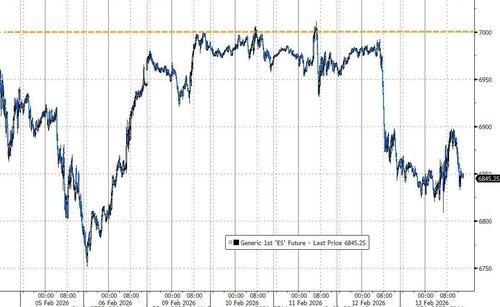
Group 1 - The current global market is experiencing a rare "high noise, high velocity" period, making it difficult for even seasoned traders to navigate. Goldman Sachs' hedge fund business head, Tony Pasquariello, noted that this level of unpredictability is reminiscent of major trauma periods like the global financial crisis or the COVID-19 pandemic [1] - The core anxiety in the market stems from two opposing narratives regarding AI: one that sees AI as a disruptive risk leading to sell-offs in "victim" sectors, and another that questions the return on investment from AI capital expenditures. This tension is causing significant volatility, with aggressive sell-offs occurring whenever marginal AI risks are perceived [1][4] - The S&P 500 index has stalled around the 7000-point mark this year, failing to break through, while beneath the surface, there are turbulent undercurrents. Goldman Sachs' "AI leaders vs. laggards" pair trade recently achieved its largest single-day gain, primarily driven by shorting "laggards" [1][4] Group 2 - Global capital allocation is subtly shifting due to crowded U.S. markets and valuation pressures, with incremental funds increasingly flowing overseas. The South Korean and Japanese stock markets have recently shown strong performance, particularly the KOSPI index, which has doubled since the end of 2024 and achieved its best weekly performance in five years [3][8] - The current market environment is filled with contradictory signals, making investment challenging. There is a rare phenomenon of simultaneous buying in both cyclical assets (like industrial stocks and raw materials) and defensive assets (like consumer staples and utilities) [4] - The debate surrounding AI's fundamental impact is intensifying, focusing on who the beneficiaries and victims are, and whether AI leads to value creation or destruction. This debate has resulted in increased volatility for related stocks and thematic baskets, particularly in the software sector [6] Group 3 - The U.S. stock market has seen a stagnation in the wake of non-farm payroll and CPI data releases, while overseas markets have experienced a surge. According to Goldman Sachs strategist Ryan Hammond, non-U.S. equity funds have seen an inflow of $89 billion this year, compared to only $16 billion for U.S. equity funds [8] - The South Korean stock market is leading this trend, with the MSCI Korea index rising 28% year-to-date in U.S. dollar terms. Goldman Sachs' chief equity strategist for Asia Pacific, Tim Moe, maintains an overweight rating and has raised the KOSPI index target to 6400 points, citing impressive earnings growth and attractive valuations [10] - The Japanese market has also performed well, with the Nikkei index recently rising by 5%. Notably, the correlation between the Japanese stock market and the currency has seemingly reversed, indicating a shift from "currency depreciation trades" to healthier "reflation trades" [12] Group 4 - Despite the uncertain macro environment, hedge funds have shown remarkable resilience. Tony Pasquariello observed that macro discretionary funds accumulated significant profit buffers in January, while long-short equity strategies have generally avoided risks [14] - Looking ahead, market trends appear to favor active management over passive investment, and liquidity is becoming more favorable for liquid assets rather than illiquid ones. Strategies that can adapt to narrative changes in this noisy and fast-paced market seem to be gaining an advantage [14]


淡水河谷发布2025年第四季度和2025年财务报告——交付强劲业绩,达到或超出所有指导目标
Xin Lang Cai Jing· 2026-02-13 01:24
Core Viewpoint - In 2025, Vale delivered strong performance, meeting or exceeding all guidance targets while continuing to advance strategic priorities aimed at reinforcing long-term vision [1][6] Operational Performance - All business segments achieved strong operational and cost performance, with all guidance targets met in 2025 [7] - In Q4 2025, sales performance was robust, with iron ore, copper, and nickel sales increasing by 5% (4 million tons), 8% (8,000 tons), and 5% (3,000 tons) year-over-year, respectively [2][7] - Iron ore and copper production reached the highest levels since 2018, with nickel production achieving double-digit growth [1][6] Pricing and Cost Metrics - The average realized price for iron ore fines was $95.4 per ton, up 1% quarter-over-quarter and 3% year-over-year [2][7] - The realized price for copper was $11,003 per ton, reflecting a 12% quarter-over-quarter increase and a 20% year-over-year increase [2][7] - The realized price for nickel was $15,015 per ton, down 3% quarter-over-quarter and down 7% year-over-year [2][7] Cost Efficiency - In 2025, the C1 cash cost for iron ore was $21.3 per ton, a 2% decrease year-over-year, marking the second consecutive year of cost reduction [2][7] - Total iron ore costs in 2025 were $54.2 per ton, down 3% year-over-year [2][7] - In Q4 2025, total copper costs were negative $881 per ton, and nickel costs were $9,001 per ton, down 35% year-over-year [3][8] Financial Performance - Adjusted EBITDA was $4.8 billion, a 17% year-over-year increase and a 10% quarter-over-quarter increase, reflecting increased contributions from base metals operations [3][8] - Free cash flow was $1.7 billion, an increase of $900 million year-over-year, driven by EBITDA growth and lower net financial expenses [5][10] Capital Expenditure and Shareholder Returns - Capital expenditures for Q4 2025 were $2 billion, aligning with the annual guidance of $5.5 billion [4][9] - The total net debt at the end of the quarter was $15.6 billion, a decrease of $1 billion quarter-over-quarter [5][10] - According to the company's dividend policy, $1.8 billion in dividends and capital interest will be paid in March, with an additional $1 billion in special returns paid in January [5][10]

Flowers Foods(FLO) - 2025 Q4 - Earnings Call Transcript
2026-02-12 22:02
Financial Data and Key Metrics Changes - Net sales increased by 11% year-over-year, with a price mix contributing 70 basis points to this growth, while volume declined by 2.2% due to pressures in certain product lines [16][17] - Gross margin as a percentage of sales decreased by 30 basis points to 48.5%, influenced by increased outside purchases related to the Simple Mills business model [17] - GAAP diluted EPS for the quarter was a loss of $0.32, a decrease of $0.52 from the prior year, primarily due to a $136 million non-cash impairment of intangible assets [18][19] Business Line Data and Key Metrics Changes - The fresh packaged bread category saw Flowers maintain unit share, with Dave's Killer Bread gaining 20 basis points, while traditional loaf unit sales declined by 4% in Q4 [3][4] - The cake business experienced a 5% growth in unit sales, driven by the strength of the Wonder brand, despite a 3% decline in category unit sales [11] - Specialty premium loaf gained 60 basis points of unit share, largely driven by DKB, which added 50 basis points [10] Market Data and Key Metrics Changes - The overall bread category experienced a 2% decline, while the food category saw a modest increase in unit sales [4] - The competitive environment remained rational but challenging, with the average price per unit in the bread category rising by 1.1% [26] - Consumer behavior is shifting towards value-seeking, with increased sales in club stores and a decline in center store volumes [28][29] Company Strategy and Development Direction - The company is conducting a comprehensive review of operations to reignite top-line growth and expand margins, focusing on optimizing the brand portfolio and enhancing supply chain capabilities [4][5] - Investments in marketing and innovation are expected to create near-term margin pressure but are deemed essential for long-term growth [5][22] - The integration of Simple Mills is progressing well, with expectations for significant growth driven by innovation and expanded distribution [12][13] Management's Comments on Operating Environment and Future Outlook - Management expressed cautious optimism for 2026, anticipating continued category headwinds, particularly in traditional loaf, and inflationary pressures on inputs [21][22] - The company plans to balance investments in leading brands with the need to manage costs and maintain profitability [22][30] - Management remains committed to navigating current challenges while positioning for future success through strategic initiatives [30] Other Important Information - The company generated cash flow from operating activities of $446 million in 2025, an increase of $34 million over the prior year [20] - Capital expenditures decreased to $127 million, while dividends paid increased to $209 million [20] - The company is focused on maintaining a strong balance sheet, with net debt to trailing 12-month adjusted EBITDA at approximately 3.3x [20] Q&A Session Summary Question: What are the expectations for 2026? - The company expects total sales to be down 180 basis points to up 20 basis points, with category headwinds anticipated to be around 4% [21] Question: How is the Simple Mills integration progressing? - The integration is progressing well, with expectations for double-digit sales growth driven by innovation and expanded distribution [24]

PHINIA (PHIN) - 2025 Q4 - Earnings Call Transcript
2026-02-12 14:32
Financial Data and Key Metrics Changes - Total net sales for Q4 2025 were $889 million, representing a year-over-year increase of 6.7% [5][15] - Adjusted EBITDA for the quarter was $116 million, up $6 million, with a margin of 13% [6][16] - Adjusted earnings per diluted share increased to $1.18 from $0.71 in the same period last year [7] - Full year revenue was approximately $3.5 billion, a 3% increase, excluding final contract manufacturing sales from the former parent [17][18] Business Line Data and Key Metrics Changes - Fuel system segment sales for Q4 were $560 million, up 7.9%, with an adjusted operating margin of 10.7% [6][19] - Aftermarket segment sales were $329 million, up 4.8%, with an adjusted operating margin of 15.8% [7][20] - For the full year, fuel systems revenue increased by 3.3%, while aftermarket segment sales rose by 2.7% [19][20] Market Data and Key Metrics Changes - Sales in Asia and the Americas showed strength, while Europe experienced lower sales within fuel systems [14][15] - The company noted that the aftermarket segment remained resilient, supported by an aging global vehicle fleet [9] Company Strategy and Development Direction - The company aims to differentiate through product leadership and focus on sustainable growth markets [12][24] - Capital allocation remains disciplined, with a focus on M&A opportunities while returning capital to shareholders [10][11] - The company plans to continue expanding its presence in core and adjacent markets, including aerospace and defense [8][12] Management's Comments on Operating Environment and Future Outlook - Management highlighted the resilience of the business amid a complex operating landscape and expressed confidence in long-term growth [3][25] - The outlook for 2026 anticipates flat to slightly down global industry volumes, with expectations of mid-single-digit sales growth [24][25] Other Important Information - The company reduced its debt by $24 million, resulting in a net leverage ratio decrease from 1.4x to 1.3x [7][21] - An 11% increase in dividends and a $150 million increase in the share repurchase program were announced [11][21] Q&A Session Summary Question: Clarification on commercial vehicle growth expectations in Europe - Management confirmed that the mid to upper single digits growth expectation refers to the overall industry [27][29] Question: Inquiry about Adjusted EBITDA margins and growth hurdles - Management explained that while revenue growth is expected, factors like FX and tariffs are impacting margin expansion [30][31] Question: Details on the third aerospace and defense supply contract - Management confirmed that the third contract is with the same customer as the previous two [32] Question: Volume assumptions for 2026 and potential for positive light vehicle volumes - Management indicated that the market is expected to be flat to down, but the company anticipates market share gains [82][84] Question: Capital allocation priorities and M&A outlook - Management stated that capital allocation decisions will focus on maximizing shareholder value, with share repurchases remaining a priority [59][60]