投资哲学

Search documents
投资不是碰运气——在九方智投AI股票机,开启认知进化之路
第一财经· 2026-03-18 09:38
Core Viewpoint - The essence of investment education is to facilitate a transition from "luck-driven" to "cognition-driven" investment strategies, emphasizing the importance of understanding one's cognitive boundaries in making investment decisions [1]. Group 1: Understanding Cognitive Boundaries - The first lesson in investment is recognizing one's cognitive limits, which can be assessed by two questions: the ability to articulate reasons for potential profits before making investment decisions and the capacity to identify personal mistakes during investment reviews [2]. - The training program aims to help investors establish a "mirror of cognition," allowing them to see their cognitive map clearly and understand their strengths and weaknesses in investment [4]. Group 2: Structured Learning Path - The training program is designed with a progressive learning path tailored for different user stages, focusing on building good learning habits and enhancing learning efficiency for new users, while providing a comprehensive growth path for existing users [6]. - Regular thematic activities and monthly learning plans are implemented to maintain user engagement and motivation, alongside a tracking system for learning progress [6]. Group 3: Personalized Investment Framework - The program emphasizes that there is no perfect investment framework; rather, it is about finding a framework that aligns with one's cognitive understanding, as demonstrated by investment legends like Warren Buffett and George Soros [10]. - The unique value of the training program lies in its systematic approach to help each investor discover their own investment philosophy through practice and reflection, rather than imposing a fixed ideology [10]. Group 4: Continuous Evolution in Investment - In an era of information overload, the competitive edge lies in establishing a cognitive system for filtering and digesting information, which the training program aims to provide through a comprehensive educational framework [11]. - The ultimate goal is to empower investors to become the "chief architect" of their investment journey, continuously expanding their cognitive boundaries [11].


卢玉珊的投资哲学:在波动中追寻长期价值
Zhong Guo Jing Ji Wang· 2026-02-25 02:17
Core Viewpoint - The investment approach of Southern Fund's Lu Yushan emphasizes a balanced and sustainable style, focusing on building a system that adapts to various scenarios to address future uncertainties, with a core emphasis on identifying trends, selecting companies, and diversifying risks [1] Group 1: Investment Strategy - Lu Yushan seeks to identify "main channels" in the market, focusing on sectors with long-term trends driven by economic structure changes, technological evolution, and social development, rather than short-term hotspots [2] - In the Q3 2025 report of the Southern Core Competitive Mixed Securities Investment Fund, Lu noted that the growth style had become extreme and adjusted the strategy to favor balanced allocation, focusing on undervalued cyclical industries for potential absolute returns [2] - In the Q4 2025 report, she continued this balanced approach, highlighting opportunities in AI computing power, commercial aerospace, energy storage, and sectors related to external demand, while adjusting the fund's allocations accordingly [2] Group 2: Company Selection - Lu Yushan employs frameworks to assess companies, placing importance on the actual impact of innovation, such as whether it improves user experience or optimizes costs, and emphasizes buying at reasonable prices [3] - She tends to focus on solid fundamental manufacturing companies that are not yet fully recognized by the market, rather than overvalued popular stocks [3] Group 3: Risk Management - The investment method includes a strong focus on risk management alongside the pursuit of returns, characterized by a "balanced growth" style [4] - Maintaining industry diversification is crucial, as high concentration in a single industry is avoided to reduce dependency on any one sector [4] - Lu Yushan dynamically assesses the cost-effectiveness of stocks and bonds, adjusting positions based on market conditions [5] - A key goal of her approach is to control drawdowns, aiming for smoother net value fluctuations during market adjustments [6] Group 4: Overall Investment Philosophy - Overall, Lu Yushan's investment method can be viewed as a framework for building long-term stability, relying on understanding trend directions, focusing on corporate value, and effective risk management to create a sustainable value growth strategy [7]
现金堆到3816亿美元却成净卖方?巴菲特“最后一季”持仓大揭秘
Jin Rong Jie· 2026-02-25 01:21
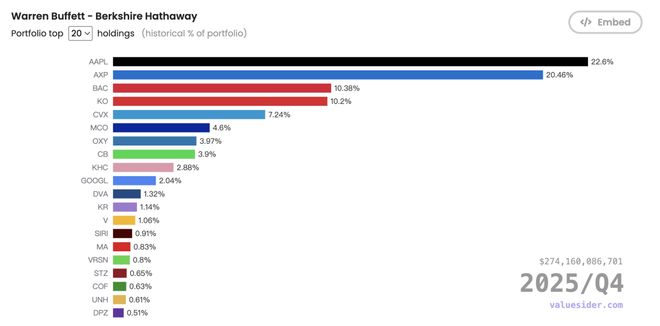
Core Insights - Berkshire Hathaway remains a net seller of stocks in Q4 2025, significantly reducing its positions in Apple, Bank of America, and nearly completely selling Amazon, while increasing holdings in Chevron and Chubb, and initiating a small position in The New York Times [1] Group 1: Portfolio Overview - The total market value of Berkshire's stock portfolio is approximately $274.16 billion [1] - The top five holdings are Apple Inc. (22.6%), American Express (20.46%), Bank of America (10.38%), The Coca-Cola Company (10.20%), and Chevron Corporation (7.24%) [3] - The financial sector dominates the portfolio with a 40.92% share, followed by technology at 24.64%, consumer staples at 14.87%, and energy at 11.21% [4] Group 2: Q4 Position Changes - Core sell-offs include: - Apple (AAPL) reduced by 4.3%, from 238.2 million shares to 227.9 million shares, decreasing in value by approximately $2.799 billion [5] - Bank of America (BAC) reduced by 8.9%, from 568.1 million shares to 517.3 million shares, with a value decrease of about $2.793 billion [5] - Amazon (AMZN) significantly reduced by 77.2%, from approximately 10 million shares to 2.28 million shares, resulting in a value decrease of about $1.783 billion [5][6] Group 3: Core Buys - Chevron (CVX) increased by 6.6%, from 122.1 million shares to 130.2 million shares, adding approximately $1.233 billion in value [7] - Chubb (CB) increased by 9.3%, from 31.33 million shares to 34.25 million shares, adding about $0.91 billion in value [7] Group 4: New Positions - A new position in The New York Times (NYT) was initiated with approximately 5.07 million shares, valued at about $0.352 billion, representing 0.13% of the total portfolio [8][9]


集中还是分散?
Xin Lang Cai Jing· 2025-12-28 06:02
Group 1 - The core viewpoint emphasizes the shift from concentrated investment strategies to diversified portfolios, highlighting that diversification can mitigate risks associated with individual stock performance [1][2] - A diversified portfolio showcases the value of investment philosophy, framework, process, and discipline, which are crucial for long-term success [2] - Relying on a few stocks may yield success through luck or key insights, but managing a larger number of stocks (e.g., 50) requires a more systematic approach [3] Group 2 - Average fund managers managing a portfolio of 50 stocks are likely to achieve mediocre returns, while those managing only 5 stocks may outperform some exceptional managers [4] - Evaluating the excellence of an investment team should consider their ability to manage a diversified portfolio of over 50 stocks or their long-term performance exceeding the market [5] - True diversification must involve low correlation among assets; merely holding 50 stocks in a single sector or country does not constitute genuine diversification [7][8] Group 3 - The argument against relying solely on luck is reinforced by the notion that even in the face of global crises, a well-structured portfolio can mitigate risks, such as including short positions [9][10] - While luck plays a role in investment success, a strong investment philosophy aims to minimize its impact on outcomes [10]
视频|霍华德·马克斯:人生唯一的成功,是能够按照你自己的方式去生活
Xin Lang Cai Jing· 2025-12-21 11:30
Core Insights - Howard Marks, co-founder of Oaktree Capital, shared his investment philosophy in a recent 75-minute interview, emphasizing its essential and systematic aspects [1][2] - Marks frequently referenced Warren Buffett and Charlie Munger, illustrating how he views Buffett's "dancing to work" attitude as an ideal lifestyle and Munger's ability to harness talent into a systematic thinking framework, which he calls a "toolbox for life" [1][2] - Marks expressed admiration for Buffett, especially as Buffett approaches retirement, using numerous quotes to pay tribute to him [1][2] - When asked about balancing family, career, and interests, Marks stated that "the only success in life is to live it your own way," echoing a similar sentiment he shared at a forum in May 2019 [1][2]
霍华德·马克斯:人生唯一的成功,是能够按照你自己的方式去生活
聪明投资者· 2025-12-21 03:53
Core Insights - Howard Marks, co-founder of Oak Tree Capital, shared his investment philosophy in a recent 75-minute interview, emphasizing the importance of a systematic approach to investing and life [1] - Marks frequently referenced Warren Buffett and Charlie Munger, highlighting their influence on his thinking and approach to investment [1] - He described Buffett's ideal work-life balance as "dancing to work" and praised Munger for his ability to harness talent into a systematic thinking framework, which he referred to as a "toolbox for life" [1] - Marks stated that true success in life is living according to one's own way, a sentiment he reiterated from a previous forum in May 2019 [1] Additional Noteworthy Content - SpaceX is likely to go public next summer, as Elon Musk discusses strategies for betting on high-probability successes in a recent conversation [1] - The market is experiencing an upward trend, with predictions of a bull market continuing; Zhang Yidong's latest analysis suggests a confirmed trend of dual easing in the U.S. and significant opportunities in structural highlights [1] - Sea, the founder of a Southeast Asian tech giant, shared insights on capturing opportunities in the AI wave during a rare dialogue [1] - An overview of the fourth quarter performance of small-cap ETFs was also provided, reflecting market dynamics [1]
段永平到底有多少钱?他是不是中国的隐形首富?
Sou Hu Cai Jing· 2025-12-20 06:05
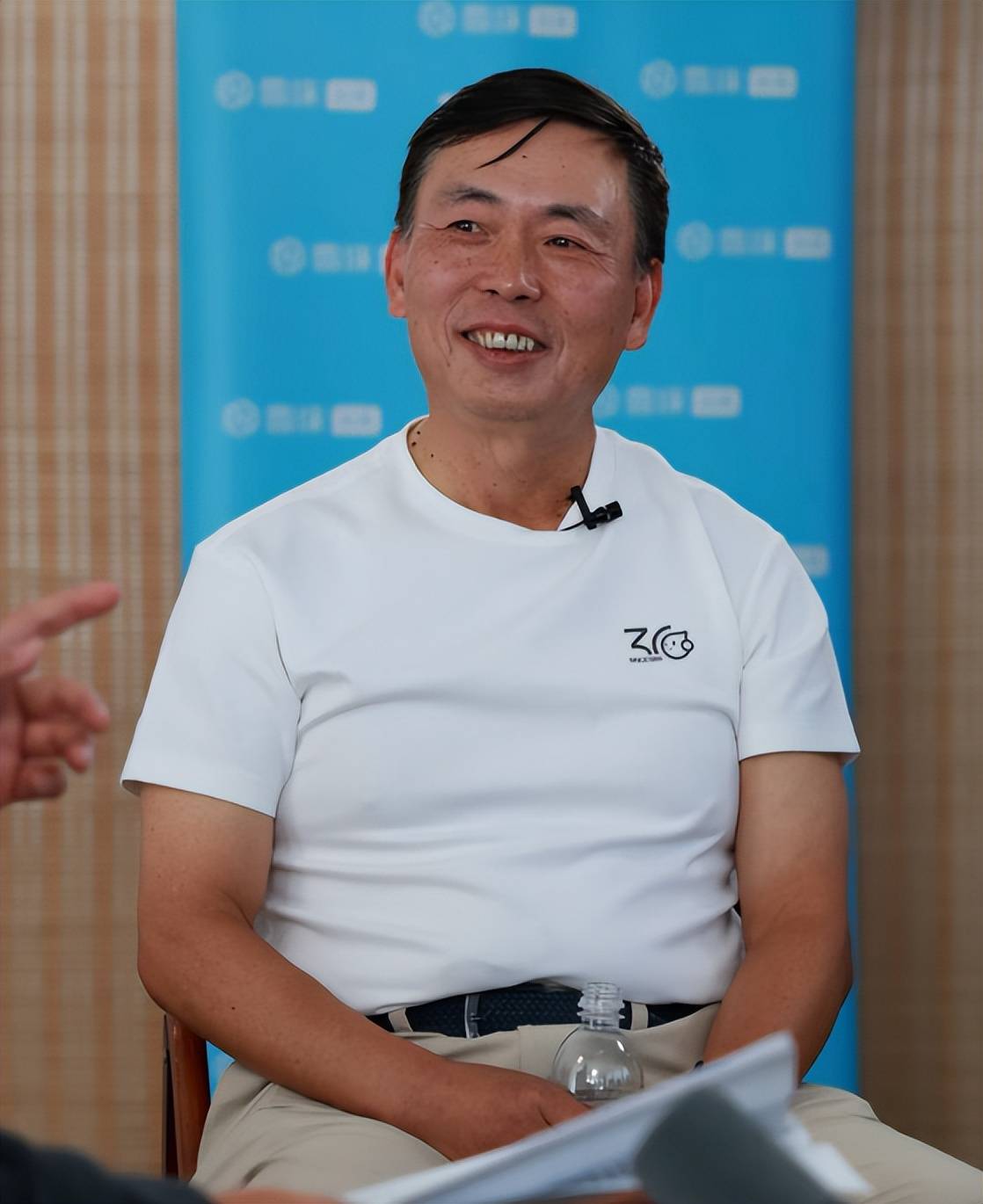
Core Viewpoint - Duan Yongping is considered a hidden billionaire in China, with a significant wealth gap compared to other wealthy individuals like Wang Shi, primarily due to his successful investment strategies and diversified asset portfolio [1][3]. Investment Portfolio - Duan's wealth is largely derived from successful investments, including over 50 times profit from his investment in NetEase and substantial gains from Apple stocks, with current holdings valued at approximately 70 billion RMB [4]. - He holds 3,483 million shares of Apple and 338 million shares of Berkshire Hathaway, which together account for about 77% of his U.S. stock holdings, valued at around 200 billion RMB [4][6]. - In addition to these, Duan has investments in Pinduoduo, Occidental Petroleum, Alibaba, and Google, with an estimated total market value of around 1200 billion RMB [4]. A-Share Holdings - Duan also holds shares in Kweichow Moutai, valued at approximately 28 billion RMB, and has maintained profitability despite market fluctuations [6]. - His investment in Tencent is valued at around 4 billion RMB, with successful buy-ins during market dips [6]. Private Companies - Duan is the founder of BBK Electronics, which has successfully launched brands like OPPO and VIVO. His estimated holdings in these companies are significant, with OPPO valued at 150-200 billion RMB and VIVO at around 300 billion RMB [8]. - His total estimated assets, including stocks and private company holdings, exceed 2000 billion RMB, along with unquantified cash assets [8]. Investment Philosophy - Duan's investment journey began with a strategic investment in NetEase, where he recognized the potential of the gaming market, leading to substantial profits [10]. - He emphasizes a simple investment philosophy, reflecting a straightforward approach to wealth accumulation and investment strategies [10].



现代金融财富邂逅传统非遗文化 投资哲思“跃然纸上”
Sou Hu Cai Jing· 2025-12-17 05:52
Core Insights - The event organized by Pengyang Fund focused on investment strategies in the AH market, analyzing macroeconomic conditions and asset allocation strategies for the upcoming "14th Five-Year Plan" period in China [3] - The analysis highlighted a shift in market dynamics towards investments with solid performance and growth potential, emphasizing the importance of domestic demand, technological innovation, and the establishment of a unified national market as key policy variables for economic and capital market performance in the coming year [3] - The discussion also pointed out that the global preference for dollar assets is ending, with investors increasingly favoring Chinese assets that offer better valuation and cost-effectiveness [3] Investment Strategy - Investment should focus on high-quality core assets with proven competitive advantages and stable governance, serving as a "ballast" in asset allocation [6] - Long-term investment strategies should prioritize emerging growth areas driven by industrial upgrades, technological innovation, and policy support [6] - The capital market is expected to see increased activity and a more balanced supply-demand dynamic, allowing investors to capitalize on greater opportunities [6] Cultural Integration - The event incorporated traditional culture, specifically the "Yanchang Paper-Cutting" art, to enhance the understanding of investment philosophies among participants [8][13] - The paper-cutting process symbolizes the balance between decisive action and careful preservation, paralleling the investment logic of maintaining core values while adapting to market changes [8] - The initiative aims to promote the integration of traditional Chinese culture with financial education, emphasizing that true wealth encompasses both numerical growth and spiritual enrichment [13]

红杉的投资哲学和秘密武器,a16z 投了个很有意思的 AI 学习产品
投资实习所· 2025-12-16 05:33
Core Insights - The article discusses the leadership transition at Sequoia Capital, with Alfred Lin and Pat Grady taking over from Roelof Botha, and highlights their investment philosophy and internal strategies developed over the past decade [1]. Group 1: Investment Philosophy - Consensus is deemed meaningless; strong conviction is essential for investment success. Sequoia has a voting system where partners score projects from 0 to 10, with a focus on the presence of strong beliefs rather than consensus [2][3]. - Strong disagreements indicate volatility, which is embraced in venture capital. The presence of strong conviction from a minority can signal potential asymmetric returns, making such investments worthwhile [3]. - The goal of venture capital is not to create stable companies but to identify outlier opportunities. Sequoia's partners see themselves as stewards, empowering unique talents rather than enforcing top-down control [4][5]. Group 2: Management Focus - Sequoia emphasizes "freedom within frameworks," providing a solid structure based on shared values and high standards while allowing individuals to work in their unique ways [5]. - The focus is shifted from measuring outputs to controllable inputs, assessing values, capabilities, and process quality rather than individual performance metrics [6][7][8][9]. Group 3: Selection and Courage - A high failure rate does not equate to poor investment; instead, the ability to embrace high inclusion rates of asymmetry is crucial. Courage is identified as a rare quality among investors [11][12]. - Sequoia has mechanisms to counter psychological biases that lead to poor investment decisions, emphasizing the importance of rational decision-making over emotional responses [12]. Group 4: Talent Identification - Sequoia has developed a proprietary system for mapping talent networks, akin to a "PageRank for people," which helps identify top talent and assess company potential [13][14]. - The approach is based on building trust and providing value to the network, which facilitates the sharing of valuable information [14].
霍华德·马克斯今年最精彩对话,反复说到“偶像”巴菲特,激赞芒格把天赋变成了一整套系统……
聪明投资者· 2025-12-15 07:53
Core Insights - The essence of investing is not about seeking certainty but rather about managing probabilities in uncertainty [2][6] - Emotional stability is one of the most critical qualities observed in successful investors [54][52] - Long-term, consistent performance is more valuable than a few high-risk bets [2][6] Group 1: Investment Philosophy - Howard Marks emphasizes the importance of a structured approach to talent, which has significantly influenced Warren Buffett [14][15] - The conversation highlights the significance of avoiding disasters and pursuing stability for wealth growth over decades [6][2] - Marks believes that successful investing requires recognizing one's unique strengths and limitations, fostering a healthy partnership based on mutual acknowledgment [2][6] Group 2: Market Behavior and Strategy - Marks draws parallels between the current AI hype and the internet bubble of 1998-2000, noting the lack of clear, coherent explanations of how AI will fundamentally change the world [42][43] - He warns against the common mistakes made during market euphoria, such as assuming today's leaders will remain dominant and buying laggards solely based on their lower valuations [44][46] - The importance of understanding one's risk tolerance and making conscious investment choices is emphasized, as well as the need for a dynamic approach to risk management [24][26] Group 3: Investment Tools and Techniques - Marks advocates for a long-term buy-and-hold strategy, suggesting that excessive trading often leads to poor outcomes [31][32] - He stresses the necessity of having a knowledge advantage in each asset class to succeed in investing [36][35] - The concept of a "toolbox" for recognizing patterns and applying the right strategies in various scenarios is highlighted as essential for investors [12][13] Group 4: Asset Evaluation - Marks critiques gold and cryptocurrencies for lacking intrinsic value, as they do not generate cash flow, making it difficult to assess their worth [47][48] - He points out that while gold has provided a 7.7% annualized return since 2010, it significantly lags behind the S&P 500's 12.7% return during the same period [48][49] - The recommendation for most individuals is to invest in professionally managed products like funds or ETFs rather than attempting to pick individual stocks [50][51]