超额储蓄

Search documents
中金:居民存款搬家潜力几何?
中金点睛· 2025-08-18 23:36
Core Viewpoint - The article discusses the potential for residents' deposits to shift towards the stock market, highlighting signs of this trend emerging since May 2023, driven by various economic factors and changes in investor behavior [2][30]. Group 1: Signs of Deposit Migration - Since May 2023, there have been indications of deposits moving towards the stock market, including an increase in M1 growth from 2.3% in May to 5.6% in July, suggesting a trend of deposit activation [2]. - The growth of fixed-income wealth management products has slowed compared to last year, while equity mutual funds and private securities investment funds have seen a rebound in growth [2]. - Non-bank deposits increased significantly, with a year-on-year increase of 1.4 trillion yuan in July, indicating that deposits may be entering brokerage margin accounts in preparation for market entry [2][9]. Group 2: Capital Market Activity - Since August 2023, the A-share market has seen daily trading volumes exceed 2 trillion yuan, with a notable increase in trading activity and a financing balance surpassing 2 trillion yuan [3]. - The number of new accounts opened on the Shanghai Stock Exchange increased by 26% from May to July, although it remains below the peak levels seen in October 2022 [3]. Group 3: Sources of Deposit Creation - The article estimates that residents have accumulated approximately 5 trillion yuan in "excess savings" from 2022 to 2024, which could potentially be used for investment [14]. - The contribution of fiscal measures to deposit creation has risen from 25% at the end of 2023 to 53% currently, while the contribution from entity credit has decreased from 73% to 41% [14]. - The weakening of financial disintermediation has led to a significant outflow of deposits from fixed-income products back into the banking system, contributing to the recent increase in deposits [15]. Group 4: Motivations for Deposit Migration - Improved risk appetite among residents, driven by government stimulus policies and positive economic expectations, has led to a shift in investment behavior towards the stock market [30]. - The current environment of weak returns from major risk assets like real estate and stocks has prompted funds to flow into higher-yielding investments, with the A-share market showing a 12-month average return of around 20% [30]. - The weakening of the US dollar has facilitated the return of overseas funds to the Chinese stock market, as investors seek better returns domestically [31]. Group 5: Potential for Deposit Migration - The potential for deposits to migrate to the stock market is estimated at around 5-7 trillion yuan, which could exceed the amounts seen during previous market rallies in 2016-2017 and 2020-2021 [42]. - The upcoming maturity of approximately 70 trillion yuan in fixed-term deposits in 2025 may drive residents to seek higher-yielding assets, as the re-pricing of these deposits will result in lower interest rates [40]. - The activation of deposits, driven by a favorable economic environment, could lead to an additional net increase of around 5 trillion yuan in resident demand deposits, which may also flow into the stock market [41].


高利率环境下美国劳动力市场保持韧性的原因及后续展望
Sou Hu Cai Jing· 2025-06-03 02:59
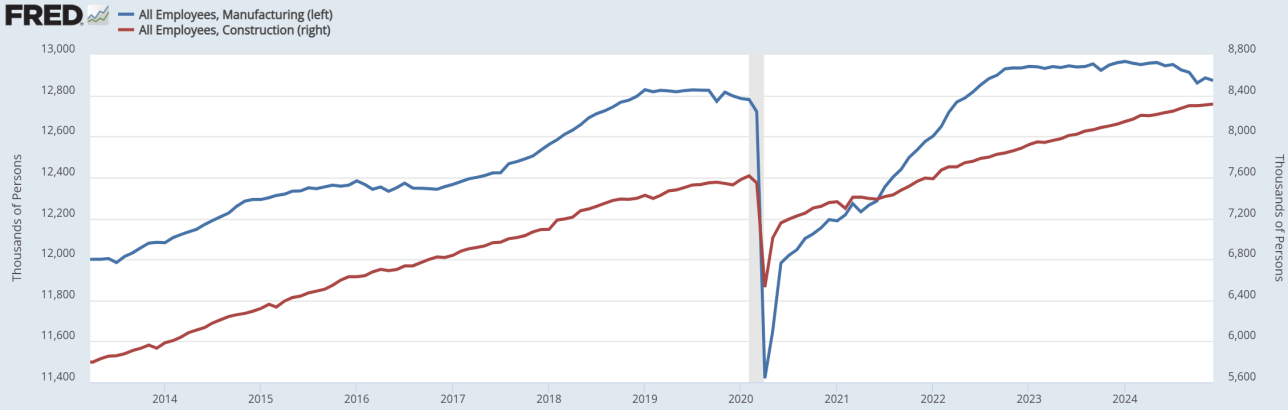
Group 1 - The core viewpoint of the articles highlights the resilience of the U.S. labor market despite aggressive interest rate hikes by the Federal Reserve post-pandemic, characterized by a steepening of the Phillips and Beveridge curves [1][2][4][5]. - The U.S. labor market has shown robust growth with unemployment rates remaining historically low, even as the Federal Reserve raised interest rates from 0-0.25% to 5.25%-5.5% over a span of 11 hikes [3][4]. - The average monthly non-farm employment from March 2022 to March 2025 is 230,400, significantly higher than the pre-pandemic average of 178,000 [3]. Group 2 - The Phillips curve has become more vertical, indicating that despite a drop in inflation from 7.0% to 2.1%, the unemployment rate only increased from 3.6% to 4.1%, demonstrating the labor market's resilience [4]. - The Beveridge curve has steepened, showing that even with a decrease in job vacancy rates from 7.4% to 4.4%, the unemployment rate only rose slightly, further indicating labor market strength [5]. - The labor market is characterized by a significant "demand exceeding supply" situation, with a labor shortage exacerbated by slow recovery in labor supply post-pandemic [6]. Group 3 - Strong public and private investments, driven by the Biden administration's "Invest in America" agenda, have significantly boosted labor demand, with total spending around $1.2 trillion since late 2021 [7]. - Private sector investments have exceeded $1 trillion, particularly in manufacturing and non-residential construction, contributing to job growth despite high interest rates [7][8]. - The accumulation of "excess savings" and rising asset prices have supported consumer spending, which in turn has driven labor demand, creating a positive feedback loop in the economy [12][13]. Group 4 - The influx of low-cost immigrant labor has made the labor market both "scarce and relatively cheap," which has stimulated demand and mitigated the impact of high interest rates on business costs [14][15]. - The labor market's dynamics can explain the verticalization of the Phillips curve and the steepening of the Beveridge curve, as high demand persists even with rising interest rates [16]. - The neutral interest rate has risen post-pandemic, leading to an underestimation of the restrictive nature of the Federal Reserve's policy rates, which has contributed to the labor market's resilience [17][18]. Group 5 - In the short term, the labor market is expected to remain stable, with a gradual decrease in hiring rates but low levels of layoffs, indicating a balanced supply-demand situation [20][21]. - In the medium to long term, uncertainties stemming from potential policy changes under the Trump administration could impact the labor market, particularly regarding tariffs and federal spending cuts [22].