非物质文化遗产保护

Search documents
双专场汇聚南北名家,北京曲艺团复建十周年专场演出举行
Bei Jing Ri Bao Ke Hu Duan· 2025-10-20 09:28
Core Points - The Beijing Quyi Troupe celebrated its 10th anniversary since its re-establishment with special performances showcasing traditional Chinese art forms [1][3] - The troupe has created nearly 20 original productions and thematic performances over the past decade, focusing on social issues and enriching the cultural life of citizens [3][5] - The anniversary performances featured ten selected programs, symbolizing "perfection," and included various forms of quyi, demonstrating the richness and vitality of the art [3][5] Company Overview - The Beijing Quyi Troupe was founded in 1952 and was re-established in 2015 in an enterprise model under the guidance of the Beijing Performing Arts Group [3] - The troupe is recognized for its efforts in the preservation and promotion of intangible cultural heritage, having been awarded as an advanced collective in national intangible cultural heritage protection work in 2024 [3] Future Directions - The troupe aims to explore the integration of traditional quyi with modern aesthetics while continuing to protect traditional culture and experimenting with market-oriented approaches [5]


澳门《非物质文化遗产名录》新增12个项目
Zhong Guo Xin Wen Wang· 2025-10-13 14:04
Core Points - The Macau Cultural Bureau announced the addition of 12 new projects to the "Intangible Cultural Heritage List" in 2024, confirmed by the Secretary for Social Affairs and Culture on September 26, 2025 [1][2] - The total number of intangible cultural heritage items in Macau has now increased to 24, following the inclusion of these new projects [1] Group 1 - The 12 newly added projects include: land worship customs, dragon dance, lion dance, Portuguese folk dance, Spring Festival, Dragon Boat Festival, dragon boat racing, Tai Chi, Portuguese tart making skills, almond cake making skills, wedding gift cake making skills, and bamboo noodle making skills [1] - Since the implementation of the "Cultural Heritage Protection Law," the Macau government has included 70 projects in the "Intangible Cultural Heritage List" through research and surveys [1][2] Group 2 - The Cultural Bureau plans to continue enhancing the research and identification of Macau's intangible cultural heritage and aims to legally protect more valuable cultural heritage [2] - There is a focus on promoting the social transmission and innovative development of intangible cultural heritage in Macau [2]
文旅部:推动各地建设非遗工坊1.29万家,带动120万余人就业增收
Zhong Guo Xin Wen Wang· 2025-09-29 08:54
Core Viewpoint - The press conference highlighted the achievements in the high-quality development of culture and tourism during the "14th Five-Year Plan" period, emphasizing the integration of intangible cultural heritage (ICH) into daily life and its role in economic and social development [1]. Group 1: Non-Material Cultural Heritage Protection - The atmosphere for ICH protection has become more robust, with the issuance of guidelines and local regulations across 31 provinces, fostering a collaborative environment for ICH protection [2]. - Over 270 cultural ecological protection zones have been established for comprehensive protection of ICH and its cultural and natural environments, enhancing the connection between traditional practices and modern life [2]. Group 2: Active Transmission Practices - The Ministry of Culture and Tourism has promoted the integration of traditional transmission methods with modern education, resulting in over 100 universities offering ICH protection programs and training for more than 100,000 ICH inheritors [3]. - There is a growing trend of younger individuals and even foreign friends engaging in traditional practices such as playing the guqin and watching Kunqu opera, indicating a modernization and popularization of ICH [3]. Group 3: Economic and Social Benefits - The establishment of 12,900 ICH workshops has created job opportunities for over 1.2 million people, demonstrating the economic impact of ICH on local communities [3]. - The integration of ICH with tourism and local culture has enhanced cultural experiences for the public, showcasing the potential for ICH to serve as a local identity and attract tourism [3].
中国梦·大国工匠篇 | 斯兰别克·沙合什:用半世纪坚守焕新滑雪“活化石”
Yang Shi Wang· 2025-09-22 07:23
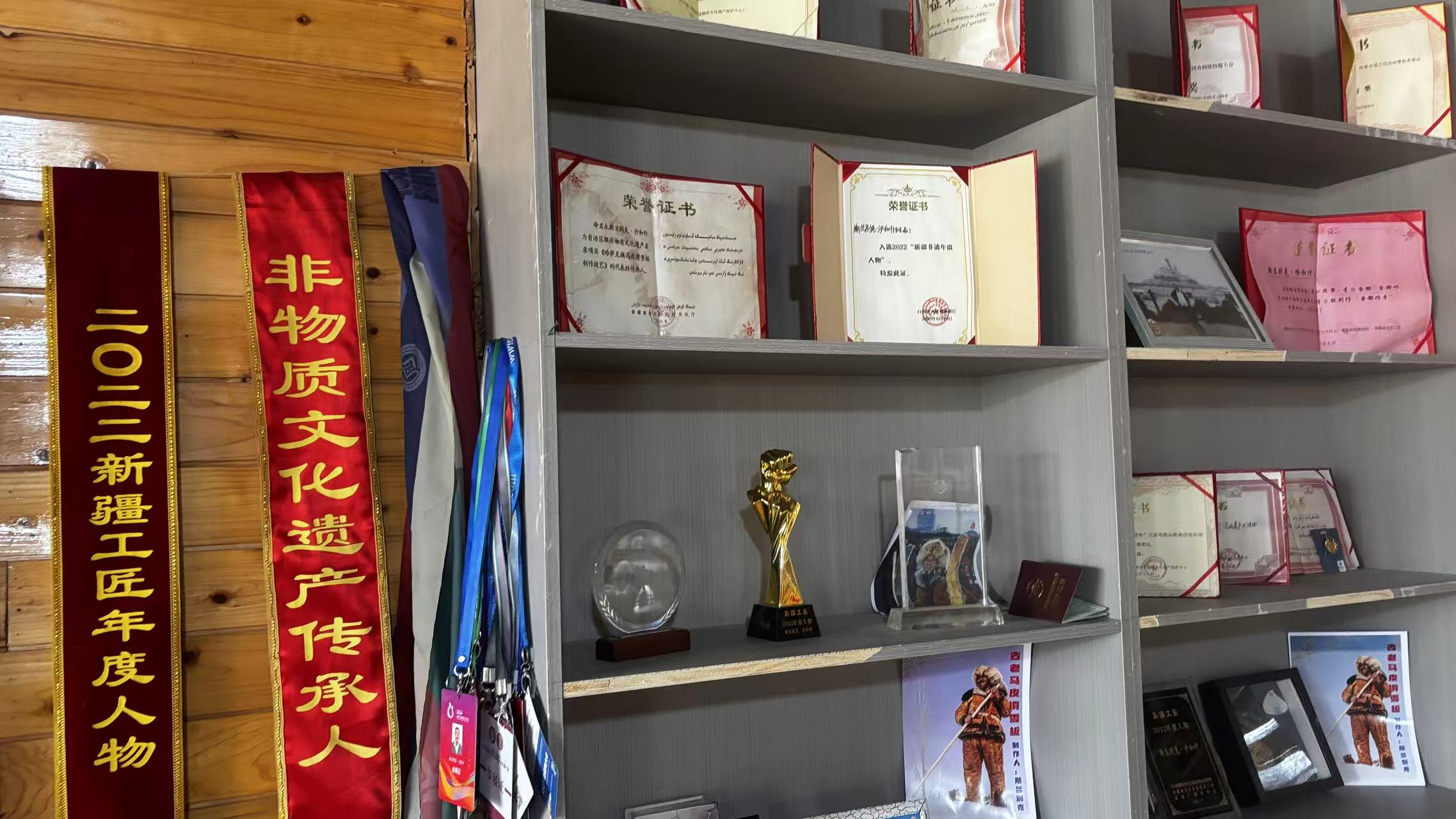
Core Viewpoint - The article highlights the preservation and innovation of the ancient fur ski board-making technique in Altay, Xinjiang, showcasing its cultural significance and economic impact on the local community [1][3][9]. Group 1: Cultural Heritage - The fur ski board-making technique is recognized as a regional intangible cultural heritage, with Slandbek Shahas as its representative inheritor [2][3]. - This ancient craft has been passed down through five generations, with Slandbek being the fourth generation, emphasizing the deep-rooted cultural significance [3][4]. - The ski boards were historically essential for survival in harsh winter conditions, reflecting the ingenuity of local nomadic peoples [5][6]. Group 2: Economic Impact - The production of fur ski boards has attracted numerous tourists and ski enthusiasts, improving the living conditions of Slandbek's family [3][6]. - The introduction of modern machinery has increased production efficiency and enhanced the quality of the ski boards, allowing for the creation of mini ski boards that appeal to a broader market [6][9]. - The tourism sector in Altay has seen a 20% increase in overall visitor numbers, with an average of 15,000 daily visitors during the 2024-2025 ski season [9]. Group 3: Education and Future Prospects - The integration of skiing into the compulsory physical education curriculum in local schools has fostered a new generation of young athletes, with over 360 registered youth ski athletes [9]. - Slandbek actively engages with local children, teaching them the traditional craft and instilling appreciation for their cultural heritage [9][10]. - The connection between ancient ski culture and modern events, such as the Beijing Winter Olympics, has elevated the profile of Altay's ski heritage on a global stage [10].
山脚下,停着好多“船”(走进传统村落)
Ren Min Ri Bao· 2025-09-05 22:22
Core Perspective - The article highlights the cultural and economic significance of the traditional boat-shaped houses in Baicha Village, Hainan, showcasing their architectural uniqueness and the efforts to preserve and promote this heritage through tourism and skill transmission [2][4][6]. Group 1: Cultural Heritage - The boat-shaped houses, known as "船型屋," are a traditional dwelling of the Li ethnic group, characterized by their unique construction using local materials like bamboo and thatch [3][4]. - In 2008, the "Li ethnic boat-shaped house construction technique" was included in the second batch of national intangible cultural heritage, emphasizing its cultural importance [4]. Group 2: Skill Transmission - The number of skilled craftsmen in the boat-shaped house construction has increased from 5 to over 20, with more than 200 young people in surrounding towns learning the technique through training programs [5]. - Training sessions are held locally, allowing participants to engage in hands-on learning while contributing to the restoration of these traditional houses [5]. Group 3: Economic Development - The construction of the Hainan Tropical Rainforest National Park tourism road has significantly boosted visitor numbers to Baicha Village, enhancing local tourism [6][7]. - The village has developed various facilities such as visitor centers and museums, and has integrated local crafts into the tourism experience, allowing residents to benefit economically from tourism [7]. - In 2022, Baicha Village was nominated as a site for the World Heritage List, further promoting its cultural and natural significance [7].

百年十番音乐薪火传 福州少年倾情演绎“福州版交响乐”
Zhong Guo Xin Wen Wang· 2025-08-25 01:12
Core Viewpoint - The concert showcased the "Fuzhou version of symphony" through the performance of the "Ban Shi Liu" children's ten-piece ensemble, highlighting the cultural significance and modern adaptation of the traditional tea pavilion ten-piece music [1][2]. Group 1: Event Overview - The concert took place on the evening of the 23rd at the Fuzhou Pinghua Jiyi Training Institute, featuring nearly 60 young performers dressed in uniform, playing traditional instruments [1]. - The event was the second special concert since the establishment of the ensemble in 2023, indicating progress in the children's musical skills and teamwork [1]. Group 2: Cultural Significance - Tea Pavilion Ten-Piece Music originated from the Tea Pavilion Street in Taijiang District, Fuzhou, and was included in the national intangible cultural heritage list in 2006 [2]. - The Taijiang District Cultural and Tourism Bureau has increased efforts to protect and promote this cultural heritage, leading to the formation of the "Ban Shi Liu" children's ten-piece ensemble [2]. Group 3: Educational and Community Impact - The ensemble has been innovating while preserving the essence of tea pavilion ten-piece music, adapting classic pieces and performing in various cultural events, thus becoming a vibrant cultural symbol for the local community [2]. - The recent concert aimed to enhance public appreciation for tea pavilion ten-piece music and promote the ongoing protection of this intangible cultural heritage [2].
针线笔触,绘出高原五彩斑斓(活力中国调研行)
Ren Min Ri Bao· 2025-08-18 22:31
Core Viewpoint - Qinghai Province is leveraging its rich intangible cultural heritage resources to develop unique industries and boost local economic growth through innovative practices in traditional crafts [1][4]. Group 1: Thangka Art Industry - The Thangka art industry in Huangnan Tibetan Autonomous Prefecture has seen significant growth, with revenue increasing from 240 million yuan in 2011 to 1.08 billion yuan in 2024, and five related enterprises now earning over 10 million yuan annually [1]. - Local artists are innovating in both content and techniques while preserving traditional craftsmanship, leading to increased public interest in Thangka art [1]. - Efforts are being made to protect and document Thangka techniques, including "white drawing," "color painting," and mineral pigment production [1]. Group 2: Pan Embroidery Industry - The establishment of the Pan Embroidery Association in Banjian Village has led to the creation of a Pan Embroidery Garden, involving 145 embroiderers and generating an annual income of 3 million yuan from 75,000 orders [2]. - Training programs have been organized, resulting in over 4,000 embroiderers trained, and non-heritage interest classes introduced in five schools [2]. - The Pan Embroidery industry in Huzhu County has achieved a total output value of 94.7 million yuan from 2022 to 2024, with an average annual growth rate of about 5% [2]. Group 3: Tibetan Carpet Industry - The Tibetan carpet industry is undergoing transformation through technology, with companies like Shengyuan Carpet Group utilizing AI for design and production, resulting in a carpet measuring 31.95 meters by 13.55 meters [3]. - The company has diversified its production methods to include machine-woven and hand-punched carpets, enhancing the quality and variety of products [3]. - In 2024, Shengyuan Carpet's revenue is projected to reach 119 million yuan, with exports exceeding 9.7 million USD, reflecting an 8% year-on-year growth in export volume [3].
无兽马戏团,还能抓住年轻人的心吗
Zhong Guo Qing Nian Bao· 2025-07-28 23:43
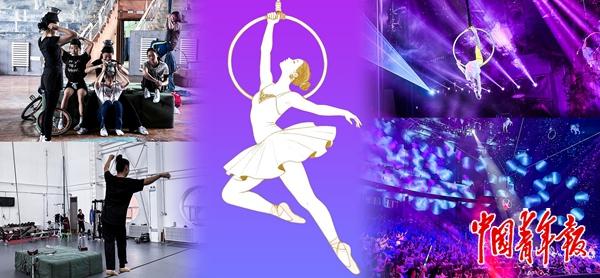
Core Viewpoint - The article discusses the efforts of the Qiqihar Circus to attract younger audiences by blending traditional training with modern technology, highlighting the challenges and strategies involved in this transition [2][5]. Group 1: Historical Context and Achievements - Qiqihar Circus, with a history of 73 years, is one of the few state-owned acrobatic troupes registered under the name "circus" in China [2]. - The circus has gained international recognition, participating in various competitions and winning awards, such as the bronze medal at the 2007 Second International Circus Festival in Spain [3][4]. - The troupe has been designated as a "National Cultural Export Key Enterprise" by multiple government departments, reflecting its cultural significance [4]. Group 2: Training and Talent Acquisition - The rigorous training and pursuit of excellence are fundamental to the circus's unique artistic style, characterized as "passionate, explosive, rough, and bold" [4]. - There has been a decline in new talent entering the circus, with only about 13-14 new recruits in the past decade, attributed to parents' reluctance to let their children endure the hardships of acrobatics [6]. - The circus has started recruiting from the Hebei Wuqiao Acrobatic Art School, focusing on students who are committed to making acrobatics a lifelong career [6]. Group 3: Challenges and Perceptions - The perception of circus performances among younger generations is often limited to outdated animal acts, leading to a lack of interest in attending shows [7][9]. - Young performers express the need for the circus to adapt to contemporary tastes, suggesting the incorporation of elements like "Guochao" (national trend) and "anime" into performances [10][11]. Group 4: Modernization and Competition - The Qiqihar Circus is facing competition from market-driven circuses that quickly adapt to modern audience preferences, utilizing advanced technology and immersive experiences [11]. - The Harbin Sunac Paradise Circus, for example, employs 360-degree surround light technology and immersive theater design, appealing more to younger audiences [11]. - The Qiqihar Circus acknowledges the need for improvements in stage design and branding to enhance its appeal to the younger demographic [11].
《意大利发展报告(2024—2025)》显示——中意加强务实合作惠及世界
Jing Ji Ri Bao· 2025-07-28 21:47
Group 1 - The core viewpoint of the article emphasizes the importance of strengthening practical cooperation between China and Italy amidst a complex international landscape, which will benefit both parties and the world [1][2] - The report highlights that China and the EU have formed a strong economic symbiotic relationship, with bilateral trade expected to reach $785.8 billion in 2024, making each other their second-largest trading partners [1][3] - Italy's economy is significantly impacted by U.S. tariff policies, with exports to the U.S. accounting for 4% of its GDP, indicating the need for resilience and openness in international trade [2][3] Group 2 - The report indicates that 2024 marks an important year for China-Italy relations, celebrating the 20th anniversary of their comprehensive strategic partnership and the 700th anniversary of Marco Polo's death [3] - There is considerable potential for cooperation in the service sector, with China planning to expand its service industry, which includes telecommunications, education, and healthcare, providing new opportunities for collaboration with Italy [3][4] - The two countries can learn from each other in the field of artificial intelligence, with Italy able to adopt China's advanced practices in AI application, while China can benefit from Italy's regulatory frameworks [4]
国图举办2025年“非遗讲座月”收官之讲
Xin Hua She· 2025-07-27 06:43
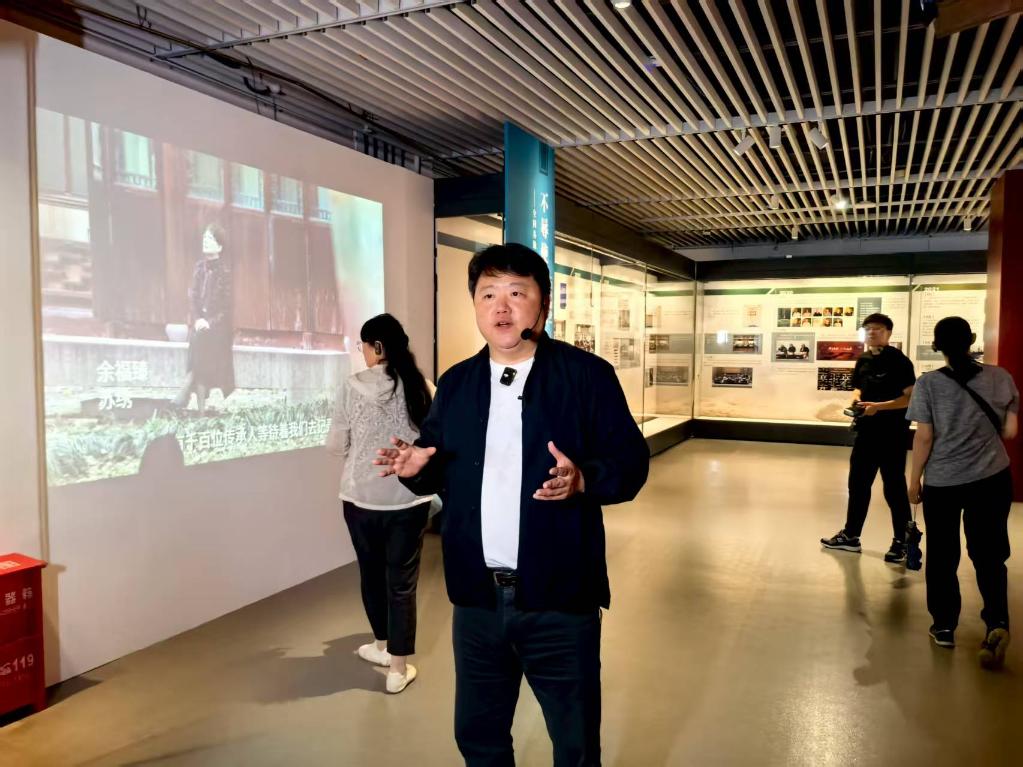
Group 1 - The event "China's Eyes - A Decade Review of National Intangible Cultural Heritage Representative Inheritors Recording Work" was held at the National Library, marking the conclusion of the 2025 "Intangible Cultural Heritage Lecture Month" [1][3] - The lecture was led by Tian Miao, Deputy Director of the Social Education Department (China Memory Project Center) of the National Library, who guided attendees through an immersive exhibition and thematic speech, reflecting on the ten-year journey of recording national intangible cultural heritage inheritors [1][3] - The "Intangible Cultural Heritage Lecture Month" is a brand activity launched by the National Library in 2013, held annually around the Cultural and Natural Heritage Day in June, becoming an important platform for promoting intangible cultural heritage knowledge in China [3] Group 2 - Over the past decade, intangible cultural heritage workers, experts, and recording teams have engaged deeply with inheritors, systematically documenting their skills and memories, emphasizing the significance and value of this recording work [3] - The 2025 "Intangible Cultural Heritage Lecture Month" collaborated with various intangible cultural heritage protection centers, hosting themed exchange activities in provinces like Guizhou, Zhejiang, and Hunan, showcasing the essence of "Intangible Heritage Makes Life Better" [3]