相声演出

Search documents
被约谈?郭德纲的商业版图比你想象的更硬核
凤凰网财经· 2025-12-08 14:15
Core Viewpoint - The article discusses the recent controversy surrounding Guo Degang and his comedy troupe, De Yun She, highlighting the tension between traditional art forms and modern commercial operations, as well as the implications of regulatory scrutiny on their business model [2][58]. Group 1: Recent Controversy - On December 7, a report claimed that the Beijing Cultural and Tourism Bureau had formally interviewed De Yun She regarding complaints about their performance, which allegedly included inappropriate content [2][5]. - The performance in question, "Yi Gao Ren Dan Xiao," faced criticism for containing numerous ethical jokes and vulgar content, leading to public complaints [3][23]. - This is not the first time De Yun She has faced regulatory issues; previous incidents include a 2019 penalty for inappropriate remarks during a performance [11][18]. Group 2: Business Model and Expansion - De Yun She has evolved from a small troupe to a large organization with nine performance teams and over 400 actors, expanding its reach to cities like Nanjing, Shanghai, and Chengdu [25]. - The business model consists of a two-tier structure: small theaters providing stable cash flow and large commercial performances that significantly increase profits [26][32]. - In 2012, De Yun She reportedly generated over 30 million yuan from ticket sales, with average ticket prices estimated at 400 yuan and an audience capacity of 2,500 to 3,000 per show [31][34]. Group 3: Brand Diversification - Guo Degang has diversified the De Yun She brand into various sectors, including high-end clothing and restaurants, aiming to create a multifaceted brand identity [36][38]. - Despite mixed results from these ventures, they collectively contribute to the brand's value beyond traditional comedy [38]. - Guo's investments in related companies, such as "Huan Yu Brothers," have also been significant, although he has distanced himself from the idea of taking De Yun She public [40][44]. Group 4: Historical Context and Growth - The article traces the history of De Yun She from its humble beginnings in 1995 to its current status, emphasizing the struggles and eventual rise in popularity and commercial success [45][56]. - Guo Degang's journey from performing in front of a few audience members to becoming a prominent figure in the entertainment industry is highlighted, showcasing the growth of his brand [55][57]. - The article concludes that the ongoing challenges faced by De Yun She reflect the broader conflict between maintaining artistic integrity and navigating commercial pressures [58].


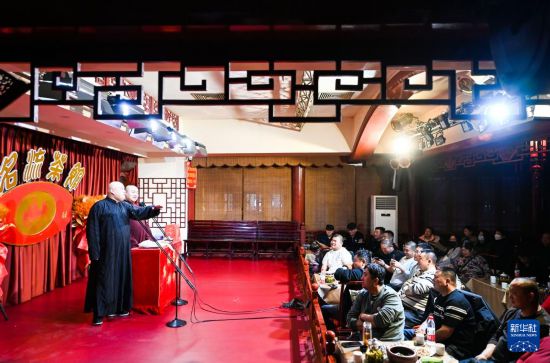
相声小剧场 冬日聚人气
Xin Hua She· 2025-12-07 02:31
Core Viewpoint - The article highlights the vibrant cultural scene in Tianjin, particularly focusing on the popularity of traditional Chinese comedic performance, known as Xiangsheng, during the winter season [1]. Group 1: Industry Overview - Tianjin currently hosts over 40 venues dedicated to Xiangsheng performances, showcasing a mix of traditional tea houses and modern theaters located in shopping malls and parks [1]. - The diverse range of performance venues attracts visitors from various regions, contributing to the cultural richness of the city [1]. Group 2: Cultural Impact - The performances provide warmth and entertainment for citizens during the winter, enhancing their cultural life [1]. - The lively atmosphere in venues, characterized by engaging performances and audience applause, reflects the enduring appeal of traditional arts in contemporary society [1].
双专场汇聚南北名家,北京曲艺团复建十周年专场演出举行
Bei Jing Ri Bao Ke Hu Duan· 2025-10-20 09:28
Core Points - The Beijing Quyi Troupe celebrated its 10th anniversary since its re-establishment with special performances showcasing traditional Chinese art forms [1][3] - The troupe has created nearly 20 original productions and thematic performances over the past decade, focusing on social issues and enriching the cultural life of citizens [3][5] - The anniversary performances featured ten selected programs, symbolizing "perfection," and included various forms of quyi, demonstrating the richness and vitality of the art [3][5] Company Overview - The Beijing Quyi Troupe was founded in 1952 and was re-established in 2015 in an enterprise model under the guidance of the Beijing Performing Arts Group [3] - The troupe is recognized for its efforts in the preservation and promotion of intangible cultural heritage, having been awarded as an advanced collective in national intangible cultural heritage protection work in 2024 [3] Future Directions - The troupe aims to explore the integration of traditional quyi with modern aesthetics while continuing to protect traditional culture and experimenting with market-oriented approaches [5]

暑期复盘|演出市场票房105.56亿大涨近半,岳云鹏、那艺娜等惹争议
Sou Hu Cai Jing· 2025-09-02 07:27
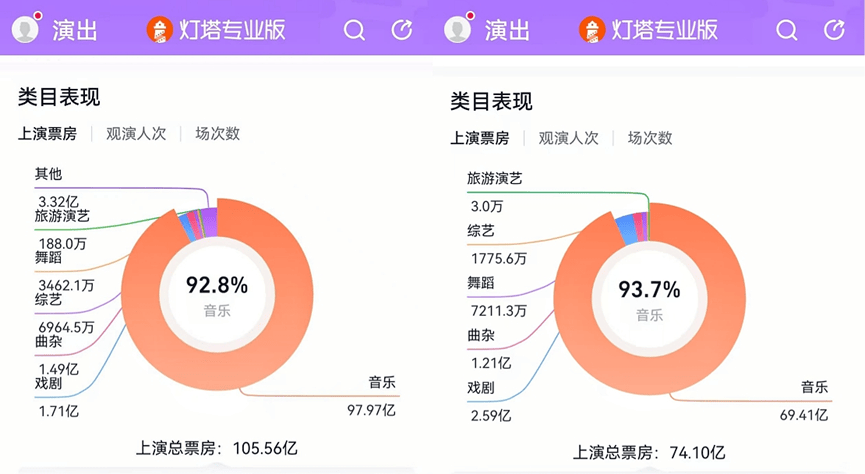
Core Insights - The offline performance market has shown significant growth during the summer, with total box office revenue reaching 10.556 billion yuan, a 42.46% increase compared to 7.410 billion yuan in the same period last year [1] - The sustained growth in the performance market indicates a shift in consumer mindset and demand for live events, moving beyond just "revenge spending" after the pandemic [3] Group 1: Market Performance - Music performances continue to dominate the market, accounting for over 90% of total revenue, while other categories like tourism performances and variety shows have also seen substantial growth [3] - The total box office for music performances increased from 6.941 billion yuan last year to 9.797 billion yuan this year, reflecting a growth of over 41% [5] - The audience for niche categories, such as mime and mixed performances, has also expanded, with 3.32 billion yuan in box office revenue and 3.758 million attendees, representing 18.1% of the total audience [3] Group 2: Consumer Behavior - The trend of attending performances as a social activity or a means to relieve stress is becoming more common, indicating a shift in consumer behavior towards live events [5] - The diversity of performers has increased, with various artists, including comedians and internet celebrities, participating in concerts, which has attracted different audience segments [7] Group 3: Industry Challenges - Despite the growth, the market exhibits a "winner-takes-all" effect, where only a few top artists can sell out shows, leading to financial struggles for many smaller or non-professional event organizers [9] - The rising costs associated with performances, including artist fees and production expenses, have led to increased ticket prices, which may affect audience experience [11] - The industry faces ongoing challenges, including the need for a long-term perspective to navigate the current market dynamics and ensure sustainable growth [11]
“历史积淀+现代繁华”完美融合 “新”天津正以昂扬姿态迎接八方来客
Yang Shi Wang· 2025-08-29 06:41
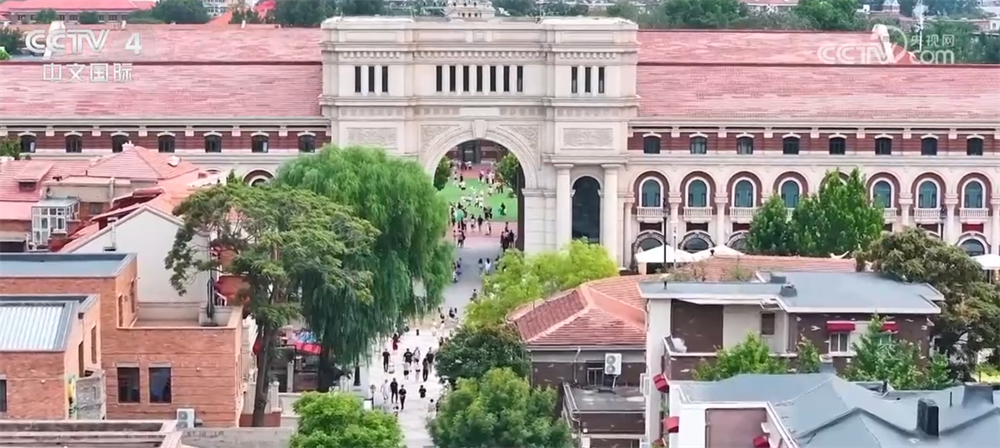
Group 1 - The Shanghai Cooperation Organization Tianjin Summit will be held from August 31 to September 1, highlighting Tianjin's cultural and historical significance as a city that blends Eastern and Western influences [1] - Tianjin is recognized for its humor and sophistication, showcasing a unique blend of local culture through food, architecture, and entertainment [1] - The city has a rich history as one of China's earliest open ports, which has contributed to its diverse cultural landscape [1] Group 2 - The Tianjin Heping District has undertaken a comprehensive urban renewal plan aimed at enhancing the environment and making it more resident-friendly [3] - The renovation connects two major landmarks, Minyuan Square and the Five Avenues Park, improving the overall visitor experience and providing recreational spaces for citizens and tourists [6] - The transformation of historical buildings into modern venues such as cafes and cultural hubs reflects a successful integration of historical heritage with contemporary urban life [9] Group 3 - Tianjin is characterized by its ability to seamlessly merge historical depth with modern vibrancy, presenting a welcoming atmosphere for visitors [12]
天津红桥区优化服务流程 助力老字号焕发新活力
Zhong Guo Fa Zhan Wang· 2025-08-28 12:04
Group 1 - The Tianjin Hongqiao District government has optimized service processes to assist Mingliu Teahouse in obtaining a performance license, reducing the approval time from 3 working days to 1 working day [1] - The government provided professional guidance on key aspects such as site selection and fire safety requirements, ensuring compliance and completeness of application materials [1] - A "green channel" was established for the enterprise, with dedicated personnel for continuous follow-up and timely review of submitted materials, significantly saving time costs for the business [1] Group 2 - After the license approval, the staff continued to assist Mingliu Teahouse in coordinating with the District Culture and Tourism Bureau to understand market regulations and audience needs [2] - The series of personalized services facilitated the rapid acquisition of the license and expansion of performance venues, aiming to revitalize the traditional art of Xiangsheng in the district [2] - The initiative is expected to bring more cultural events to the public, enhancing the cultural landscape in Hongqiao District [2]
书店的北京范儿丨“长”在胡同里的书店(视频)
Zhong Guo Jing Ji Wang· 2025-07-23 00:19
Core Insights - Xuan Nan Bookstore serves as a cultural platform that integrates traditional Beijing arts such as Jingyun Dagu, storytelling, and crosstalk, beyond just being a bookstore [1][2] - The bookstore is located in a quiet alley in Beijing's Xicheng District, named after the historical Xuan Nan Fang, emphasizing its connection to the cultural heritage of old Beijing [1] - The establishment has created a micro cultural ecosystem called "Cultural Anlan Circle," offering various activities including reading clubs, traditional craft workshops, and dining experiences [1][2] Business Model - The bookstore's survival strategy relies on a blend of different business activities, including a café, restaurant, and cultural events, which enhance the overall customer experience [1] - Xuan Nan Bookstore operates three performance venues: Xuan Nan Club, Xuan Nan Theater, and an upcoming "Republic of China Afternoon Tea" venue, focusing on traditional Beijing arts [2] Community Engagement - The bookstore attracts both local residents and tourists, providing a space for cultural exchange and community gatherings, thus acting as a "cultural living room" for the neighborhood [2] - The owner emphasizes the importance of bridging the gap for younger generations to connect with traditional arts, highlighting the bookstore's role in cultural transmission [2]
镜观·回响|津门文化万象新
Xin Hua She· 2025-06-10 13:06
Core Viewpoint - The article emphasizes the importance of cultural heritage and its integration into modern urban life in Tianjin, highlighting various cultural sites and initiatives that reflect the city's unique historical and cultural identity [1][3][6]. Group 1: Cultural Heritage and Development - Tianjin has a rich cultural history spanning over 600 years, with its unique cultural characteristics shaped by the city's development [1]. - The city is actively working to preserve and utilize its cultural resources, ensuring that historical elements are integrated into modern urban planning [13][17]. - The Pingjin Campaign Memorial Museum has become a significant red tourism site, attracting 1.41 million visitors in 2024, marking a 50% increase year-on-year [8]. Group 2: Cultural Attractions and Activities - The Tianjin Ancient Culture Street, established before 1404, has evolved into a hub for commerce and cultural exchange, featuring numerous historical relics and traditional brands [9]. - The Five Avenues historical cultural district is known for its diverse architectural styles and is referred to as a "World Architecture Expo" [12]. - Cultural performances, such as traditional Chinese opera and modern theater, are thriving in Tianjin, contributing to a vibrant cultural atmosphere [18][19][21][22]. Group 3: Urban Renewal and Cultural Integration - The transformation of the former Tianjin First Machine Tool Factory into the Tianjin Machine Tool Industrial Museum showcases the city's efforts to repurpose industrial heritage for cultural education [16]. - The city is implementing a strategy of "one building, one policy" to revitalize historical buildings, introducing new products and experiences while preserving their historical significance [14]. - The integration of industrial elements with modern functions in urban parks is injecting new vitality into the city's development [17].