
预制菜国家标准

Search documents
预制菜术语和分类公开征求意见
Xin Lang Cai Jing· 2026-01-22 11:57
转自:京报网_北京日报官方网站 #预制菜有国家标准了#【#预制菜术语和分类公开征求意见#】据人民日报消息,为切实维护消费者合法 权益,促进产业高质量发展,国务院食安办组织国家卫生健康委、市场监管总局等部门起草了《食品安 全国家标准 预制菜》《预制菜术语和分类》草案;会同市场监管总局、商务部等部门起草了关于推广 餐饮环节菜品加工制作方式自主明示的公告,将于近日向社会公开征求意见。下一步,相关部门将在充 分吸纳各方意见建议的基础上,进一步修改完善,按程序发布。 ...
预制菜国家标准,官方将公开征求意见
新华网财经· 2026-01-22 11:55
来源:央视新闻微信公众号 原标题:《 国务院食安办等部门将对预制菜国家标准等公开征求意见 》 关注" 新华网财经 "视频号 更多财经资讯等你来看 往期推荐 为切实维护消费者合法权益,促进产业高质量发展,国务院食安办组织国家卫生健康委、市场监管总局等部门起草了《食品安全国家标准 预制菜》《预 制菜术语和分类》草案;会同市场监管总局、商务部等部门起草了关于推广餐饮环节菜品加工制作方式自主明示的公告, 将于近日向社会公开征求意见 。 下一步,相关部门将在充分吸纳各方意见建议的基础上,进一步修改完善,按程序发布。 马斯克,索赔1340亿美元 机器人将再度登上央视春晚! ...


国务院食安办等部门将对预制菜国家标准等公开征求意见
中国基金报· 2026-01-22 11:48
为切实维护消费者合法权益,促进产业高质量发展,国务院食安办组织国家卫生健康委、市 场监管总局等部门起草了《食品安全国家标准 预制菜》《预制菜术语和分类》草案;会同市 场监管总局、商务部等部门起草了关于推广餐饮环节菜品加工制作方式自主明示的公告,将 于近日向社会公开征求意见。下一步,相关部门将在充分吸纳各方意见建议的基础上,进一 步修改完善,按程序发布。 来源:市场监管总局 ...

事关预制菜国家标准,国务院食安办等部门将公开征求意见
Xin Jing Bao· 2026-01-22 11:39
下一步,相关部门将在充分吸纳各方意见建议的基础上,进一步修改完善,按程序发布。 央视新闻1月22日消息,为切实维护消费者合法权益,促进产业高质量发展,国务院食安办组织国家卫 生健康委、市场监管总局等部门起草了《食品安全国家标准预制菜》《预制菜术语和分类》草案;会同 市场监管总局、商务部等部门起草了关于推广餐饮环节菜品加工制作方式自主明示的公告,将于近日向 社会公开征求意见。 ...
回眸2025丨探寻中国市场的活力与秩序
Jing Ji Ri Bao· 2026-01-16 00:19
Group 1: Economic Overview - In the past year, China's economy faced challenges, with retail sales exceeding 45.6 trillion yuan, growing by 4.0%, indicating consumer spending remains a stabilizing force [1] - By the end of December, the number of business entities reached 195 million, with over 100 million tax-related entities, reflecting robust market vitality [1] Group 2: Platform Economy Regulation - The competition among major platforms like JD, Taobao, and Meituan in the food delivery sector involved nearly 100 billion yuan in investments, leading to improved service quality and better treatment for delivery riders [2][3] - Regulatory bodies played a crucial role in maintaining fair competition, shifting the focus from subsidy wars to enhancing service quality and ensuring food safety [2][3] Group 3: Addressing Deep-rooted Issues - Regulatory efforts in 2025 targeted the "algorithmic hegemony" and unreasonable rules imposed by platforms, leading to the cancellation of controversial refund policies and promoting fairer trading practices [3] - Major platforms committed to creating a win-win ecosystem for consumers, merchants, and delivery riders, with initiatives like eliminating penalties for late deliveries and increasing social security coverage for riders [3][4] Group 4: Combating "Involution" Competition - "Involution" competition emerged as a significant challenge in 2025, characterized by price wars that compromised product quality and safety, as seen in the drastic decline of profit margins for brands like Laiyifen [6][7] - The government emphasized the need to shift competition from price-cutting to value creation, with regulatory measures aimed at addressing unfair practices and enhancing product quality [6][7][8] Group 5: Food Safety and Standards - The "pre-made dish" controversy highlighted public concerns over food safety, prompting regulatory bodies to accelerate the establishment of national standards for the industry [10][11] - Regulatory measures included comprehensive food safety oversight and the introduction of transparency in food production processes to restore consumer trust [11][12] Group 6: Market Dynamics and Innovation - The regulatory framework aims to create a balanced market environment where quality and innovation are prioritized over low prices, allowing businesses to thrive without compromising standards [9][12] - The response from the industry includes innovative dining experiences and significant investments in product development, indicating a shift towards higher quality offerings [9][12]


预制菜国标将至,餐饮透明化时代加速到来!
Zhong Guo Shi Pin Wang· 2025-12-29 05:44
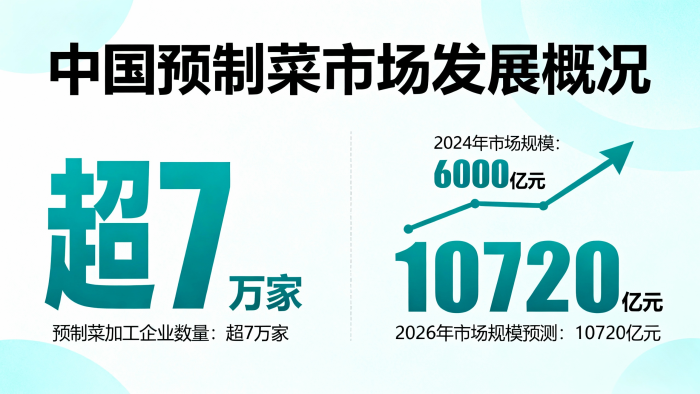
Core Insights - The pre-prepared food industry in China is rapidly growing, with over 70,000 processing companies and a projected market size exceeding 600 billion yuan in 2024, reaching 1,072 billion yuan by 2026 [1][3] Industry Overview - The demand for quick service and diverse menu options in the food and beverage sector is driving the industrialization of catering, leading to increased efficiency in kitchen operations through semi-finished products [3] - However, the industry faces challenges due to a lack of standards, resulting in food safety and quality concerns, as well as issues with ingredient freshness and production practices [3] Regulatory Developments - In response to industry issues, the government is actively working on establishing national standards for pre-prepared foods, with a significant notification issued in March 2024 to clarify definitions and promote safety [3] - The draft of the national food safety standard for pre-prepared foods has passed review and is set to be publicly consulted, addressing classification, raw materials, processing methods, storage, transportation, and inspection [3] Food Safety Standards - A new version of the national food safety standard for food additives will be implemented starting February 8, 2025, providing clear guidelines for the use of preservatives and other additives in pre-prepared foods [4] Industry Best Practices - Leading companies in the pre-prepared food sector are adopting high standards, such as the brand "Yisambao," which emphasizes no preservatives and utilizes modern food processing technology to ensure product quality [6] - Regions like Guangdong, Shanghai, and Hunan are exploring initiatives to clearly label pre-prepared foods, enhancing consumer trust and operational efficiency for restaurants [6] Future Market Outlook - The future of the dining market should not see pre-prepared foods and freshly made dishes as oppositional but rather as complementary, meeting diverse consumer needs [8] - With the implementation of national standards, consumers will be better equipped to identify quality pre-prepared food options, fostering a balance between convenience and safety in modern dining [8]
(经济观察)中国加快制定国家标准 推动预制菜走向“明白菜”
Zhong Guo Xin Wen Wang· 2025-09-22 13:18
Core Viewpoint - The recent public dispute between the restaurant chain Xibei and internet celebrity Luo Yonghao highlights the differing perceptions of prepared dishes between consumers and restaurant operators, as well as consumer concerns regarding the transparency of information about the use of prepared dishes in restaurants [1] Group 1: Regulatory Developments - The Chinese State Council's Food Safety Committee has organized multiple departments to expedite the formulation of national standards for prepared dishes and promote transparency in their use within the restaurant sector, thereby better protecting consumer rights [1] - A notification issued last year defined prepared dishes at the national level, stating that they do not contain preservatives and are pre-processed for heating or consumption, excluding staple foods [1] - The National Market Supervision Administration clarified that dishes made in central kitchens by chain restaurants do not fall under the category of prepared dishes [1] Group 2: Consumer Perception and Market Trends - The rapid industrialization of the restaurant sector has led to a significant increase in the use of semi-finished products, enhancing kitchen efficiency, while the business model has evolved to combine central kitchens with chain stores [2] - Despite the growth of the prepared dish market, which is projected to reach 674.9 billion RMB by 2030 with a compound annual growth rate exceeding 10%, challenges such as incomplete standards and low consumer trust persist [2] - The ongoing consumer debate emphasizes the need for transparency regarding the use of prepared dishes, with consumers expressing a preference for clear labeling of such products [2][3] Group 3: Consumer Rights and Industry Practices - The Consumer Rights Protection Law in China grants consumers the right to know the true nature of the products or services they purchase, which aligns with the push for clear labeling of prepared dishes in restaurants [3] - Some regions, including Guangdong, Shanghai, and Hunan, are actively exploring measures to promote transparency in the use of prepared dishes, such as requiring labels that indicate "prepared dishes" or "central kitchen production" [3] - Researchers suggest that if operators proactively disclose their definitions of prepared dishes, they could gain consumer trust and benefit from a market return based on integrity [3]
多部门推进预制菜国家标准制定
Bei Jing Shang Bao· 2025-09-21 15:57
Core Viewpoint - The State Council's Food Safety Office is taking significant measures to address the growing public interest in pre-prepared meals by organizing relevant departments to expedite the formulation of national standards for these products [1] Group 1 - The State Council's Food Safety Office has prioritized the issue of pre-prepared meals due to widespread public concern [1] - Relevant departments such as the Ministry of Industry and Information Technology, the Ministry of Commerce, the National Health Commission, and the State Administration for Market Regulation are involved in the research and development of standards [1] - The initiative aims to enhance consumer rights by promoting transparency in the use of pre-prepared meals in the catering sector [1]
【市场监管】一场关于预制菜的民意调查
Sou Hu Cai Jing· 2025-09-16 00:34
Core Viewpoint - The discussion surrounding pre-prepared meals highlights the need for transparency and clear definitions in the industry to build consumer trust and address concerns [2][3][5] Group 1: Consumer Trust and Transparency - Consumers need clear information on which meals are pre-prepared and which are freshly made to make informed choices [2][3] - Trust in the food industry is built over time and can be easily damaged by unclear labeling or unexpected pre-prepared meals [3] - The establishment of national standards for pre-prepared meals is crucial to resolving current controversies and aligning consumer expectations with industry practices [2][4] Group 2: Industry Segmentation - The restaurant industry is diverging into two paths: "efficiency-oriented" dining, which embraces pre-prepared meals for speed and standardization, and "experience-oriented" dining, which emphasizes fresh cooking and culinary skill [4] - Examples of efficiency-oriented dining include chains like KFC and Sally's, where consumers are aware of the pre-prepared nature of the food [4] - Experience-oriented dining is characterized by restaurants that promote fresh cooking and engage customers through live kitchen broadcasts, appealing to those who value the cooking process [4] Group 3: Market Dynamics and Consumer Choice - The pre-prepared meal sector has grown significantly, with both restaurants and households increasingly incorporating these products into their routines [5] - The perception that pre-prepared meals are inferior or unsafe is challenged by the fact that reputable companies prioritize food safety and quality, often using better ingredients than some small eateries [5] - Ultimately, consumers hold the power to choose what they eat, and their trust and acceptance are vital for the sustainable development of the pre-prepared meal industry [5]

中经评论:一场关于预制菜的民意调查
Jing Ji Ri Bao· 2025-09-16 00:04
Core Viewpoint - The debate between Xibei and Luo Yonghao has shifted public attention back to offline restaurants, highlighting the need for national standards for prepared dishes, which is crucial for resolving current controversies in the industry [1] Group 1: Industry Standards and Consumer Perception - There is a strong call for the establishment of national standards for prepared dishes, as the current definitions vary significantly between consumers, businesses, and policy documents [1] - Consumers have their own criteria for what constitutes "freshly made," which may not align with official definitions, indicating the importance of incorporating consumer experiences into the standard-setting process [1] - The establishment of standards should consider both industry trends and consumer acceptance to achieve broad consensus [1] Group 2: Trust and Transparency in the Restaurant Industry - Trust is fundamental in the restaurant industry, whether in casual eateries or high-end dining, and can be easily damaged by unclear practices regarding prepared dishes [2] - Transparency in disclosing which dishes are prepared and which are freshly made is essential for building consumer trust and allowing them to make informed choices [2] Group 3: Market Segmentation in the Restaurant Industry - The restaurant industry is evolving into two distinct paths: "efficiency-oriented" restaurants that utilize prepared dishes for speed and standardization, and "experience-oriented" restaurants that emphasize fresh cooking and culinary skills [3] - Prepared dishes have become a significant industry, with many restaurants and households incorporating them into their meals, indicating a growing acceptance of this segment [3] - The perception that prepared dishes are inherently inferior or unsafe is challenged by the fact that reputable companies often prioritize food safety and quality, sometimes even exceeding the standards of smaller establishments [3] Group 4: Consumer Choice and Industry Sustainability - As prepared dishes become a part of daily life, it is crucial to emphasize that the ultimate choice of what to eat lies with consumers, whose trust and recognition are vital for the sustainable development of the industry [4]