
2型糖尿病治疗

Search documents
国家卫健委紧急叫停两项手术
券商中国· 2025-07-09 06:11
Core Viewpoints - The National Health Commission has issued notifications prohibiting the use of "jejunum-ileum anastomosis" for treating type 2 diabetes and "cervical deep lymphatic vessel/vein anastomosis" for treating Alzheimer's disease due to lack of sufficient evidence supporting their safety and efficacy [1][2]. Group 1: Jejunum-Ileum Anastomosis for Type 2 Diabetes - The National Health Commission assessed the use of "jejunum-ileum anastomosis" for type 2 diabetes and found it lacks theoretical support and high-quality evidence, leading to its prohibition [1]. - Local health authorities are required to ensure that medical institutions cease using this technique for diabetes treatment, with serious consequences for non-compliance [1]. Group 2: Cervical Deep Lymphatic Vessel/Vein Anastomosis for Alzheimer's Disease - The National Health Commission has identified that "cervical deep lymphatic vessel/vein anastomosis" is still in the early exploratory stage of clinical research, with unclear indications and contraindications, resulting in its prohibition for Alzheimer's treatment [2][3]. - Local health authorities must monitor and ensure that medical institutions stop using this technique, while also providing follow-up services for affected patients [3]. - The National Health Commission will consider re-evaluating the clinical application of this technique once sufficient preclinical research evidence is available [3].


多家三甲医院开展!国家卫健委紧急叫停
Nan Fang Du Shi Bao· 2025-07-09 05:27
Core Viewpoint - The National Health Commission of China has prohibited the use of "cervical deep lymphatic vessel/lymph node-venous anastomosis" for the treatment of Alzheimer's disease due to insufficient clinical evidence supporting its safety and efficacy [1][4]. Group 1: Regulatory Actions - The National Health Commission organized an expert evaluation of the technique, concluding that it is still in the early exploratory stage of clinical research, with unclear indications and contraindications [1][4]. - Local health authorities are required to ensure that medical institutions cease the use of this technique for Alzheimer's treatment and provide follow-up services for affected patients [1][5]. - Institutions and personnel continuing to use this technique post-notification will face serious consequences under relevant health laws and regulations [2]. Group 2: Technical Overview - "Cervical deep lymphatic vessel/lymph node-venous anastomosis" is a microsurgical technique that connects lymphatic vessels or nodes to nearby veins, primarily used for treating persistent lymphedema [3]. Group 3: Evaluation Findings - The evaluation found a lack of direct evidence from preclinical studies regarding the safety, efficacy, and economic viability of the technique for Alzheimer's treatment [4]. - The technique's application for Alzheimer's disease lacks high-quality evidence from clinical studies and health economics [4]. Group 4: Implementation Guidelines - Provincial health authorities must fulfill their responsibilities in managing the clinical application of medical technologies and enhance daily supervision of medical institutions [5]. - Local health departments should conduct investigations into the clinical application of the technique and ensure compliance with the prohibition [5].

国家卫健委叫停LVA手术治疗阿尔茨海默病
news flash· 2025-07-09 01:06
Core Viewpoint - The National Health Commission has issued two important notifications prohibiting specific surgical techniques for the treatment of Alzheimer's disease and type 2 diabetes, emphasizing the need for clinical application management and evidence-based support for medical practices [1]. Group 1: Alzheimer's Disease Treatment - The notification prohibits the use of "cervical deep lymphatic vessel/lymph node-venous anastomosis" for treating Alzheimer's disease due to its early exploratory stage in clinical research [1]. - Expert evaluations indicate that the indications and contraindications for this technique are not clearly defined, and there is a lack of high-quality evidence supporting its safety and effectiveness [1]. Group 2: Type 2 Diabetes Treatment - The notification also bans the use of "jejunum-ileum anastomosis" for the treatment of type 2 diabetes, reflecting similar concerns regarding the clinical application of this surgical method [1]. - The decision underscores the importance of rigorous evaluation and evidence before adopting new medical technologies in clinical settings [1].
“体重管理”赛道新动态!博瑞医药公布两项II期临床研究数据
Guo Ji Jin Rong Bao· 2025-06-24 13:16
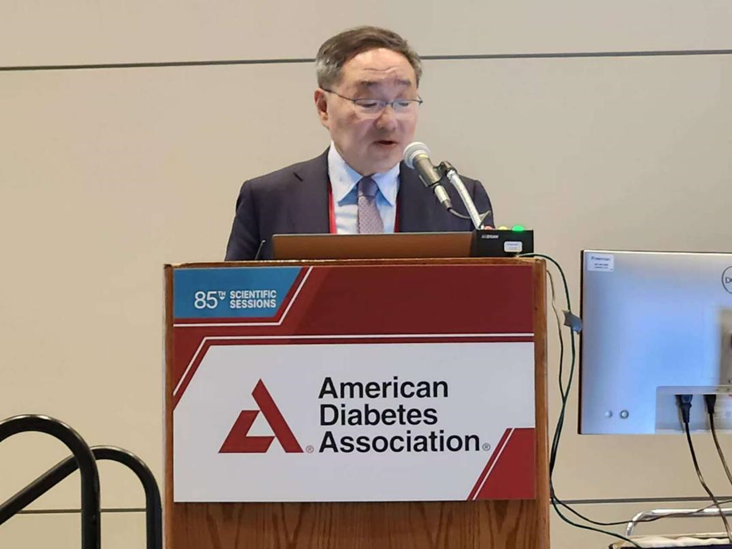
Core Insights - BrightGene Pharmaceutical Co., Ltd. presented promising Phase II clinical trial data for its dual-target agonist BGM0504 at the 85th American Diabetes Association (ADA) Scientific Sessions, indicating potential advantages over Semaglutide in treating type 2 diabetes and obesity [1][4] - The company also shared preclinical results for a new Amylin, BGM1812, which shows enhanced receptor activation and potential for effective weight management [1][5] Group 1: BGM0504 Clinical Data - BGM0504 demonstrated significant reductions in HbA1c, fasting blood glucose, postprandial blood glucose, weight, and blood pressure in adult patients with type 2 diabetes during Phase II trials [3][4] - The majority of adverse events were mild to moderate and resolved without intervention, with no observed cases of hypoglycemia or unexpected adverse events, indicating a favorable risk-benefit profile [3][4] - The drug is currently undergoing Phase III clinical trials in China for weight management and type 2 diabetes, with over 1,000 patients treated, showing excellent efficacy and safety [4] Group 2: BGM1812 Development - BGM1812 is a novel Amylin designed using AI/ML optimization, characterized by strong and prolonged effects, with potential for development into a weekly oral formulation [5] - The company aims to leverage its expertise in peptide development to accelerate innovative therapies for unmet clinical needs in metabolic diseases [4]

礼来计划年底前递交efsitora用于治疗2型糖尿病成人患者的上市申请
news flash· 2025-06-23 01:44
Core Insights - Eli Lilly plans to submit a marketing application for efsitora, an insulin treatment for adult patients with type 2 diabetes (T2DM), to global regulatory authorities by the end of this year [1] Group 1: Clinical Trial Results - The company announced detailed results from three Phase 3 clinical studies: QWINT-1, QWINT-3, and QWINT-4 [1] - These studies evaluated the efficacy and safety of efsitora alfa administered once weekly compared to daily basal insulin in T2DM adult patients [1] - All studies achieved their primary endpoints, demonstrating that weekly efsitora is non-inferior to daily basal insulin in reducing hemoglobin A1C levels [1]

更适合中国人使用的司美格鲁肽口服片14mg
GLP1减重宝典· 2025-06-22 07:21
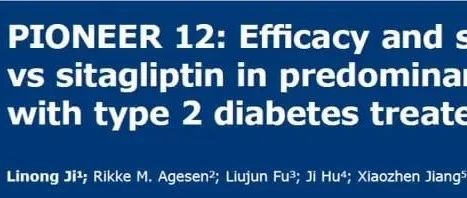
Core Viewpoint - The PIONEER 11 and PIONEER 12 studies provide significant clinical data supporting the approval of semaglutide tablets (brand name: Ozempic) for type 2 diabetes (T2DM) treatment in the Chinese population, demonstrating its efficacy and safety compared to active controls and placebo [2][3][14]. Group 1: PIONEER 11 Study - The PIONEER 11 study evaluated the efficacy and safety of semaglutide as monotherapy in Chinese T2DM patients with inadequate diet and exercise control, highlighting differences in clinical profiles compared to Western populations [4][9]. - This study was a 26-week, randomized, double-blind, placebo-controlled, multi-center Phase 3 trial involving 521 T2DM patients, with approximately 75% being Chinese. The primary endpoint was the change in HbA1c levels from baseline at week 26, and the confirmatory secondary endpoint was weight change [5]. - Results showed that all doses of semaglutide (3mg, 7mg, 14mg) significantly reduced HbA1c compared to placebo, with the 14mg group achieving a reduction of 1.6%. Additionally, the 7mg and 14mg groups experienced significant weight loss, with the 14mg group losing 3.0kg overall and 2.6kg in the Chinese subgroup [5][11]. Group 2: Safety and Tolerability - The study indicated that gastrointestinal adverse events were the most common, mostly mild and transient, with no reports of severe hypoglycemia and a low incidence of serious adverse events across all groups [7][13]. Group 3: PIONEER 12 Study - The PIONEER 12 study assessed the combined effect of semaglutide with sitagliptin in T2DM patients on stable doses of metformin, revealing potential differences in clinical profiles and drug responses in the Chinese population compared to Western groups [9][10]. - This was also a 26-week, randomized, double-blind, active-controlled, multi-center Phase 3 trial involving 1441 patients, with around 75% being Chinese. The primary and secondary endpoints were consistent with PIONEER 11, focusing on HbA1c and safety [10]. - Results indicated that all doses of semaglutide significantly outperformed sitagliptin in reducing HbA1c, with the 14mg group achieving a reduction of 1.6%. Weight loss was also significantly greater in the semaglutide groups compared to sitagliptin, with the 14mg group losing 3.8kg overall and 3.4kg in the Chinese subgroup [11][14]. Group 4: Conclusion - The 14mg dose of oral semaglutide demonstrated significant weight loss and glycemic control in the Chinese population, suggesting it is well-suited for use in this demographic despite lower baseline weights, indicating a promising application outlook [14].
降低45%痴呆风险!司美格鲁肽等GLP-1RA类药物独特神经保护作用创新发现
GLP1减重宝典· 2025-05-16 02:15
Core Viewpoint - A new meta-analysis indicates that GLP-1 receptor agonists, used for treating type 2 diabetes and aiding weight loss, may significantly reduce the risk of developing any form of dementia [2][4]. Group 1: Study Overview - The study, led by Catriona Reddin from Galway University, reviewed 26 randomized clinical trials involving over 160,000 participants, providing further evidence of the cognitive improvement potential of GLP-1 drugs [2][4]. - Participants in the trials were type 2 diabetes patients who had not been diagnosed with dementia or cognitive impairment, and they were followed for at least six months [4]. Group 2: Findings and Comparisons - The results showed that the incidence of dementia or cognitive decline was significantly lower in the group using GLP-1 drugs compared to the placebo group [4]. - Previous observational studies suggested a slight reduction in dementia risk associated with GLP-1 drugs, but this meta-analysis provides stronger evidence through controlled clinical trials [2][4]. Group 3: Mechanisms and Implications - The protective effects of GLP-1 drugs may not solely be due to blood sugar control, as SGLT2 inhibitors did not show a significant correlation with dementia risk [7]. - GLP-1 drugs have been found to possess anti-inflammatory properties, which may help mitigate chronic neuroinflammation, a significant factor in dementia [11][12]. - These drugs may also positively impact cardiovascular health, potentially reducing dementia risk related to vascular issues [12]. Group 4: Future Research and Recommendations - While the findings are promising, experts caution against prescribing GLP-1 drugs solely for dementia prevention without further large-scale studies specifically targeting dementia [15]. - Ongoing clinical trials are investigating the use of semaglutide for early Alzheimer's treatment, with results expected later this year [16].

翰森制药孚来美纳入最新专家共识,助力2型糖尿病治疗方案革新
Zhong Guo Jing Ji Wang· 2025-04-22 06:54
近日,中国研究型医院学会糖尿病学专业委员会组织编写的《胰高糖素样肽1受体激动剂联合胰岛素治 疗2型糖尿病专家共识(2025版)》在《中华糖尿病杂志》发表,翰森制药聚乙二醇洛塞那肽注射液(商品 名:孚来美)成功纳入推荐,助力2型糖尿病联合治疗革新。 在我国,胰岛素被广泛应用于糖尿病治疗,但低血糖和体重增加是常见且不容忽视的不良反应。胰高糖 素样肽1受体激动剂(GLP-1RA)与胰岛素联合,可针对2型糖尿病(T2DM)多种病理生理缺陷干预,不仅 能显著增强降糖效果,减少每日胰岛素用量,还能降低体重增加和低血糖风险,已成为临床常用联合治 疗方案。《胰高糖素样肽1受体激动剂联合胰岛素治疗2型糖尿病专家共识(2025版)》旨在规范这一联合 治疗方案的临床应用,为基层医师提供科学权威的参考和指导。 共识指出,足量GLP-1RA联合胰岛素,可为患者带来心血管及肾脏保护等额外获益,无论日制剂还是 周制剂,都能显著降低糖化血红蛋白(HbA1c)水平,提高血糖达标率。此外,基于空腹C肽的T2DM分型 为精准治疗提供了便捷途径,GLP-1RA适配不同T2DM分型的精准治疗方案。 孚来美是我国首个自主研发的GLP-1RA周制剂、全球 ...

君圣泰医药-B(02511)宣布熊去氧胆小檗硷(HTD1801)在2型糖尿病患者中开展的两项3期临床试验达到主要终点
智通财经网· 2025-04-15 00:11
Core Viewpoint - Junsheng Tai Pharmaceutical-B (02511) has announced that its self-developed intestinal and hepatic anti-inflammatory and metabolic regulator, HTD1801, has achieved primary efficacy endpoints and multiple secondary efficacy endpoints in two Phase 3 clinical trials for Type 2 Diabetes Mellitus (T2DM) patients [1][2]. Group 1: Clinical Trial Results - The SYMPHONY 1 and SYMPHONY 2 trials are multi-center, randomized, double-blind, placebo-controlled Phase 3 studies aimed at evaluating the efficacy and safety of HTD1801 in T2DM patients with poor blood glucose control after dietary and exercise interventions (SYMPHONY 1; N=407) and those with inadequate control on metformin (SYMPHONY 2; N=549) [2]. - The primary efficacy endpoint for both studies was the change in glycated hemoglobin (HbA1c) from baseline after 24 weeks of treatment compared to placebo, with secondary endpoints including the percentage of subjects achieving HbA1c <7.0%, fasting plasma glucose (FPG), low-density lipoprotein cholesterol (LDL-C), gamma-glutamyl transferase (GGT), and high-sensitivity C-reactive protein (hs-CRP) [2]. Group 2: Efficacy and Safety Profile - After 24 weeks of treatment, the proportion of patients achieving HbA1c <7.0% in the HTD1801 group was significantly higher than in the placebo group, with HTD1801 also showing significant reductions in both postprandial and fasting blood glucose levels [3]. - HTD1801 demonstrated the ability to lower both glucose and lipids, significantly reducing LDL-C and non-HDL-C levels, as well as inflammatory markers GGT and hs-CRP, which are closely related to cardiovascular events and clinical outcomes in T2DM patients [3]. - Both studies indicated that HTD1801 exhibited good safety and tolerability, with the most common adverse events being gastrointestinal in nature, consistent with previous clinical findings, and less than 2% of subjects discontinued due to adverse events, with no significant risk of hypoglycemia observed [3].