智能网联汽车

Search documents
朱华荣:全球智能网联汽车标准体系仍存壁垒,建议加强标准互认
Zheng Quan Shi Bao Wang· 2025-10-16 08:21
Core Viewpoint - The future of automobiles is projected to be customizable smart vehicle robots, with L2 level assisted driving expected to become standard in new cars by 2030. However, the smart connected vehicle industry faces challenges due to an incomplete global standard system [1]. Industry Challenges - There are overlapping and contradictory industry standards that create cost pressures and technical difficulties for production and inspection [1]. - Significant differences in national standards regarding autonomous driving data security lead to issues of repeated certification and multiple compliance requirements for companies [1]. Recommendations - It is suggested that governments worldwide promote mutual recognition of standards to achieve a single certification that is globally accepted, thereby creating a unified, efficient, and sustainable development environment for smart connected vehicles [1].

重磅利好!9部门发布!
中国基金报· 2025-10-16 04:04
Core Viewpoint - The article discusses the implementation of the "Action Plan for Promoting New Urban Infrastructure Construction to Build Resilient Cities (2025-2027)" issued by nine departments, aiming to enhance urban risk prevention and governance capabilities through digital, networked, and intelligent urban infrastructure construction [1][6]. Summary by Sections 1. Financing Mechanism - Establish a diversified financing system led by government investment and primarily supported by enterprise investment, encouraging local governments to strengthen policy guidance through reward and subsidy mechanisms [2][30]. - Support eligible projects to issue Real Estate Investment Trusts (REITs) in the infrastructure sector and promote market-oriented credit provision by banks without increasing local government hidden debt [2][30]. 2. Intelligent Municipal Infrastructure - Implement action plans for the construction and renovation of intelligent municipal infrastructure, focusing on safety management and dynamic information updates for urban lifelines [2][8]. - Enhance safety operation management in key areas and establish real-time monitoring platforms for critical infrastructure [2][9]. 3. Smart Community Development - Promote the construction of smart residential areas and community embedded service facilities, focusing on safety hazard prevention and the digital transformation of urban commerce [3][10]. - Establish a comprehensive management platform for residential buildings, ensuring safety throughout the entire lifecycle of housing [3][10]. 4. Digital Home Construction - Strengthen residential information infrastructure and promote the construction of gigabit fiber networks, enhancing connectivity for electricity and information networks [4][15]. - Encourage the integration of smart products in existing homes and the electrification and digitalization of traditional home products [4][15]. 5. Intelligent Construction and Industrialization - Encourage cities to build intelligent construction industry bases and promote the application of Building Information Modeling (BIM) technology across major infrastructure projects [4][11]. - Support the intelligent production and upgrading of building components, fostering innovation in automated construction technologies [4][11]. 6. Urban Information Model (CIM) Platform - Construct a data resource system that integrates various urban management data, enhancing the sharing and utilization of information across departments [12][23]. - Develop the CIM platform to support urban governance and risk assessment, facilitating the integration of various urban management functions [12][23]. 7. Urban Operation Management Service Platform - Promote a unified urban operation management service platform to enhance real-time monitoring and dynamic analysis of urban management [12][25]. - Establish a three-tier platform system at the national, provincial, and city levels to improve data sharing and operational coordination [12][26]. 8. Strengthening Coordination - The Ministry of Housing and Urban-Rural Development will coordinate with relevant departments to develop annual work priorities and evaluate progress [13].


工信部辛国斌:搭载组合驾驶辅助功能的乘用车新车销量占比超过60%
Ge Long Hui· 2025-10-16 03:38
格隆汇10月16日|工业和信息化部副部长辛国斌今日在2025世界智能网联汽车大会上表示,在有关各方 共同努力下,我国智能网联汽车产业发展取得了积极成效。 一是技术水平显著提升,建成涵盖智能座 舱、自动驾驶、网联云控等在内的完整的产业体系。大算力芯片,智能线控底盘批量上车,搭载组合驾 驶辅助功能的乘用车新车销量占比超过60%。 二是示范应用持续拓展。在20个城市开展"车路云一体 化"应用试点,加快路侧单元云控平台等基础设施建设,全国累计开放测试示范道路3.5万公里,部署智 能化路测单元超过1.1万平方米。 三是政策体系逐步完善,累计制定发布国家及行业标准88项,牵头自 动驾驶系统测试场景等近10项国际标准制定。有序开展智能网联汽车准入试点,加强组合驾驶辅助系统 和OTA升级管理,为创新技术应用创造良好条件。 ...
工信部辛国斌:编制十五五智能网联新能源汽车产业发展规划 加快组合驾驶辅助自动驾驶等标准制定
Ge Long Hui· 2025-10-16 03:34
格隆汇10月16日|工业和信息化部副部长辛国斌今日在2025世界智能网联汽车大会上表示,作为行业主 管部门,工业和信息化部将把智能网联汽车作为推进新型工业化发展新质生产力的重要力量,统筹推进 技术攻关、推广应用等工作,推动产业高质量可持续发展。 一是支持技术创新,推动人工智能与汽车 产业深度融合,高水平建设汽车行业人工智能中试基地,支持汽车"研产供销服务"各个环节大模型的应 用开发,赋能全产业数字化转型,加强新一代电子电气架构,大算力芯片、操作系统等技术攻关,加快 自动驾驶技术突破。 二是促进跨界融合,深入推进"车路云一体化"应用试点,通过路侧交通等信息交 互,提升自动驾驶安全水平,推动城市间跨域连片移动,支持汽车、信息通讯、能源、交通等行业企 业,围绕模型训练、车网互动等,共建可信数据空间,促进跨界融合发展。 三是完善政策体系,编制 十五五智能网联新能源汽车产业发展规划,明确发展目标,部署重点任务,加快组合驾驶辅助自动驾驶 等标准制定,优化智能网联汽车生产领域管理,规范产业竞争秩序,维护公平有序市场环境。四是深化 开放合作,坚持全球化发展,国际化创新,持续打造市场化、法治化、国际化一流营商环境。 ...
2025世界智能网联汽车大会即将举行,汽车智能化加速
Xuan Gu Bao· 2025-10-15 15:06
Industry Overview - The 2025 World Intelligent Connected Vehicle Conference will be held from October 16 to 18 in Beijing, focusing on cutting-edge technologies, industrial applications, and future trends in the intelligent connected vehicle (ICV) sector [1] - China has identified intelligent connected vehicles as one of the eight key areas for enhancing manufacturing competitiveness, supported by the "New Energy Vehicle Industry Development Plan (2021-2035)" [1] Industry Development - The Ministry of Industry and Information Technology reported positive progress in the development of the intelligent connected vehicle industry, with 17 national-level testing demonstration zones established and over 35,000 kilometers of testing roads opened [2] - More than 10,000 testing demonstration licenses have been issued, and 20 pilot cities for "vehicle-road-cloud integration" are being accelerated [2] - The focus for 2025 includes the introduction of "Artificial Intelligence + Transportation" implementation opinions to promote smart driving and related innovations [2] Company Insights - Qiming Information is developing a collaborative solution for vehicle-road-cloud integration, expected to benefit from the rapid deployment of the vehicle-road-cloud industry [2] - Asia-Pacific Co., Ltd. is actively building new intelligent business lines, encompassing autonomous driving technologies such as environmental perception, active safety control, and mobile internet [2]


【新能源周报】新能源汽车行业信息周报(2025年10月6日-10月12日)
乘联分会· 2025-10-15 08:37
Industry Information - Botai Car Union and SenseTime signed a cooperation framework agreement to promote AI applications in intelligent connected vehicles [8] - The first large-capacity sodium-ion energy storage power station in China has been put into operation, capable of reducing coal consumption by 9,000 tons and CO2 emissions by 13,500 tons annually [11] - The "Weihai-Dalian" new energy vehicle transportation route has been opened, enhancing logistics for electric vehicles in northern China [12] - In August, China's automotive parts exports reached $8.41 billion, with a year-on-year increase of 4.7% [13] - During the National Day and Mid-Autumn Festival holiday, the charging volume for new energy vehicles on highways exceeded 1.2 billion kWh, marking a historical high [14] - CATL has repurchased shares worth 4.386 billion yuan and its subsidiary completed a financing round of 2 billion yuan [17][18] - The global strategic cooperation between CATL and Maersk aims to optimize supply chain management [14] - Hunan Province plans to narrow the gap in new energy vehicle penetration rate with the national average to within 6% by the end of 2025 [20] - The second phase of CATL's Luoyang base has officially commenced production, with an expected annual output increase of 30 GWh [21] Policy Information - Wenzhou has suspended the implementation of the automobile replacement subsidy policy starting from October 10, 2025 [24] - The Ministry of Finance announced adjustments to the technical requirements for the exemption of vehicle purchase tax for new energy vehicles for 2026-2027 [26][27] - Shanghai has adjusted the rules for the 2025 automobile trade-in subsidy program, implementing a public lottery system for qualification [31] - The first international standard for "Intelligent Mobility Service Safety and Privacy" has been successfully established, led by China [36] - The Ministry of Commerce and the General Administration of Customs announced export controls on lithium batteries and artificial graphite anode materials, effective from November 8, 2025 [38] Company Information - Li Auto plans to launch 105 new charging stations by the 40th week of 2025, bringing the total to over 3,400 [47] - BYD's monthly sales in the UK have surpassed 10,000 units for the first time, with the Song Plus DM-i model ranking sixth in the top ten single model sales [45] - Tesla is planning to introduce a lower-priced version of the Model Y to adapt to changes in U.S. electric vehicle incentives [45] - Geely's Galaxy brand has become the fastest to reach annual sales of one million new energy vehicles [48] - NIO is set to launch the 2.0 version of its world model, enhancing its AI capabilities [49] - Xiaopeng Motors will announce significant breakthroughs in physical AI at its upcoming AI Technology Day [49]




住建部等部门:推动以智慧多功能杆为主要载体的道路基础设施智能感知系统和城市云平台建设
Zheng Quan Shi Bao Wang· 2025-10-15 08:04
Core Viewpoint - The Ministry of Housing and Urban-Rural Development, along with other departments, has issued an action plan for implementing the opinions on promoting new urban infrastructure construction to create resilient cities from 2025 to 2027, focusing on the development of road coordination facilities [1] Group 1 - The action plan emphasizes the need for demand-oriented development of intelligent sensing systems for road infrastructure, primarily utilizing smart multifunctional poles as the main carrier [1] - The initiative includes the integration of "vehicle-road-cloud" applications through pilot projects to support the application of intelligent connected vehicles [1] - The goal is to improve urban travel environments and enhance the level of digital governance in cities [1]
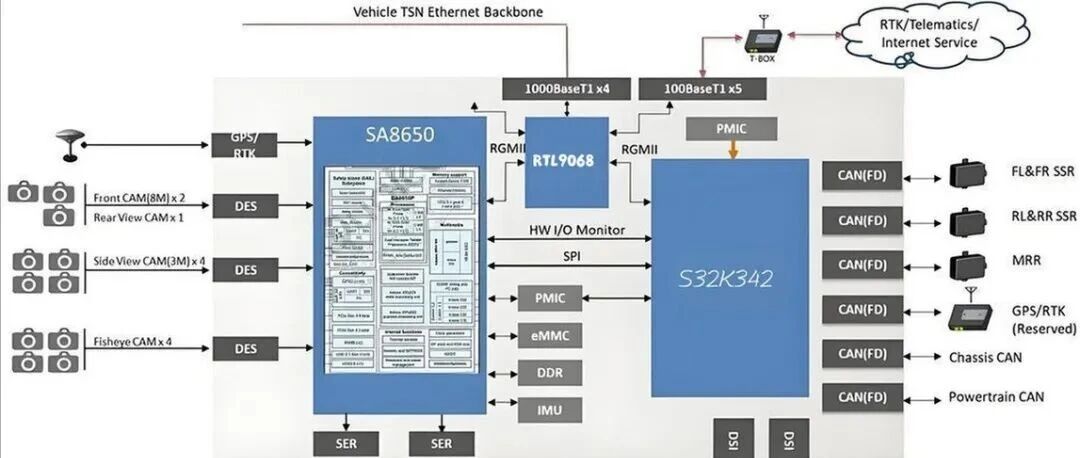
高通SA8650自动驾驶域控制器拆解分析
芯世相· 2025-10-15 06:07
Group 1: Autonomous Driving Domain Controller Overview - The autonomous driving domain controller serves as the "central brain" of intelligent connected vehicles, facilitating the transition from assisted driving to fully autonomous driving [5] - It integrates multi-sensor data, path planning algorithms, and vehicle control interfaces to achieve perception, decision-making, and execution in a unified manner, making it a key platform for L2 and above autonomous driving technologies [5] Group 2: Main Functions of the Domain Controller - Multi-sensor fusion and perception involve integrating data from radar, lidar, cameras, IMU, and high-precision GPS to create an accurate environmental semantic map [6] - Decision planning and path generation require the system to complete path planning and behavior decision-making within milliseconds based on real-time traffic density and speed limits [6] - The controller ensures precise control of acceleration, braking, and steering through interaction with chassis control systems while meeting ISO 26262 ASIL-D safety standards [6] - Data security and vehicle-to-everything (V2X) communication are achieved through 5G-V2X direct communication and encryption algorithms to protect vehicle control data and user privacy [6] Group 3: Hardware Architecture Analysis - The Qualcomm SA8650 core module consists of a main SoC chip, power management chip, and memory chips, integrating various key functional components [20] - The architecture includes a powerful CPU based on Arm v8.2 Cortex technology, a high-performance GPU for graphics rendering, and a Tensor processor for machine learning tasks [22] - The system also features an image signal processor for camera data processing, a video codec module for high-quality video handling, and a dedicated safety island subsystem for critical automotive safety tasks [23] Group 4: Communication and Safety Features - The RTL9068AB switch module supports 1000 Base-T1 standard for high-speed communication, enhancing bandwidth and connectivity in automotive networks [56] - The NXP TJA1145 and TJA1044 CAN transceivers ensure compliance with industry standards and provide low-power modes for energy efficiency [62][68] - The system includes advanced message processing mechanisms and multiple operational states to enhance reliability and performance in automotive applications [64][70] Group 5: Power Management and Efficiency - The LM25143-Q1 is a synchronous buck DC/DC controller designed for high current output, supporting a wide input voltage range and low quiescent current for extended battery life [77][78] - The MPQ8875A is a versatile DC/DC converter with a wide input voltage range, designed for automotive applications, featuring robust fault protection and adjustable switching frequency [91][92] Group 6: GPS Module Specifications - The UM670A GPS module supports multiple satellite systems and offers high sensitivity and positioning accuracy, suitable for automotive applications [122][130] - It features a compact design with a wide operating temperature range and low power consumption, making it ideal for integration into vehicle systems [135][140]

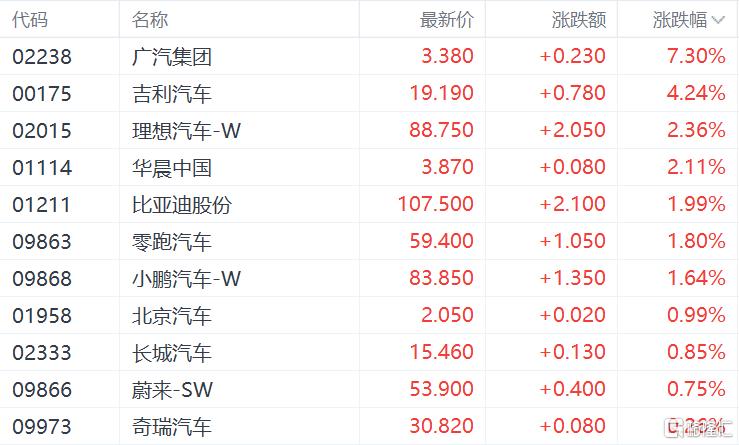
三方联手打造“国民好车”!港股汽车股爆了,广汽集团涨超7%
Ge Long Hui· 2025-10-15 03:45
Group 1 - JD.com announced a collaboration with GAC Group and CATL to launch a new car, with test drives starting in late October and an official release during the Double 11 shopping festival in November [1][4][7] - The new car is positioned as an affordable model targeting the mass market, focusing on stylish design, safety performance, and a balance between range and price [8] - GAC Group will handle vehicle manufacturing, while CATL will provide battery and battery swap solutions, addressing user concerns about charging efficiency and vehicle range [8][9] Group 2 - The smart connected vehicle market in China is projected to exceed 286 billion yuan by 2025, with a year-on-year growth of 24.5%, and L2-level assisted driving penetration expected to surpass 45% [9] - In the first nine months of 2023, China's automotive production and sales both exceeded 24.4 million units, marking a year-on-year increase of 13.3% and 12.9% respectively [10] - New energy vehicles (NEVs) have become a significant growth driver, with production and sales both surpassing 11 million units, reflecting a year-on-year growth of over 30% [10][11]

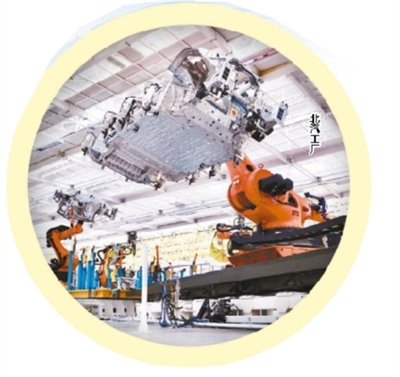
北京智能汽车为何“更聪明”
Bei Jing Qing Nian Bao· 2025-10-14 17:32
Core Viewpoint - Beijing is positioning itself as a leading hub for intelligent connected vehicles, leveraging its policy advantages, technological advancements, and industrial cluster to accelerate the development of the smart and connected vehicle industry [7][9]. Group 1: Policy and Standards - Beijing has established itself as a pilot city for intelligent connected vehicles, with the recent release of four local standards in the autonomous driving sector, focusing on closed testing and vehicle-road-cloud integration [7]. - The city aims to create a globally leading institutional innovation hub by prioritizing standard-setting to gain a voice in industry development [7]. - The implementation of the "Beijing Autonomous Driving Vehicle Regulations" marks a significant step in legalizing L3 and above autonomous vehicles for personal use, expanding the scope beyond commercial applications [7][9]. Group 2: Technological Infrastructure - The Beijing Economic-Technological Development Area has achieved 600 square kilometers of intelligent connected road coverage, with over 1,000 vehicle-mounted units deployed and more than 33 million kilometers of testing mileage [7][8]. - The cloud control platform processes approximately 420 terabytes of data daily, integrating over 1,100 test vehicles and covering more than 1,600 intersections [8]. - The city has developed a comprehensive urban-level experimental platform encompassing "vehicle, road, cloud, network, and map" systems, enhancing the testing and operational capabilities of autonomous vehicles [8]. Group 3: Industry Development - Beijing's automotive industry is a key pillar of its economy, with a projected automotive industry output value exceeding 700 billion yuan by 2025, and an 80% penetration rate for intelligent connected vehicles (L2 and above) [7]. - The city has seen a significant increase in electric vehicle production, with July's output reaching 52,000 units, a year-on-year increase of 140% [9]. - Over 120 intelligent connected vehicle companies are now based in Beijing, with notable growth in firms like WeRide and Pony.ai, which have reported record revenues and expanded operations [8][9]. Group 4: Application and Innovation - Autonomous driving services are being scaled up, with companies like Baidu and Pony.ai conducting regular operations in multiple cities, including Beijing [9]. - The upcoming World Intelligent Connected Vehicle Conference will showcase advancements in technology, applications, safety, and data, focusing on the transition from pilot projects to large-scale applications [9]. - The integration of smart technologies in manufacturing processes is enhancing production efficiency for companies like Xiaomi and Li Auto, contributing to the overall growth of the sector [9].