AI大模型

Search documents
小米前高管王腾成立新公司!
证券时报· 2026-01-08 09:07
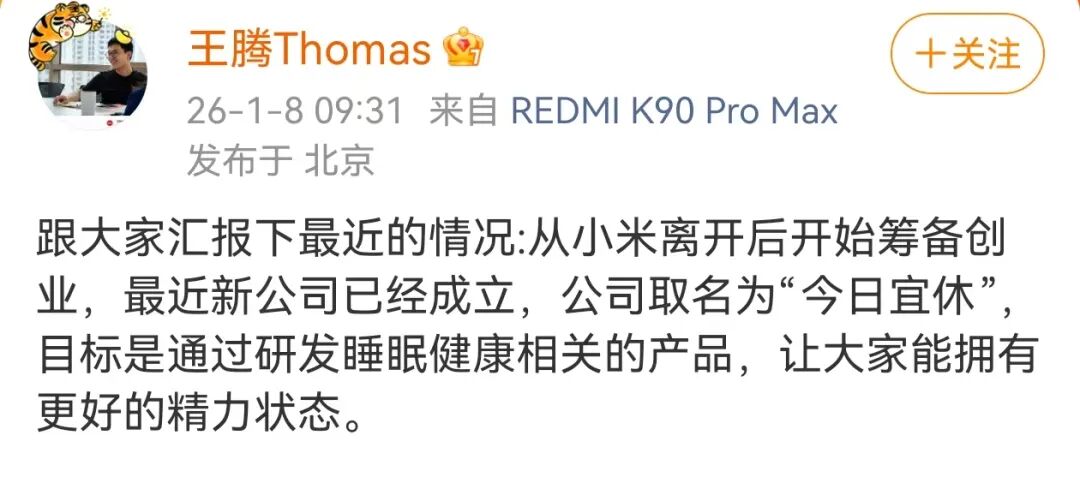
Core Viewpoint - Wang Teng, former General Manager of Xiaomi's China Marketing Department, has announced his new venture focused on sleep health and energy management through a company named "Today is Suitable for Rest" [2][4]. Group 1: Company Overview - The new company aims to develop products related to sleep health, addressing a growing concern among individuals regarding their sleep quality and energy levels [2][4]. - Wang Teng has assembled a startup team primarily composed of members from leading tech companies like Xiaomi and Huawei [5]. Group 2: Rationale for Focus Area - The choice of sleep health and energy management is based on three considerations: the increasing public concern over sleep and energy, the need for a better societal understanding of sleep's value, and advancements in AI technology that can enhance product experiences [4]. - Factors affecting sleep, such as light, temperature, sound, and air quality, can be monitored using sensors combined with AI models to facilitate proactive decision-making and interventions for improving sleep and energy management [4]. Group 3: Background Context - Wang Teng's departure from Xiaomi was marked by a controversy involving allegations of leaking confidential information and conflicts of interest, leading to his dismissal [5]. - Following his exit, Wang expressed remorse for past mistakes and emphasized his continued support for Xiaomi and its products [5].


港股AI大模型企业MiniMax暗盘涨超15%,现报191港元。
Jin Rong Jie· 2026-01-08 08:38
本文源自:金融界AI电报 港股AI大模型企业MiniMax暗盘涨超15%,现报191港元。 ...
慧辰股份(688500.SH):去年11月中旬公司与合作伙伴发布了GEO相关的解决方案
Ge Long Hui· 2026-01-08 07:59
Core Viewpoint - The company has launched a GEO-related solution to meet the increasing demand for brand marketing in the AI large model era, leveraging over a decade of experience in data elements and serving top-tier clients [1] Group 1: Business Advantages - The company has accumulated extensive Know-How, industry knowledge, and algorithm model libraries through long-term service to Fortune 500 clients and leading brands [1] - The company has developed its own industry large model and digital human model, while also integrating mainstream public service models such as DeepSeek, Wenxin Yiyan, Baichuan Intelligence, Zhipu, Kimi, and GPT [1] Group 2: Model and Solution Capabilities - The company can optimize algorithm models based on different application scenarios by combining various models for training and tuning, resulting in a multi-modal collaborative dynamic scheduling solution [1] - The GEO-related solution is currently being promoted in industries such as fast-moving consumer goods, education, and automotive [1] Group 3: Market Demand and Future Outlook - There is an increasing demand from clients for brand marketing solutions in the AI large model era, which has led to the development of the GEO-related solution based on the company's accumulated algorithm and data capabilities [1] - The company encourages investors to pay attention to future disclosures in designated media for updates on the ongoing business [1]

被小米辞退后,王腾进军睡眠赛道
Guan Cha Zhe Wang· 2026-01-08 07:46
Group 1 - The core idea of the news is that former Xiaomi executive Wang Teng has founded a new company named "Today Yixiu," focusing on developing sleep health-related products to improve people's energy levels [1][2] - Wang Teng's motivation for this venture stems from personal experiences with sleep quality and energy levels, which he found to be common issues among his peers due to work-related stress [1] - The new company will leverage advancements in AI and sensor technology to create products that can actively monitor and intervene in environmental factors affecting sleep, such as light, temperature, sound, and air quality [1] Group 2 - Wang Teng has a background in product strategy at OPPO and joined Xiaomi in 2016, where he held various significant positions, including General Manager of the Redmi brand and the China market [2] - His rapid rise within Xiaomi, achieving the role of General Manager of the China market in just eight years, indicates his strong influence and recognition within the company [2] - Wang Teng was dismissed from Xiaomi in September 2023 due to serious violations, including leaking company confidential information and conflicts of interest, which garnered significant attention [2]

雷军爆料2026年重磅新品:自研芯片、OS、AI大模型将“大会师”
Sou Hu Cai Jing· 2026-01-08 07:06
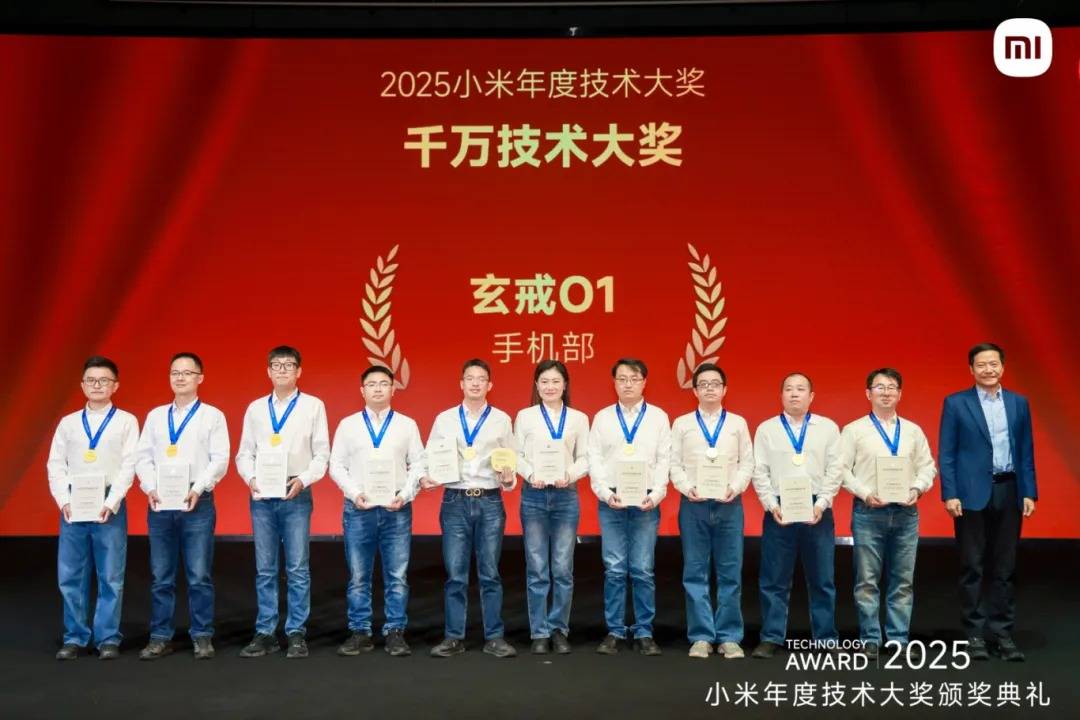
Group 1 - The core event was the awarding of Xiaomi's self-developed chip "Xuanjie O1" at the "Ten Million Technology Awards" ceremony held in Beijing [1] - Xiaomi's founder and CEO Lei Jun announced that in 2026, the company will launch a terminal product that integrates self-developed chips, OS, and AI models, speculated to be the Xiaomi 17S Pro with the new Xuanjie O2 chip [3] - The Xuanjie O2 chip is expected to be released around September this year, utilizing the latest Arm public architecture, with an IPC improvement of at least 15% and the potential integration of the Arm Cortex-X9 series super-large core [5] Group 2 - Xiaomi is concurrently advancing its self-developed Xuanjie 5G baseband, which has reportedly achieved key breakthroughs, although it is not confirmed if it will launch alongside the Xuanjie O2 [7] - In the AI model sector, Xiaomi's open-source self-developed model MiMo-V2-Flash has shown impressive performance, with a total parameter count of 309 billion and 15 billion active parameters, outperforming competitors in response speed and ranking among the top tier of open-source models [10] - The integration of Xuanjie O1, Xuanjie O2, and MiMo-V2-Flash signifies a rapid closure of Xiaomi's self-developed ecosystem, marking a new phase of deep collaboration between hardware and software, enhancing user experience and setting a new benchmark for self-developed technology integration in the industry [10]
王腾离开小米后创业:主打睡眠健康相关产品,未来接入米家生态
Xin Lang Cai Jing· 2026-01-08 06:48
Core Insights - Former REDMI General Manager Wang Teng announced his departure from Xiaomi to start a new venture named "Today Yixiu," focusing on developing sleep health-related products to enhance people's energy levels [1][3] - The choice of this sector is driven by the widespread nature of sleep issues, Wang's professional background in biological information, and support from AI large model technology [1][3] - A startup team has been formed, primarily consisting of members from leading tech companies like Xiaomi and Huawei, who possess extensive experience in software and hardware product development [1][3] Company Details - Today Yixiu Technology Co., Ltd. was established on January 6, 2026, with Wang Teng holding 55% of the shares and serving as the legal representative [2][4] - The registered capital of the company is 1 million RMB, and it is located in Haidian District, Beijing [2][4] - The company is currently hiring for positions such as software and hardware product managers and AI algorithm engineers, with plans to set up branches in Hangzhou and Shenzhen in the future [1][3] Market Integration - In response to inquiries about integrating with the Xiaomi ecosystem, Wang confirmed that the company will definitely connect with it [2][4] Background Context - Prior to his departure, Xiaomi reported that Wang Teng had leaked company confidential information and was involved in serious violations and conflicts of interest, leading to his dismissal [2][4]

冲上热搜!小米前高管,成立新公司
Zhong Guo Ji Jin Bao· 2026-01-08 06:24
Group 1 - Wang Teng announced the establishment of a new company named "Today is Suitable for Rest" focused on developing sleep health-related products to enhance people's energy levels [2][4] - The company has formed an initial team primarily composed of members from leading tech companies like Xiaomi and Huawei, possessing extensive experience in software and hardware product development [7] - Wang Teng emphasized the growing societal concern regarding sleep and energy management, noting the rapid advancements in AI technology that can significantly improve product experiences [7] Group 2 - The company is currently recruiting for key positions, including software and hardware product managers, health/AI algorithm engineers, sleep health experts, and various engineering roles [7] - Wang Teng's departure from Xiaomi was due to serious violations, including leaking company confidential information and conflicts of interest, leading to his dismissal in September 2025 [8] - The initial team is seeking candidates with relevant work experience, with the main office located in Beijing and plans to establish branches in Hangzhou and Shenzhen in the future [7]
小米被辞前高管王腾成立新公司
新华网财经· 2026-01-08 06:21
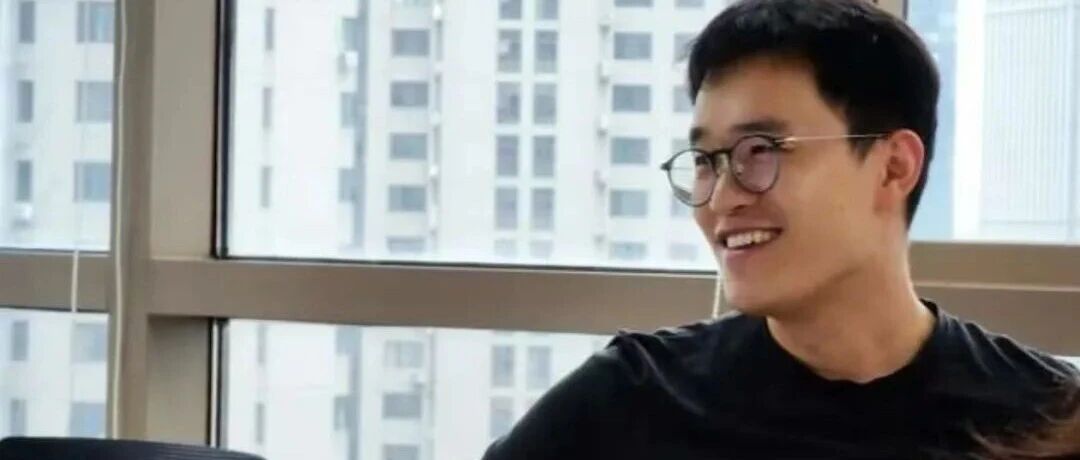
Group 1 - Wang Teng, former General Manager of Xiaomi's China Marketing Department and REDMI brand, announced the establishment of a new company named "Today Yixiu" four months after being dismissed from Xiaomi [3] - The core team of the new company consists of members from Xiaomi, Huawei, and other tech companies, indicating a strong background in technology [3][6] - Wang Teng highlighted the common issues of poor sleep quality and lack of energy, emphasizing the need for society to better understand the value of sleep [4] Group 2 - The new company aims to leverage advancements in AI and sensor technology to improve sleep quality and energy management through proactive decision-making and interventions [4] - Currently, the company is recruiting for various positions, including software and hardware product managers, health/AI algorithm engineers, and sleep health experts, with a preference for experienced candidates [6] - Wang Teng faced disciplinary action from Xiaomi for leaking confidential information and conflicts of interest, leading to his dismissal, which he publicly acknowledged and apologized for [6][10]
冲上热搜!小米前高管,成立新公司
中国基金报· 2026-01-08 06:17
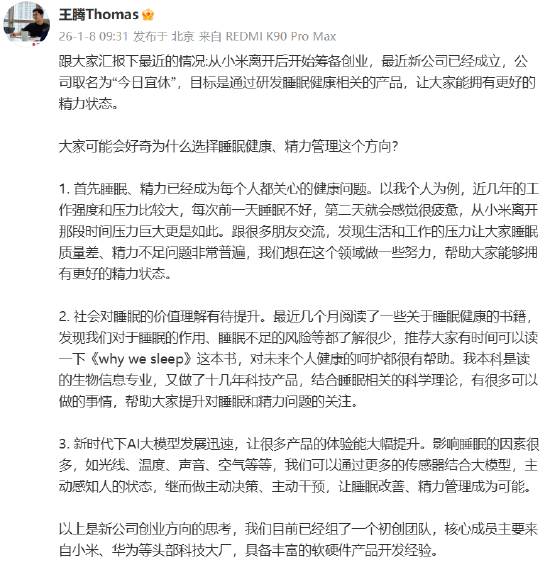
Core Viewpoint - Wang Teng has announced the establishment of a new company named "Today is Suitable for Rest," focusing on developing products related to sleep health to improve people's energy levels [2][3]. Group 1: Reasons for Choosing Sleep Health and Energy Management - Sleep and energy have become significant health concerns for everyone, with many individuals experiencing poor sleep quality and fatigue due to work-related stress [4][9]. - There is a need to enhance societal understanding of the value of sleep, as many people are unaware of the risks associated with sleep deprivation [4][9]. - The rapid development of AI large models allows for significant improvements in product experiences, enabling proactive interventions to enhance sleep and energy management through various sensors [4][9]. Group 2: Company Structure and Recruitment - The initial team has been formed, primarily consisting of members from leading tech companies like Xiaomi and Huawei, who possess extensive experience in software and hardware product development [9]. - The company is actively recruiting for key positions, including software and hardware product managers, health/AI algorithm engineers, sleep health experts, and various engineering roles [9]. - The initial team prefers candidates with relevant work experience, and the company is based in Beijing, with plans to establish branches in Hangzhou and Shenzhen in the future [9]. Group 3: Background of Wang Teng - Wang Teng previously held significant positions at OPPO and Xiaomi, culminating in his role as General Manager of the Redmi brand and the China market [10]. - He was dismissed from Xiaomi in September 2025 due to serious violations, including leaking company confidential information and conflicts of interest [10].
泄密被辞退的小米前高管王腾开新公司!带着小米、华为前员工干这事…
Bei Jing Shang Bao· 2026-01-08 05:15
Group 1 - The core team of the new company "Today Yixiu" is composed of members with extensive experience in software and hardware product development, primarily from Xiaomi and Huawei [1] - The new company focuses on developing products related to sleep health, addressing the growing concern over sleep quality among individuals due to work-related stress and lifestyle factors [2] - The founder emphasizes the need to enhance societal understanding of the value of sleep and its associated risks, drawing from personal experiences and scientific literature on sleep health [2] Group 2 - The company is currently hiring for various positions, including software and hardware product managers, health/AI algorithm engineers, and sleep health experts, with a preference for candidates with relevant work experience [3] - The founder previously faced disciplinary action from Xiaomi for leaking confidential information and conflicts of interest, leading to his dismissal [3] - The founder has publicly denied allegations of illegal activities, stating that while there were shortcomings, no laws were broken [5] Group 3 - The founder's career at Xiaomi began in 2016, with various roles leading to his position as the general manager of the Redmi brand before his departure [7]