乡村全面振兴

Search documents
习近平向全国广大农民和工作在“三农”战线上的同志们致以节日祝贺和诚挚问候
中国基金报· 2025-09-22 05:18
Core Viewpoint - The article emphasizes the importance of agricultural modernization in achieving Chinese-style modernization, highlighting the government's commitment to supporting farmers and rural development [1][2]. Summary by Sections Agricultural Achievements - This year, the country has overcome natural disasters such as droughts and floods, achieving stable summer grain production and increased early rice output, with expectations for another bumper harvest [1]. Government Commitment - The article outlines the necessity for local party committees and governments to prioritize agricultural and rural development, implement strong agricultural support policies, and enhance agricultural technology and equipment [1]. Employment and Income Growth - There is a focus on promoting employment and income growth for farmers through various measures, aiming for comprehensive rural revitalization [1]. Community Involvement - The article encourages farmers to actively participate in rural development and calls for support from all sectors of society to build livable and workable beautiful villages, working together towards a prosperous future [1].


在第八个“中国农民丰收节”到来之际 习近平向全国广大农民和工作在“三农”战线上的同志们致以节日祝贺和诚挚问候
Xin Hua She· 2025-09-22 05:08
Core Viewpoint - The article highlights the celebration of the eighth "Chinese Farmers' Harvest Festival," with President Xi Jinping extending greetings to farmers and those working in the agricultural sector, emphasizing the importance of agricultural modernization for China's overall modernization [1] Summary by Relevant Sections Agricultural Achievements - This year, China has overcome natural disasters such as droughts and floods, achieving stable summer grain production and increased early rice output, with expectations for another bumper harvest [1] Policy Emphasis - Xi Jinping stresses the need for prioritizing agricultural and rural development, urging local governments to implement the central government's decisions, enhance policies that benefit farmers, and strengthen agricultural technology and equipment support [1] Future Vision - The call for collective efforts from farmers and society to build livable and workable beautiful villages is made, aiming for a shared journey towards a modernized future in line with Chinese characteristics [1]
持续用力遏制农村高额彩礼
Jing Ji Ri Bao· 2025-09-21 22:09
Core Viewpoint - The central government emphasizes the importance of addressing high bride price issues in rural areas as a key task for grassroots governance and rural revitalization, aiming to create a healthy and civilized marriage culture [1] Group 1: Background and Significance - High bride prices have become a widely discussed social issue, adding significant financial burdens to families, particularly low-income rural households, and affecting the sense of well-being associated with rural revitalization [1] - The phenomenon of high bride prices has historical roots and is influenced by social factors such as peer comparison, traditional customs, gender imbalance, and changing marriage views, as well as economic factors like urban-rural income disparity and evolving family structures [2] Group 2: Strategies for Improvement - It is essential to recognize the complexity and long-term nature of the issue, advocating for a comprehensive approach that includes economic measures to enhance the effectiveness of interventions [2] - Improving the living and working conditions in rural areas and enhancing income-generating capabilities can help reduce the emphasis on bride prices, promoting a shift towards "zero bride price" or "low bride price" families [2] Group 3: Community Engagement and Support - Listening to community concerns is crucial in addressing the motivations behind high bride prices, which often stem from a desire for future security rather than mere compensation for upbringing [3] - Strengthening social security policies and increasing investment in rural healthcare can alleviate concerns for families, while encouraging newlyweds to fulfill familial responsibilities can help maintain the living standards of both sets of parents [3] - Specific measures, such as those implemented in Ningxia Zhongwei City, provide incentives for "zero bride price" or "low bride price" families, demonstrating a shift towards these practices becoming the norm [3]
察势在先 实干为要
Ren Min Ri Bao· 2025-09-19 06:02
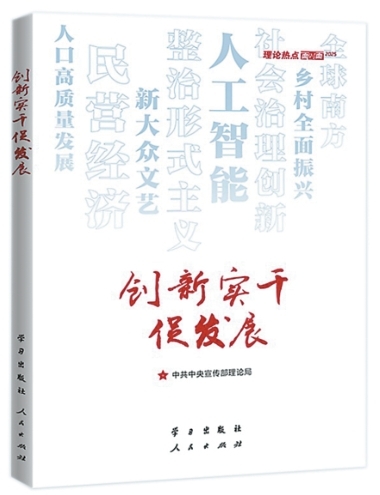
Core Insights - The book "Innovation and Practical Action Promote Development" analyzes current global and domestic trends, addressing key issues such as the impact of artificial intelligence on the economy, the growth of the private sector, and rural revitalization [2][3][4]. Group 1: Thematic Analysis - The book employs a multidisciplinary approach, integrating philosophy, political science, economics, and sociology to explore the essence behind contemporary phenomena, particularly the relationship between humans and machines in the context of AI [3]. - Historical context is utilized to argue that the development of the private economy is a strategic choice based on long-term theoretical exploration and practical experience [3][4]. - The book emphasizes the importance of understanding global population changes, highlighting that issues like aging and declining birth rates are not unique to China but are global challenges [5]. Group 2: Practical Implications - The book advocates for a pragmatic approach to understanding and acting upon current trends, emphasizing the need for practical action in response to identified opportunities and challenges [5][6]. - It stresses the significance of recognizing the interconnectedness of China's development with global civilization progress, encouraging readers to adopt a broader perspective [4][5]. - The work aims to enhance confidence in development and maintain strategic direction amidst uncertainties, aligning with the broader goals of national rejuvenation and modernization [2][6].
省政府召开经济运行调度会议 许昆林出席并讲话 徐曙海在镇收听收看会议
Zhen Jiang Ri Bao· 2025-09-19 00:07
Core Insights - The provincial government is committed to consolidating and expanding the positive momentum of economic recovery, emphasizing the importance of high-quality development and the need to implement central government policies effectively [1] Group 1: Economic Stability and Growth - The provincial economy has shown resilience and potential for growth despite external pressures, with a focus on stabilizing employment, businesses, markets, and expectations [1] - There is a strong emphasis on expanding consumption and stabilizing investment, particularly in commercial and large commodity consumption, while also promoting service consumption [2] Group 2: Foreign Trade and Investment - Efforts will be made to stabilize foreign trade and foreign investment, including hosting international trade promotion activities and diversifying market access [2] - The government aims to leverage platforms like China-Central Asia trade cooperation and cross-border e-commerce to attract quality foreign investment [2] Group 3: Technological and Industrial Innovation - The integration of technological and industrial innovation is a priority, with support for leading tech companies to collaborate across the industry and academia [2] - There is a focus on advancing artificial intelligence applications and nurturing future industries to enhance technological advantages and market position [2] Group 4: Urbanization and Rural Revitalization - The government plans to promote new urbanization and comprehensive rural revitalization, addressing challenges in urban renewal and agricultural production [2] - Initiatives will include enhancing urban infrastructure and marketing agricultural products to boost rural economies [2] Group 5: Employment and Safety - Employment support programs and safety measures will be implemented to mitigate risks in key sectors, particularly during the upcoming holiday periods [2]
强化信贷保障支持乡村全面振兴
Jing Ji Ri Bao· 2025-09-18 21:59
Core Viewpoint - The Chinese government emphasizes the importance of financial support for rural revitalization, highlighting the need for improved access to financial services in rural areas to overcome existing challenges such as credit difficulties and insufficient collateral [1][2]. Group 1: Financial Support Initiatives - The People's Bank of China has implemented five major actions to support rural revitalization, focusing on financing for food security, rural industries, construction, and governance [1]. - The National Financial Supervision Administration has announced an increase of 300 billion yuan in the quota for agricultural and small enterprise re-loans, merging agricultural and small enterprise re-loans into a single category to enhance policy effectiveness [2][3]. - As of the end of Q2 2025, rural loan balances reached 38.95 trillion yuan, a year-on-year increase of 7.4%, with agricultural loans growing by 8.1% [4]. Group 2: Technological Empowerment - The digital finance wave is transforming rural financial services, with banks encouraged to utilize technology such as big data and artificial intelligence to enhance credit services for the agricultural sector [5][6]. - Despite advancements, challenges remain, including the digital divide and information asymmetry, which hinder the effective delivery of financial services to rural areas [6][7]. Group 3: Small and Micro Enterprise Financing - The balance of inclusive small and micro enterprise loans reached 36 trillion yuan by the end of Q2 2025, reflecting a year-on-year growth of 12.3% [8]. - Financial institutions are urged to optimize their services for small and micro enterprises, addressing specific financing challenges in rural areas [9].
我国人均粮食占有量达五百公斤,农村改革进一步深化 粮食产量创新高 农村发展有活力(权威发布·高质量完成“十四五”规划)
Ren Min Ri Bao· 2025-09-16 22:00
Core Insights - The Chinese government is committed to achieving high-quality agricultural and rural development during the "14th Five-Year Plan" period, focusing on building a strong agricultural nation and promoting comprehensive rural revitalization [1][8] Agricultural Production - Grain production is expected to reach approximately 1.4 trillion jin (around 700 million tons) in 2024, with a per capita grain availability of 500 kg, ensuring basic self-sufficiency in grains and absolute safety in staple food [2][3] - The area for autumn grain cultivation has increased, and the growth conditions are favorable, setting a solid foundation for a bountiful harvest [2] - The average yield of grain per mu (0.067 hectares) increased to 394.7 kg, contributing over 80% to the growth in grain production [3] Structural Optimization - The agricultural production structure is being optimized to meet market demands, with soybean production expected to reach 20.65 million tons in 2024, and oilseed production increasing by nearly 5 percentage points in self-sufficiency [3] - The variety of agricultural products is expanding, with sufficient supply of fruits, vegetables, meat, and aquatic products, enhancing the nutritional balance of residents' diets [3] Policy Support - A comprehensive policy framework has been established to support farmers, including subsidies, price supports, and insurance systems, ensuring stable income for grain producers [4] - Significant investments have been made in rural infrastructure, with over 4.64 million kilometers of rural roads and a 94% access rate for tap water [4] Rural Reform - The second round of land contracting has been extended for another 30 years, with pilot programs launched in several provinces to enhance land management and protect farmers' rights [5] - The government emphasizes voluntary and compensated land transfers, prohibiting forced measures to promote land circulation [5] Poverty Alleviation and Support - A robust support system is in place to consolidate and expand the achievements of poverty alleviation, with an average of 3 to 5 support measures provided to households at risk of returning to poverty [6] - Central government funding for rural revitalization has reached 850.5 billion yuan, improving infrastructure and public services in poverty-stricken areas [6] Overall Agricultural Stability - The agricultural sector is crucial for employment and rural stability, with significant improvements in living conditions and infrastructure for nearly 500 million rural residents [7] - The income of farmers has been growing rapidly, with the urban-rural income ratio decreasing from 2.56:1 in 2020 to 2.34:1 in 2024, reflecting the effectiveness of supportive policies [7] Future Outlook - The focus remains on achieving agricultural modernization and addressing challenges in rural areas, with a commitment to strengthening the agricultural foundation and enhancing quality and efficiency [8]
省级基层农技人员培训班陆续开班
Liao Ning Ri Bao· 2025-09-15 01:08
Core Viewpoint - The training of grassroots agricultural technology personnel is crucial for enhancing agricultural technology levels and improving the effectiveness of agricultural technology promotion [1] Group 1: Training Program - A provincial training program for grassroots agricultural technology personnel has been launched across multiple locations, involving 555 personnel from 55 counties in 10 cities [1] - The training focuses on practical courses such as high-yield techniques for corn and integrated rice-crab farming, delivered by experts from relevant institutions [1] Group 2: Challenges and Future Plans - The provincial agricultural department acknowledges existing shortcomings in grassroots agricultural technology promotion and plans to continue reforming and building the promotion system [1] - There is an emphasis on encouraging trained personnel to return to their primary roles and enhance their capabilities, as well as innovate promotion methods to support agricultural industrialization and rural revitalization [1]
粤桂协作名特优产品产销对接活动促成6个合作项目
Zhong Guo Xin Wen Wang· 2025-09-14 03:28
Core Points - The event "Mountain and Water Interaction: Guangdong-Guangxi Cooperation on Quality Products" was held in Guangzhou, resulting in six strategic cooperation projects involving various sectors such as fruits and grains [1] - Over a hundred high-quality specialty agricultural products from Guilin, including rice, mushrooms, and sweet corn, were showcased, allowing consumers to experience Guilin's flavors [1] - The event attracted numerous buyers and citizens, highlighting the potential for Guilin products to penetrate the Greater Bay Area market [2] Group 1 - The event aims to facilitate the entry of Guilin's agricultural products into the Greater Bay Area, providing consumers with more quality, green, and healthy product options [2] - Guilin has developed 240 geographical indication products and specialty agricultural products, showcasing its commitment to rural revitalization [1] - The cooperation between Guangdong and Guangxi is not only economic but also cultural, enhancing the emotional connection between the two regions [2]
非凡“十四五”丨“国家财政账本”来了!一起细读
Xin Hua She· 2025-09-12 12:08
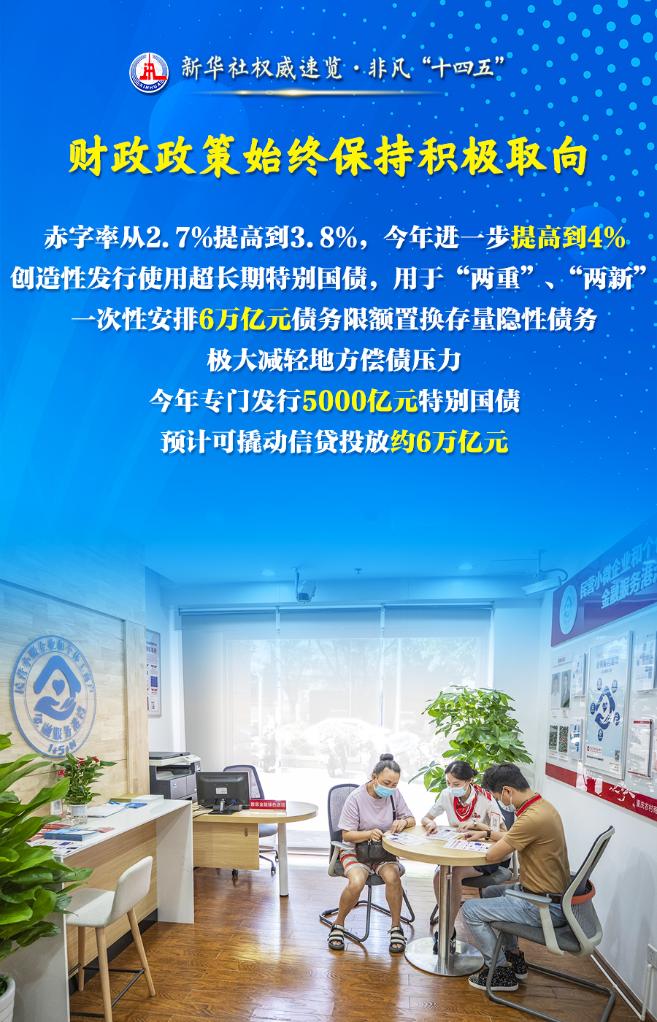
Core Viewpoint - The Chinese government emphasizes the importance of improving people's livelihoods through fiscal policies during the "14th Five-Year Plan" period, with a focus on high-quality development and direct financial support to citizens [1]. Fiscal Policy - The fiscal deficit rate has increased from 2.7% to 3.8%, and is expected to rise further to 4% this year [2]. - A special long-term bond issuance of 6 trillion yuan has been arranged to replace hidden debts, significantly alleviating local repayment pressures [2]. - An additional 500 billion yuan in special bonds is expected to stimulate approximately 6 trillion yuan in credit [2]. Tax and Budget Reforms - The central government's transfer payments to local governments have totaled nearly 50 trillion yuan during the "14th Five-Year Plan" [3]. - The scale of cross-provincial adjustments is projected to reach 253.3 billion yuan in 2024 [3]. - 14 out of 18 existing tax types have completed legislation [3]. Economic Stimulus - Central fiscal employment support funds amount to 318.6 billion yuan, with an overall fiscal contribution of about 420 billion yuan leading to over 2.9 trillion yuan in sales of various goods [5]. - Over 19.4 trillion yuan in local government special bonds have been arranged over five years to support 150,000 construction projects [5]. Technological Development - National fiscal spending on technology is expected to reach 5.5 trillion yuan, a 34% increase from the "13th Five-Year Plan" [7]. - The government has supported over 30,000 small and medium-sized technology enterprises with approximately 800 billion yuan in loans [7]. Education Funding - National fiscal education funding is projected to exceed 25 trillion yuan during the "14th Five-Year Plan," maintaining over 4% of GDP for over a decade [9]. - Approximately 1.1 trillion yuan has been allocated for transfer payments to enhance local education investments [9]. Debt Management - By the end of August, 4 trillion yuan of the newly increased 6 trillion yuan special debt limit has been issued [11]. - The total government debt is projected to be 92.6 trillion yuan by the end of 2024, with a manageable debt ratio [11]. Rural Development - Central fiscal funds for rural revitalization have increased from 156.5 billion yuan in 2021 to 177 billion yuan in 2025 [13]. - Rural residents in poverty-stricken areas have seen their per capita disposable income increase by nearly 40% over the "14th Five-Year Plan" period [13]. International Cooperation - The government is actively engaging in international financial cooperation, particularly in managing sovereign debt for developing countries [14]. - Efforts are being made to enhance the "Belt and Road" investment and financing system [14]. Financial Supervision - Strengthened supervision mechanisms are in place for the issuance of national bonds and local government debt management [16]. - A comprehensive supervision system has been established for central department budgets and transfer payment funds [16].